The rise and fall (and return) of North Carolina’s red light cameras

I’m Brian Gordon, tech reporter for The News & Observer, and this is Open Source, a weekly newsletter on business, labor and technology in North Carolina.
Brian Ceccarelli thought he had vanquished red light cameras. For more than a decade, the software engineer in Cary fought to rid North Carolina intersections of the cameras that automatically capture vehicles running reds and mail fines to their drivers.
In 2010, Ceccarelli sued the town of Cary following his second red light citation, arguing the length of time given for yellow lights was too short. He brought a white board to the courtroom, serving as plaintiff and expert witness. He lost the case, but won the war, as Cary soon shuttered its program.
Ceccarelli wasn’t done. He set up a website, called Red Light Robber, where he recruited plaintiffs to take on other red light camera systems. The past three years have brought a string of successes, with Raleigh, Fayetteville, Wilmington and Greenville all ditching their cameras. Raleigh didn’t renew its system in March 2024, citing “third-party litigation.” Raleigh’s cameras had monitored 25 intersections where they issued 40,000 violations a year. No locality in North Carolina uses them now.
That will soon change, as last week Greensboro voted to reinstate its red light camera program. Fines will be $50. Greensboro city council member Sharon Hightower told me traffic safety is a big local concern and officials spent two years analyzing which intersections saw the most side-impact, T-bone crashes.
“It is safety,” she said. “It’s not about revenue.”
Other types of traffic cameras could be next. In July, North Carolina passed a law allowing local governments to set up automatic speeding ticket cameras in school zones. This week, The Assembly detailed how a camera operator’s political donations appeared to help push the bill through.
The Red Light Robber is no fan. “Red light cameras, like speed cameras, take advantage of the difference between the precise wording of law and the imprecise nature of engineering,” Ceccarelli said. And his fight goes on.
Zepbound and down: NC accelerates obesity drug output
Pepsi was born in a North Carolina pharmacy. Now a threat to the company is being made here too.
In its latest annual report, PepsiCo listed “increasing use of weight-loss drugs” as a business risk for a third straight year. Little wonder, as millions of Americans now take Zepbound, Wegovy, Mounjaro and Ozempic to treat obesity.
Two companies make these four medications. And both do so from the Triangle.
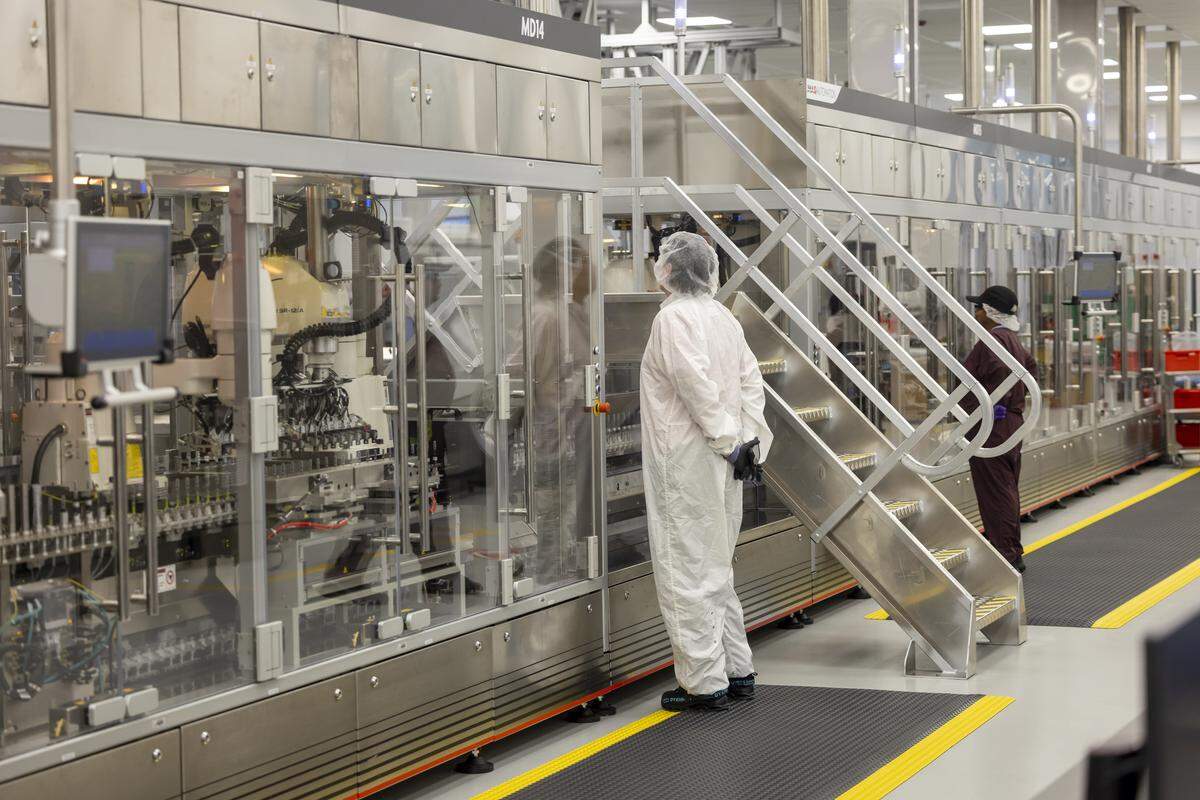
Novo Nordisk fills Wegovy and Ozempic injection pens at a 450,000-square-foot facility in the Johnston County town of Clayton, where it also packages the drugs. Last year, the large Danish company committed $4.1 billion to expand its local fill-finish operations. Eli Lilly is more recent to the state, but no less ambitious. In 2023, the Indianapolis-based pharma giant started producing Mounjaro and Zepbound at a new Research Triangle Park fill-finish plant. Then last year, it opened a replicate facility in Concord, near Charlotte.
“Suffice to say, there are millions of units of medicine coming down this side alone,” Daniel VonDielingen, one of Eli Lilly’s senior vice presidents in manufacturing, said during a recent tour of an RTP production line, where a stream of Mounjaro pens passed us.
And this week, another major pharmaceutical company committed to make GLP-1s in the Triangle. Genentech, a Roche subsidiary, hopes to produce its obesity treatment at its Holly Springs campus by 2029.
First though, Genentech has to develop the drug. The company ceremonially broke ground on its Wake County campus Monday; another massive weight-loss drug project underway.
“When the technology finally kind of catches up to the medical need, you get these big opportunities,” said Bill Bullock, senior vice president of economic and statewide development at the North Carolina Biotechnology Center. “And North Carolina has just been super well positioned to capture it.”
Can Trump tariffs bring NC furniture jobs back?
North Carolina still has furniture jobs — especially for high-end custom items — and the planet’s biggest furniture market is held twice a year in High Point. But outsourcing to Asia shut factories, caused layoffs and dented the state’s claim to being “The Furniture Capital of The World.” Between 1999 and 2009, the North Carolina furniture manufacturing sector lost more than half of its jobs, according to the regional Federal Reserve Bank.
Are tariffs the solution then?
In a Truth Social post last Friday, President Donald Trump said his administration would consider furniture tariffs following a 50-day investigation to “bring the Furniture Business back to North Carolina, South Carolina, Michigan, and States all across the Union.”
The industry group Furniture for America disagrees, writing in April that “no amount of tariffs will bring back American furniture manufacturing back to its prior levels.” The group’s membership includes domestic producers and importers.
In the short term, tariffs may have already cost local furniture jobs. This month, Michigan-based Howard Miller announced it would close its two North Carolina facilities in Lexington and High Point, affecting 42 jobs. Its CEO blamed earlier Trump tariffs for disrupting the company’s supply chain.
Then again, furniture jobs leaving the state isn’t new.

Wolfspeed tidbits
Durham’s bankrupt chipmaker Wolfspeed released its 2025 annual report this week with a few interesting details:
- The company went from 5,000 employees to 3,400 in the past year.
- Wolfspeed continues to rely on two customers for more than a third of its revenue.
- Its operating losses soared last year, with a dip in revenue and a spike in expenses, which Wolfspeed told me is due to “restructuring and liability management activities.”
- Wolfspeed plans to emerge from Chapter 11 next month (stronger than before) and incorporate in Delaware (where many North Carolina companies are already legally based).
Clearing my cache
- Research Triangle Park startup restor3d raised $104 million from existing shareholders and a new investor. Started in 2017, restor3d, 3D prints orthopedic implants.
- Students returning to North Carolina public schools this week are prohibited from using phones in class under a new law.
- The utility infrastructure firm S&N will lay off 126 workers at its field office in Youngsville. S&N attributed the Franklin County job losses to its largest customer, the Charlotte-based internet provider Brightspeed, “unexpectedly” ending its contracts.
- In a first, Duke University researchers have discovered a new gene therapy that can repair heart damage caused by heart attacks in non-human primates.
- Was it already known that Johnson & Johnson would make medicines at Fujifilm’s soon-to-open Wake County contract drug manufacturing plant? Yes. And did publicizing it in a news release last week allow J&J to champion its domestic spending to a Trump administration that has threatened pharmaceutical tariffs? Yes again.
But Johnson & Johnson’s announcement did give new details about how much it will invest at its Holly Springs site ($2 billion), for how long (at least 10 years) and how many jobs it expects to create there (around 120).
National Tech Happenings
- All eyes are on the Supreme Court as Federal Reserve governor Lisa Cook has sued over her firing by President Trump. An unprecedented test of the Fed’s independence is coming.
- The robotaxi company Waymo has tested its first car in New York City, angering the main local taxi union. Raleigh and Charlotte have flirted with self-driving taxis in recent years.
- The U.S. government has finalized the terms of its unprecedented (there’s that word again) long-term equity stake in the struggling chipmaker Intel: $11.1 billion in public support for nearly 10% ownership. Defense firms could be next.
Thanks for reading!
This story was originally published August 29, 2025 at 9:30 AM.