Long COVID patients work to regain control of their breathing — and their lives
READ MORE
How to help COVID long-haulers
While there is much physicians and therapists can’t yet explain about what’s now known as long COVID, long-haul COVID or post-acute COVID-19, they can assure patients of two things: The syndrome is real and there are treatments that might help ease the mysterious, frustrating and fatiguing side effects. And medical professionals are working toward a third assurance: Better days are ahead.
Expand All
UNC clinic offers hope and support for those battling long COVID’s mysterious symptoms
Long COVID patients work to regain control of their breathing — and their lives
‘I remain faithful’: Therapists and patients learn that recovery can’t be rushed
‘My mind just goes blank’: When ‘brain fog’ comes, patients find that therapy helps
Music, long known as an effective treatment against dementia, anxiety, depression and even cancer, turns out also to be a tonic for some long COVID patients, helping them rebuild lung capacity and regulate their breathing, which is sometimes strained more than a year after their initial infection.
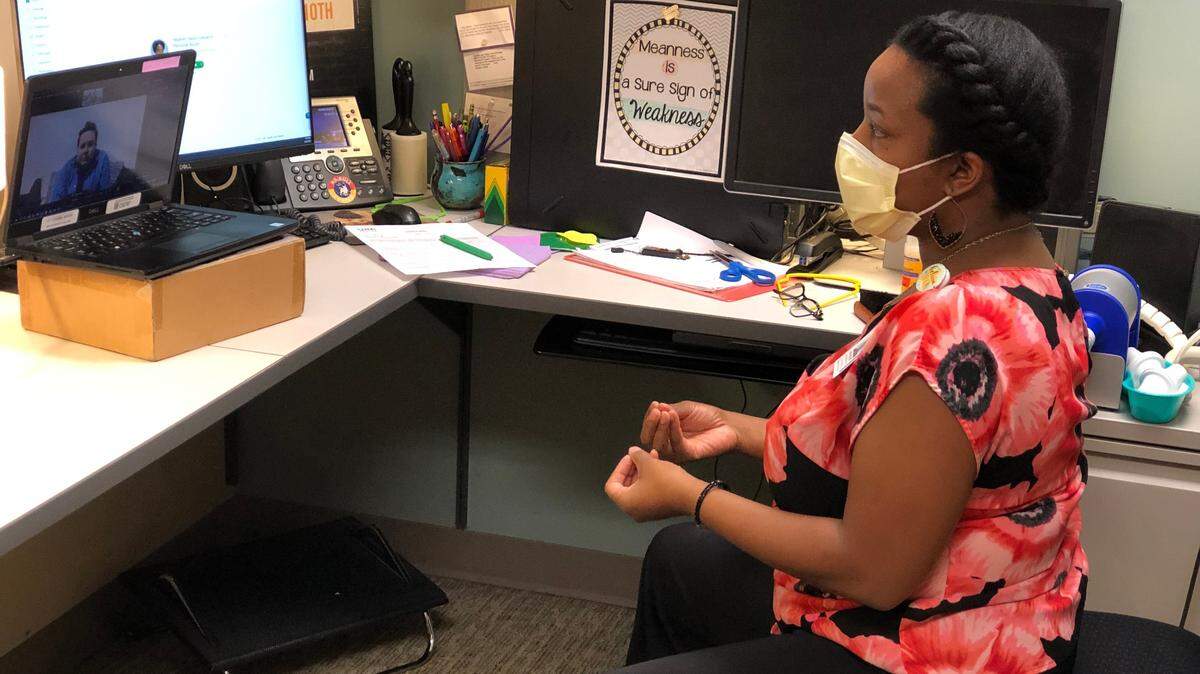
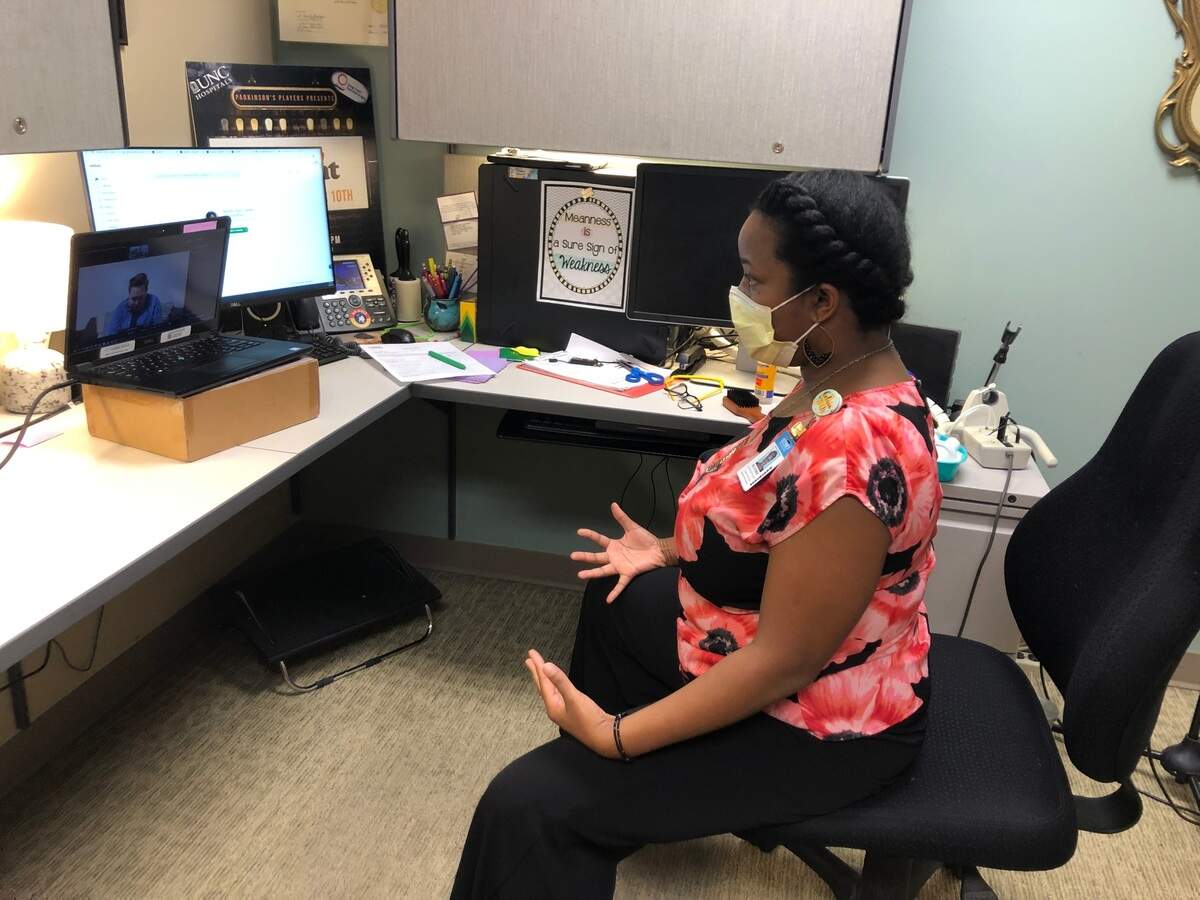
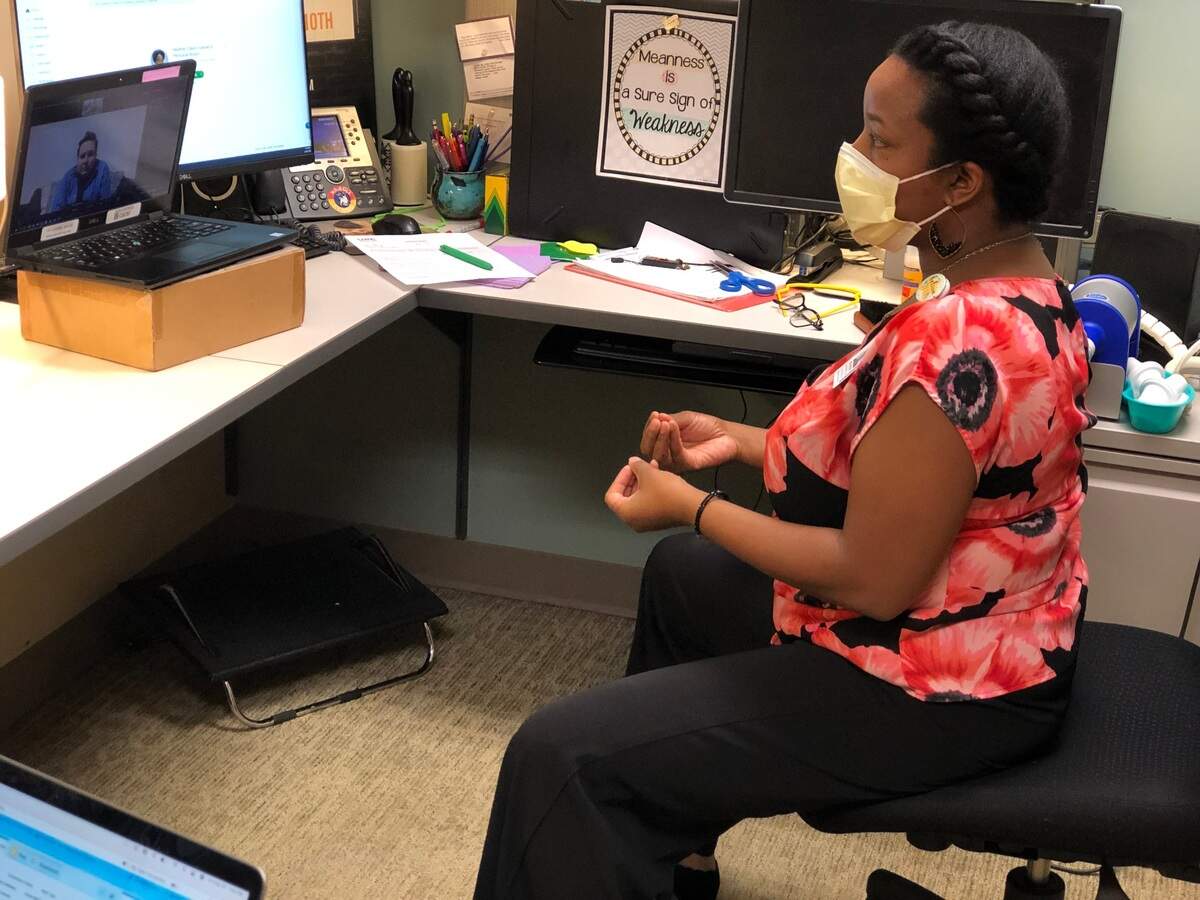
“Do you sing at all?” Heather Davis asked her new patient, Alyx Ashby, during their first appointment recently. Ashby, who lives in Newton, northwest of Charlotte, had planned to come to Davis’s Chapel HIll office for the session, but attended by video call after coming down with COVID-19 as the omicron variant circulated in February.
That was Ashby’s second COVID infection.
The first happened in October 2020. It started with a nosebleed just after Ashby got out of bed one morning. Thinking little of it, Ashby, who prefers the pronoun “they,” went on to their job in a medical clinic, where they developed a slight headache.
“As the day progressed, my ribs hurt,” Ashby said. “And by the end of the day, I couldn’t sit up straight.”
They got tested for COVID and by the time the results came back two days later, “I was having trouble standing and walking. My hands were tingly and numb.
“It was crazy,” Ashby said.
A yearlong trek for relief
Finally COVID made its trademark move, attacking Ashby’s lungs, making it hard to get a breath and making their chest and ribs ache. Next came the POTS — postural orthostatic tachycardia syndrome —a disorder in which a person’s heart rate rises excessively on standing.
It’s not uncommon among long COVID patients, and it can wreak havoc with a person’s ability to manage daily chores or hold a regular job.
Ashby, 42, made several attempts at returning to work, but by December 2020, the chest and rib pain still made it impossible to even sit and answer office phones. So began a more than yearlong trek from one specialist to another in search of treatments that could control the constellation of symptoms. Adding medications, subtracting them, trying new ones.
For Ashby, accustomed to a frenetic job during the day and busy evenings as a single parent of two young children, being without the energy even to cook a meal was a devastating life change. After UNC opened its recovery clinic for long-haul COVID patients in March 2021, Ashby got a referral to see if therapists there could help move the recovery process along.
Clinicians offer a range of treatments to try to help each patient with their unique set of symptoms. Unable to explain exactly why any particular patient is still debilitated or to offer a single “cure,” UNC and similar clinics around the country have instead been treating each patient’s symptoms, borrowing techniques used from the treatment of ailments that are better understood.
A slow, gentle buildup of physical exercise for muscle weakness, for instance, or word problems and memory training for brain fog.
Voice therapy
Davis, a voice therapist at UNC trained in speech pathology and vocal performance, is accustomed to working with patients who have suffered stroke or traumatic brain injury. Though Ashby had had neither, after an initial assessment Davis asked Ashby about singing.
“Do, re, mi,” Davis told Ashby, demonstrating the exercise. She explained to Ashby the mechanics of breathing that people don’t think about until something like COVID comes along and they feel like they’re drowning with no water. She had Ashby practice “belly breathing,” first in a sitting position, then while lying on their back.
“It’s a kind of mindfulness exercise,” Davis said later. “We want you to kind of become aware of how your body is moving around you as you breathe in and out.”
Davis said she might only have a few sessions with Ashby, but that could be enough to teach them to be deliberate about breathing slowly and deeply, thinking of the diaphragm as a bellows that needs to fully inflate and deflate.
“It’s about slowing down your breathing and feeling it in your body.”
Singing, Davis told Ashby, is a slow, controlled exhale, and practicing holding a note can build lung stamina. She had Ashby sing, timing how long Ashby could hold the note.
Ashby promised to practice the exercises at least two minutes a day, and to begin a log of daily activity for the purpose of tracking improvement, however slow.
At the next session, Ashby said, they would bring a song they liked.
This story was originally published March 30, 2022 at 6:00 AM.