
Most recent tests show improving 1,4-dioxane levels at Pittsboro’s water intake
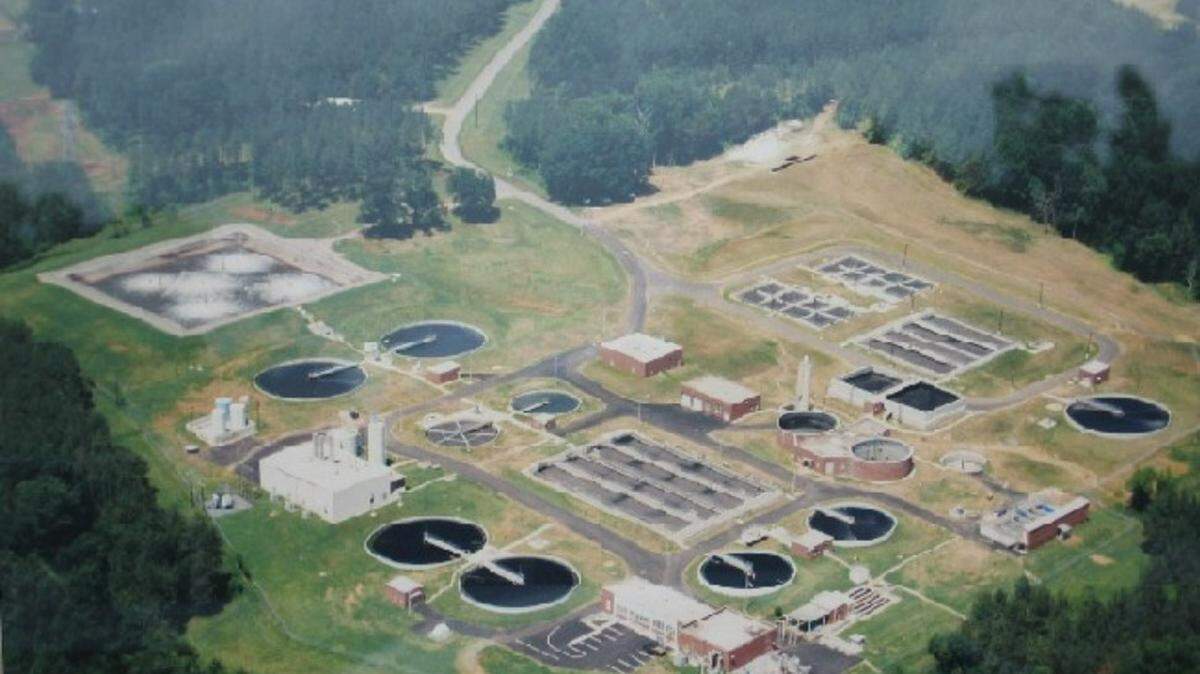
Levels of a toxic chemical have declined in Pittsboro’s drinking water as Burlington officials continue to investigate a company they believe may have led to a discharge that started in mid-September.
Pittsboro officials said declines in 1,4-dioxane in raw water from the Haw River taken this week indicate a slug of 1,4-dioxane discharged from Burlington’s South Wastewater Treatment Plant has passed the town’s drinking water intake.
Levels of 1,4-dioxane from several samples are below the Environmental Protection Agency’s 35 parts per billion health advisory goal but above the 0.35 ppb in-stream target value the N.C. Department of Environmental Quality set for drinking water supplies.
Samples taken throughout the week showed levels of 1,4-dioxane in raw water from the Haw River consistently declining, reaching 2.33 ppb in a sample taken Thursday. Levels of the chemical in drinking water tanks around the town continued to rise slightly, as finished water containing some 1,4-dioxane mixed with water not containing any.
On Thursday, samples from a trio of tanks throughout the town recorded 1,4-dioxane levels between 4.95 and 5.28 ppb.
“These numbers will change based on the concentration found in the finished water, moving upwards or downwards based on this number, but the focus is on the raw water concentration decreasing over time. Our water plant staff will be working through the weekend to empty the tanks to refresh with new water,” Colby Sawyer, a Pittsboro spokesman, wrote in a press release.
Pittsboro’s program offering free reverse osmosis-treated drinking water at Chatham Marketplace will end Friday at 5 p.m.
The town plans to continue testing its water daily until 1,4-dioxane is undetectable.
On Burlington’s end, city officials have identified Apollo Chemical as the “potential but still unconfirmed source” for the 1,4-dioxane discharge, John Vernon, a city spokesman, told The News & Observer.,
Apollo’s discharge to the city’s wastewater system will be sampled daily for the chemical, Vernon wrote. Management from the company is also reviewing its manufacturing processes to see if it is discharging chemicals that could be combining in the wastewater to form 1,4-dioxane.
The EPA says 1,4-dioxane is a probable human carcinogen. The chemical is used to stabilize solvents in products like paints, cosmetics and deodorant.
Late last Friday, Pittsboro announced that the City of Burlington had notified it that samples taken from Burlington’s South Wastewater Treatment Plant showed elevated levels of 1,4-dioxane.
The Sept. 14 sample showed 459 parts per billion of 1,4-dioxane leaving the wastewate plant, significantly higher than a June release that caused the chemical to spike in Pittsboro.
Water takes about a week to move 30 miles downstream on the Haw River from Burlington to Pittsboro’s drinking water intake, meaning that at the time of Pittsboro’s warning the chemical would have been either at or nearing its water supply.
Here are the results of samples Pittsboro has reported this past week:
Samples taken 9/28
- Raw Grab from Intake (Coming from Haw River) – 2.33 ppb
- Finished Water Grab (Water Leaving the Plant) – 4.77 ppb
- Chatham Park Tank (Chatham Park of Suttles Road)– 4.98 ppb
- Chatham Forest Standpipe (Back of Chatham Forest off Belmont Rd) – 4.95 ppb
- Million Gallon Tank (Off Hillsboro St. in Area of Dark Oaks Dr.) – 5.28 ppb
- Horton Tank (Behind Horton Middle School) – 2.59 ppb
Samples taken 9/27
- Raw Grab from Intake (Coming from Haw River) – 3.21 ppb
- Finished Water Grab (Water Leaving the Plant) – 4.98 ppb
- Chatham Park Tank (Chatham Park of Suttles Road)– 4.00 ppb
- Chatham Forest Standpipe (Back of Chatham Forest off Belmont Rd) – 2.44 ppb
- Million Gallon Tank (Off Hillsboro St. in Area of Dark Oaks Dr.) – 4.61 ppb
- Horton Tank (Behind Horton Middle School) – 4.54 ppb
Samples taken 9/26
- Raw Grab from Intake (Coming from Haw River) – 5.21 ppb
- Finished Water Grab (Water Leaving the Plant) – 3.38 ppb
- Chatham Park Tank (Chatham Park of Suttles Road)– 3.20 ppb
- Chatham Forest Standpipe (Back of Chatham Forest off Belmont Rd) – 3.57 ppb
- Million Gallon Tank (Off Hillsboro St. in Area of Dark Oaks Dr.) – 3.52 ppb
- Horton Tank (Behind Horton Middle School) – 3.4 ppb
Samples taken 9/25
- Raw Grab from Intake (Coming from Haw River) – 6.77 µg/L
- Finished Water Grab (Water leaving the plant) – 5.26 µg/L
- Chatham Park Tank (Chatham Park of Suttles Road)– 3.23 (ppb)
- Chatham Forest Standpipe (Back of Chatham Forest off Belmont Rd) – 3.07 ppb
- Million Gallon Tank (Off Hillsboro St. in Area of Dark Oaks Dr.) – 2.60 ppb
- Horton Tank (Behind Horton Middle School) – 1.74 ppb
This story was produced with financial support from 1Earth Fund, in partnership with Journalism Funding Partners, as part of an independent journalism fellowship program. The N&O maintains full editorial control of the work.
This story was originally published September 27, 2023 at 6:02 PM.