County officials question WakeMed a month after merger announcement. What’s next

AI-generated summary reviewed by our newsroom.
- Wake County commissioners delayed action and issued over 100 questions about the merger.
- WakeMed would receive a $2 billion investment from Atrium.
- The commissioners postponed their decisions until August 4.
“This is probably one of the most important decisions that you’ll make for the future of this county,” Advocate Health CEO Eugene Woods told the Wake County Board of Commissioners in a four-hour meeting on Monday.
He and a cadre of upper leadership from Advocate – the parent company of Charlotte-based Atrium Health – and WakeMed were there to make the case for a hospital merger that would see WakeMed become a part of one of the nation’s largest nonprofit hospital systems.
Just a month ago, WakeMed announced the merger proposal on a Friday. The following Monday, a request to alter WakeMed’s articles of incorporation made it onto the commissioners’ consent agenda.
Consent agenda items are typically passed all at once with no discussion. It’s a designation often left for noncontroversial items.
At the time, county officials characterized their role as a minor one. County press releases said that commissioners were explicitly not making a decision on the merger. They had no power to approve the merger.
But ultimately, the commissioners delayed their decision for 90 days and asked WakeMed to hold discussions with the public about the proposal.
And on Monday, they gave both nonprofits a list of over 100 questions about the merger. Those questions ranged from how much control WakeMed will still have over its affairs to how medical costs could change under the merger.
The county originally built and owned the hospital in the 1960s, before the creation of WakeMed as a nonprofit to manage the hospital.
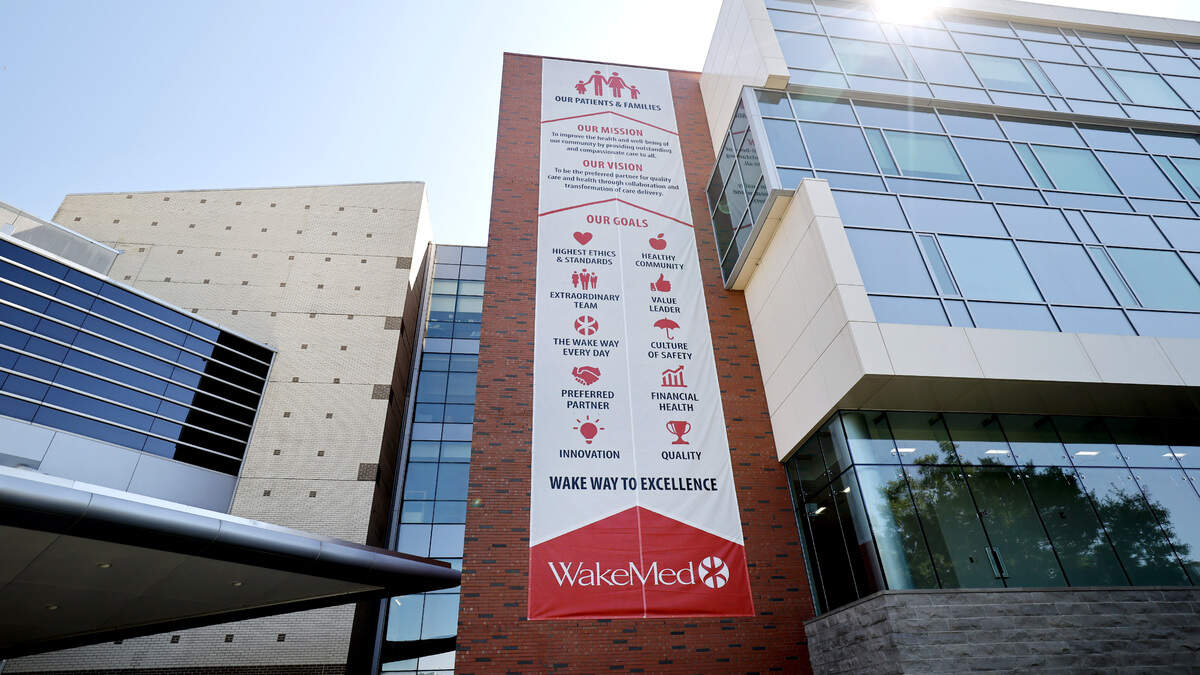
In 1997, the county granted WakeMed ownership of the hospital buildings and property in a transfer agreement.
County Attorney Roger Askew told commissioners on Monday “I believe paragraph six of the original transfer agreement says that any change in the management structure of WakeMed must be approved by the board of commissioners, so that’s really what brings us to this table.”
What did county commissioners ask?
One aspect of the merger deal is that WakeMed will receive an investment of $2 billion from Atrium. WakeMed says that money will be used for things like modernizing its New Bern Avenue campus.
It will also create 3,300 new health care jobs and expanded medical services for 1 million people across the state, according to WakeMed.
Commissioner Vickie Adamson said she would feel more comfortable approving the deal if Atrium could place in legally enforceable agreements various commitments its making to WakeMed and the community.

Several commissioners asked WakeMed about how costs for people using the hospital would be affected by the merger and if WakeMed will still have control over its operations.
What did WakeMed and Atrium say?
Costs for medical services are rising with or without the Atrium merger, said WakeMed CEO Donald Gitzig. He said the merger will help keep some costs low.
As part of a larger hospital system, WakeMed will be able to buy “boatloads” of drugs like aspirin, which will drive down costs. But he said insurance companies dictate much of the cost to the average hospital user.
Several members of the WakeMed Board of Directors, who govern the nonprofit, said their biggest difficulty with the merger proposal was giving up some local control.

Under proposed changes to the nonprofit’s articles of incorporation that are a part of the merger, WakeMed would cede some control over its board to Atrium.
But “ the WakeMed board and its leadership will retain control over the day-to-day” operations of the hospital system, said Mary Nash Rusher, one of WakeMed’s board members.
What’s next?
The commissioners’ decisions related to the merger are postponed until Aug. 4.
WakeMed held a series of community forums on the merger, and it plans to host multiple church-based dialogue sessions at churches across the county on Sundays beginning June 14.
If the commissioners choose to approve, then WakeMed would submit paperwork to the Federal Trade Commission, which can move to block or change deals if it thinks will reduce competition in ways that hurt patients and employees.
This story was originally published June 8, 2026 at 9:33 PM.