
Who really deserves credit for North Carolina’s ‘Best for Business’ honor | Opinion

AI-generated summary reviewed by our newsroom.
- North Carolina rose in CNBC rankings after 2011 reforms led by GOP legislators.
- Key gains were driven by tax and regulation changes; weaknesses persist in infrastructure.
- Future success hinges on workforce and infrastructure investment, not celebration.
Cue the confetti: The moment CNBC names North Carolina the best state for business, there’s a stampede to the nearest microphone.
The governor does a victory lap on TV. Legislators post celebratory graphics on social media. And hey, who can blame them? Being No. 1 for business three out of the past four years is no small thing.

But who actually deserves the credit?
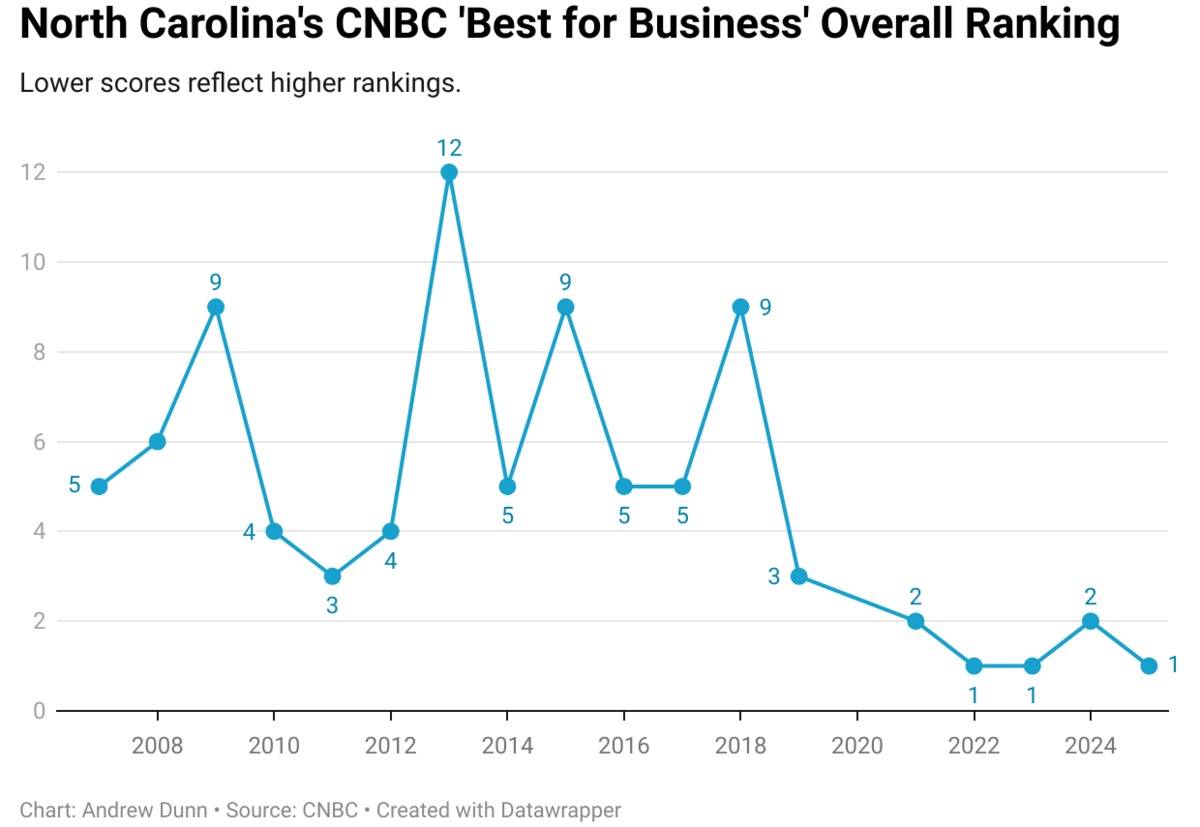
To find out, I analyzed every CNBC ranking from 2007 through 2025 — every category, every data point, every dizzying swing. Some of it defies logic, but the overall arc is clear.
And it tells a compelling story about how North Carolina rose to the top, and what it’ll take to stay there.
The real drivers of reform
Let’s be clear upfront: CNBC’s rankings aren’t gospel. They use real data, but the methodology is pretty arbitrary and shifts year to year — a new weighting here, a new metric there. Some category swings defy explanation.
Case in point: North Carolina’s business friendliness ranking swung from 9th to 21st to 10th in just three years — without any major policy changes.
So yes, we take the individual rankings with a grain of salt. But the long-term trends? They’re meaningful. And North Carolina’s trajectory is unmistakable.
From 2007 to 2011, North Carolina was a solid top-10 state overall. But the economy ranked dismally low, and business friendliness was middle of the pack.
That started to change in 2011. Republican leadership took control of the General Assembly and began reshaping the state’s economic DNA. Taxes were slashed. Regulations were trimmed. The death tax was eliminated. The unemployment insurance system was reformed. And for the first time in a long time, we built up a serious rainy-day fund.
By 2014, those reforms had taken hold, and the results started to show up in the CNBC rankings. We became a perennial contender for the top spot.
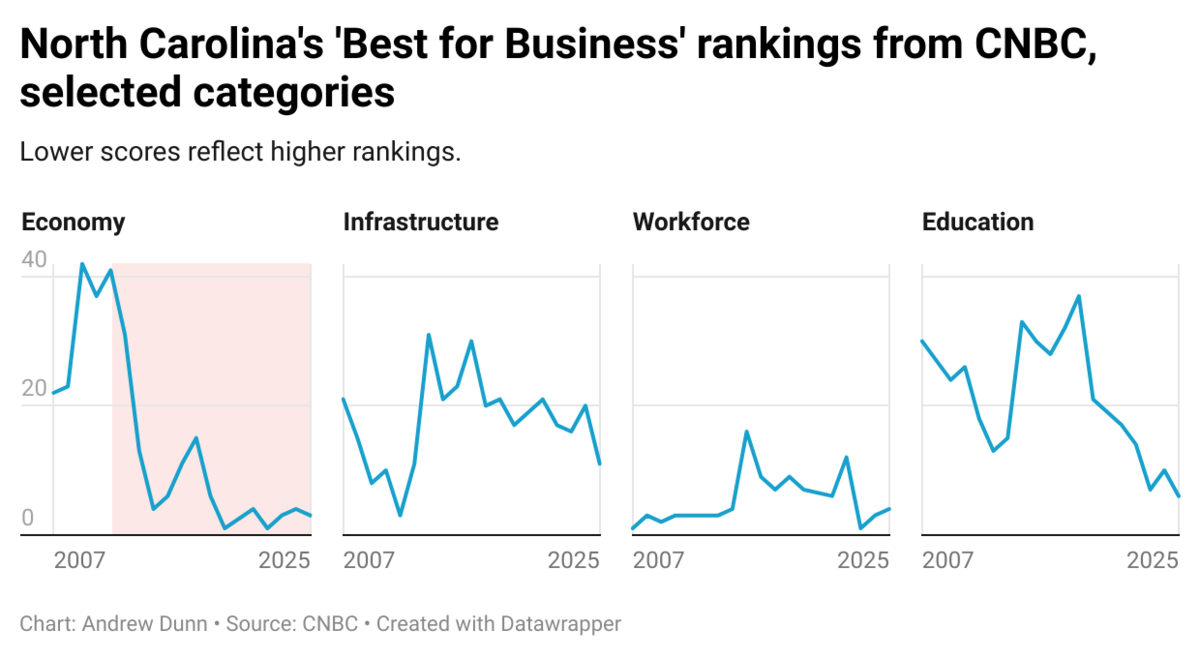
Our economy ranking, once a drag, became a strength — leaping from a pre-2011 average of 31st to a consistent top-five performer. That kind of 25-point jump doesn’t happen by accident. It’s the result of deliberate, durable reform.
A bipartisan foundation, but a conservative engine
Of course, Republican lawmakers didn’t build this alone. North Carolina’s economic success is the product of decades of decisions, many of them bipartisan. Democratic governors and legislators built the university system and created the early momentum that made our state attractive to research and tech.
As Gov. Josh Stein put it in his CNBC interview: “Republicans and Democrats, we have our differences here in North Carolina, but we also know that having a strong, vibrant, growing economy, diversified — that is what works for our people.”
That’s the right sentiment. But what’s changed since 2011 is that the state finally matched that long-term vision with reality. The legislature made the tough calls that reshaped our tax climate, stabilized our finances, and created a foundation where businesses could thrive. That was the missing piece, and it’s what vaulted North Carolina to the top.
Governors may get the headlines. But when it comes to CNBC’s actual scoring — economy, tax climate, business costs — the levers are held by the General Assembly.
North Carolina’s biggest gains have come in those very categories. Even in the education category, despite perennial Democratic complaints, North Carolina has moved steadily upward.
Still, there are warning lights blinking. Infrastructure and workforce rankings haven’t kept pace. Our infrastructure ranking dropped from an average of 13.5 before 2011 to around 20th since.
Workforce development, once a crown jewel, has softened. We ranked second before 2011. Now we hover around 7th or 8th. Still strong, but no longer dominant. Cost of living and the cost of doing business — things like utility rates, insurance rates and the like — don’t fare well in the rankings.
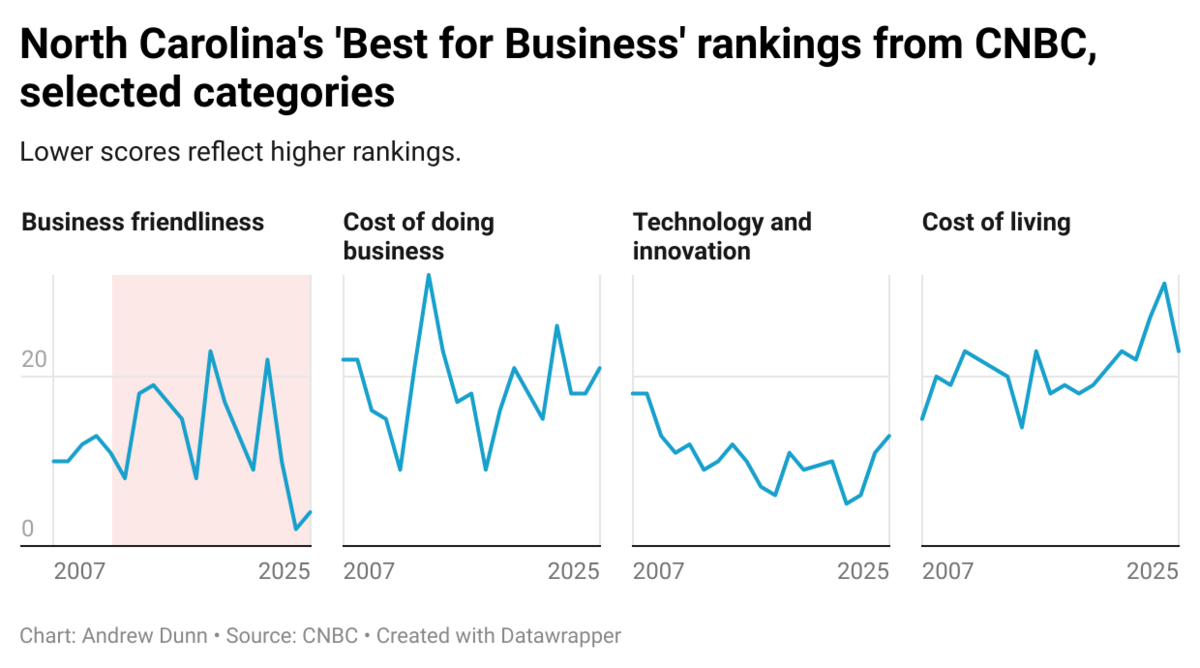
Those aren’t cosmetic issues, but strategic vulnerabilities.
What comes next
We’ve hit the top. But we won’t stay there much longer by coasting.
If the 2010s were the decade of tax reform, the 2020s need to be about infrastructure and workforce.
That means conservative leadership must bring the same urgency and clarity to broadband, roads, permitting and talent development that we brought to budget reform.
Because the truth is: success is not self-sustaining. It has to be re-earned — every budget, every session, every year.
So yes, let the governor take his victory lap. But let’s not forget who rewrote the blueprint.
North Carolina’s rise wasn’t inevitable. It was the result of clear-headed leadership, long-term thinking and a willingness to govern with principle.
The CNBC rankings don’t just flatter us. They prove something deeper: Conservative governance, done right, works.
Let’s keep doing it.