The ACC tournament was made for us. It’s leaving a Coliseum-sized hole in North Carolina
Pronouns are important to ACC basketball fans.
There’s a clear difference between “us” and “them” for fans of Duke, UNC, N.C. State and Wake Forest.
For many a March, there was one uniting factor during the ACC tournament. When it is held at the Greensboro Coliseum, fans of the “Big Four” can safely use “ours.”
The ACC tournament returns to the Coliseum for the 27th time this week for the men’s tournament after a four-year break with stops in Brooklyn, Washington and Charlotte.
It’s probably not the final time Greensboro will host the event but it does have the feel of a “last hurrah” which has even the most important people in ACC basketball feeling wistful.
“When I think of Greensboro, I think of the ACC and the magnificence of our conference,” Duke coach Mike Krzyzewski said after his team’s win over UNC on Saturday night. “Other venues have been good. I’m not sure any venue showcases our basketball for the ACC as well as Greensboro.”
Washington (2021) and Brooklyn (2022) will host the tournament the next two years. There’s an expectation for the league to regularly rotate between those two cities and Charlotte going forward.
It will likely be back in Greensboro at some point, but as UNC coach Roy Williams recently said, “probably not in my lifetime.”
A history lesson
The first 13 years of the ACC tournament were played in Raleigh at N.C. State’s on-campus home, Reynolds Coliseum. The Wolfpack, at first under the direction of basketball pioneer Everett Case, won the tournament five times in those 13 years.
Irwin Smallwood covered those early tournaments and many more during his illustrious five-decade career at the Greensboro News & Record.
“Everyone got tired of N.C. State beating their brains out in Reynolds,” Smallwood said.
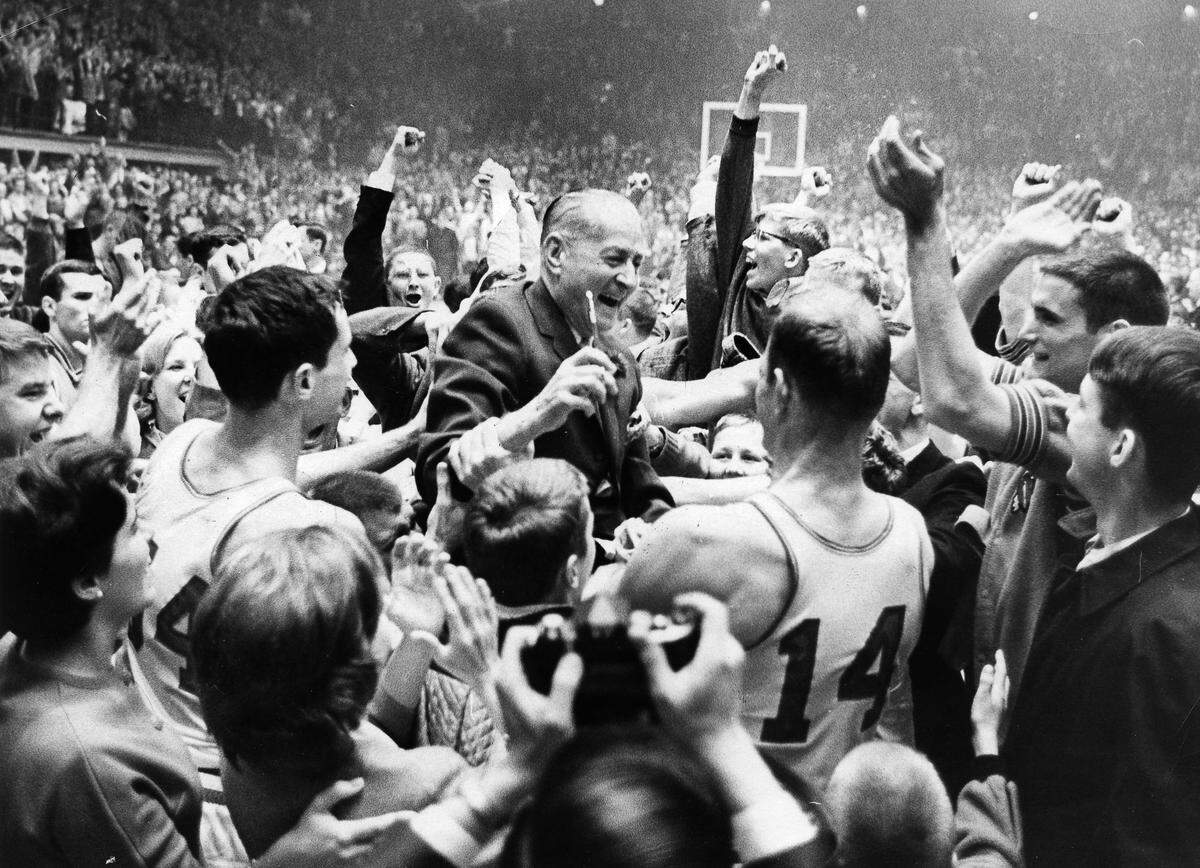
So the idea to build a neutral-site home for the tournament in Greensboro, where the conference headquarters were and still are, was hatched.
The Greensboro Coliseum opened in Oct. 1959 and the tournament was moved there eight years later. There are a lot of “firsts” and “bests” for the “Big Four” schools when it comes to tournament memories at the Coliseum.
▪ Dean Smith led UNC to the first tournament championship in Greensboro in 1967. It was the legendary coach’s first ACC title. He won six more. His last, in 1997, also came in Greensboro.
▪ N.C. State won the “Greatest ACC Game Ever Played” at the Greensboro Coliseum, a 103-100 overtime win over Maryland in the 1974 ACC championship game. The Wolfpack, led by the incomparable David Thompson, went on to win the NCAA tournament title in the same building two weeks later.
▪ Half of Wake Forest’s four ACC titles happened in Greensboro. Randolph Childress turned in the highest-scoring ACC tournament effort (107 points in three games), and perhaps the finest individual performance in league history, in 1995 to lead the Demon Deacons to the title. Tim Duncan made it back-to-back titles for the Deacs the next year.
▪ Krzyzewski won the first of his 15 ACC titles in Greensboro in 1986, a one-point win over Georgia Tech. Six of Duke’s 15 titles under Krzyzewski have come in Greensboro.
Location, location, location
History is big part of what makes Greensboro so important to longtime ACC fans.
“Everyone who is there, in the city itself, they embrace it,” Krzyzewski said. “It’s really like — history. They get it. It’s not just current. There will be a lot of talk about, remember in 1970? Remember ‘86? I remember ‘86.”
To Krzyzewski’s point, the way Greensboro prioritizes the event is also an important factor.
The tournament is “The Show” when it is in Greensboro. The two years in New York, it wasn’t even the only major conference tournament in town. The Big East tournament was at its usual home at Madison Square Garden in Manhattan and there were all of the other attractions in New York.
“When we went to Brooklyn, we got back to the hotel and the guy at the door says, ‘Coach what are you guys doing here?’” Williams said. “I’m not lying. I said, ‘Oh, I’m here to play golf. I just brought my basketball players with me.’”
The tournament was always a big deal in Greensboro. The central location made it convenient for the fans in the state to get there but also the other schools in the old, eight-team league.
That it was the only way into the NCAA tournament (only one team from each league was allowed until 1975) made the tournament a must-see event.
There’s a reason why schools would wheel a TV into classrooms across the state for the early quarterfinal games on Friday.
“The (ACC) tournament was to get into the NCAA tournament but it was also for bragging rights,” Smallwood said. “That was a big part of it and I’m not sure how important that is anymore. But back then, it was everything.”
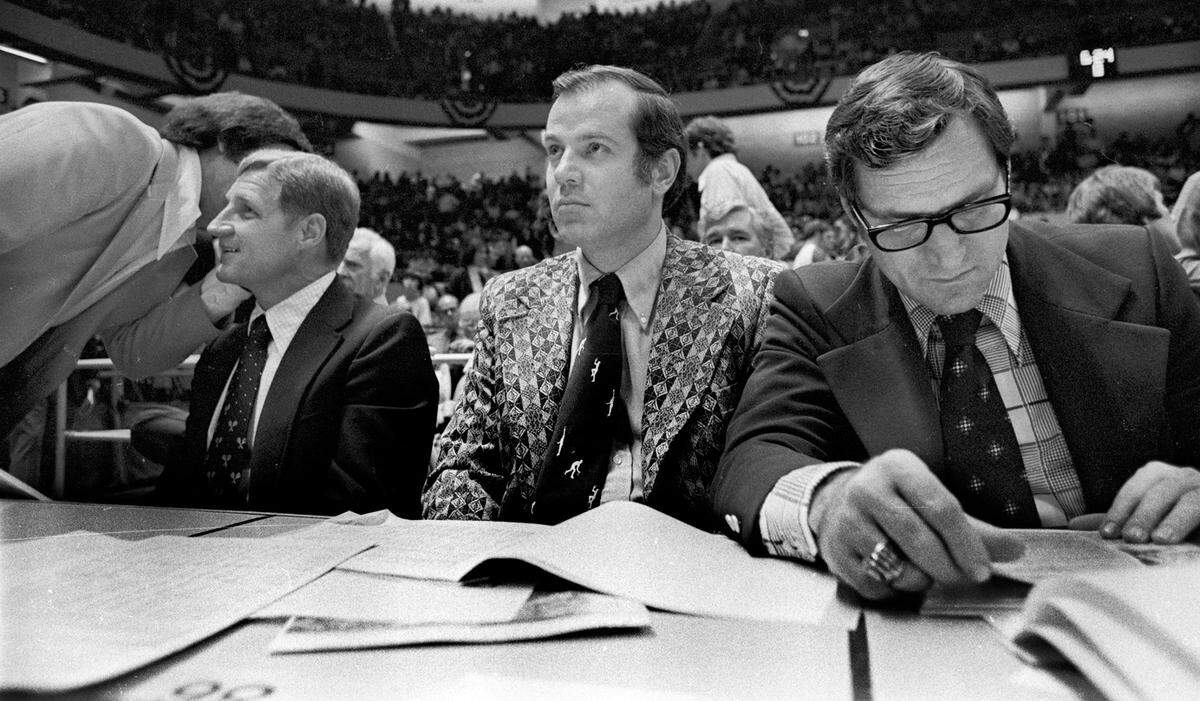
Finding a way in
Even after the value of the tournament changed for NCAA purposes, it was still a nearly impossible ticket to score.
The Triangle schools only sold tournament tickets, or “books” with tickets to every game, through their fundraising clubs. Only Iron Dukes or Rams Club or Wolfpack Club members with significant donations could get them.

So area fans would get creative. Some would join the booster clubs at Clemson or Maryland (and later when Florida State joined the league in 1991) to have access to tickets.
George Ragsdale grew up in Jamestown and his dad, Billy, took him to his first ACC tournament in 1984. Twenty years later, he remembered an old trick his dad used and gave $100 to the Terrapin Club.
“In the ‘80s and ‘90s, you lived the ACC tournament, you breathed it and you wanted to be a part of it,” said Ragsdale, 43, an N.C. State grad who lives on the family farm in Jamestown.
Even if it meant giving money to Maryland.
“They still call and email me” Ragsdale said.
The price was worth it.
He won’t need a work-around for tickets to this week’s tournament. Tuesday’s games are available for $5 on online secondary sites, a tournament book can be had for $115.
“It’s made for TV now,” Ragsdale said. “It’s not made for us.”
On the move
Keeping the tournament in Greensboro or Charlotte made more sense when there were only eight teams in the ACC from four different states.
The ACC went through the first wave of expansion in the mid-2000s to 12 teams and now has 15 teams from 10 different states.
“It’s a different conference than it was years back,” said Paul Brazeau, an associate commissioner for the ACC.
Brazeau’s official title with the ACC is senior associate commissioner for men’s basketball but a big part of his job is running the tournament.
Syracuse coach Jim Boeheim has publicly pushed for the ACC to move the tournament out of Greensboro and into bigger markets.
But anywhere other than Madison Square Garden is probably not going to appeal to Syracuse fans. That the Orange have a 2-5 record in tournament play doesn’t help.
Louisville, 2-4 in the tournament since replacing Maryland in the conference in 2015, hasn’t exactly embraced the value or tradition of the ACC tournament, either.
It’s not exactly a surprise that two of the one-off winners of the tournament in Greensboro — Miami (2013) and Notre Dame (2015) — are coached by ACC lifers.
But Brazeau said the idea of moving the tournament out of Greensboro hasn’t been just a creation of Boeheim, a notorious curmudgeon, or a move to appease the league’s newer members.
“It’s accepted throughout the conference and there’s an understanding that we are different,” Brazeau said. “To bring a great tournament different places is beneficial for our brand and for all of the schools.”
There’s also a value to holding the event where it’s cherished and still has deep connection to many of its fans.
“Time marches on and they’ve got to do what they’ve got to do but what Greensboro has meant to the ACC tournament is incalculable,” Smallwood said. “I hope they have enough sense to come back.”
This story was originally published March 10, 2020 at 5:45 AM with the headline "The ACC tournament was made for us. It’s leaving a Coliseum-sized hole in North Carolina."