
SC attorney general praises NC lab company in testimonial, but how much of it is true?
Three months after receiving the last of $94,500 in campaign contributions from Mako Medical co-founder Chad Price and his business associates, South Carolina Attorney General Alan Wilson wrote a glowing testimonial of the lab company and its leaders.
It was a letter that exaggerated Mako’s status in the health care world and included other information Wilson said he hadn’t vetted. When a reporter pointed out the exaggeration, Wilson said he hadn’t actually written the letter, and it was largely based on details Price had given to one of Wilson’s staffers.
“As the current Attorney General of South Carolina and an active member of a national group that includes Attorneys General from across the country — I have witnessed the impact of Mako Medical and the professionalism of this company first hand,” said the letter dated Jan. 29, 2019, which The News & Observer obtained through a public records request.
Mako is a 6-year-old lab testing company with facilities in Raleigh and Henderson that has boasted rapid growth and has received recognition from the U.S. Labor Department for hiring veterans. Mako leaders also tout the company’s charitable efforts, though Price has declined to provide details about his public claim the company has given $26 million in money and services.
The company, which has strong political ties to Republicans, has been under scrutiny in the past year. Several campaign contributions linked to the company are being investigated. Price has made inflated claims about his educational and work experience. The company has launched COVID-19 testing around the country, including a partnership Georgia Gov. Brian Kemp announced last month, but problems with the testing have emerged in New Hampshire, Colorado and Mecklenburg County.
The letter written by Wilson, a Republican who was re-elected in 2018 to a third term as South Carolina’s attorney general, came at the request of a friend — Price — who Wilson said he first met in the fall of 2017. It was addressed “To whom it may concern” and Wilson said he did not know who might have received it. Price and others at Mako did not respond to an N&O reporter’s requests for more information about the letter.
“I didn’t know exactly what he was going to use it for,” Wilson said in an interview with the N&O. “I thought it was going to be like on his website or in a testimonial where you go pitching business.”
The letter said Wilson was “impressed” with Mako’s work in detecting and combating health care fraud. Calling Mako “one of the largest healthcare companies in America,” he said it has won “numerous awards for growth, quality, innovation, and patient service.”
“Mako’s dedication to hiring military veterans, supporting local nonprofits and charities, and their focus on giving back has established credibility with congressional and state leaders, Governors, and Attorneys General,” the letter said. “Mako’s team works hard and is committed to making an impact in each individual state they serve.”
Wilson closed by saying, “Thank you for considering my personal recommendation, these are letters I rarely write but this special company has truly earned it.”
With roughly 500 full and part-time employees, Raleigh-based Mako isn’t one of North Carolina’s largest health care companies, let alone among the largest in the nation. Wilson, his staff and Mako provided no information to the N&O to support the claims he made about Mako detecting health care fraud.
“I did not type the letter myself,” Wilson said. “I asked him to provide us some documentation and I had an assistant who took that documentation and I’m assuming put it together.” The N&O asked for the documentation. Wilson’s office said they didn’t have it.
Campaign watchdogs in the Carolinas said the letter raises questions.
“Damn, that’s really something,” said Bob Hall, the retired executive director of Democracy NC. “He’s telling you that he rarely writes these letters, so why is he writing it for this company when it doesn’t even have accurate information? It does seem like it’s a special favor that is given to a major donor.”
John Crangle, the retired Common Cause executive director in South Carolina, said it is hard to prove a quid pro quo, but said what he called a “love” letter for Mako following a sizable amount of campaign money needs to be looked into.
“Did Mako give the campaign contributions in hopes to get help from Alan Wilson to recruit business in other states?” he asked.
It’s not the only example of an elected official helping Mako and also receiving campaign money from Price and his business associates.
Georgia state senator helps Mako
Emails obtained by The News & Observer show that a Republican Georgia state senator, while making a bid for Congress, was trying to help Mako gain approval as an in-network provider for the health care company that decides which vendors provide services for Medicaid and Medicare in Ohio.
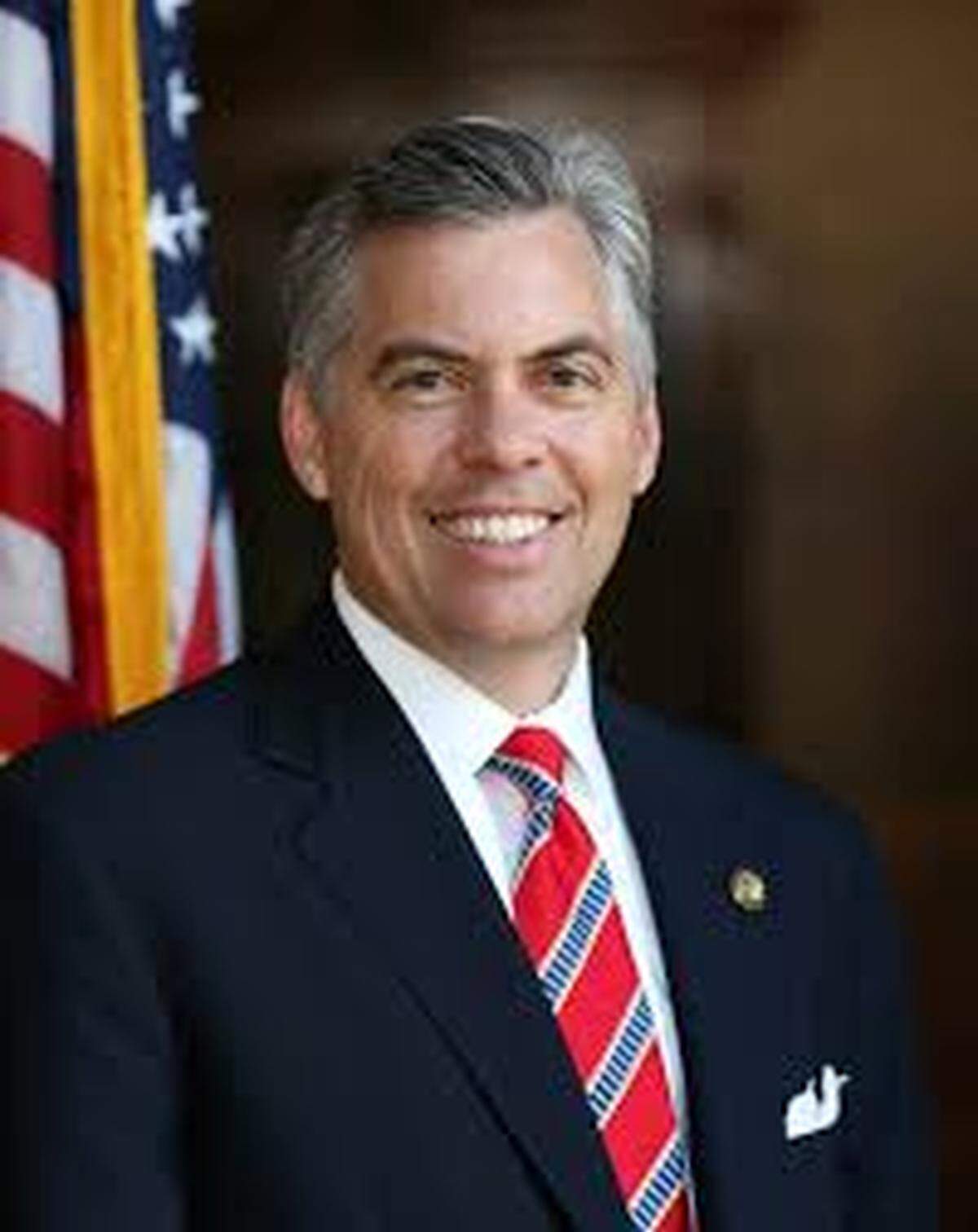
Judson Hill was a seven-term state senator from an Atlanta-area suburb when he announced in November 2016 that he would seek the seat that would soon be vacated by U.S. Rep. Tom Price, who President Donald Trump chose as his first health and human services secretary. Hill resigned from the state Senate on Feb. 13, 2017, to run for Price’s seat.
He had been active in health care issues in the Georgia legislature, serving as chairman of a study committee looking into state and federally supported health care financing programs.
The emails show at that time he was also assisting Mako Medical as it sought approval to tap into a huge market as an in-network lab provider for CareSource, a managed care company that serves 1.2 million Medicaid recipients in Ohio.
“Good news from care source,” Hill wrote to David Rich, an Atlanta-area health care provider, and Josh Arant, Mako’s chief operating officer, on Dec. 9, 2016. Included was an email from a CareSource representative who said he would ask that “your lab be given a rush review” by the company.
Two weeks later, campaign finance records show, Arant made a $2,700 contribution to Hill’s campaign, the maximum allowed under federal law. As discussions continued between Hill and CareSource, Chad Price made a $2,700 contribution on March 28, 2017. After Hill lost the Republican primary for the seat, Price made a second $2,700 contribution in his sister Jessica’s name on August 29, 2017.
Mako did not win the lab approval for Ohio. Joseph Kelley, a CareSource spokesman, said earlier this year the company was looking into the email communications, but has not responded since.
“Currently, CareSource has no specific comment,” Kelley said in an email response on Feb. 28. “We take all questions like this seriously and will provide a response to your questions after we gather more information.”
CareSource is based in Dayton, Ohio, and also runs plans for four other states: Georgia, Indiana, Kentucky and West Virginia. Its website shows Mako is an in-network lab services provider for Indiana, Kentucky and West Virginia.
Price and Arant declined requests for an interview. Heather Matthews, a spokeswoman for Mako, said in an emailed response that Hill is a “personal friend” of the two co-founders. Hill and Rich did not respond to emails or phone calls.
Hill’s ethics statements for his state office and for his congressional run do not mention Mako. He worked as a lobbyist in Georgia after failing to win the seat. His lobbyist filings do not show Mako as a client.
Political giving
In February, The News & Observer reported on Price and his business associates’ political giving. Over the past five years as Mako grew from a small lab to a multi-state operation, Price, his family and business associates contributed a combined $560,000 to state, federal and local campaigns.
Some of those contributions are being looked at by state regulators. The $2,700 given to Hill in August 2017 is among $17,500 in contributions that Price gave to state or federal candidates in four states in his sister Jessica’s name. Price has acknowledged that she has a severe mental disability and functions at the level of a young child. But she was listed as a Mako employee in some of the campaign reports.
Wilson did not receive a contribution in Jessica’s name, but he did receive a $3,500 contribution from a Mako spinoff that was no longer in business. It was among a dozen contributions to Wilson from businesses connected to Price totaling $42,000. That represents a little less than half of the $94,500 he received from Price and his business associates from December 2017 through October 2018.
Wilson, 47, won a third term in office the following month.
South Carolina allows businesses to make contributions; Crangle calls that a loophole people use to get around a $3,500 contribution limit per election by giving under multiple businesses.
The N&O also in February reported on Price’s inflated claims about his education and work experience. He resigned from the Wake Tech Community College’s board of trustees a day after the story was published.
Since then, the N&O has learned that Macon Newby, wife of state Supreme Court Justice Paul Newby, was an early investor in Mako. Price and Arant have said they met in a monthly Bible study Paul Newby ran. Newby, a Republican, is seeking election to the chief justice’s seat in November.
Paul Shumaker, a prominent campaign consultant who has Paul Newby as a client, said Price bought out Macon Newby’s share in 2018. Shumaker also disputed Price’s claim in a 2013 email that he had run Paul Newby’s campaign.
“(Newby) said, ‘That is absurd because I did not meet the guy until like September, October of 2012,’” Shumaker said.
Much of the Mako-related campaign money went to Republicans, though a growing amount has gone in recent years to Democrats as they have gained more power in state governments.
Wilson, a Republican, said the campaign money had nothing to do with his letter.
“Just because someone does something nice for me, or supports me politically, or supports me financially, doesn’t mean I’m going to do favors for them because of that,” Wilson said. “I can sincerely tell you, I was just trying to be nice to a guy who was really nice to me.”
He also said his friendship with Price would have no impact on his role as South Carolina’s top law enforcement official. Wilson said he is rarely asked to provide such letters, and he did not consider it official business. No one had contacted him about the letter until he heard from a reporter.
“I wanted to do it in my own letterhead and not attorney general letterhead, and so I’m surprised this letter was in there,” he said. “But I’m fine to give that to you.”
Access to health care customers
Such letters could be helpful because state governments have some of the biggest pools of health care customers. The states manage Medicaid programs that spend billions of dollars each year, and they also run health care programs for state and sometimes local employees and retirees. Having in-network status for these programs is critical.
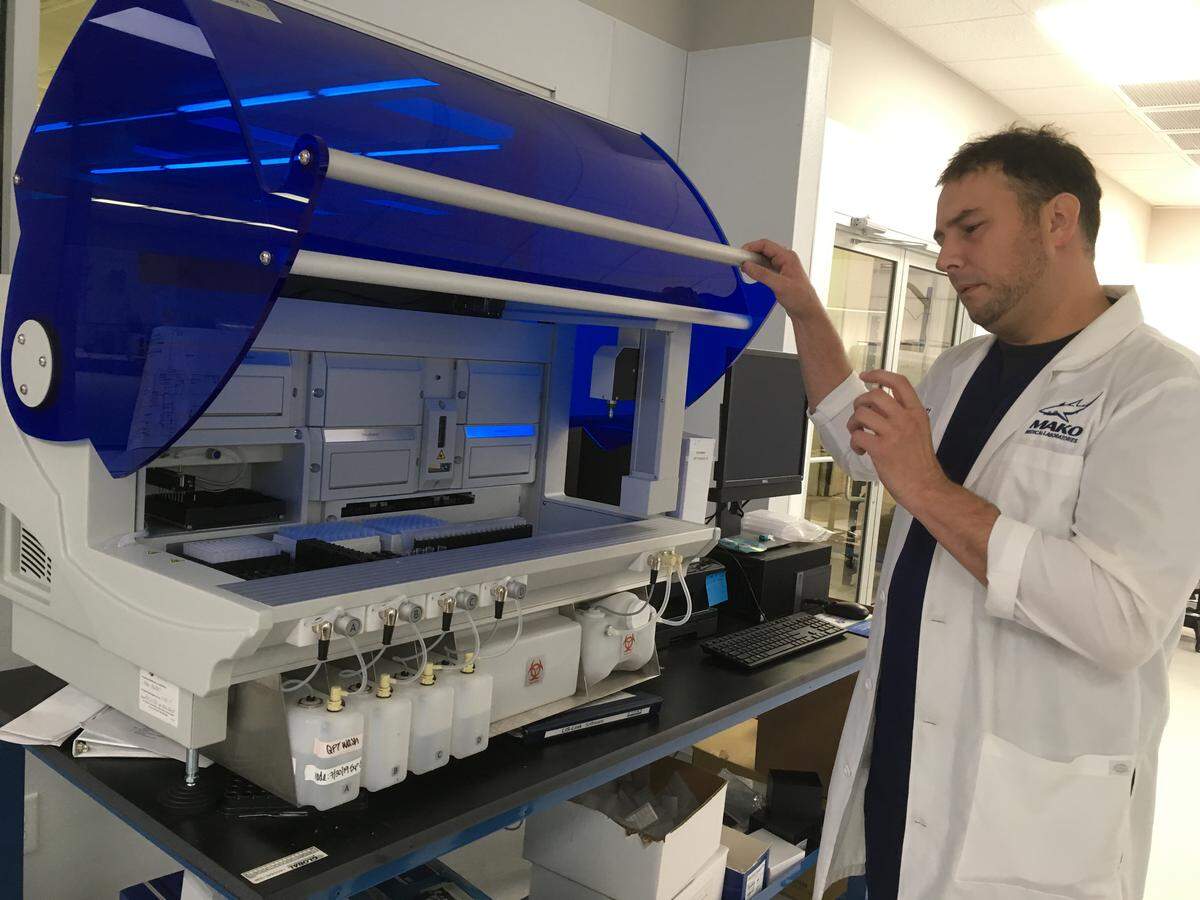
The letter could be especially helpful to Mako at a time when it has dramatically shifted its business to COVID-19 testing. Mako officials said in a news release this month the company has added 17 testing machines, and has gone from 50 employees working a single shift to 400 employees working shifts to process and deliver results around the clock.
Mako officials said the company processes 30,000 tests a day, and produces nearly all results within 48 hours. That is a much shorter time frame than major competitors LabCorp and Quest that have been struggling to keep up with demand.
Mako received a federal loan between $2 and $5 million from the Paycheck Protection Program, according to a Small Business Administration database. Congress created the program in the spring to help businesses survive the pandemic, but it is drawing criticism for helping those with strong political and banking connections, while those without them were less successful.
Arant, Mako’s chief operating officer, wrote in a statement to the N&O that Mako applied to the program after seeing a 40% drop in its business volume when the pandemic hit.
“Despite the PPP money, we still had to enact COVID-driven layoffs,” said Arant, who had previously served as an aide to then Gov. Pat McCrory, a Charlotte Republican. “Thankfully, over several weeks, our remaining team was able to quickly change course and begin providing COVID-19 testing which has allowed us to not only bring back team members, but also employ people who were laid off from their jobs due to the pandemic.”
COVID-19 testing
During the pandemic, news reports show several states have made arrangements with Mako to provide testing services, including Colorado, Florida, Georgia, New Hampshire, Montana, North Carolina and Virginia. Local governments and health care facilities have also turned to Mako for testing. The company said since April it has processed 650,000 tests in 22 states.
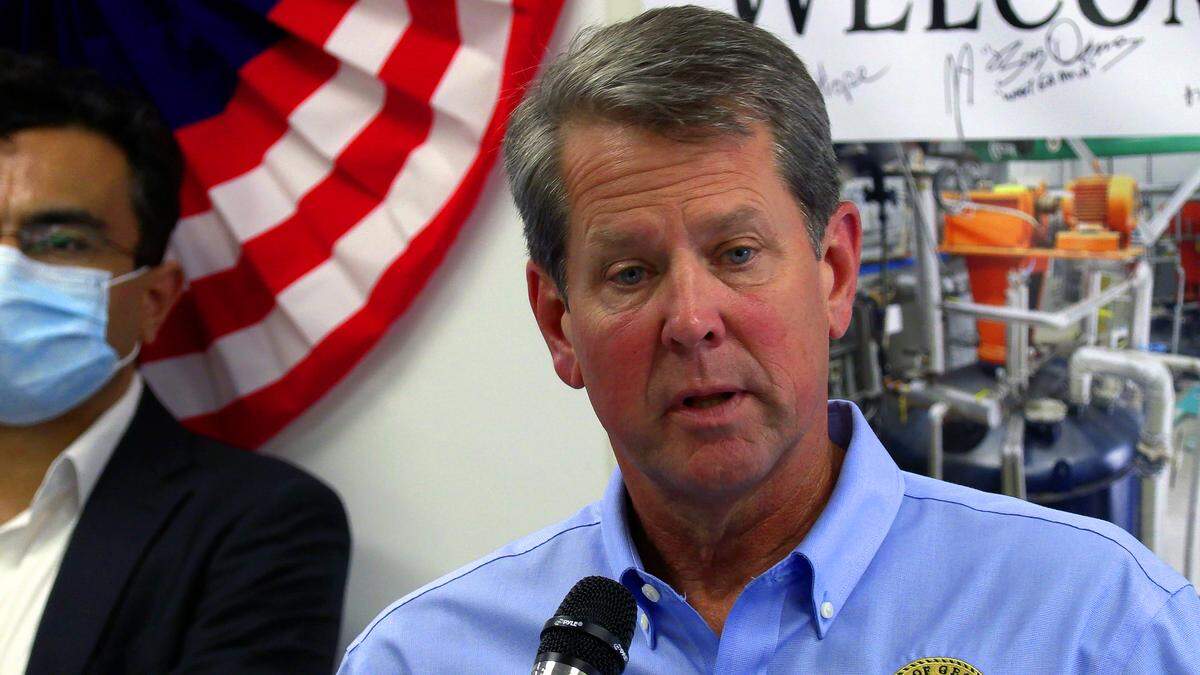
Kemp, the Republican Georgia governor, announced on July 20 he had formed a “partnership” with Mako to provide COVID-19 testing. Three days earlier, Steven Phillips, a Washington, D.C., lobbyist, registered to represent the company in the state, Georgia lobbying records show. Phillips was a former legislative director and counsel to U.S. Sen. Jesse Helms, a North Carolina Republican.
Mako has had its stumbles in the COVID-19 testing arena. In April, it advertised on its Twitter and Facebook accounts that it was developing an antibody test that would prove immunity, something that experts at the time said could not be shown.
Testing it had done in May for an assisted living facility in Mecklenburg County resulted in false positives, WSOC-TV reported. Arant said they were due to human error.
Last month, The Concord Monitor reported that New Hampshire officials switched to an in-state lab for surveillance testing of nursing homes after several operators complained about false positives while using the Mako tests.
The state’s health and human services director did not criticize Mako, however, and said the in-state lab would provide results more quickly and give the state more control over the process.
In response to a public records request from the N&O, New Hampshire officials turned over its contract with Mako. The sole source contract would have paid Mako $6 million for testing through the end of the year, and had an option to renew for up to two more years.
Brendan Williams, president of the New Hampshire Health Care Association, later forwarded to the N&O reports from other nursing homes, each reporting between one and five false positive tests of staff and/or residents, bringing the total number of homes to 10. Others told Williams they had no issues with Mako’s testing.
“I think initially things were OK in terms of the turnaround with Mako,” Williams said. “But then it seemed like things were falling apart and we were hearing a lot of reports of false positives, and that’s extremely troubling.”
‘False positive’ problem
One of the nursing home administrators, Ray Bower of the Riverside Rest Home in Strafford County, told the N&O one false positive out of hundreds of tests isn’t indicative of a problem. “In my particular case, it’s 99.9% accurate,” Bower said.
Jennifer Nuzzo, an epidemiologist and professor with Johns Hopkins University’s Bloomberg School of Public Health, said in an interview with the N&O the number of nursing homes reporting false positives suggested testing issues.
“It appears that there are questions about this company’s quality assurance efforts,” she said. “With these open questions, I can understand why the state may not have wanted to renew the contract until these issues can be sorted out.”
Last week, Colorado announced that 355 people Mako had tested at a Colorado Springs shopping mall needed to be retested, The Colorado Springs Gazette reported.
A state health department spokesperson who declined to give his or her name later told the N&O in an email that a county health official “flagged the possibility that some of the samples may not have been stored at a low enough temperature to ensure viability.” Mako continues to perform testing under the state contract.
In email responses to the N&O from Matthews, Arant disputed the number of false positives in New Hampshire and said the company’s average processing time was 13 hours. He did not acknowledge a problem with the Colorado Springs testing, but said Mako would again test the 355 people “out of an abundance of caution,” and retest the original samples to determine if “temperature impacted the quality” of them.
He also cited Mako’s accreditation by the College of American Pathologists.
“On top of the high standards required by CAP, MAKO Medical also adheres to a rigorous, internal, multi-faceted Quality Assurance program which includes daily, weekly and monthly inspections to continually refine and improve services,“ Arant said.
“MAKO Medical constantly implements heightened safeguards and controls for COVID-19 testing that are improved upon daily through collaboration with accrediting organizations, health departments, and laboratory scientists.”
This story was originally published August 18, 2020 at 8:00 AM with the headline "SC attorney general praises NC lab company in testimonial, but how much of it is true?."