Why haven’t COVID-19 cases spiked at Duke University? Mass testing plays a big part.
As COVID-19 cases soared into the hundreds at UNC-Chapel Hill and N.C. State University this fall when students returned to campus, Duke University seems to have things under control, for now.
The university has reported 46 cases — a 0.3% positivity rate — this semester after conducting more than 17,000 tests of students and employees since Aug. 2, the university reported Monday. There are only 15 active COVID-19 cases among Duke’s student, faculty and staff population, including nine new positive cases last week.
Meanwhile, UNC has reported more than 900 COVID-19 cases and N.C. State has reported more than 800 cases among students and employees since classes began on Aug. 10. Both of those universities started the semester a week earlier than Duke, but quickly shifted in-person classes online and told students to move out of dorms.
Duke’s robust testing strategy, student behavior and limiting campus housing and facilities are critical pieces of its success in mitigating the spread of the virus on campus, so far.
.JPG "RAL_20200901_dukecovid_CAT_239 (1).JPG")
Other universities have seen clusters of COVID-19 cases in campus dorms and fraternity and sorority houses. But Duke has had “the advantage of not having to deal with that,” Duke Vice President of Public Affairs Mike Schoenfeld said.
“We don’t have large, unsupervised fraternity and sorority houses,” he said. “It’s not part of our culture. ... It’s clearly been a challenge and problem for other universities around the country.”
There’s also a bit of luck and serendipity, Schoenfeld said.
“All of this could change quickly,” he said. “Our feeling has been very much like a tournament: survive and advance. And that’s what we’re going to keep doing.”
Mass testing of campus community
Duke deployed four COVID-19 testing strategies in its efforts to welcome students, faculty and staff back to its Durham campus this fall.
The university asked students to self-quarantine for 14 days and to get tested for coronavirus before coming to campus. Students were told to stay home if they tested positive.
Every undergraduate student was tested before moving into the dorms and graduate students were also tested before classes started.
Duke also tested people with symptoms and utilized contact tracing to identify individuals who may have been exposed to the coronavirus.
Duke students and employees typically get their tests results back in 24 hours, which is also an important aspect of the plan.
“A test is a snapshot, it’s not a predictor,” Schoenfeld said. “If that snapshot is 10 days old by the time you get it, it’s probably not worth much.”
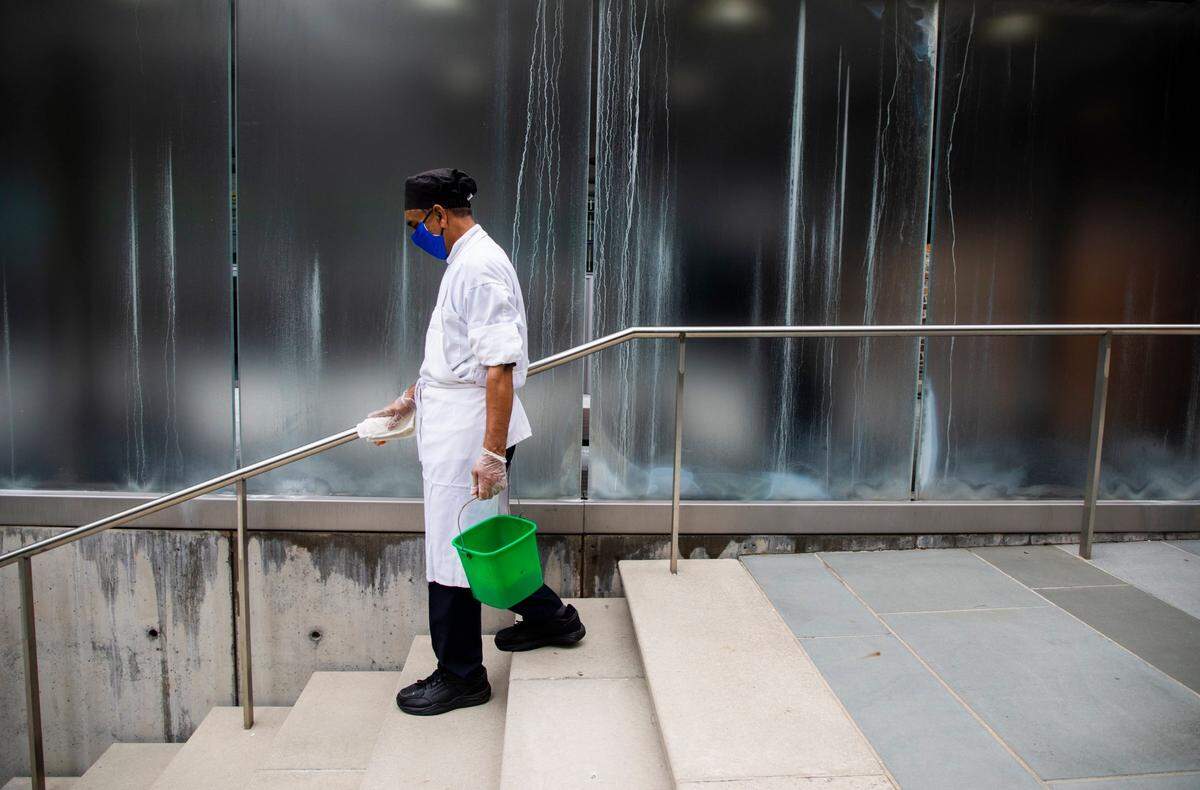
The ability to do pool surveillance testing of asymptomatic students and employees in-house at Duke has been “absolutely critical,” Schoenfeld said. And it will continue throughout the semester.
What is pooled or surveillance testing?
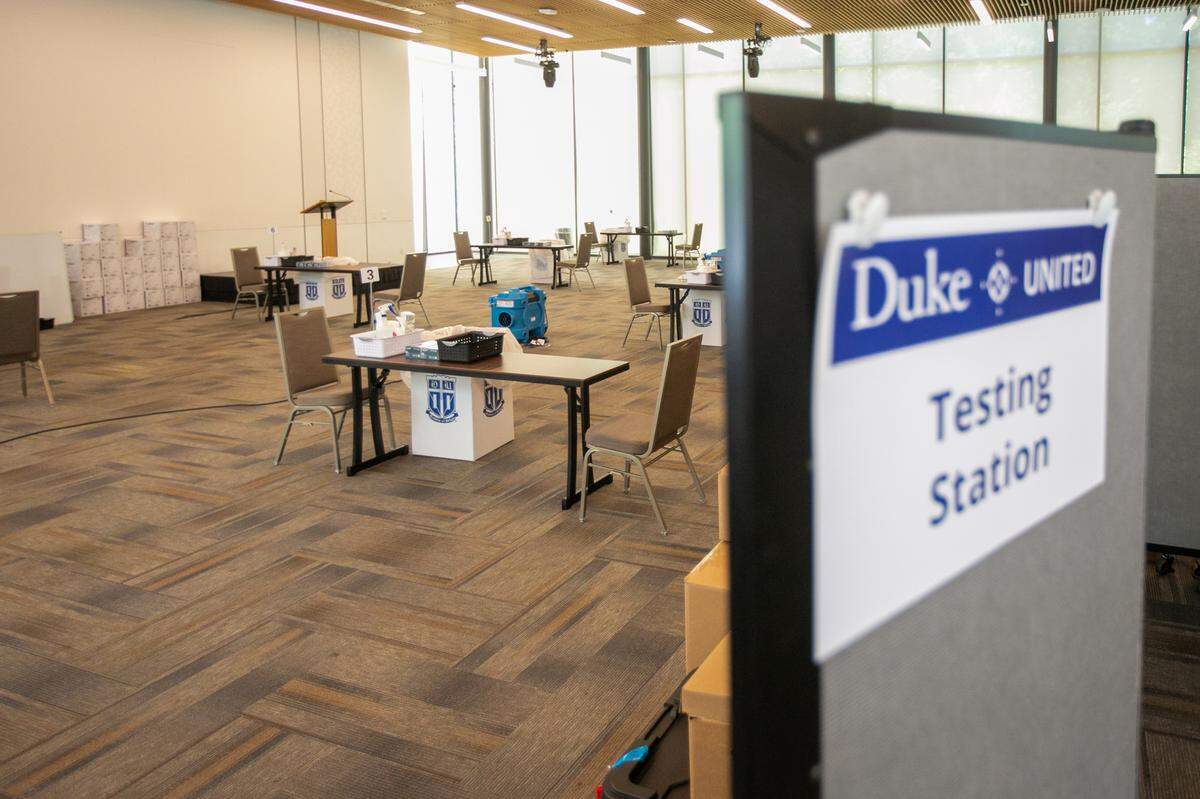
For pool testing, students, faculty and staff go to a testing site on campus and stick a swab up their noses to get a sample.
Gareth Kelleher, a freshman at Duke, said it takes about two minutes to do the test and that the multiple locations on campus are easy to walk to.
“I wouldn’t mind getting tested one or two more times a week just to make sure we’re keeping a better handle on an outbreak,” he said.
Students register the testing kit under your name in an app and “if they don’t call you, you’re good,” Kelleher said.
Duke researchers explained that a sample is combined with four other people’s samples to be tested in a recent video published by the university.
Those five samples are screened in a single test, which allows for more tests while saving time and resources, including supplies. Duke has screened more than 8,000 samples for these and plans to do another 7,000 this week.
If a pooled test comes back positive, each student or individual in that sample will be tested individually. That way Duke can quickly identify who has COVID-19 and isolate the student and provide medical attention, as necessary.
This method helps the university understand where the virus is on campus and how it’s being spread, for example in a particular residence hall or class. That could help identify potential hotspots.
While dozens of Duke’s faculty, researchers and staff are part of this effort, the work is done almost entirely by robots, according to Nicole DeNaeyer, a lab research analyst in the Duke Human Vaccine Institute. In the video, she said this project is enabling students to be on campus this fall.
The automated platform can process up to 120 samples in less than 15 minutes, which means they can easily test the entire student body.
“I want to ensure that they are still able to learn and take part in this Duke experience,” DeNaeyer said in the video. “At the end of the day I’m happy that we can be helping the students and making sure that they’re safe.”
UNC and NC State opt out of mass testing
Unlike Duke, UNC System schools did not conduct mass testing before fall the semester began, even as faculty from several universities petitioned for it. Public health experts briefed the UNC System Board of Governors and consulted with university leaders about the wholesale testing of asymptomatic students, faculty and staff and advised that it wasn’t necessary.
Throughout the summer, UNC-CH health experts said mass testing would not be productive and could create a false sense of security that could lead to further spread of the virus as individuals might stop taking the proper precautions, the News & Observer previously reported.
In June, Orange County Health Director Erica Pettigrew told UNC faculty that testing asymptomatic people was a strategy they considered. But, they determined it was more useful to focus on interventions like wearing face masks, practicing physical distancing and testing people with symptoms, she said.
N.C. State also determined that mass testing students “could not be completed at anywhere near the level to be meaningful, effective or realistic” based on the large campus population, The News & Observer previously reported. However, the university said it is testing asymptomatic students, faculty and staff through surveillance programs, according to NCSU’s COVID-19 dashboard. That surveillance testing includes people identified through contact tracing, NCSU athletes and other asymptomatic students, faculty and staff. The university does not do pool testing that combines respiratory samples from several people.
N.C. State is the largest student body population in the system with more than 36,000 students, and UNC-CH is second with more than 29,000 students. Duke’s student body is about 17,000 students.
“It’s smaller than UNC and N.C. State for sure, but it’s not tiny,” Schoenfeld said.
As a private institution, Duke can also make its own decisions, implement them quickly and pivot quickly, as needed, he said.
When asked about Duke’s fall plans and pooled surveillance testing, Dr. Myron Cohen said in an email that UNC-CH is “watching with great interest what all other universities are doing, especially larger public universities.” Cohen is UNC’s associate vice chancellor for global health and medical affairs and director of UNC’s Institute for Global Health & Infectious Diseases.
“We try hard to discuss every option for every test as we learn of such work around the world,” Cohen wrote.
Changes to campus life
In addition to mass testing, Duke also restricted campus housing to first-year and sophomore students. Other universities had reduced housing capacity this semester, but that was largely due to students canceling their housing contracts.
Duke’s housing is at about 50% of the normal capacity, with students living in residence halls on campus, in two off-campus apartment complexes and at the Washington Duke Hotel. Most students were not assigned roommates.
That decision to reduce the amount of students on campus was not without controversy at the time and will have a significant financial impact, but clearly it was the right thing to do, Schoenfeld said.
About two-thirds of classes are taken remotely at Duke, though every course is offered online, and faculty were given the choice of where and how they wanted to teach this fall.
Students also have to submit a daily check of symptoms on an app.
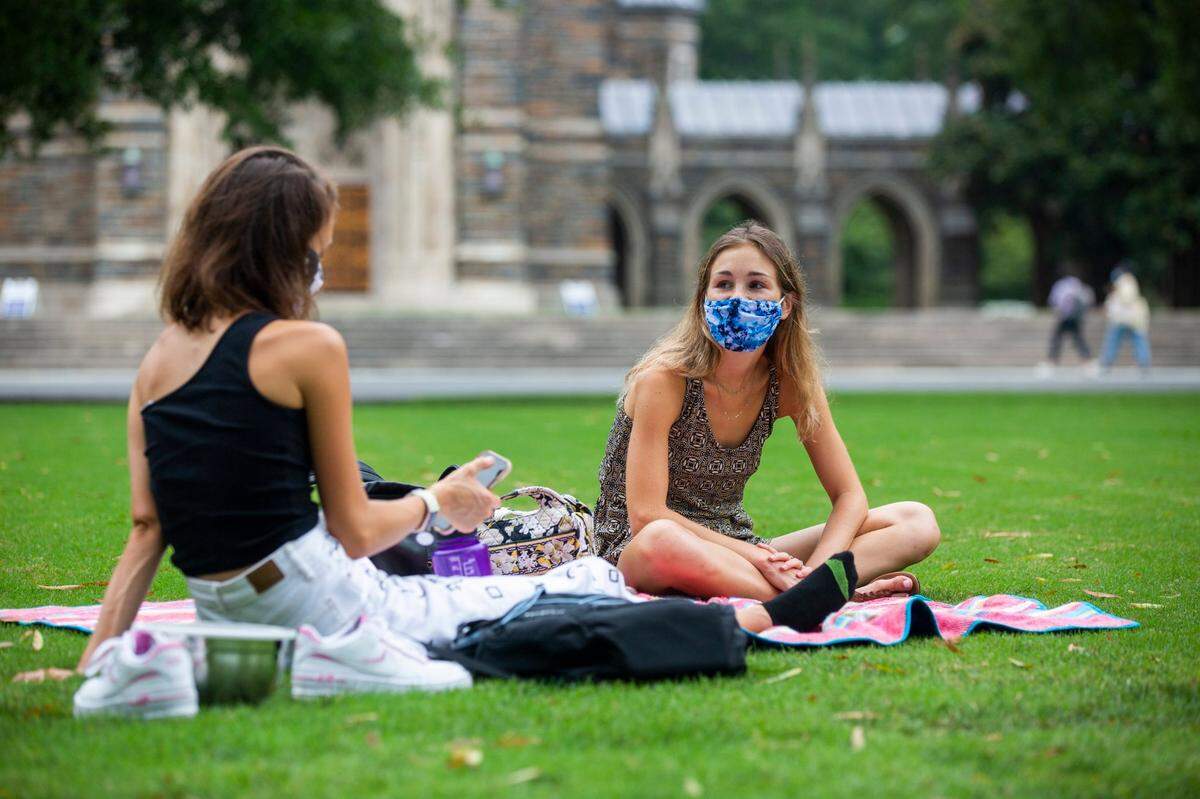
Like other universities, Duke is limiting use of campus facilities and enforcing mask wearing and social distancing.
Schoenfeld said they’ve received reports of violations and taken action when there is misconduct, but generally students have been in compliance with the rules.
“Everyone is wearing a mask out in public and there’s really no talk of big parties,” said Duke freshman Pilar Kelly. “There was at the beginning, but that very quickly got shamed. People look down on others who are flagrantly breaking the rules.”
Students have also received emails from dorm supervisors reprimanding them about reports of too many people hanging out in common rooms.
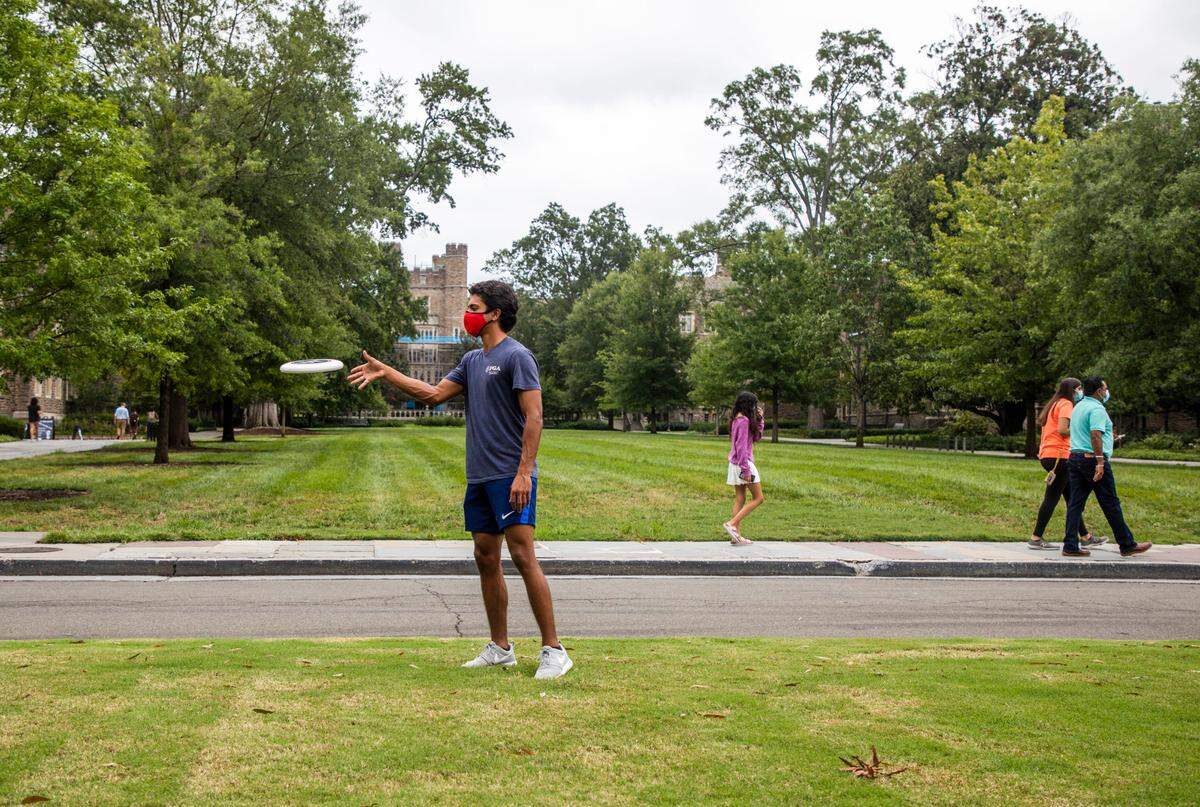
Students are still going out to eat or shop in Durham and hanging out with groups of people who aren’t living in the same dorm as them.
“It’s hard to completely limit all social interactions, especially as freshman,” Kelly said.
But despite the rules, she’s grateful to be on campus. It’s really all she knows.
“It would’ve been disappointing to have my first semester be at home,” Kelly said. “Even if I do end up getting sent home, I have a little taste of setting up my dorm and the exciting parts of college I got to experience.”
Neither Kelly nor Kelleher personally know any students who’ve tested positive for COVID-19 or who have had to quarantine on campus. They don’t expect to be sent home in the next couple of weeks based on how things are going, but they both know it’s possible if students don’t follow the rules.
“It doesn’t take much to start an outbreak,” Kelleher said. “And that can just ruin everyone else’s life and school at Duke.”
This story was originally published September 2, 2020 at 9:00 AM with the headline "Why haven’t COVID-19 cases spiked at Duke University? Mass testing plays a big part.."