Sentenced to death after being convicted by a lie, NC brothers still wait for justice
On the last night she ever knew her sons to be free, Mamie Brown walked into the police station in Red Springs, a small town on the northern edge of Robeson County, searching for her oldest. Soon she could hear him through a door, crying and pleading: “I didn’t do it. I didn’t do it.”
His name was Henry McCollum. He was 19 when he became a suspect in a gruesome crime. His interrogation began around 9:30 p.m. on Sept. 28, 1983, and went past 1:30 a.m. His half brother Leon Brown, then 15, was questioned next. They’re both intellectually disabled, with IQs in the 50s. In 1983 they had the mental capacity of elementary school-age children.
It was dark when the brothers arrived at the police station. By sunrise they were charged with raping and murdering an 11-year-old girl. Investigators insisted the brothers had confessed. What happened in that police station has haunted McCollum and Brown, the ripples reverberating still. In 2014, after almost 31 years in prison, they were exonerated on the basis of DNA evidence.
Now, more than 37 years after walking into the Red Springs Police Department, McCollum and Brown are revisiting that night. It’s a focus of a federal civil rights lawsuit that has wound its way through courts since 2015. The brothers’ legal team argues that investigators coerced McCollum and Brown’s confessions, suppressed and fabricated evidence, investigated the crime in bad faith and violated the brothers’ due process rights.
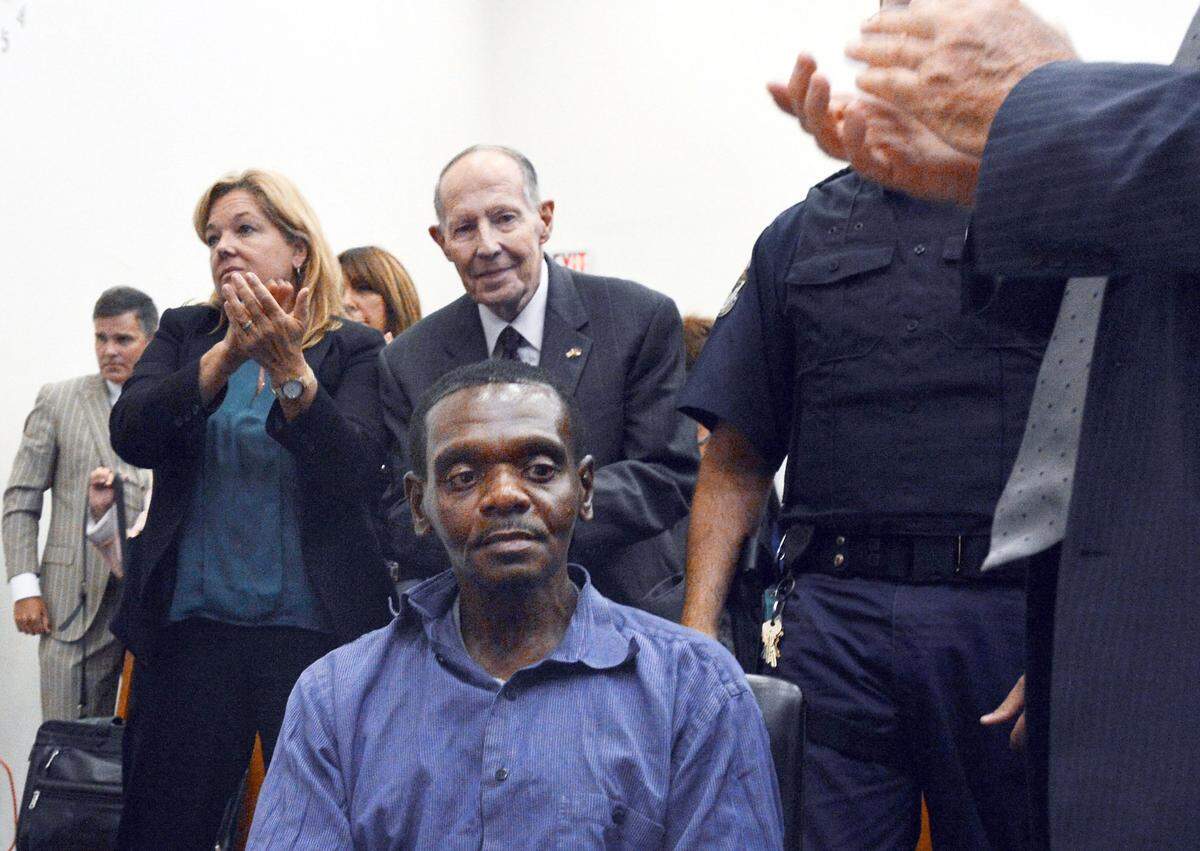
The town of Red Springs, whose police department was part of the original suit, settled years ago. Others refuse. Four former law enforcement officers have been named as defendants: Joel Locklear and Kenneth Sealey of the Robeson County Sheriff’s Office and Leroy Allen and Kenneth Snead from the State Bureau of Investigation.
To varying degrees, they all played a role in the brothers’ confessions. The brothers claim they felt threatened by all of them, as if the officers alone held the authority to execute them if they didn’t cooperate.
In the past five years, Locklear and Snead have died. Allen and Sealey, who retired in 2018 after decades as the Robeson County Sheriff, have grown firmer in their denial. Lawyers for the officers have long argued their clients should be protected by qualified immunity. The state attorney general’s office, in defending the former SBI agents, once argued against a governor’s pardon that cleared McCollum and Brown.
A trial was set to go before a jury last year, before the pandemic forced an indefinite delay. Though it remains unscheduled, the trial is expected to begin this year in the U.S. District Court for the Eastern District of North Carolina. When it starts, it will transpire against the backdrop of an ongoing national reckoning surrounding police treatment of Black people — one that inspired nationwide protests and marches last summer following the death of George Floyd.
Floyd’s death last May in Minneapolis, after a white police officer knelt on his neck for almost nine minutes, played out in public, a witness providing footage that brought to life the agony and outrage of Floyd’s final moments. In 1983, McCollum and Brown’s defining encounter with police happened in the privacy of walls and a closed door, McCollum’s cries providing his fearful mother a foreboding vision of what was to come.
McCollum and Brown were sentenced to death on the basis of a police narrative that crumbled under the weight of facts and time. Their ongoing civil case has reinforced one truth: Those who’ve faced miscarried justice by police face a punishing road to hold investigators to account.
From Red Springs to death row
Back on Sept. 28, 1983, Henry McCollum had been at the police station for about two hours when his mother arrived around 11 p.m. Mamie Brown testified that she’d grown worried “because they had told me that they were going to bring Henry right back. They just wanted to take him for questioning.”
Days earlier, after sundown, a girl had disappeared in Red Springs. Her parents and others canvassed the streets. Her name was Sabrina Buie. She was 11 and tall, with short hair and a talent for Pac-Man at the neighborhood arcade. People who knew her said she was always hanging around that arcade, attached to the back of a small convenience store.
Buie’s body was found a short walk from the store, in the underbrush of a soybean field beside a two-lane country road. She was naked. She’d been raped. She’d died slowly after her panties had been pushed down her throat with a stick. The local police and Robeson County Sheriff’s Office requested help from the SBI.

Soon an 11th grade girl named Ethel Furmage told investigators of a rumor: that she heard McCollum, whose nickname was Buddy, was in on the crime. Speculation abounded. Less than a week later, Furmage recanted, telling investigators that “she had not received any information” that McCollum was really involved.
Still, “she suspected that he was involved,” SBI agent Kenneth Snead wrote in one report, referencing the kind of odd behavior that could’ve been attributable to McCollum’s intellectual disability. Snead wrote that Furmage thought McCollum was “crazy,” how she said “he just doesn’t act right,” how she “noticed in the past that he stares at people, mostly women.”
By the time Furmage told the SBI she had no real information about McCollum, he had become a suspect solely on the basis of the original rumor. That led investigators to Mamie Brown’s house off of Malpass Avenue, where McCollum was staying.
They asked if he’d come to the Red Springs Police Department. When his mother went to check on him later, she brought along McCollum’s half brother, Leon Brown, who was 15 and even more intellectually challenged.
Inside the station, Mamie testified later at her sons’ trial, she heard the interrogator’s accusations of murder booming through the closed door: “Didn’t you kill Sabrina Buie?” Mamie Brown attempted to open the door but it was locked.
She said an officer threatened her with arrest if she didn’t sit in a waiting area. She heard her son cry out, proclaiming innocence. And that’s “when I ran outside,” Mamie Brown said, according to a court transcript.
“I was out in the street crying,” she said, “and I was asking God to help me.”
It was then, she said, that police took her youngest into custody.
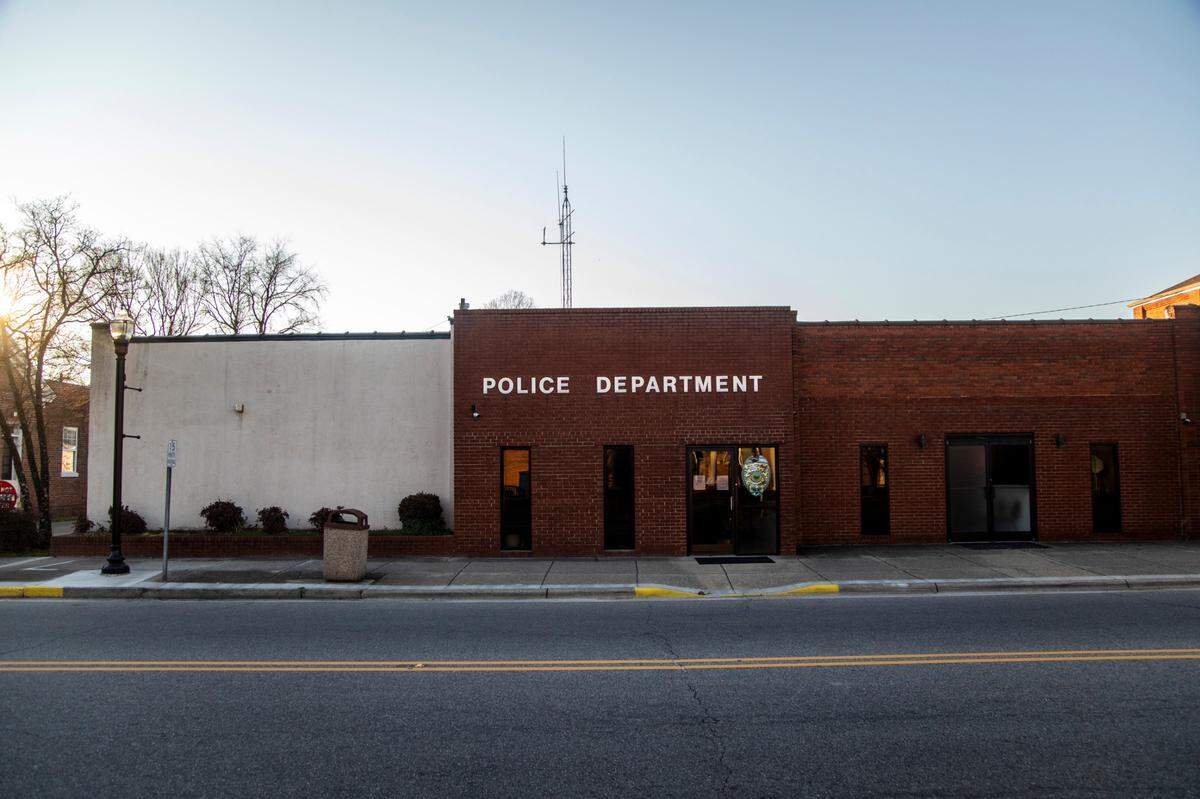
Her sons were interrogated for hours, without legal representation and without their mother at their side. They both signed documents they later said they did not understand. Leon Brown’s signature was his name printed out in the labored, deliberate handwriting of a child still learning to write.
Among the documents were confessions that investigators prepared. McCollum and Brown were charged on the basis of those confessions. They were convicted twice on the basis of those confessions, the second time at separate retrials in the early 1990s. They served 30 years and 11 months in prison on the basis of those confessions. McCollum served almost all of it on death row, where he became North Carolina’s longest-serving death row inmate. Brown was on death row for at least three years.
The brothers became poster children, almost literally, for death penalty advocates. Former Supreme Court Justice Antonin Scalia in 1994 once cited the McCollum/Brown case to argue in favor of the constitutionality of the death penalty. It was more humane, Scalia wrote, than how Buie had died.
In 2010, McCollum’s prison mugshot appeared on a flier the North Carolina Republican Party mailed to voters. The ad attacked Democrats who’d supported a measure to allow death row inmates the chance to present evidence that their convictions were tainted by racial bias. It suggested that if voters supported Democrats a flood of death row inmates would be let loose.
“Meet your new neighbors,” the ad said on the front, with McCollum’s picture on the back. Next to it was a menacing description, some of the type in red capital letters: “Get to know Henry McCollum. He RAPED AND MURDERED AN 11 YEAR OLD CHILD.”
For 31 years, McCollum and Brown never stopped insisting upon their innocence.
In 2014, Sharon Stellato, an associate director at the North Carolina Innocence Inquiry Commission, received DNA test results of a piece of evidence discovered where Buie had been killed. For years the state innocence commission had investigated the McCollum/Brown case.
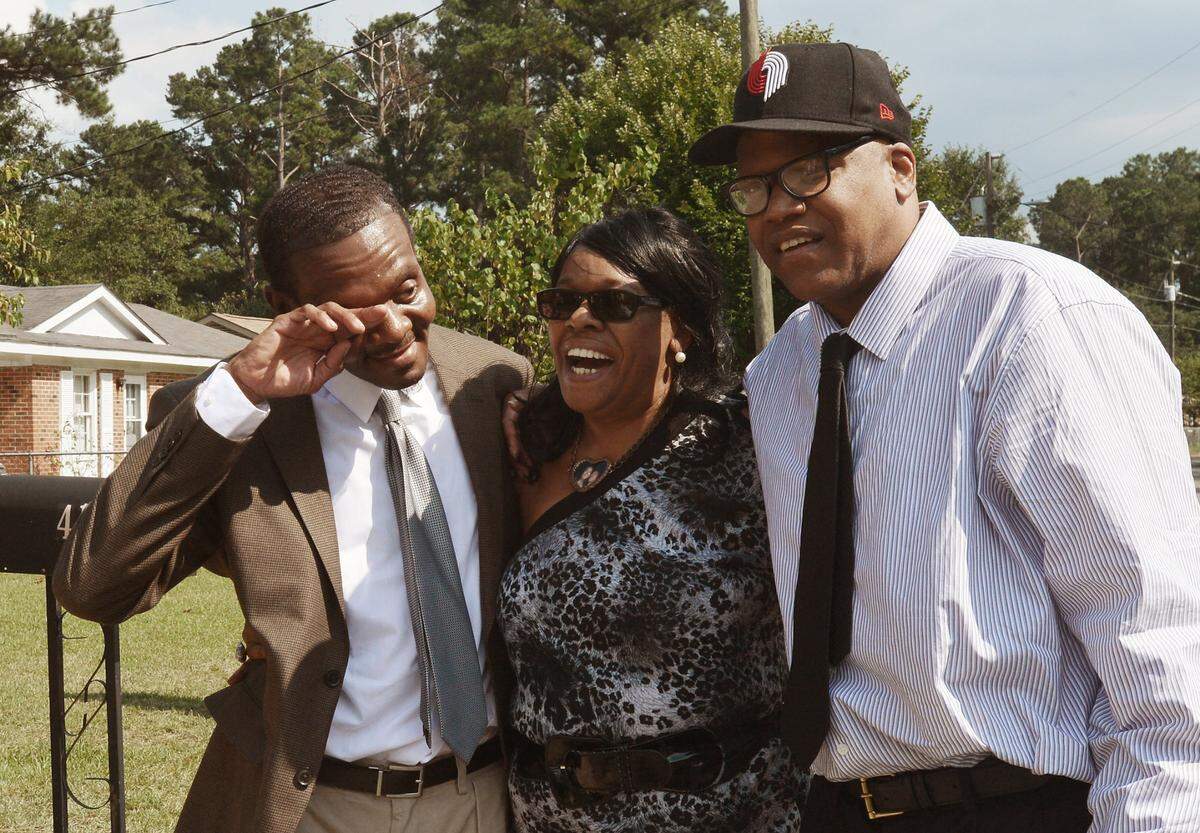
Stellato called McCollum and Brown’s sister, Geraldine Brown Ransom, with the news: her brothers were going to be cleared. During that conversation, Ransom recalled in a deposition in her brothers’ civil case, Stellato told Ransom that she and her mom were going to “jump to the sky” upon McCollum and Brown’s release.
But Mamie Brown had died in June 2013. She’d died believing her two sons would die in prison. She didn’t live long enough to see them become free men.
Exonerated, but not free
In September 2014, Robeson County Superior Court vacated McCollum and Brown’s convictions, dismissed their charges and ordered their release from prison. A judge made the ruling after hearing testimony detailing the inconsistencies with the brothers’ confessions and the revelation of the new DNA evidence.
Johnson Britt, then the Robeson County District Attorney, supported the court’s decision. Ten months later, then-North Carolina Gov. Pat McCrory issued full pardons of innocence.
But what they experienced during their incarcerations did not stay within those prison walls. It followed them out.
McCollum lived for three decades where men are sent to die. He received few visitors, family or otherwise, said Kenneth Rose, an attorney who worked on McCollum’s case for 20 years. Rose was perhaps the visitor who most often saw McCollum.
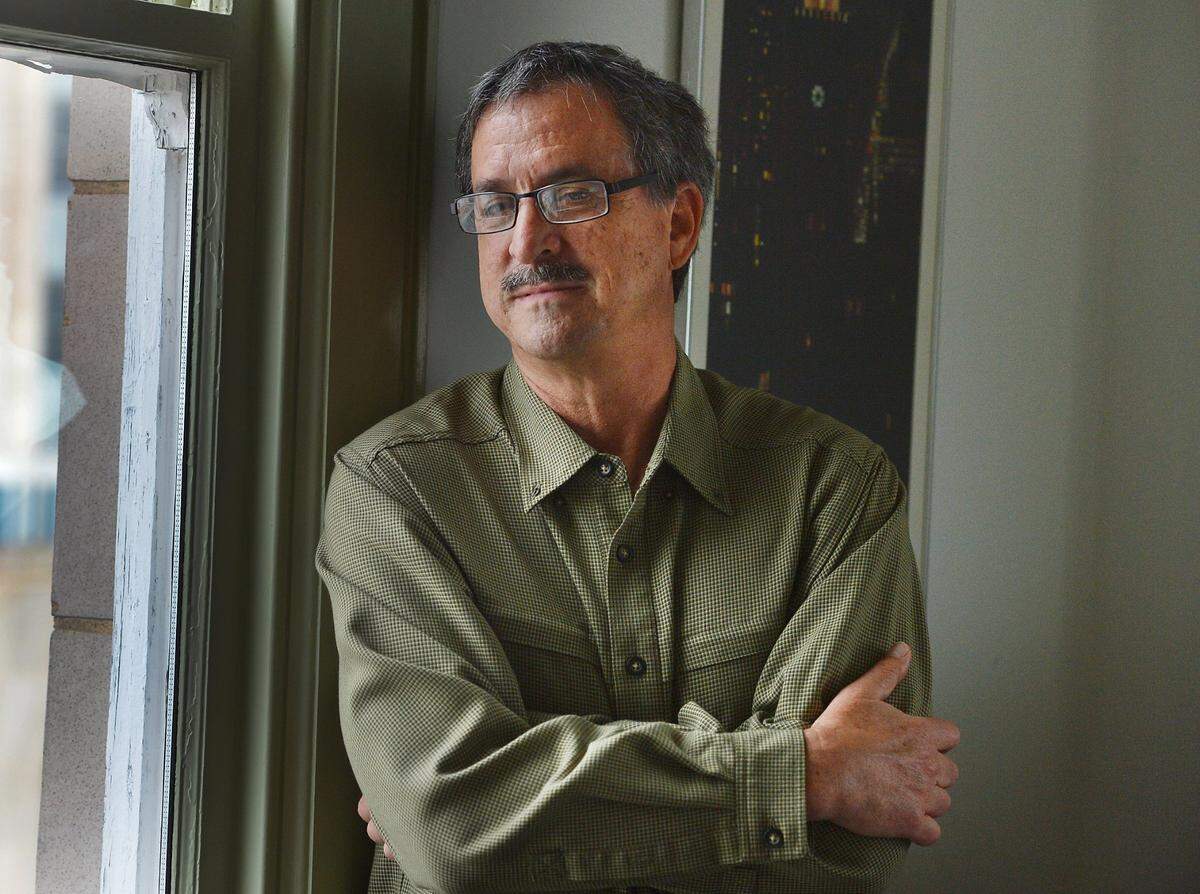
“Every time I went to see him, Henry would talk about his innocence, and he’d say, ‘I don’t belong here, when am I going to get out?’” said Rose, who played a leading role at the Center for Death Penalty Litigation in Durham from 1996 through 2017. “He fully expected to get out any time. He did not understand how they could keep an innocent person in prison.
“He was at times just incredibly distraught and would cry when I saw him.”
Rose and McCollum’s visits played out at Central Prison with the men separated by a thick screen. Rose can still see the diamond pattern of the wire mesh, McCollum on the other side.
Some of the other inmates took advantage of McCollum, Rose said, because “they knew him as an easy mark.” They’d have McCollum hide their homemade alcohol in his cell, or take the fall for other schemes. Others on death row “became in some ways his family,” Rose said.
North Carolina hasn’t executed a prisoner in 14 years. But between McCollum’s sentencing in 1984 and 2006, the state executed 41 men. McCollum never grew used to the routine of it, to seeing people he knew, some of them the only friends he had, led off to die.
“The prison was fearful that he would commit suicide,” Rose said, and so the staff “would take away everything he had that could potentially be a device to kill himself, and isolated him during executions.”
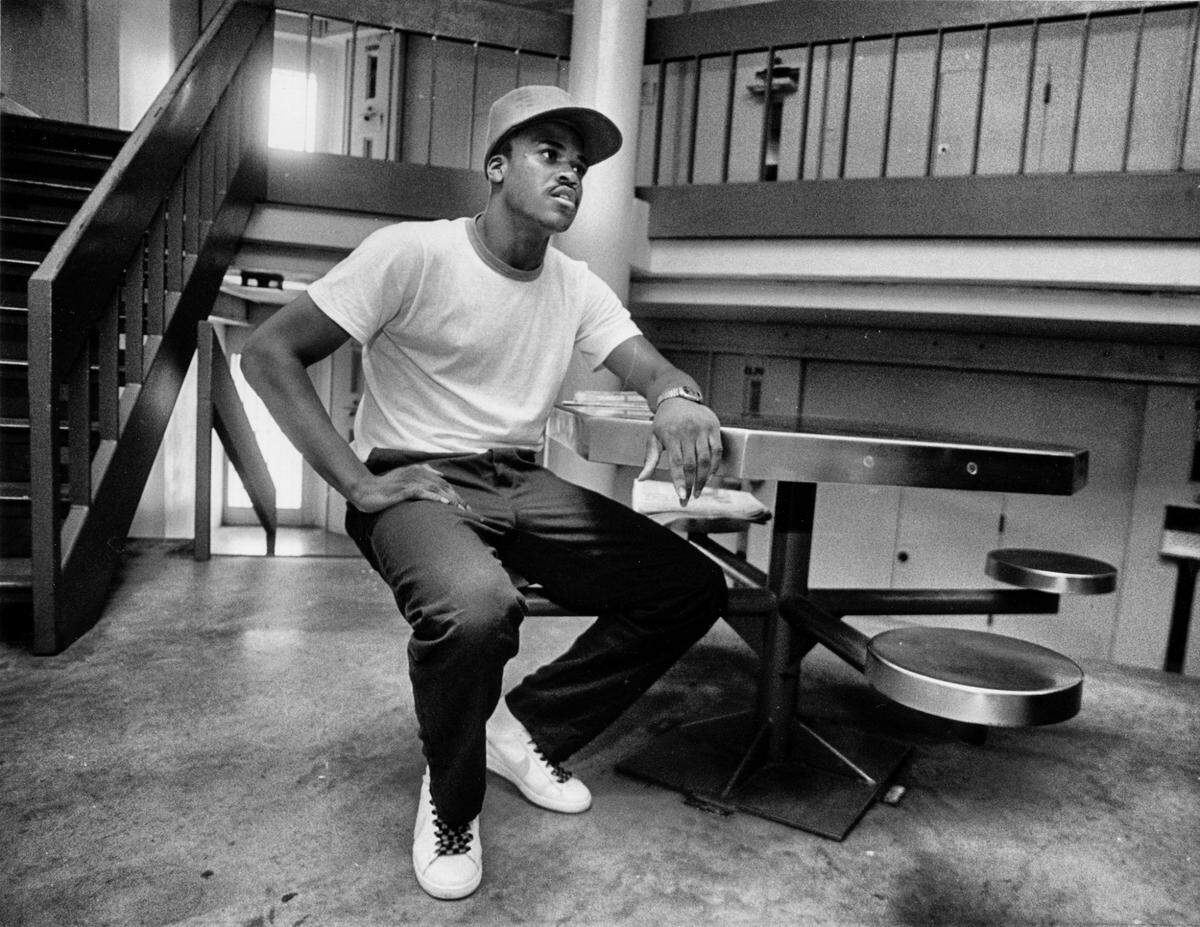
Brown, meanwhile, was not yet an adult when he entered prison in 1984. He finished growing up there and spent most of his years in the general population, his fellow inmates believing that he’d molested and killed a child. Once, his sister said in her 2017 deposition, Leon Brown “began telling me what happened to him in prison, and ...”
She didn’t continue the thought. When McCollum and Brown were released from prison in 2014, it became national news. Television cameras were there to capture the moment when the men walked out of the prison gates. There were cries of “thank you, Jesus” when they stepped into the embrace of their waiting supporters.
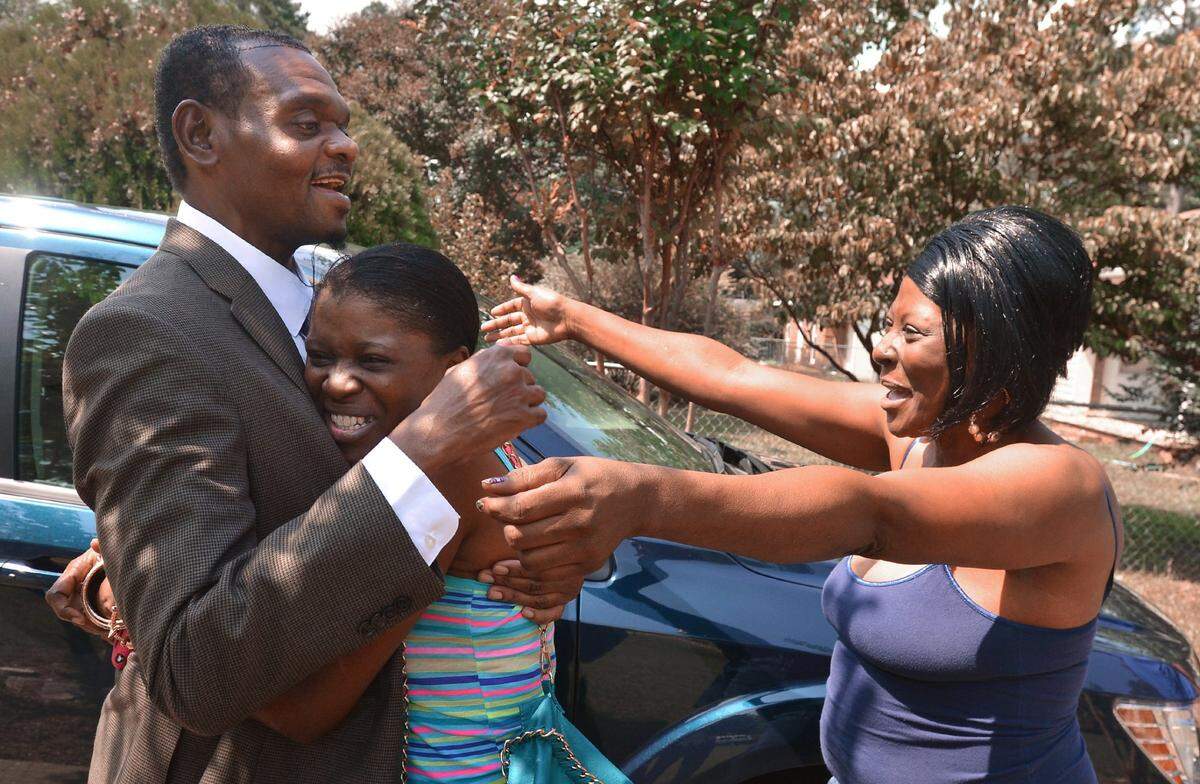
“I fought this battle with the help of God,” Brown said then. “I’m here today.”
“They took 30 years away from me for no reason,” McCollum said then. “But I don’t hate them.”
They faced a long road to rejoin society. The day of their release, a CBS News camera showed McCollum laboring to buckle a seat belt. In time, he could mostly live on his own. Brown has required more care.
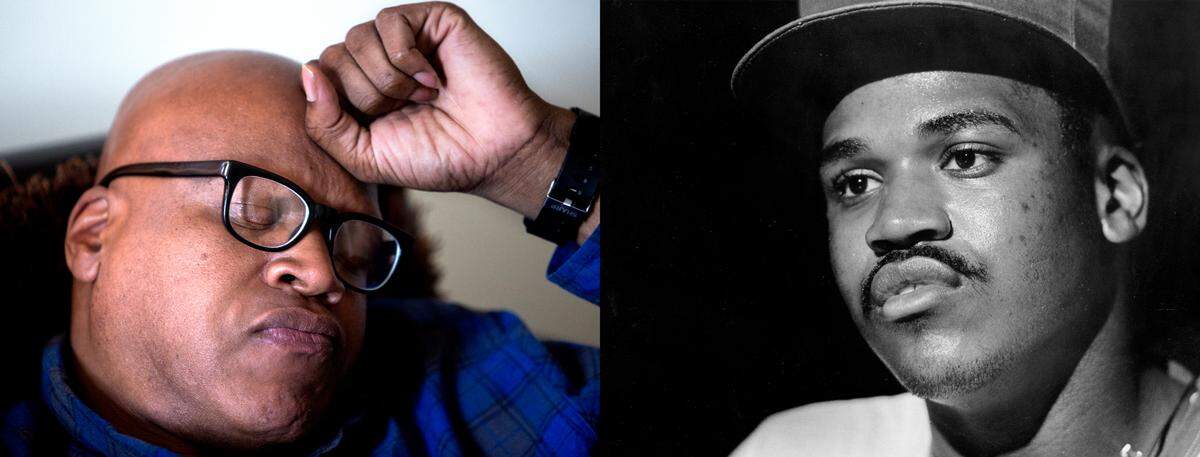
For a while, he lived with his sister, Geraldine Brown Ransom, in Fayetteville. She became his guardian, and acknowledged in her deposition that she was unprepared for the responsibility. In the first three years after Brown’s release, he required hospitalization for mental health treatment “about 20 times,” his sister said.
At times, Geraldine said, “Leon was running away from home and saying God told him not to take his medication.” Once, she found Brown walking into oncoming traffic, she testified.
“He was sicker than I thought,” she said. “He’s very, very, very, very sick.
“It’s whatever his mind says, that’s it. But he’s not violent at all.”
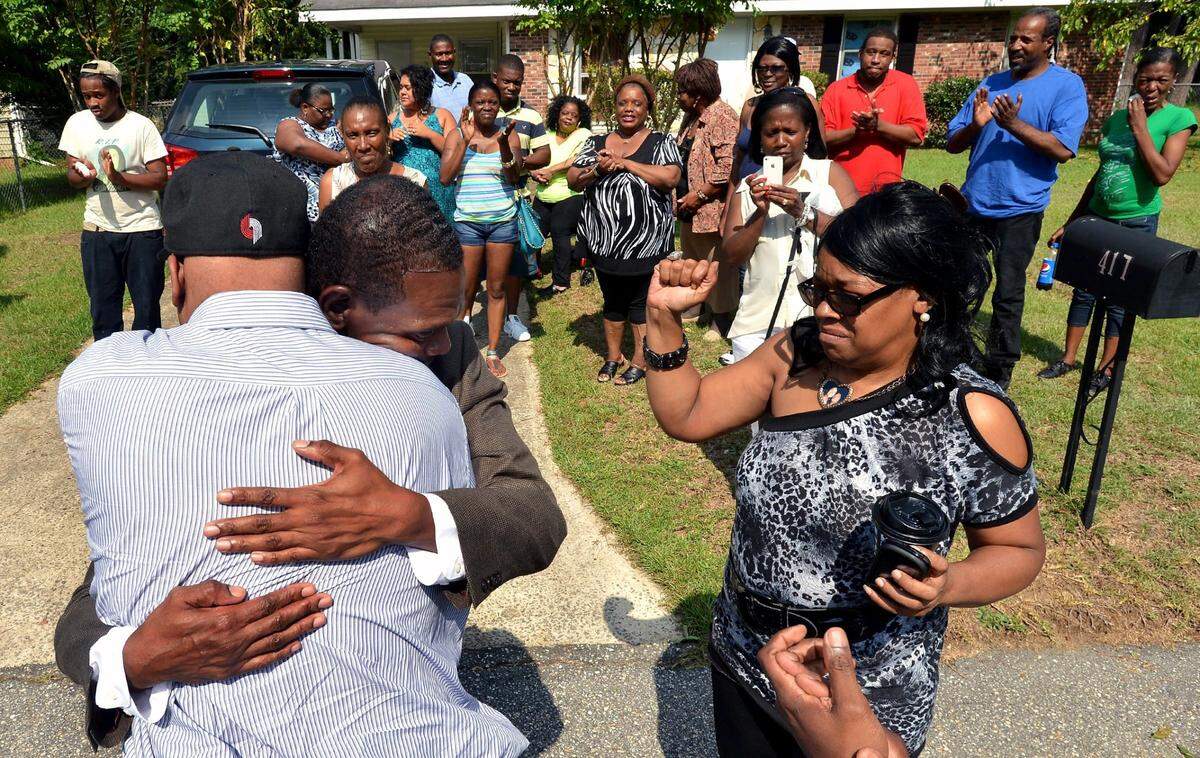
Victimized once more
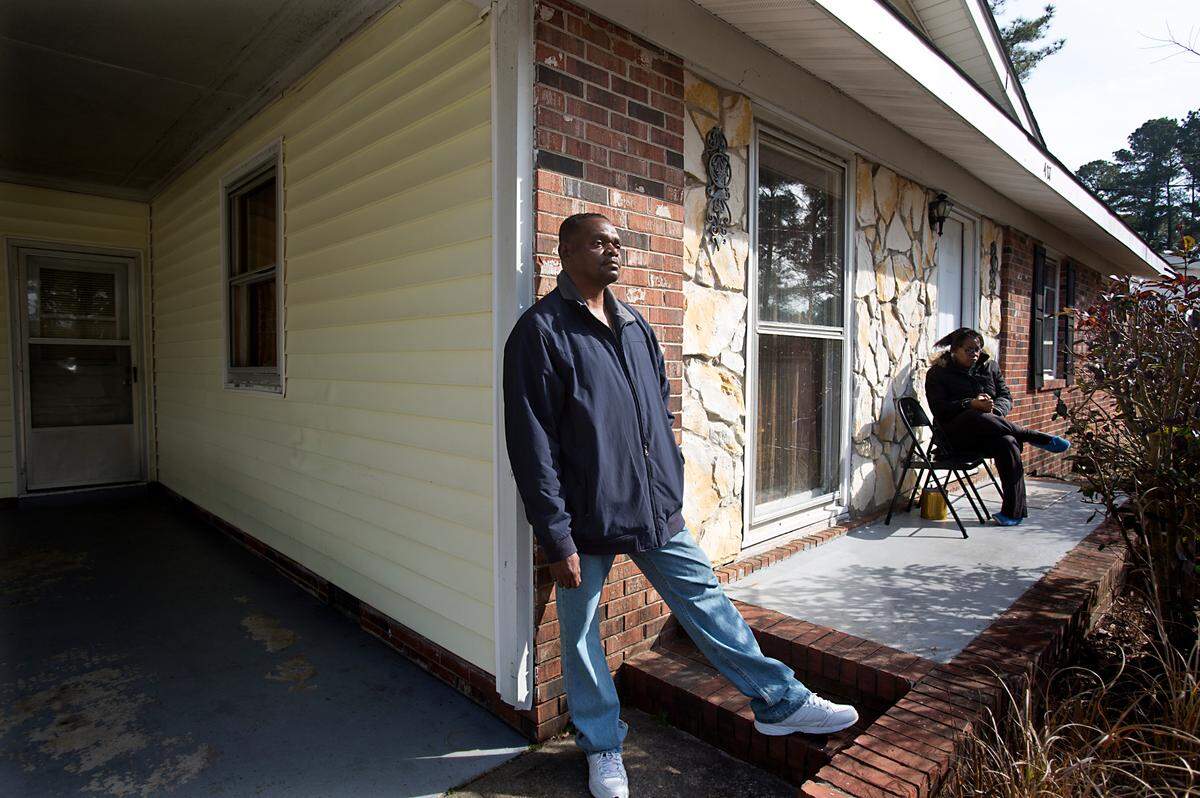
McCollum is 56 now, Brown 53. They both require court-appointed legal guardians to manage their finances and other aspects of their lives. McCollum lives in a small town just across the Virginia line. Brown, who has been in and out of group homes and psychiatric facilities, lives not far from where his life unraveled 37 years ago.
In the six years since their release, opportunists have tried, and succeeded at times, in taking advantage of them.
Not long after their exonerations, McCollum and Brown, along with Geraldine, entered into an agreement with two women later described in court filings as “non-lawyer ‘consultant advisors.’” The women, Kim Weekes and Deborah Pointer, had told Geraldine that they could help McCollum and Brown with “the pardon process,” according to a North Carolina State Bar complaint. The women referred McCollum and Brown to an Orlando-based attorney named Patrick Megaro, who in February 2015 began representing the brothers.
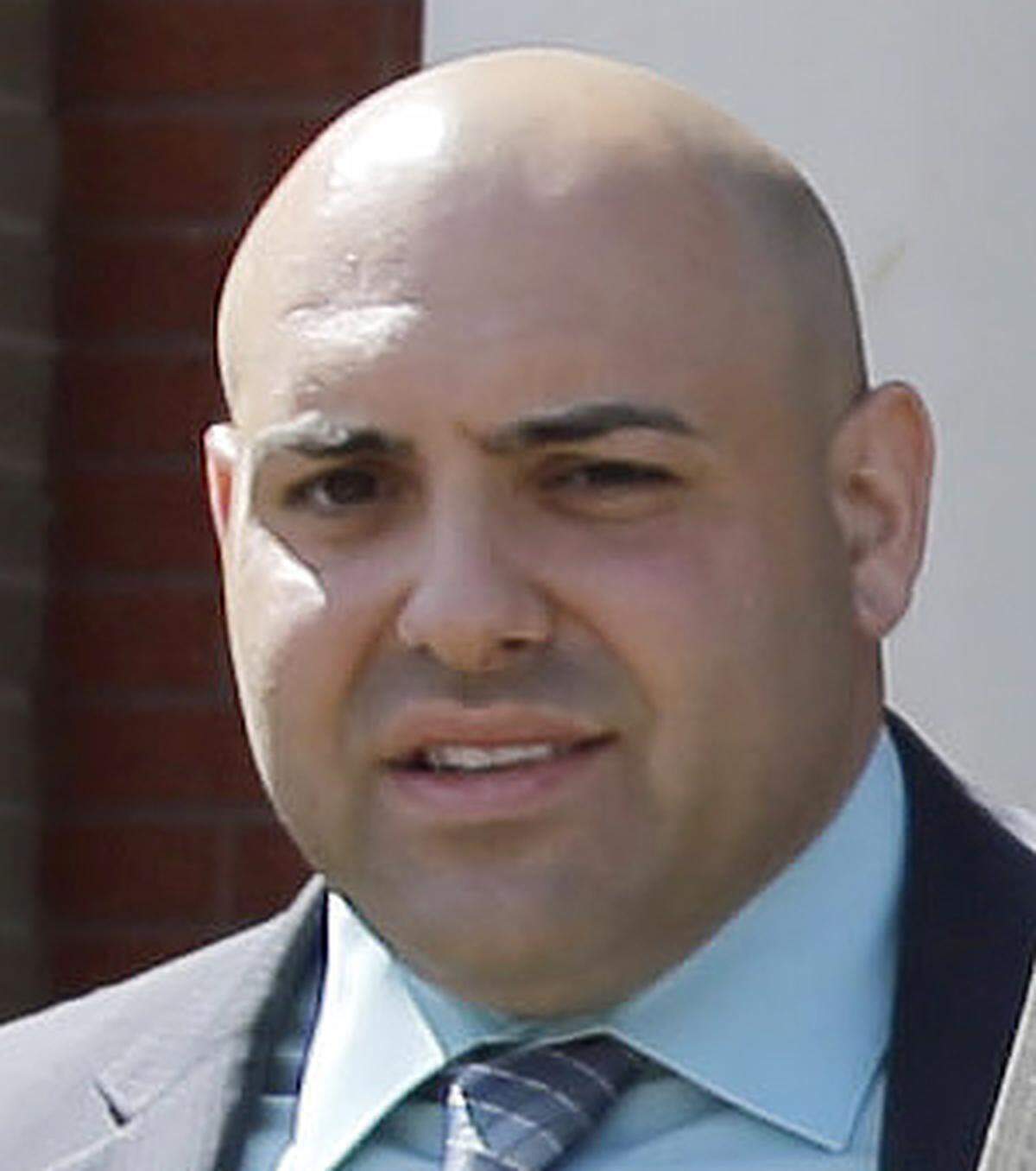
At the time, they were months away from receiving their full pardons of innocence, which came with payments of $750,000 each for their wrongful imprisonment. In October 2015, the state sent Megaro a check for $1.5 million, to be divided between McCollum and Brown. Megaro kept $500,000 of it for himself, according to a State Bar complaint.
An April 2018 story by The Marshall Project, which appeared in The New York Times, detailed McCollum and Brown’s financial plight, much of it due to high-interest loans orchestrated by Megaro, and how people they trusted had taken advantage of them. “Sometimes I feel like I shouldn’t be out here,” McCollum told Joe Neff, a Marshall Project reporter who’d spent years covering the McCollum/Brown case for The News & Observer.
Megaro had brought another lawyer into the case, which to outsiders may have appeared ripe for profit. The other lawyer’s name was Scott Brettschneider. He was from New York and, in time, he came to be known in New York City tabloids as “Mighty Whitey” for his alleged role in multiple fraud schemes involving inmates.
In May 2018, a district judge ordered Megaro off the case. He faces a long list of complaints from the N.C. State Bar, which alleges, among other things, that Megaro charged excessive fees, embezzled from the brothers and “failed to represent McCollum and Brown with competence or diligence.”
The Bar scheduled a disciplinary hearing for Megaro for the week of March 15.
Before he was removed from the case, Megaro submitted to the court an email from McCollum. He and his brother had been exploited, according to court filings, and had lost hundreds of thousands of dollars to Megaro. Even so, McCollum offered his support for his soon-to-be banned lawyer.
One line in McCollum’s email stood out: “Trust is seriously a issue in my life.”
The problems with the confessions
From the beginning, McCollum and Brown’s statements, which served as their confessions, were problematic. They were not consistent with one another, for one. They also implicated others who proved they had alibis, and who were never charged.
McCollum’s statement was the more detailed — five pages written out by Snead, the SBI agent, and signed by McCollum at 1:37 a.m. on Sept. 29, 1983. Despite McCollum’s intellectual disability, described as “severe” in the civil case record, his statement provided a vivid accounting of the night of Buie’s murder.
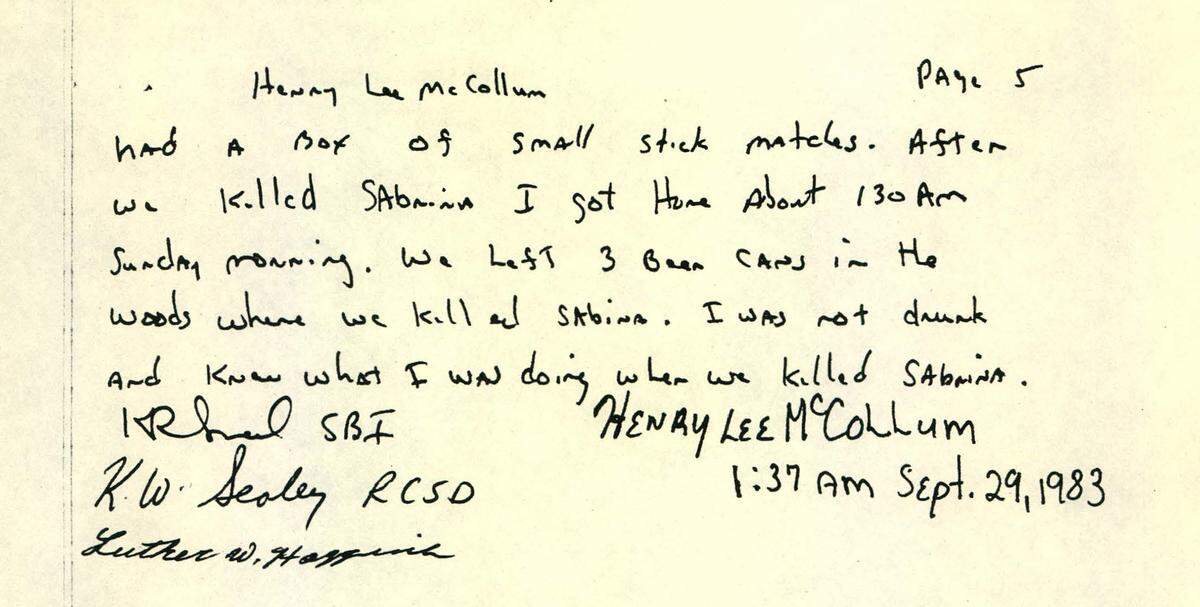
It referenced details only someone who’d seen the crime scene could have known: the size of a wooden board found near where Buie had been killed; the brand of the empty beer cans found nearby; the kind of cigarettes that those involved in Buie’s death would’ve been smoking.
McCollum’s statement also implicated three other neighborhood teens, and described how two of them had taken turns raping Buie. The statement used damning, direct language — “all five of us boys tried to get Sabrina to give us some (expletive),” it said — and it described in detail the clothes the other teens were wearing.
Nobody else was ever charged, though, aside from McCollum and Brown. Two of the other teens McCollum’s statement implicated had alibis; one was living out of state at the time. McCollum’s statement also claimed one of the others stabbed Buie, though she didn’t have any knife wounds. McCollum and Brown’s statements differed as to where they encountered Buie; what happened; how her body was moved; and the evidence at the scene.
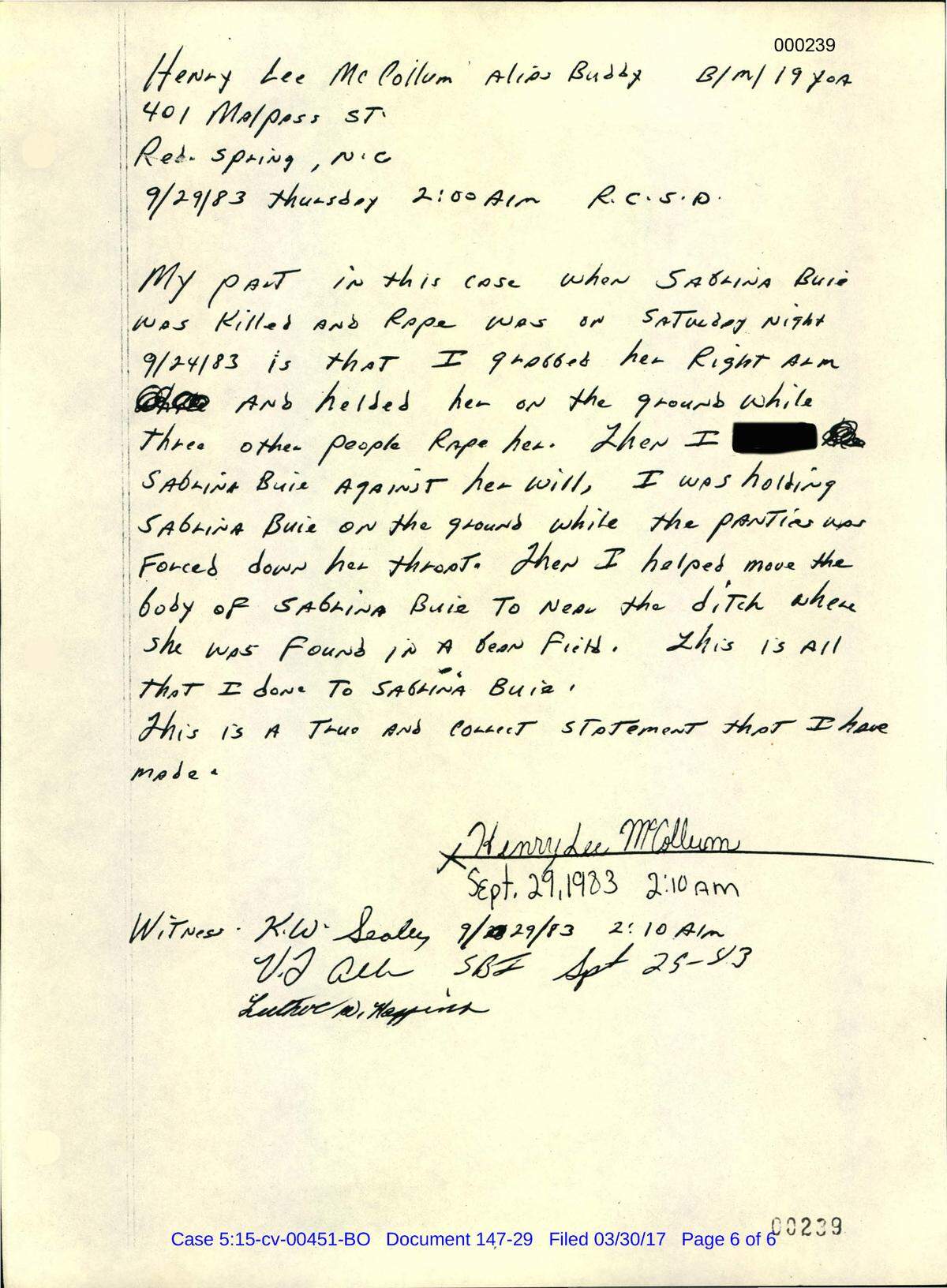
After his first statement, McCollum signed a second, shorter statement, this one written by Robeson County Sheriff’s Office Deputy Kenneth Sealey, at 2:10 a.m. That one said he’d raped Buie, then held one of her arms down while others raped and killed her.
Investigators began questioning Brown at 2:24 a.m. A Sheriff’s deputy named Joel Locklear wrote the statement that Brown signed, admitting his involvement. After it was done, Locklear testified in the brothers’ 1984 trial, “I was going to read it back to him, and I wanted him to read it. He told me, ‘I don’t read too good.’”
At their trial, both brothers testified and were asked why they signed statements they soon rejected. They said they didn’t understand what they signed, that they were threatened and tricked into signing them, and told they could go home if they did. McCollum said investigators were “hollering, cursing, calling me a Black (n-word), calling me all kind of names.”
“They said, ‘Now, tell the truth,’” McCollum said. “‘Didn’t you kill that girl?’ I said, ‘No, sir. I don’t know what you’re talking about.’ They kept hollering at me. Had me upset and I was plumb scared to death, because I ain’t never been in trouble in my life.”
When Brown was asked why he’d signed his confession he answered: “They told me what was they were going to do with me and all that. They told me I was going to the gas chamber if I didn’t do like they told me. I kept telling I didn’t kill the girl. They still say, ‘You got to do like we tell you.’”
The man next to the field
In April of 1983, a man with a long criminal record, including a history of violence against women, was on the run. He was recovering from a stabbing while working on the railroad near Charlotte, he told investigators many years later, when he decided to live with his sister in Red Springs. His name was Roscoe Artis.
Artis, then 41, had been in and out of prison since his teens. He was first convicted of a crime in 1957, assault on a female with intent to commit rape. Similar charges followed in 1967, 1970, 1974 and 1981. He also had a history of alcohol-related offenses.
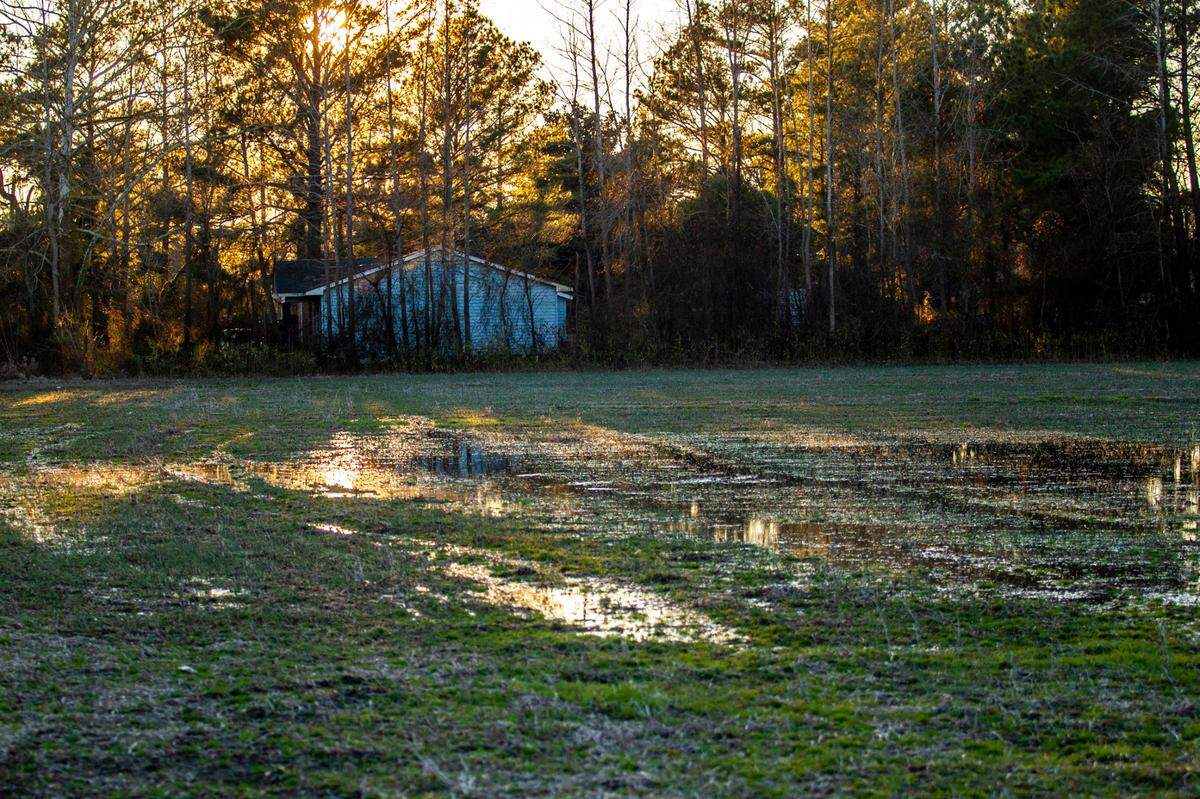
In Red Springs, Artis moved into a little blue house off a country road, next to a soybean field. Five months after he arrived, Sabrina Buie went missing. Her body was found in that field, fewer than 100 yards away from where Artis lived.
About a month after Buie’s death, Joann Brockman’s body was discovered about a mile away. Like Buie, Brockman had been raped and murdered. She was 18.
Artis was arrested and charged in Brockman’s death. He stood trial in August 1984 — two months before McCollum and Brown were tried for Buie’s murder. A jury convicted Artis and sentenced him to death.
While awaiting trial, Artis and McCollum became friends in jail. They’d known each other in the neighborhood, and they’d played basketball together. McCollum looked up to him.
Some of the same law enforcement officers investigated both the Buie murder and Brockman murder. Artis’ court-appointed attorney, Earl Strickland, also represented McCollum. The same district attorney, Joe Freeman Britt, a fiery man known for his courtroom theatrics and once lauded for the number of death row convictions he secured, prosecuted both cases.
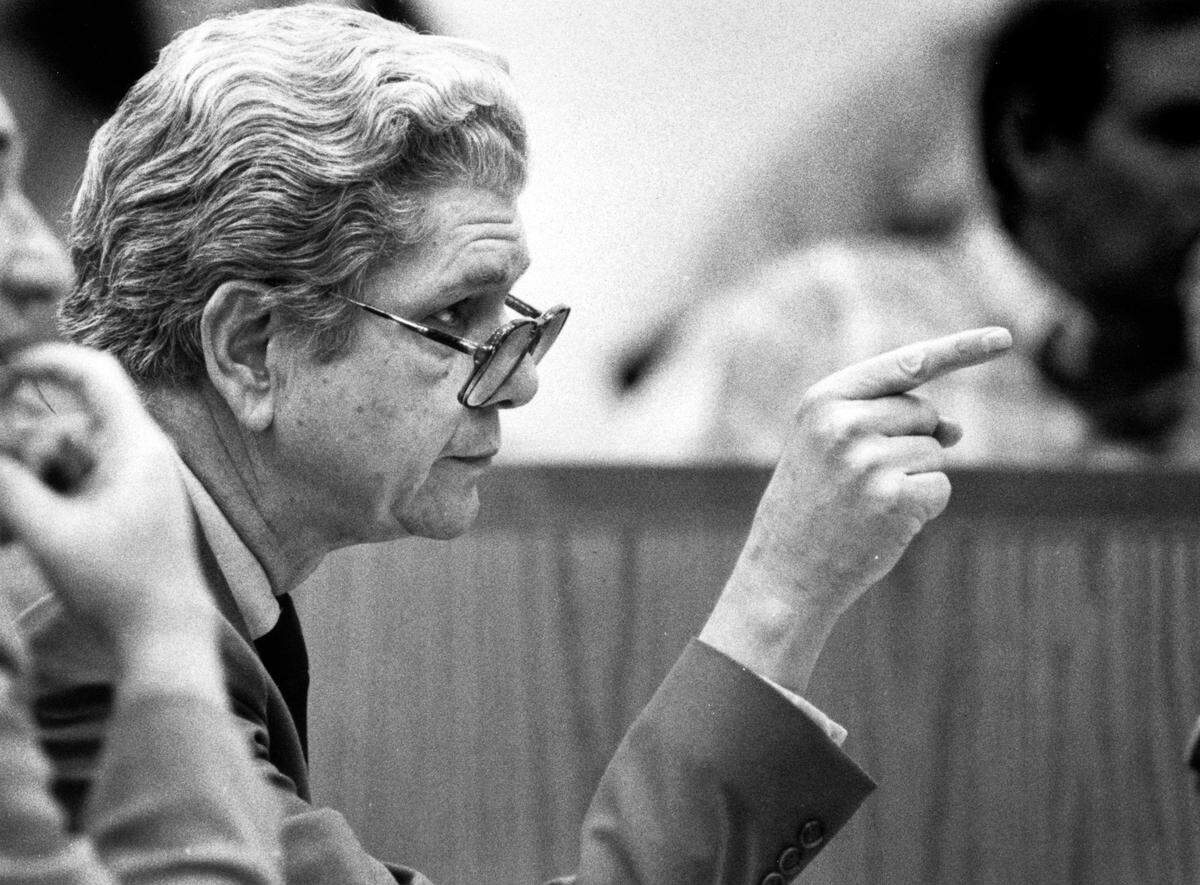
And yet despite all of those connections, no one in authority spent much time pursuing Artis as a suspect in the Buie murder. The only sign that anyone ever considered Artis at all emerged in October 1984, days before the start of McCollum and Brown’s trial and after Artis had been convicted in Brockman’s death. Someone submitted a request for the SBI lab to analyze Artis’ fingerprints and compare them to evidence from the Buie crime scene.
But on Oct. 5, the request was canceled. There is no explanation in the record as to why. The brothers’ trial began three days later.
McCollum and Brown might well still be in prison if not for a cigarette butt found at the site of Buie’s murder. The butt was what remained of a Newport brand cigarette. For more than 20 years it sat in a file somewhere, keeping a secret that time and technology slowly began to reveal.
In 2005, the Center for Death Penalty Litigation had the butt tested for the first time for DNA. McCollum was excluded as a match. Brown was later excluded, too. The North Carolina Innocence Commission began having it tested in 2011. DNA science continued to improve. In 2014, the state crime lab uploaded the DNA profile from the butt and ran it through a database.
There was a match.
Johnson Britt, then the Robeson County District Attorney and of no relation to his predecessor Joe Freeman Britt, was in his office when he received word of it. He wasn’t far from where the brothers had been convicted and sentenced to die three decades earlier.
“I was sitting at my desk,” Britt recalled during a recent interview, “and said, ‘Oh, shit.’”
The DNA matched the profile for Roscoe Artis.
Artis, who lived next to the Buie crime scene.
Artis, who murdered a woman a month after Buie’s death.
“I’m like, ‘Oh my God,’” Britt said. “The same scenario, a mile apart. And I’m like, ‘Why didn’t somebody figure this thing out?’”
The long pursuit of justice
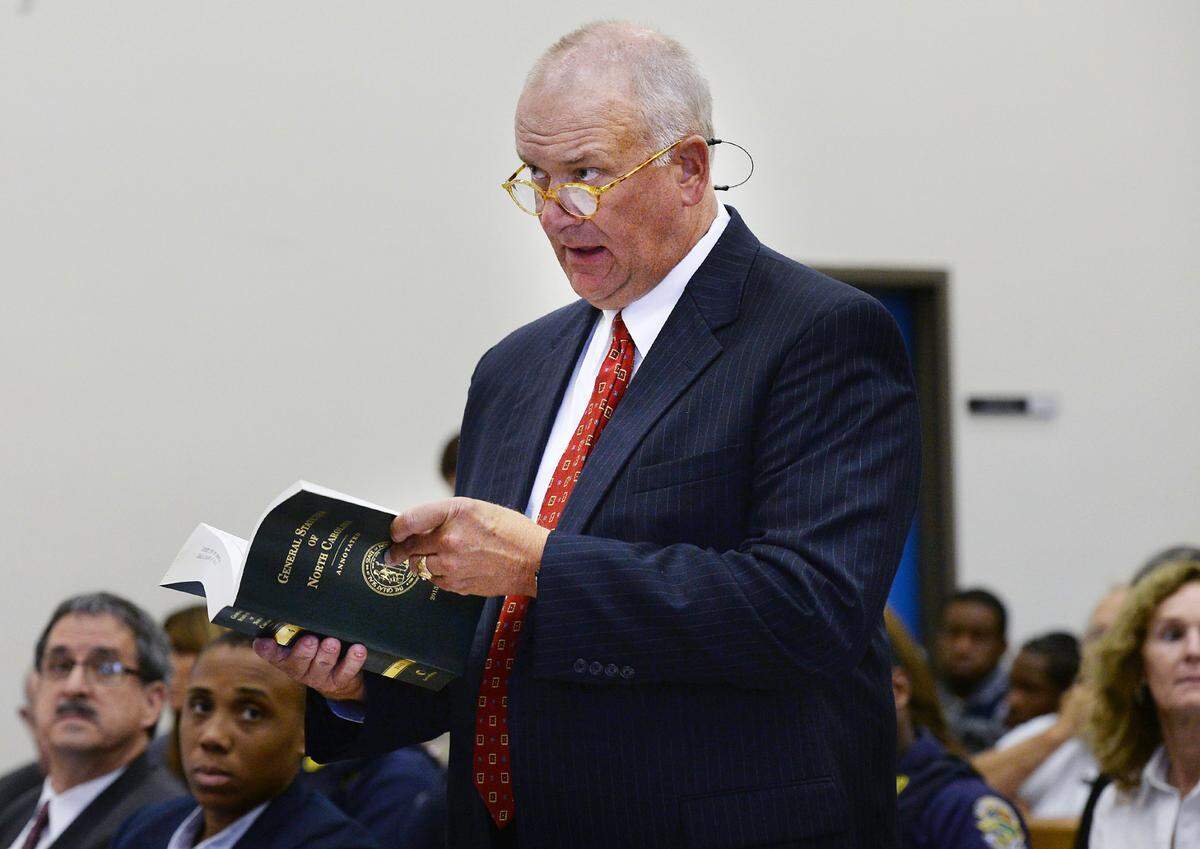
Britt’s question — “Why didn’t somebody figure this thing out?” — is central to the civil case. The brothers’ legal team contends investigators did figure it out; that in time they suspected Artis, but that they pushed those concerns aside and pursued McCollum and Brown, anyway. After all, the brothers had already signed confessions weeks before Artis killed Brockman.
Lawyers for the investigators, meanwhile, have argued that they genuinely never suspected Artis. That it was an oversight, and not part of a nefarious scheme to ignore evidence that might have pointed them away from McCollum and Brown.
Megaro, the Florida lawyer whom a federal judge later barred from representing McCollum and Brown, filed the original complaint. The town of Red Springs settled in 2017 and agreed to pay McCollum and Brown $500,000 each — an amount so low that it became part of the State Bar’s case against Megaro, as did his attempt to keep 33% of the settlement.
“Similar wrongful imprisonment cases for fewer years of incarceration and fewer years on death row have been settled for several million dollars,” one part of the Bar’s complaint read.
In 2018, McCollum and Brown received a new team of attorneys. More than a dozen lawyers are working on their case, led by four from the Washington, D.C.-based firm Hogan Lovells. The firm has taken on the case pro bono. Elliot Abrams, a partner at the Cheshire Parker Schneider firm in Raleigh, has served as the local counsel.
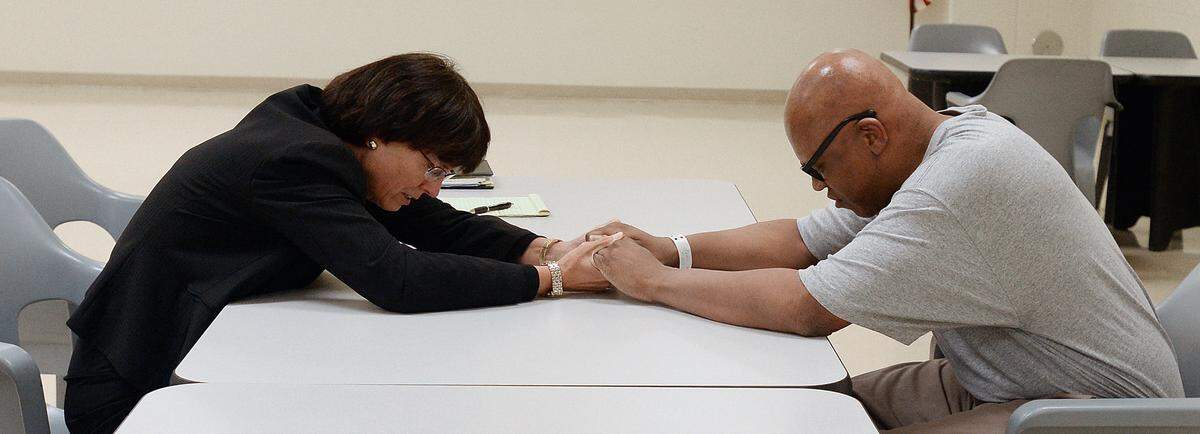
In a statement, the brothers’ attorneys from Hogan Lovells described it as “astounding that Henry and Leon are still waiting for justice, nearly six years after receiving full pardons of innocence.”
“We look forward to closing this chapter for them, once and for all.”
The pardons of innocence are, themselves, a point of contention. Despite the brothers’ exonerations, and despite Gov. McCrory granting those full pardons in 2015, the lawyers for former Robeson County sheriff’s deputies James Locklear and Kenneth Sealey have indicated they will argue that the pardons were “procured by fraud,” according to a pretrial order filed last summer. A hearing is scheduled for next Wednesday in Elizabeth City to decide whether the defense can use that argument.
Brad Wood and James Morgan, the lead attorneys for Locklear and Sealey, declined to comment on the record about their defense strategy. In court filings, Wood has argued that before McCrory granted the pardons, there’s no sign he “was made aware of the evidence of multiple confessions by McCollum.” The most public of those confessions came days after McCollum and Brown were first interrogated in 1983, when a television reporter in Robeson County confronted McCollum after a court appearance.
McCollum made a brief statement on camera acknowledging that he’d held Buie down, consistent with the statement he’d signed that led to his arrest. The legal team for the officers have seized on that statement as proof McCollum was admitting guilt. It came up during his first trial, too.
“I didn’t know what I was saying at that time,” McCollum testified then. “I was very upset. ... If you would have been in my shoes, you would be upset, too.”
For years, the lawyers for the investigators have argued that the brothers’ civil case shouldn’t be a case at all — that the SBI agents and the sheriff’s deputies didn’t do anything wrong, for one, and that they also are protected by qualified immunity. A district court rejected that argument, and in 2019 so did the U.S. Court of Appeals for the Fourth Circuit. The officers then appealed to the Supreme Court, which rejected a petition to review the case.
That decision set the case, at last, on the path toward a jury trial.
For the first five years of the civil case, the SBI agents named in it — Leroy Allen and Kenneth Snead — were represented by the state attorney general’s office. So the state of North Carolina found itself in the position of defending former SBI agents whose work led to the wrongful convictions of two men who spent 31 years in prison and who then received full pardons of innocence from the governor. After the appeals court ruling, North Carolina Attorney General Josh Stein withdrew his team from the defense.
Stein’s office has remained involved in the case “only to find a resolution,” Laura Brewer, a state attorney general’s office spokesperson, wrote in an email. “Our office does not dispute the pardons.” Though state lawyers no longer represent the SBI agents, Stein would have input about any potential settlement between the SBI and McCollum and Brown.
Throughout more than five years of legal maneuvering, there has been nothing to indicate that the SBI or Robeson County Sheriff’s Office is willing to settle. It appears most likely that the case will head to trial, barring a last-minute settlement. The trial is estimated to last between 10 and 15 days, according to the pretrial order released last summer.
McCollum and Brown’s legal team intends to argue how officers “acting individually or as part of a civil conspiracy” deprived the brothers of their due process rights. And that investigators “committed malicious prosecution.”
“This is any thinking person’s horror show,” Kenneth Rose, the attorney who worked on McCollum’s case for 20 years, said during a phone conversation not long ago. “It’s just as bad as it gets. And from the very beginning. These were teenagers. Leon was 15. Henry was 19. They’d been tested with IQs in the 50s. They had no clue what was going on.
“And the torture that they went through from the beginning until the end of his process is as bad as it could have possibly been. What stands out is the lies. Law enforcement putting together very detailed statements that only the person who had been at the scene could have known. And putting that together in a package that they call confessions for Henry and Leon. ... The only way you could rebut this is if you showed that these law enforcement officers were lying.”
The proof of that, advocates for McCollum and Brown argue, became clear enough when science allowed the cells on a cigarette butt to bear witness.
The ripples in Red Springs
On a recent Saturday in Red Springs, a heavy rainfall had left shallow pools in yards throughout the neighborhood where Sabrina Buie disappeared more than 37 years ago. Up on the corner along Main Street, where a fading downtown was a left turn and a half-mile away, the little convenience store still stood, same as it did in 1983.
Outside, empty liquor bottles and beer cans lined the edge of the field where they found the girl’s body. Inside, the arcade machines were long gone.
“We had a door here then,” Craig Hardin said one day last summer, pointing to a wall where the games used to be. In 1983, he was almost 10 years old and rode the bus to school with Sabrina. Hardin, whose father owned the store, could picture his friend inside, like she often was, playing Pac-Man or Donkey Kong.
And then “all of a sudden,” Hardin said while he mopped the floor recently, “she got missing.”
He could still see and hear her mom riding around looking for Sabrina, calling her name. He could see the scene when they found her body in the field behind the store. He could remember the reaction around town when police arrested McCollum and Brown. “The community knew the guys were innocent,” Hardin said.
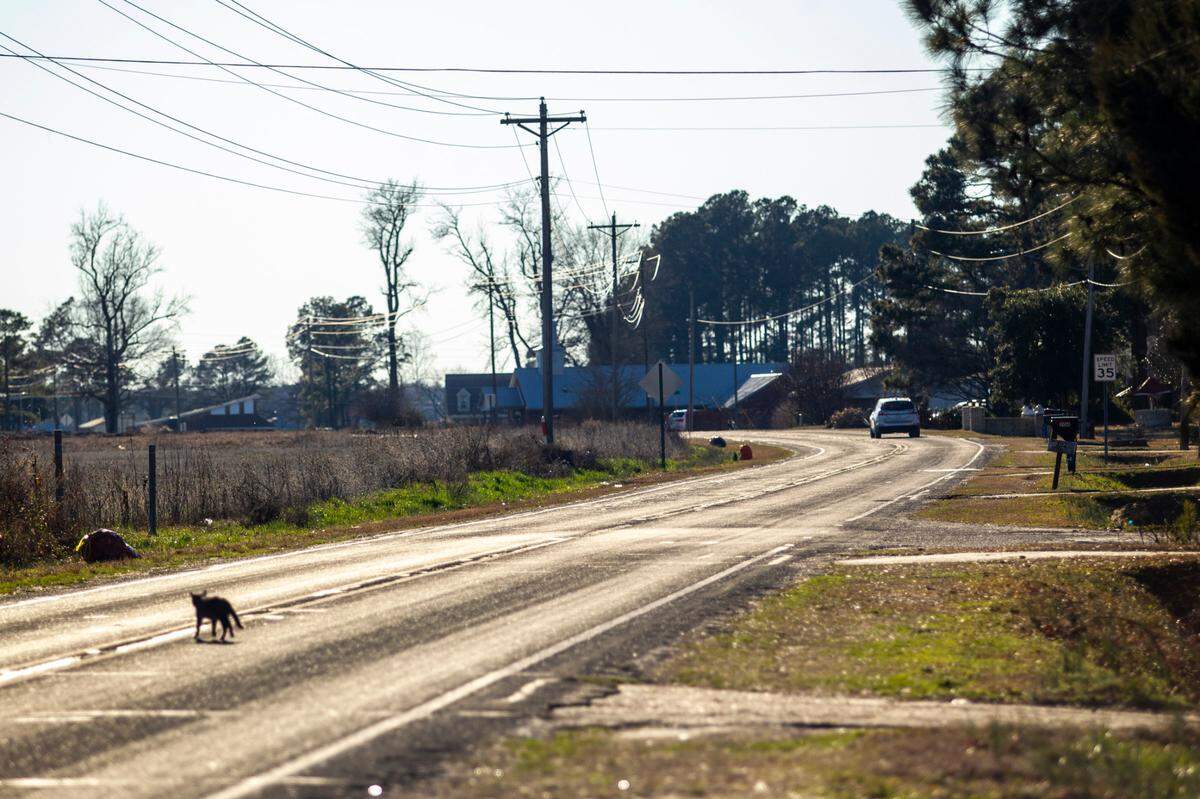
The legacy of the case haunts people around here who are old enough to remember it, or who knew people who were a part of it. That number is growing smaller.
Buie’s mom — “Ms. Brenda,” Hardin called her — died last summer. She’d been a “dear friend,” he said, and when he visited her “there was never a time that we didn’t bring up Sabrina.”
Two of the investigators at the heart of the case have died. Joe Freeman Britt, the former Robeson County district attorney, died in 2016, without ever having acknowledged that it was a mistake to prosecute McCollum and Brown.
At the brothers’ trial in 1984, he led them both through the confessions they signed, line by line. The jury needed 29 minutes to return a guilty verdict.
During his closing argument at the sentencing, Britt asked for five minutes of silence in the courtroom — the time he said it took Buie to suffocate. He cited the Bible, a verse from Exodus in the Old Testament, to justify the death penalty: “He that smiteth a man, so that he die, shall be surely put to death.”
Years later, Britt’s successor, Johnson Britt, once said that innocent men were not on death row.
“I was wrong,” he said. “And I acknowledge that.”
The McCollum/Brown case, Johnson Britt said, changed his perceptions of the justice system. The summer of unrest following the death of George Floyd had led him to reflect upon a system he’d helped to maintain.
The question Johnson Britt asked in 2014 — that of how investigators could not have identified and pursued Roscoe Artis as a suspect from the beginning — has stayed with him.
Artis died in prison last December. He never confessed to involvement in Buie’s death, but over several interviews with the state innocence commission, he went from denying seeing Buie at all the night of her disappearance to claiming that Buie had visited him and that she’d hugged him and kissed him on his cheek. Artis claimed he told her, “Girl, go home.”
“I caught her by her wrist, said, ‘Go home,’” he told investigators in August 2014, during an interview in prison. “Then I caught her in the arm right here and I shook her, I said, ‘Go home,’ like that. Then I took my hand and it felt like my little girl. I said, ‘Go home.’”
The McCollum/Brown case has taken on new meaning, too, to Kenneth Rose, the attorney who’d grown close to McCollum. Rose had long viewed his work through a prism of race and now, in this moment of national reckoning, it felt like one truth of the case had grown clearer.
“So this is a Black victim and Black defendants,” Rose said. “Why is that race plays a role? And I think the answer is, they just didn’t care. You know? They didn’t care which Black person they found, that they convicted and they sentenced to die.
“As long as some person was found guilty.”
Rose still visits with McCollum from time to time, nowadays without the wire mesh screen that separated the men for decades.
“There are times when I feel like he’s able to repair his life, and move on,” Rose said. “And there are other times where I feel like 30 years of wrongful incarceration can never be overcome.”
One day last June, thousands of people came to nearby Raeford to grieve the death of Floyd, whose North Carolina family held a memorial service there. For a day, scenes from Raeford were broadcast to a worldwide audience, mourners celebrating the life of a man whose death inspired a national movement.
The main road heading south out of Raeford is N.C. Highway 211. After 12 miles of flat farmland it turns into Main Street in Red Springs. The road runs through the town of empty storefronts and past a convenience store beside an old bean field. Craig Hardin, the man who works in that store, thinks about Sabrina Buie every time he drives past the field, and inevitably he thinks about the brothers who were charged in her death.
“Man, you can’t be no more than innocent,” he said.
In the distance was the house where Artis once lived, visible through the trees. A long time ago, Mamie Brown drove past that house and past the field and turned left onto Main Street. She drove past the stately homes with wraparound porches, where the yards don’t flood after it rains. She arrived at the police station where her sons walked in and in some ways never walked out.
Almost 40 years later, they’re still seeking something they lost — if it can ever be found.
This story was originally published March 12, 2021 at 5:55 AM with the headline "Sentenced to death after being convicted by a lie, NC brothers still wait for justice."
BEHIND THE STORY
MOREHow we reported this story
Much of the reporting in this story is based on publicly available documents in the civil case file. Some of the documents are quoted directly and cited. Others provided background information and context.
The documents used to report this story include:
▪ the statements that Henry McCollum and Leon Brown signed the night they were interrogated in Red Springs in September 1983.
▪ SBI agent Kenneth Snead’s report detailing his interviews with potential witnesses, including Ethel Furmage.
▪ the transcript of McCollum and Brown’s first trial in 1984.
▪ Roscoe Artis’ criminal record, as it appeared on file in Gastonia municipal court in 1983.
▪ transcripts of Artis’ interviews with the state innocence commission and the SBI.
▪ the transcript of the 2014 Motion for Appropriate Relief hearing, where McCollum and Brown were exonerated.
▪ the transcript of Geraldine Brown Ransom’s deposition in 2017.
▪ the 2018 North Carolina State Bar complaint against Patrick Megaro.
▪ the 2018 civil case briefs filed by plaintiffs and defendants.
▪ the 2019 federal Court of Appeals decision denying defendants’ claim of immunity.
▪ the 2020 pretrial order detailing statements of facts and the arguments to be made during the trial.