
Why did NC cut money from a domestic violence program? It started with a hidden camera.
After a brief evening visit to the women’s shelter she managed, Melanie Smith got a call from her boss: She needed to go back and kick out an alleged abuser hiding under a blanket on the living room couch.
That’s when Smith said she learned Executive Director Tammie McCarter had placed a hidden camera inside an unstaffed Ahoskie shelter that receives state funding to protect women and children fleeing domestic violence and other threats in four northeastern counties.
“She ended up confessing to me that she had a secret,” a nanny cam installed inside the shelter, said Smith, who resigned from Roanoke Chowan S.A.F.E two days later.
Only one client was in the shelter that night of April 4, with no employees there. The secret camera recorded that client with a man she’d recently accused of assaulting her, Smith said. Chris Farmer, a member of the nonprofit’s board, confirmed that account.
The nanny cam is one among several potential mismanagement issues at Roanoke Chowan S.A.F.E., whose latest tax return document says it was founded in 1984. Another is uncertainty over whether it deserves its tax exempt status under federal law.
The state Department of Administration’s Council for Women & Youth Involvement, which sets requirements for domestic violence programs, told the executive director to remove the camera soon after it was discovered. On Thursday, the department said it was cutting off funding until “all known issues” are immediately addressed.
“Roanoke Chowan SAFE is required to address all known issues immediately,” the Council for Women and Youth Involvement said in a statement emailed to the News & Observer on Thursday. “Our assessment is ongoing, and this location has already started corrective action.”
Three employees — roughly a third of the staff — who subsequently complained about McCarter’s management were fired May 7, Farmer confirmed. He said the board let one go because funds ran out. Those former employees are victim advocate Kimberly Rawls, finance manager Jaime Mason and LaVern Coulton-Harrell, who worked on human trafficking prevention.
On Tuesday, the Roanoke Chowan S.A.F.E. website listed just three employees, including McCarter. Three board members resigned since the nanny cam issue surfaced, leaving two remaining.
In the past five years, Roanoke Chowan S.A.F.E., which stands for Services for Abused Families with Emergencies, has received at least $2.2 million, much of it from the state Council for Women and the Governor’s Crime Commission. The nonprofit serves Bertie, Gates, Hertford and Northampton counties, and reported on its most recent tax return that its shelter housed 42 clients in the fiscal year ending June 30, 2020.
Interviews with former staff, current and former board members and state officials, along with records obtained from former staff and state officials paint a picture of a nonprofit in disarray:
A state directive requires staff or volunteers on site anytime a shelter is occupied. Smith and Coulter-Harrell said McCarter did not staff the shelter with employees or volunteers in shifts — a practice state officials recommend. She hired a staff manager who was responsible for being in the shelter whenever a client was there, an arrangement that could lead to an employee working full days. Farmer said other employees would spot the shelter manager when she couldn’t be there.
The nonprofit has been on the IRS’s auto-revocation list since 2012, which means it is not considered a tax exempt organization. That could mean the nonprofit would have to pay taxes on money it receives, and people who make donations to it could not use them to reduce their income taxes. Websites run by GuideStar and ProPublica that collect nonprofits’ tax forms show no tax returns — known as Form 990s — in more than a decade from the nonprofit. One state agency that provides funding to the nonprofit said it had received tax returns but did not check the nonprofit’s status with the IRS.
UNC-Greensboro officials a month ago pulled a grant that had paid Roanoke Chowan S.A.F.E. more than $116,000 over the past three years for a program to assist human trafficking victims after seeing the nonprofit had helped few people.
Farmer, the board member, said McCarter was disciplined after employees complained she had signed an employee’s name to an expense report to the state. Farmer said the board found other staff members had also signed other employees’ names to expense reports. Another former employee said McCarter also borrowed her notary stamp, which only notaries can legally use.
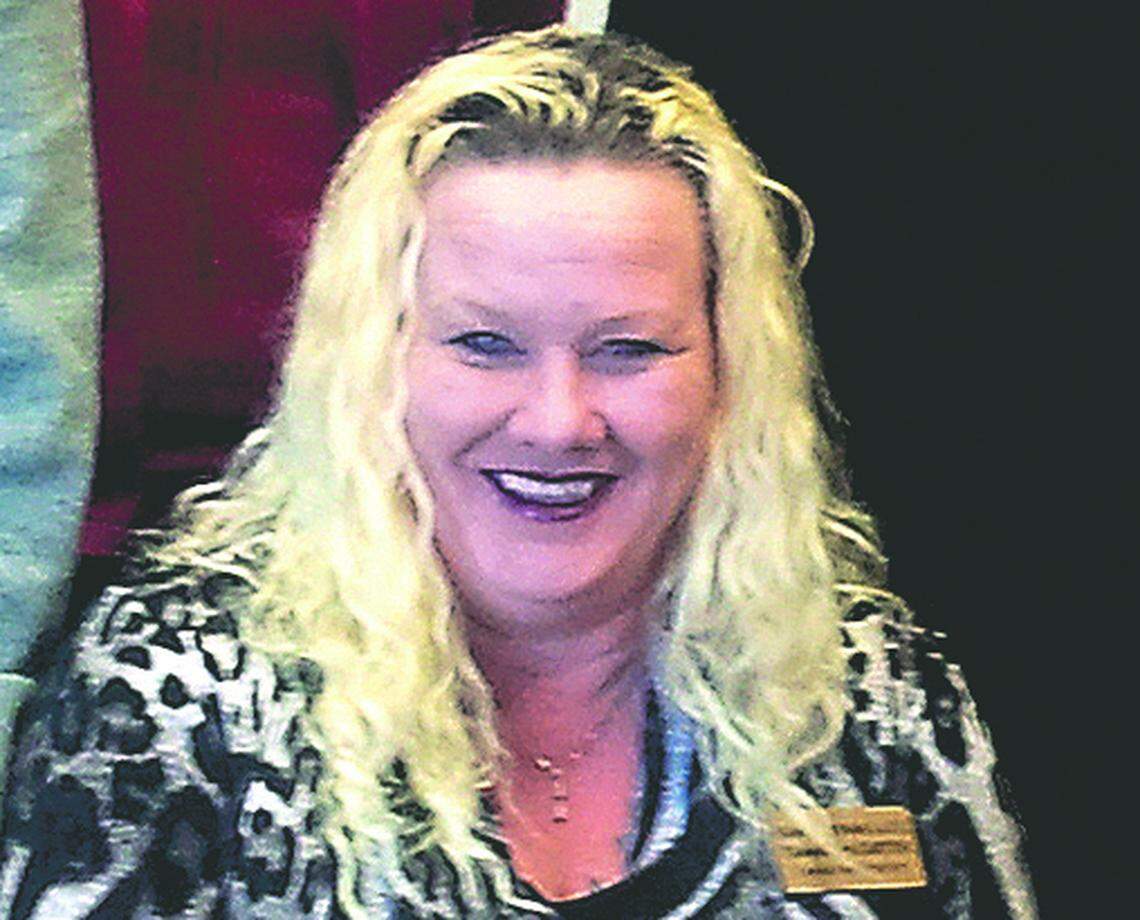
McCarter did not return a reporter’s phone calls to her home or cell phone, or after the reporter visited Roanoke Chowan S.A.F.E.’s Ahoskie office. Her LinkedIn page said she has been the executive director since July 2011. A federal tax return document recently posted on S.A.F.E.’s website shows she was paid $65,000 last year.
Public dollars, missing records
Former board member Donise Harris said she resigned after seeing fellow board members siding with McCarter after employees complained. It seemed the board didn’t want to dig into their claims, said Harris, who was on the board for three years.
“They came to us for help and this is what (the board) did,” Harris said. Rosemary Royce, the board’s chair, declined to comment on what led to the firings last month. She said she was in the process of leaving too, citing health reasons.
Farmer, a board member for roughly two years who serves as secretary and treasurer, said the nanny cam had been in the shelter for about two weeks.
“It was just a safety measure from what I understand,” Farmer said, adding that McCarter had it installed. Farmer blamed the fact that an accused abuser gained entry on the shelter manager, not McCarter.
“Had our shelter manager been in there like she should have been, that victim’s assailant wouldn’t have been in the shelter,” Farmer said.
He said he couldn’t talk about why the two other employees were fired before checking with his fellow board members. But he confirmed that McCarter and some employees were signing each others’ names on documents. He said McCarter has been disciplined, but would not say how.
He said the remaining board members are trying to piece together the nonprofit’s finances. Much of the information was in the corporate book, which had been in the hands of the nonprofit’s former financial manager, Mason, who was one of the three employees fired, he said. Mason declined to be interviewed.
Harris and Farmer said the board hasn’t been reviewing McCarter’s performance or setting her pay, something nonprofit boards typically do.
Farmer said he is concerned the nonprofit is unraveling amid the firings, resignations and allegations.
“That’s why the board met every week for two and a half months investigating each allegation,” he said.
Farmer said most of the claims the former employees made had “no merit,” but there were “a couple where some corrections had to be put in place.” Those included removing the nanny cam and ending the practice of signing other employees’ names to the expenditure reports. The pandemic, which forced employees to work from home, may have led to employees signing others’ names, he said.
Smith and Lisa Beamon, the former employee who is a notary, said McCarter would sometimes tell employees to turn away clients who called seeking a bed at the women’s shelter, even if no one was staying there.
Farmer said the board has not confirmed the two former employees’ claim. But he said employees he did not name flunked the most recent annual hotline phone test that involved people posing as domestic abuse victims seeking help. Instead of first asking if they needed to be removed from a dangerous situation, employees asked if there were family who could help them out, Farmer said.
Smith said McCarter originally required her to be at the shelter anytime a client was staying there, but that changed after Smith suffered a brain aneurysm in November 2018. After that, Smith said McCarter gave varying instructions on how much time Smith needed to spend with clients at the shelter.
Smith said she resigned when McCarter told her she would again have to move back into the shelter and always be available to watch clients.
Suspected abuser inside, state acts
Smith called the Hertford County 911 emergency center after McCarter called and instructed her to kick out the man hiding under the blanket. He left before police arrived. Ahoskie police Sgt. Chris Westbrook handled the call and asked the shelter client to leave, at Smith’s request, according to a recording of the 911 call.
Smith provided video nanny cam screenshots of the man to Westbrook, who he identified in a text message as Timothy Askew, 21, of Bertie County. Sheriff’s deputies there had charged Askew with misdemeanor assault on a female three days before McCarter spotted him at the shelter, court records show. The woman who let him into the shelter was named as the accuser.
Phone numbers for Askew and his accuser on court documents did not work when a reporter tried them. Westbrook did not fill out a report on the incident. He referred questions to Ahoskie Police Chief Jimmy Asbell, who did not return a reporter’s phone calls.
Philisa Fowler, the council’s eastern region director, said she had been unable to visit the shelter since 2019 because of pandemic restrictions. She said she ordered the nanny cam removed once she learned about it from employee complaints.
She said the council does not allow hidden cameras in shelters, citing privacy issues. “It’s confidentiality and privacy,” Fowler said. “They can have security cameras outside the facility, but not within the facility.”
Fowler said she viewed a Roanoke Chowan S.A.F.E tax return document during her last visit, but she did not make a copy of it. The agency requires grant recipients to confirm that they have a valid federal tax ID number and make the most recent three years’ tax returns available for inspection.
Her supervisors with the Council for Women could not be reached for interviews, and the agency has yet to fill a reporter’s request filed two weeks ago for financial records.
Spotty paper trail, campus cuts grant
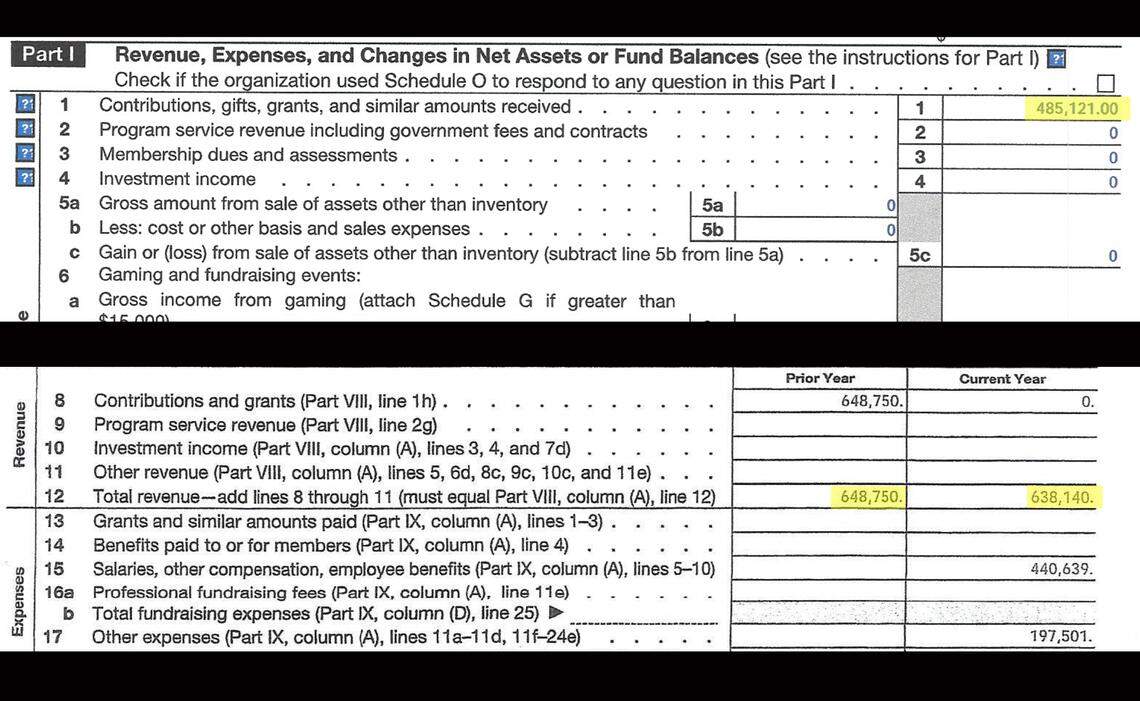
Less dramatic on the surface, but vital to transparency on how the nonprofit spends public money, Roanoke Chowan S.A.F.E. did not make tax records immediately available, as required by federal law. When the nonprofit made the records public, a big inconsistency emerged.
A News & Observer reporter visited the nonprofit’s office on May 21 to ask for its most recent three years’ returns. An office assistant said she was unaware federal law required them to be immediately available, and someone on staff would have to follow up.
When Roanoke Chowan S.A.F.E. days later posted Form 990 tax returns, the names of who filled out the forms, board members and nonprofit staff appeared to have been whited out. In addition, one of the tax return documents, for 2019, did not match what the nonprofit submitted to the Governor’s Crime Commission when applying for a $307,000 grant.
The commission for that year had a copy of the short Form 990EZ, as opposed to the regular Form 990, and it showed about $150,000 less in revenues. Matthew Jenkins, a commission spokesman, said questions about the discrepancy should be directed to the nonprofit. Staff there could not be reached for an explanation. The commission had checked a federal list of approved entities for doing business and found the nonprofit there, and also saw that it was not on a state list of unapproved entities.
The commission’s interim director, Diane Barber-Whitaker, said the commission had no idea the nonprofit had management issues until roughly two months ago when another grant recipient, UNC-Greensboro, reported it was dropping Roanoke Chowan S.A.F.E. over poor performance.
UNC-Greensboro had received $475,000 in 2018 and $590,000 in 2020, commission records show, to build and augment resources to help victims of human trafficking in Eastern North Carolina. Roanoke Chowan S.A.F.E. was a subrecipient of the grant.
Terri Shelton, UNC-G’s interim provost, said the nonprofit struggled early on to find people who needed help. It also canceled or postponed many meetings with UNC-G staff and submitted late progress reports, she said.
On April 30, after the nonprofit had received $116,000 from UNC-G, the university dropped it from the program. Shelton said the nonprofit had only identified four victims for services, well below the minimum 10 UNC-G professors had set.
“The primary concern was really just not seeing clients,” Shelton said.
Setting up a camera to monitor shelter clients is something the chairwoman of the state’s N.C. Domestic Violence Commission said she’s never heard of before. Deborah Weissman, a UNC-Chapel Hill law professor, said secret surveillance is normally an invasion of privacy for women who are often at their most vulnerable.
Weissman said the issues as identified by The N&O point to management issues that need to be corrected. They also raise questions about the adequacy of state oversight, she said.
“What you are describing suggests some huge gaps in our processes, and I’m sorry to learn about it,” she said. “There’s so much work going on and it’s very clear we’re going to have to add a bunch of other issues to the pile.”
Database editor David Raynor contributed to this report.
This story was originally published June 4, 2021 at 11:39 AM with the headline "Why did NC cut money from a domestic violence program? It started with a hidden camera.."