
Two NC killings should prompt a new look at forced mental health commitment | Opinion
AI-generated summary reviewed by our newsroom.
- Deinstitutionalization reduced long-term commitments and raised public safety gaps.
- Courts default to release; short evaluations return many with psychosis to streets.
- Law changes and funding shortfalls force hearings on commitment standards and beds.
Two slayings in Charlotte and Raleigh, in which the suspects are men with severe mental illness and long criminal histories, raise the questions of why they had not been indefinitely committed to a state psychiatric hospital long before the crimes occurred.
In the past, the suspects – both previously diagnosed with schizophrenia – may well have been confined to a mental institution. But the scandalous abuses and conditions in such hospitals led to the deinstitutionalization movement in the later half of the 20th century to close many of them and treat the mentally ill instead in community settings.
The change was intended to be more humane and protective of individual rights. But it also made it harder to have the severely mentally ill committed for extended periods.
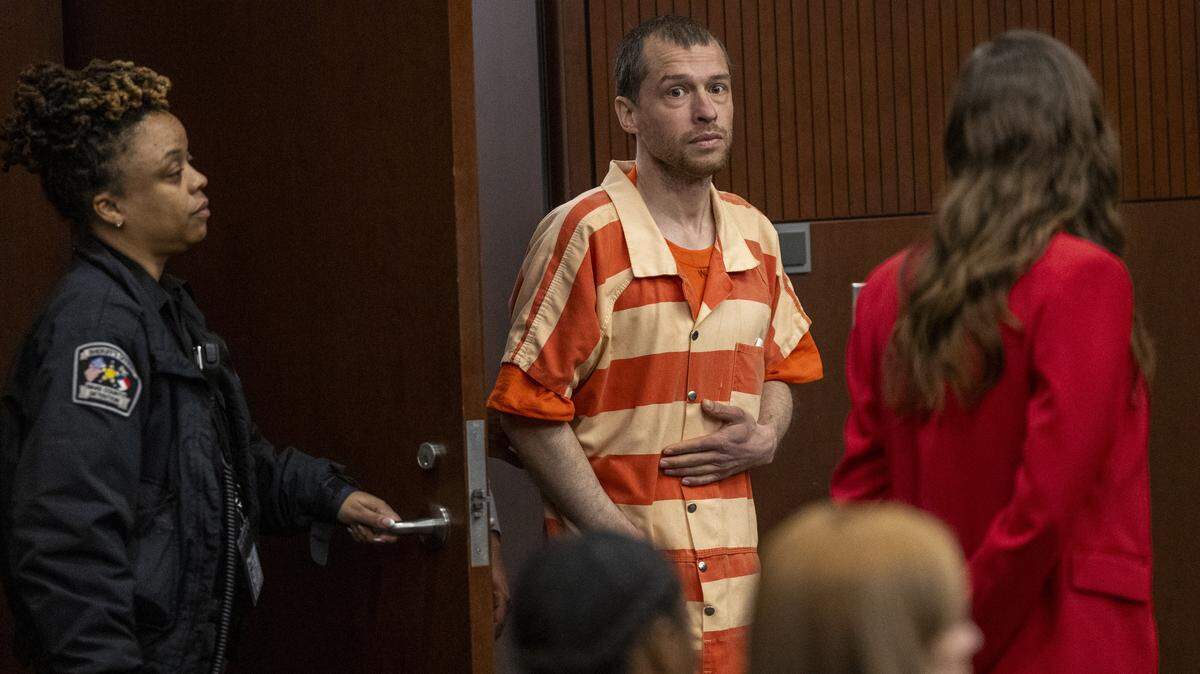
The two suspects — DeCarlos Brown Jr., 35, charged with the killing of a woman on the Charlotte light rail, and Ryan Camacho, 36, charged with killing of a Raleigh teacher after breaking into her home — illustrate the difficulty of imposing an extended involuntary commitment in North Carolina and also the danger of not doing so.
“It seems people have tended to forget that we as a society made a very deliberate decision 50 years ago or so to deinstitutionalize,” said Wake County District Attorney Lorrin Freeman. “The law and the process is designed to default to deinstitutionalization. So the bar to involuntary commitment is high.”
Those charged with a crime who exhibit signs of mental illness are referred for psychiatric evaluation. But often their charges are misdemeanors, and they are released after a stay in the county jail.
“Repeatedly what we see are people who are initially committed but released within a matter of five days or so,” Freeman said. “Then they are back out in the community with insufficient resources.”
Freeman supports the rights of the mentally ill and agrees with the ending of “the blanket institutionalizing of people,” but she also thinks it’s time to consider how the rights of the mentally ill relate to the safety of the public and the safety of the mentally ill themselves.
“We may continue to value that belief that people are best treated in the community, but these cases in Charlotte and here are an opportunity to remind ourselves of the commitment to that ideal and have a reckoning about whether we are comfortable with that,” she said.
Freeman thinks the standards for involuntary commitment need to be reconsidered, and more resources provided to the courts and human services to help connect mentally ill offenders with the medications and the other assistance they need.
A new state law, Iryna’s Law, named for the Charlotte victim, Iryna Zarutska, tightens restrictions on the release of people charged with certain violent crimes and requires mental health evaluations. But the law will also put more pressure on the courts, county jails, prisons and mental health facilities without adding funding.
Meanwhile, the North Carolina House Select Committee on Involuntary Commitment and Public Safety is holding hearings on possible changes in laws governing involuntary commitment and how to provide more psychiatric beds. The next hearing is Jan. 14.
Actually, there is already a high level of involuntary commitment of the mentally ill. Unfortunately, it’s within the criminal justice system. About 40 percent of people held in prisons and jail have a history of mental illness, according to the National Alliance of Mental Illness.
The nonprofit Treatment Advocacy Center (TAC) in Alexandria, Va., supports lowering the barriers to involuntary commitment for the severely mentally ill as a way to improve access to care.
“The pendulum has swung too far in the deinstitutionalization direction to the point where we are seeing people who are not doing well re-institutionalized in the wrong locations — prison or jail — or dead,” said Leslie Carpenter, TAC’s legislative advocacy manager.
“People with treated mental illness are not more violent than anybody else. People who are untreated can be more violent,” she said. “It is the untreated psychosis that is the problem. People can become quite well when they are able to stay in treatment.”
Gov. Josh Stein is calling for more resources for mental health services. The legislature should agree.
Rather than punishing the severely mentally ill for what is, after all, an illness, the emphasis should be on getting them care before they or the public suffer harm.
Associate opinion editor Ned Barnett can be reached at 919-404-7583, or nbarnett@newsobserver.com