
Whitey Morgan embraces his gritty, outlaw sound. Too polished? That’ll never happen.
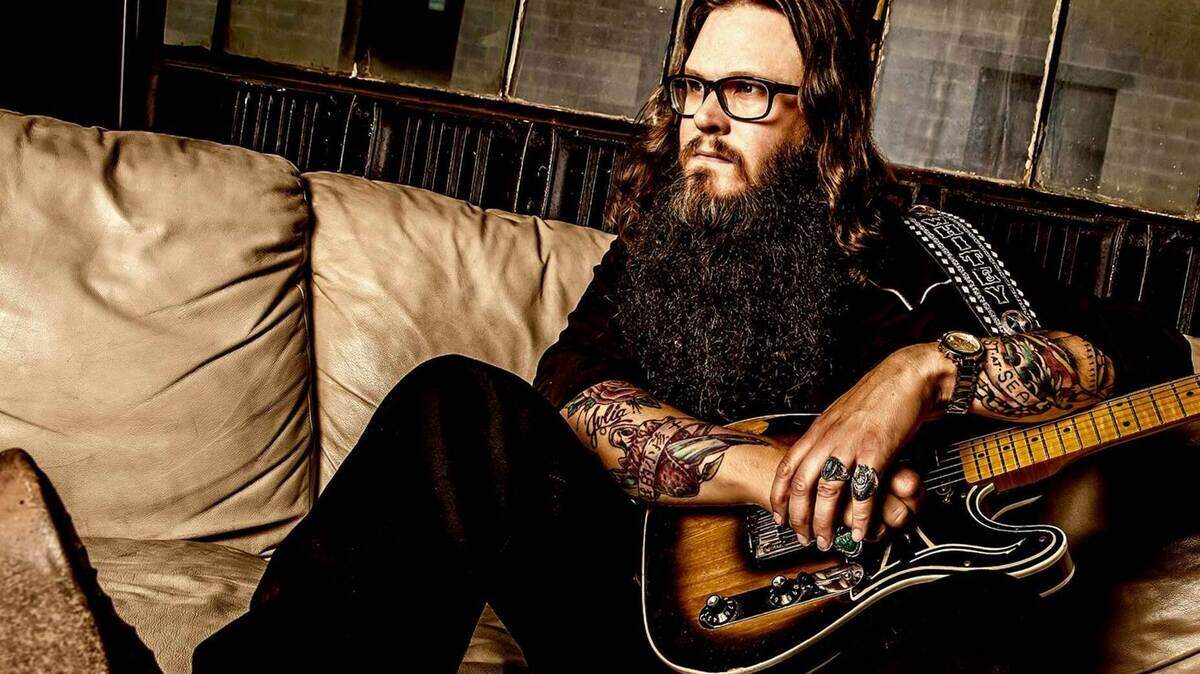
With a lead single called “Honky Tonk Hell,” a title that many commercial country station DJs might wince at saying on air, Whitey Morgan continues to embrace the legacy of his outlaw forefathers.
It’s a strategy that has worked wonders for the musician, even when recording with some of the more established studio hands in Nashville.
“I’ve found now that I’ve worked around Nashville for a little bit is that people know that I’m not going to go for the usual commercial stuff that they’ve had to do with other artists,” Morgan says in a phone interview during a break from the road.
“They like that, because they get to take the filter off and just be a regular dude around me,’ he said. “They like that they don’t have to be rated PG around me, that the songwriters I’ve worked with can actually write about real (life), and not just the bubblegum stuff. It’s as real as any of this actually gets to be, I guess.”
While his style of music has proven popular with an ever-growing fanbase, his show at the Lincoln Theatre Oct. 28 will be a bit of a contrast from the prior night’s show — a show sponsored by local country music powerhouse WQDR that features pop-leaning country acts Danielle Bradbery, Runaway June and Clare Dunn.
But his show, which comes two days after the release of his new album, “Hard Times and White Lines,” will show why he’s one of the leading voices in modern honky-tonk music. His sound comes naturally, with roots running from his hometown of Flint, Mich., to the Cumberland Gap of Kentucky and Tennessee.
Morgan talked to The News & Observer about his relationship with Nashville, as well as how a punk from Michigan found country music.
Q: How did a guy from Flint, Mich., become so deeply engrained in the honky-tonk music scene?
A: The easiest answer would be that I got it from my grandfather, who was from Kentucky, and I learned how to play guitar through him as well. He played in the bars around Flint, and when he passed away when I was 18 or 19, I inherited his guitar and record collection. That record collection is what led me to fall back in love with country music, and I went from there to form this band.
Q: Was there any one particular album in that collection that really grabbed your attention?
A: There were many of those records that did the job at the time, I imagine, but a few of the ones that stick out in my mind were a Jimmy Martin (”I Can’t Quit Cigarettes”) greatest hits collection. Martin was a great bluegrass picker and singer, and he was one of my grandpa’s favorites, and Ray Price (”Heartaches By the Number”). They were complete (opposites) of what I was playing as a teenager at that time, when I was a member of rock bands, whatever instrument I could get my hands on to get the energy out of me at that age.
Martin was huge, and I’d say he’s probably still one of my Top Five favorite artists. There’s just something about when he sings those songs with that voice, with the harmonies behind him. I know he’s not the world’s most perfect singer, because he falls in line with most of the other singers I like, where their voices tell you that they’ve had their share of problems with drinking and such. That’s the way I feel about (my singing), and it’s just the way I like my country music, too.
The first time I sat on the corner of my bed, playing my grandpa’s guitar and singing these songs, that was when I realized I didn’t need a band to play music. When you’re in a...rock band, if you’re not a singer, playing the guitar on the edge of your bed may sound cool but it doesn’t sound like a real song. When I would sit there playing these bluegrass songs, it sounded like the song I was trying to play. That’s why I started to go out and play acoustic songs around that age: just to get them outside of the walls of my bedroom. I didn’t really enjoy playing music that much until that point of my life.
Q: Do you ever find yourself stepping into a recording studio thinking that you need to add harder edge to whatever you’re working on just to please your fanbase, even if not what you want to perform?
A: For me, it’s usually the opposite; I’m the one that walks in (to a studio) wanting to make something as big and raw as I can, and then realize it doesn’t need to be that over the top, so I tend to pull back a little bit. To a certain extant, I do think about what people will accept and what they’re expecting. The good thing about me is that I have never strayed too far from who I am, with the (albums) not ever getting that different from when I first started recording.
If anything, we started out a little more traditional (country), and then began to let my rock influences in a little bit. My voice sounds a little rougher now, after playing on the road forever, and never being too good at taking care of it. I do a lot of drinking and yelling, so if anything, it sounds a little more authentic now.
Q: You’ve been working more often in Nashville on your albums. Is there ever a worry about the music coming away a little too polished?
A: No, that’s never going to happen to me. I’m 42 years old, I’ve been playing country shows since I was 19 or something, and I’ve got a background in punk rock. I hate polished (music), and I hate pretty boys. I mean, that’s engrained in my blood. I’m from Flint, Michigan. It’ll never happen.
Details
Who: Whitey Morgan with Alex Williams
When: 8 p.m. Oct. 28. (He will play at Charlotte’s Neighborhood Theatre Oct. 27)
Where: Lincoln Theatre, 126 E. Cabarrus St., Raleigh.
Cost: $16.25, $20, $75
Info: 919-821-4111 or LincolnTheatre.com
This story was originally published October 25, 2018 at 6:14 PM with the headline "Whitey Morgan embraces his gritty, outlaw sound. Too polished? That’ll never happen.."