The revolutionary art in ‘Pop America’ exhibit helps define what ‘America’ looks like
Your first reaction to “Pop America, 1965-1975” may be to smile in recognition.
The show at Duke University’s Nasher Museum of Art includes some of the most iconic images in recent memory — signature works by artists like Andy Warhol and Roy Lichtenstein, depicting everything from soup cans to leftist revolutionary figures.
And that leads to what will probably be your second reaction.
“This is the kind of art you look at and initially think you know what’s going on,” said Duke professor Esther Gabara, the show’s guest curator. “But then you take a step closer and ask, ‘Wait, what is going on with this?’
“Pop art is often associated with consumer culture, but we also have these posters using the same visual language in support of socialist revolutions.”
“Pop America,” on display through July, is a joint production between the Nasher and the McNay Art Museum, the San Antonio museum, which contributed a number of pieces to the show. Among them is one of the first artifacts you encounter upon entering the gallery, Robert Indiana’s brightly colored poster for Hemisfair. The 1968 World’s Fair in San Antonio was a landmark event in that city’s evolution from small town to crossroads metropolis.
Other “Pop America” works promote the 1968 Olympics in Mexico and Cuban revolutionary propaganda.
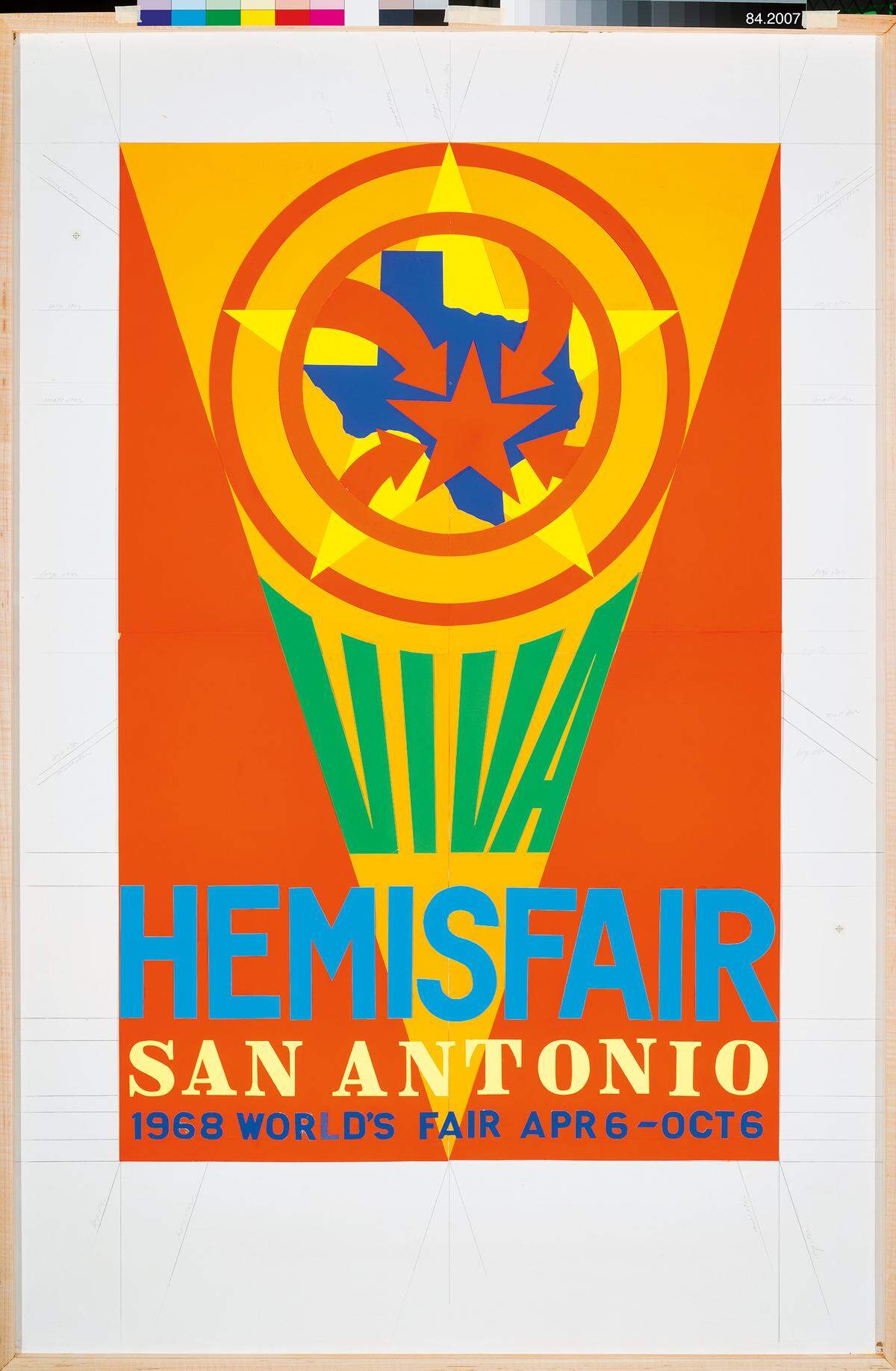
It’s the museum’s first fully bilingual show.
“The title is bilingual as-is,” said Gabara. “All the text galleries are in Spanish and English, as are a lot of the events and programs. We hope that makes for a broader ‘American-ness’ of this place, because the show is about America as a continent from Argentina up to where we are and beyond.”
Commercial as political
Much of “Pop America” is overtly and at-times ironically political. It includes Warhol’s 1972 silk-screen portrait of Chairman Mao Tse Tung along with the artist’s classic 1962 Campbell’s Soup can. Other works depict Nicolas Garcia Uriburu’s 1968 act of ecological guerilla art “First Green Venice” (in which he dyed the Italian city’s canals with non-toxic green dye) and Rupert Garcia’s “RIGHT ON!”
A 1968 rendition of Argentine rebel Che Guevara, “RIGHT ON!” is based on a famous photograph and a quote: “A warrior doesn’t die in order to hang on a wall.”
“What’s so amazing is that that iconic image had just come to be right after Che’s death, and the artist was already asking what the image’s usage meant,” Gabara said. “We’re all political beings. It’s not like there’s ‘political’ and ‘neutral.’ In 1968, a lot of art promoted some ideas. Artists more often than not want to invite you to think about these questions, not give you instructions.”
Today’s political climate in the United States serves as a backdrop for “Pop America.” The show asks viewers to think about the country as a continuous continent, at a time when the Trump administration wants to build a wall between the U.S. and Mexico.
“It does seem so relevant right now,” said Gabara. “And yet when we started working on this years ago, Obama was still in office. Not to say questions of deportation and immigration weren’t an issue, but it was different.
“I hope this show is relevant and people think about it. There’s a lot to think about, like who defines ‘America’ and what it looks like. Certainly this isn’t the first time political divides have tried to split the continent. But we still have a lot of neighbors close by, with or without the wall.”
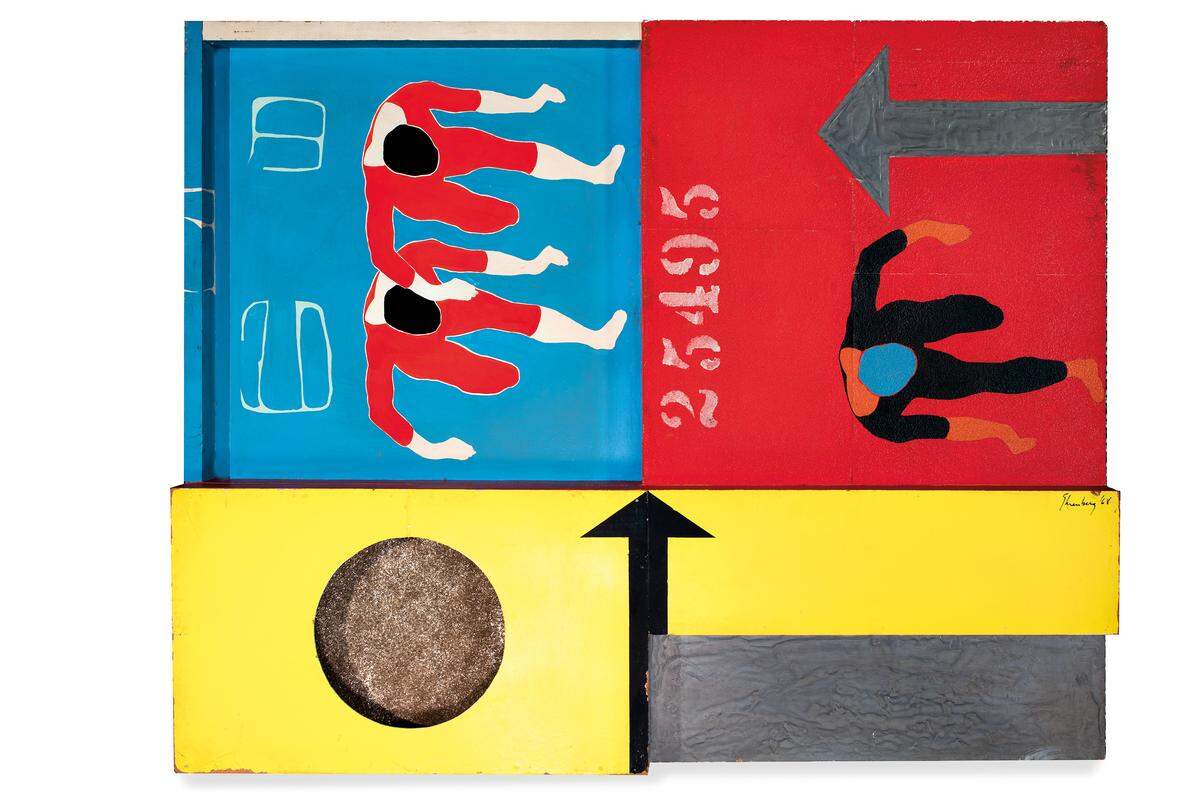
Details
What: “Pop America 1965-1975”
Where: Nasher Museum of art at Duke University, 2001 Campus Drive, Durham
When: Through July 21
Cost: Regular admission is $7 adults, $5 seniors, $4 non-Duke students; free for Nasher members, children 15 and under, active-duty military and veterans and up to five family members, Duke students, faculty, staff and alumni association members; free for everyone Thursdays, 10 a.m.-9 p.m.
Info: nasher.duke.edu or 919-684-5135, ext. 0
This story was originally published February 27, 2019 at 2:47 PM.