
‘Cruel to be Kind’? Yes, Nick Lowe will play the classics, and throws in some surprises
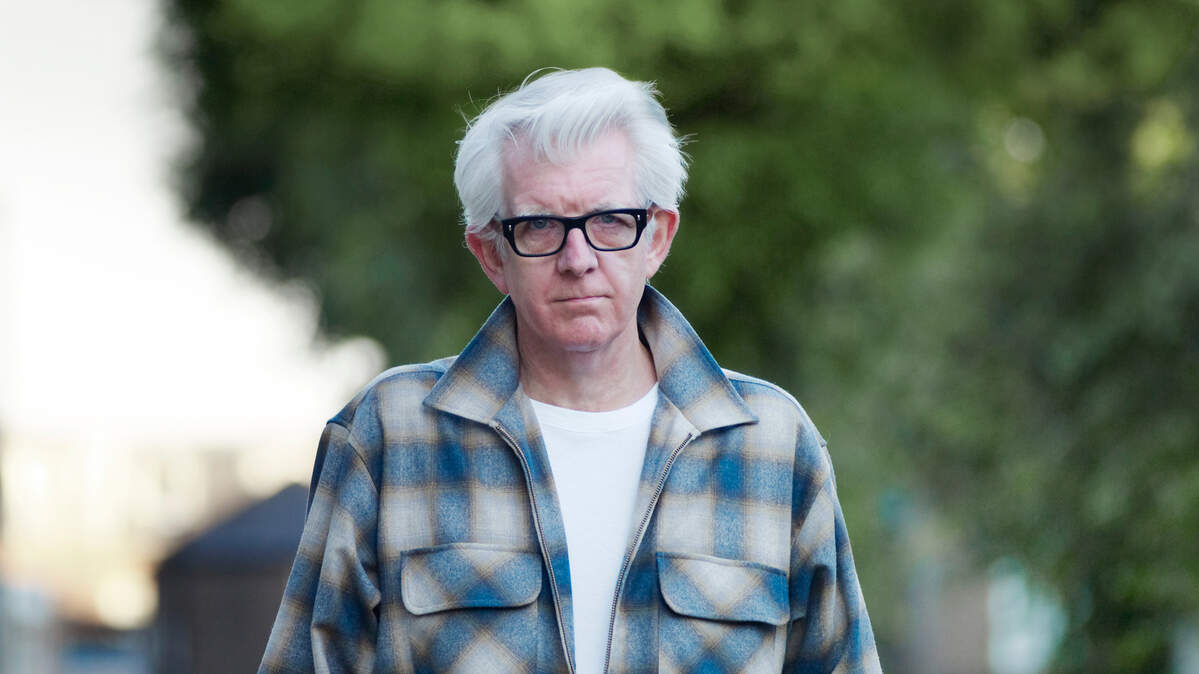
For an artist who made his mark as a singer-songwriter in the mid-to-late ‘70s, Nick Lowe remains an entertainer with a cult following, albeit a rabid one. Perhaps that’s one reason for the musician’s longevity as a successful touring artist: you can delve a little deeper into your back catalogue with the reasonable assumption that you just played someone’s favorite song.
It’s a privilege that the performer doesn’t take for granted. He’s perhaps best known for writing Elvis Costello’s “(What’s So Funny ‘Bout) Peace, Love, and Understanding,” or the biggest hit of his own career as a singer, “Cruel to Be Kind.”
As “Nick Lowe’s Quality Rock & Roll Revue starring Los Straitjackets” heads to the Haw River Ballroom in Saxapahaw April 6, the man at the center of the action knows he faces few (if certain) expectations from those in attendance.
“I’m very lucky in that I’ve worked hard to try and get an audience, to attract an audience, which isn’t just people who — and God bless them, by the way, don’t get me wrong — but who aren’t just people who were fans of mine when I was a sort of pop star in the 1970s and have aged with me,” Lowe said in a phone interview with The News & Observer from his home in London. “I have been very anxious to bring new people in, younger people in, and try to achieve an audience which spans generations.”
Lowe tries to craft a setlist that appeals to everyone: five or so tunes that people expect him to play, plus some for the hardcore fans.
“Then I bang in some surprise cover songs or a couple of new tunes,” he said. “But I hand-pick them. I don’t want to just force-feed stuff and ram it down people’s throats, whether it’s any good or not. It has to be good stuff, it’s got to be quality pop music, and that way people seem to have a ball. We love doing it.”
During our conversation with Lowe, we were able to touch on topics that span his career, from his longtime association with local record label Yep Roc Records to spending time in the Nashville of the ‘80s as Johnny Cash’s son-in-law.
Q: You’re not a stranger to the Triangle, as even when you’re not touring you have made appearances for your record label Yep Roc Records, which is based out of Hillsborough. What’s that relationship like, living in London yet working with someone in North Carolina?
A: Well, they’ve been fantastic to me. I know the old cliche is that most artists are always banging on about how terrible their record companies are, but I’m going to smash that right away, because it’s not like that with Yep Roc. They’ve been absolutely grand with me, and very encouraging in that they don’t hassle me for more product and stuff like that.
When Glenn [Dicker, cofounder of Yep Roc] started the label, he offered me a contract, and I couldn’t think of a single reason why not. They were so enthusiastic about it, and we’ve been happily associated ever since, for over 20 years now. It’s a long time in this business.
The music business has changed so incredibly since I’ve been involved in it, that not only would I never get signed by a major label now — if they exist anymore, as I’m not even sure that they do — but it just wouldn’t suit me. Even if they could think of a way that I would suit them, they wouldn’t suit me.
Q: You recently worked in the recording studio with Los Straitjackets on the 2018 EP Tokyo Bay. What has led to your continuing to work the band over the years? [Together, they will release an EP, “Love Starvation/Trombone” in May.]
A: We’ve been friends for a long time, but about five or six years ago, I released a Christmas album (“Quality Street: A Seasonal Selection For All The Family”), which met with a surprising amount of success. Very soon after it was released, some very good friends of mine — who had also been musical collaborators that had worked on the album — died one after the other, and it took the wind right out of my sails. I was unable to go out and tour behind the record, try and promote it as I would have, if they hadn’t met with their demise.
Then a couple of years went by and my manager said ... [I] should do some Christmas shows with the Straitjackets backing [me] up, so we did that and it was pretty successful. We did that for two or three years, went to the West Coast, the Midwest ... came over to Europe and did shows here. It was really good fun, but then we felt it was done. Then we started to get offers to do what you might describe as shows “out of season,” you know, “regular” [non-holiday] shows.
When we get together, I sort of feel like we join forces and cook up a kind of third entity. They’re not my backing band, and I’m not just a singer who happens to be with them. There’s a kind of togetherness where we make a third entity, which we all really enjoy.
Q: Touching on your former marriage (1979-1990) to Johnny Cash’s stepdaughter Carlene Carter, I was just wondering if you spent much time in Nashville during that period of your life, and if so what were some of the takeaways you have from that time period? I imagine there were a lot of differences between the music community you were coming from in London, and the one that you may have found in Nashville, as the latter has always been known to be very insular.
A: That’s a very diplomatic word to use. When I first went there courting Carlene, for a young English guy I knew a lot about country music, but when I got to Nashville I realized I didn’t really know very much at all about [the city]; I was quite overwhelmed.
Everyone goes on about how Nashville is a completely different place nowadays to how it was when I first went in the ‘70s, how it’s changed in the last 20-odd years. But the thing that I was surprised about [at the time] was how little music actually went on in Nashville. The only music that seemed to go on was people doing kind of George Jones and Merle Haggard impersonations on ... Broadway, in the bars.
There was no sort of jumping music scene, not like there is now, with tons of bars and clubs and things, which cater to all different kinds of music, not just country. It’s an exciting city to visit now, but in the 70s, the scene seemed to be happening only in all the recording studios, publishers and managers offices. What did you just call it? Insular? Yes, very well.
Q: You’ve developed a reputation over the past two decades of creating pop music for people of a certain age who need something a little bit more mature than what they might find on the radio. With that being said, touching back on something you said earlier about performing carefully chosen cover songs during your shows, have you ever been tempted to follow in the footsteps of some of your contemporaries and make a pretty good career out of just knocking out albums based on the Great American Songbook?
A: I wish I could pull that off, I just don’t think I can. Have you heard Willie Nelson’s new record [2018’s “My Way”], where he’d done some of the Sinatra song book? There’s a radio station here in London that has been playing a lot of tracks from it, and it’s really great because he’s an old man now; his voice is sort of rough, you know, but it sounds so cool. When he sings those beautiful songs, especially with the crack musicians he’s got playing on his records, I wouldn’t be able to do it better than that. You have to find a way of breathing life into those classic standards like he has, and I think that’s probably beyond me.
Details
Who: Nick Lowe with Los Straitjackets and Dawn Landes
When: 8 p.m. April 6
Where: Haw River Ballroom, 1711 Saxapahaw-Bethlehem Church Road, Saxapahaw
Cost: $32 in advance, $35 at the door
Info: HawRiverBallroom.com or 336-525-2314