Life, love, loss. NC jazz singer Nnenna Freelon unpacks her story in ‘Time Traveler.’
“If this world were mine, I would make you a king. With wealth untold, you could have anything.”
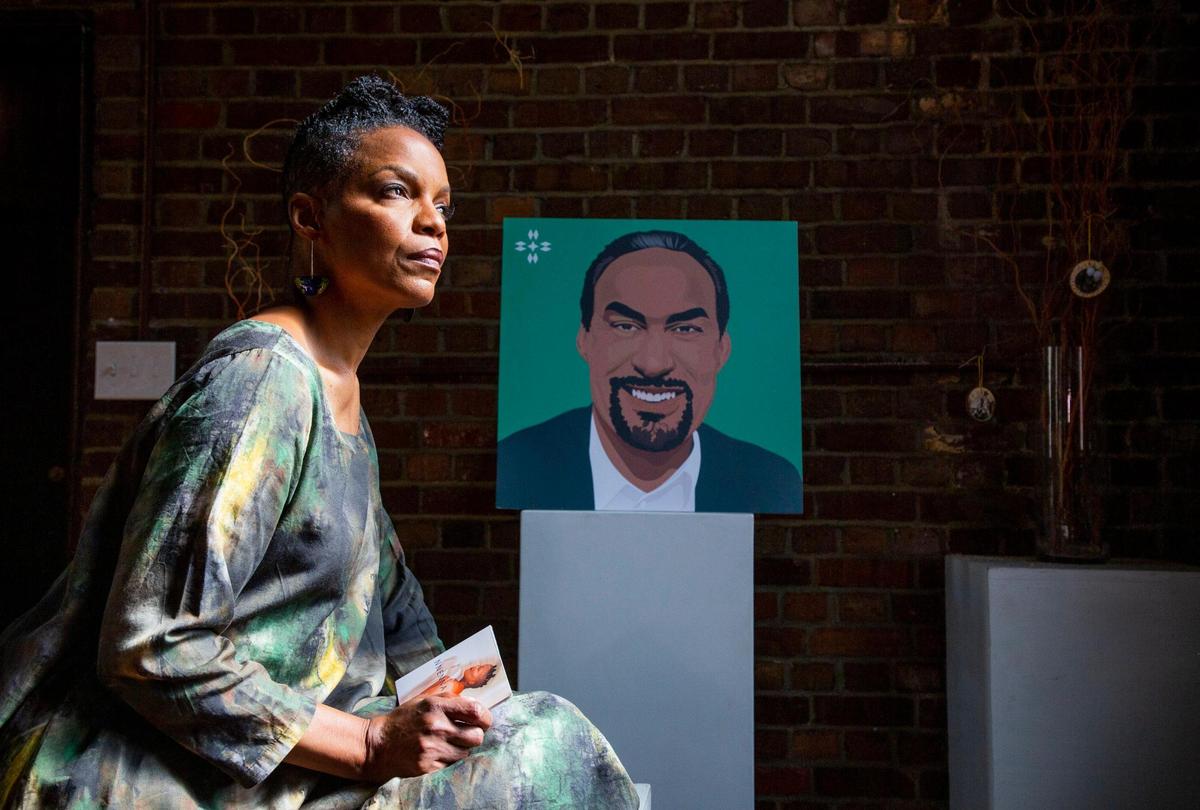
Jazz vocalist Nnenna Freelon’s new album is bittersweet — a time capsule filled with 40 years of love, laughter and tears shared with her late husband, architect Phil Freelon.
Penned as a “sonic love letter,” the album “Time Traveler” fuses old classics, ‘70s soul hits and original works. It debuted May 21, and it’s the first release in 11 years for Freelon, a multi-Grammy-nominated singer who lives in Durham.
“It was a way for me to incorporate that music, those memories, the good times and some of the sad times, too, into a sound creation,” Freelon said in an interview with The News & Observer. “I was pretty sure that the concept of ‘Time Traveler’ wasn’t something that only I experienced.”
The album earned Freelon a seventh Grammy nomination in November 2021 for Best Jazz Vocal Album. Her son, Pierce Freelon, saw his album “Black to the Future” also nominated for a Grammy, for Best Children’s Music Album.
The award winners will be announced Jan. 31 at the 64th Annual Grammy Awards.
Together, Nnenna and Phil had three children and built two internationally acclaimed careers. Her husband was a widely recognized architect who designed the National Museum of African American History and Culture and other distinctive buildings.
But in the last several years, she watched her husband struggle and ultimately succumb in 2019 to ALS, also known as Lou Gehrig’s disease. Six months later, her younger sister died. The album’s creation was steeped in those experiences.
“The music has the power to take us right back,” she said. “The smells and the sounds and the sights, it’s like magic. So ‘Time Traveler’ is also a way to enter that space and feel safe and to feel good and to feel what you feel. And if there’s a tear coming, let it come. If there’s a smile coming, let it come.”
On the cusp of 65, Freelon is starting a new chapter, she said. In this moment, she has chosen to reflect on the life she shared with Phil and the words and strength he gave her to keep living. And she hopes others can find their story in her music.
“I feel like I am re-emerging,” she said. “I am encountering myself in this new moment. I feel like a new artist. I’m no longer concerned in a way with what are people going to think if you say this, or if you do this. I’m telling my truth.
Love, family, ALS fight
Nnenna was 22 and a student at Simmons College in Boston, Mass., when she first met Phil through a mutual friend in Carrboro. She was in North Carolina to check out UNC’s School of Public Health graduate program, Freelon said.
They married 15 months later and raised their children, Pierce, Deen and Maya.
Nnenna grew in stature as an artist, earning six Grammy Award nominations, including for Best Jazz Vocal Album and Best Jazz Vocal Performance.
In 2015, Phil was diagnosed with Amyotrophic Lateral Sclerosis, a disease that attacks the brain and spinal cord, leading to paralysis and death, usually within a few years.
The couple left the downtown penthouse apartment that Phil had designed for a more accessible home in northeast Durham.
He showed her how to have fun and to live, she said. He renamed his illness “A Love Supreme,” never losing his positive attitude or his mental acuity, despite the fast and often “excruciating” process of death, Freelon said.
ALS, she said, is “a test of all your faith and all of your reserves.”
“Just to see someone lose bit by bit the parts of them that used to serve them so well was heartbreaking, but Phil showed me a kind of resilience and strength and good humor. He was so smart,” she said.
Family loss, legacy
“You’re the one that I’ve been waiting for forever, and ever will my love for you keep growing strong.”
In March 2018, as her husband’s condition worsened, leaving him first unable to use his right hand and then his left, Nnenna Freelon stored her thoughts and feelings in a journal. And then she started working on “Time Traveler.”
Together, the couple began the transformation of a small church in one of Durham’s historically African-American neighborhoods. The Geer Street church, built in 1930 to serve deaf congregants working in the local manufacturing plants, became a center for the arts.
Last year, the nonprofit NorthStar Church of the Arts provided microgrants to artists struggling during the pandemic, and as things open up and live performances can resume, it will offer programs again, Freelon said. Using it “as a place where the arts are celebrated, is really the highest and best use of that space,” she said.
NorthStar was their “legacy project,” Phil Freelon said in a 2019 interview with The Undefeated, just months before he died.
Losing her husband was devastating enough. But six months after Phil’s death, Nnenna’s sister, Debbie Pierce, died of lung cancer.
Pierce, who was 18 months younger than Nnenna, was a physician specializing in hospice and palliative care. She was her source of support during Phil’s battle with ALS, Freelon said. They were running buddies and occasionally traveled together, she said.
After Pierce’s diagnosis, their roles reversed. Her death was “tough,” Freelon said.
“It was a double whammy,” Freelon said.
Spring, roses, renewal
“The sound of my voice will leave you with fond memories of our time together.”
Freelon continued to confide in her journal, and in September, after a year of reflection and in the isolation of the pandemic, she finished “Time Traveler.”
The thoughts “were coming so fast and furious, I had to actually use my voice memo on my phone,” Freelon said. “As I was waking up, I would have a dream or just stuff, and I shared some of the musings with a friend of mine, and she said, ‘Girl, that’s a podcast.’ ”
In June, Freelon’s Great Grief podcast will debut on public radio station WUNC, featuring music and conversations with a host of guests, including musicians, poets, actors and artists.
People dance around grief, Freelon said, initially offering comfort but never broaching the subject again, as if saying the name of the one who was lost would make you remember — “as if you could ever forget,” she said.
“I want to de-mystify grief. I want to normalize it. I want to say, feel what you feel when you feel it, no matter how long it’s been,” Freelon said. “There is no calendar or linear way that we experience grief. The other thing is you don’t actually heal from it. You just find a way to incorporate it into your life.”
This year, “a spirited little doggy” named Juba came into her life, joining her older Springer Spaniel-poodle mix, Maceo.
She’s relishing the beauty of spring and the voluminous blooms of the roses in her garden. She’s looking forward to more time with her children and six grandchildren, all of whom live just a short drive away.
She still wears the silver wedding band Phil put on her finger over 40 years ago.
“These moments of re-entry are very sweet, and I hope I keep remembering — when things get so normal that you start taking it for granted again,” Freelon said. “I hope I can still remember how sweet it is to do something simple like cut roses and take them over to a neighbor and just say I was thinking about you.”
This story was originally published May 20, 2021 at 4:54 PM.