
Concert review: NC Symphony’s all-American performance spans centuries
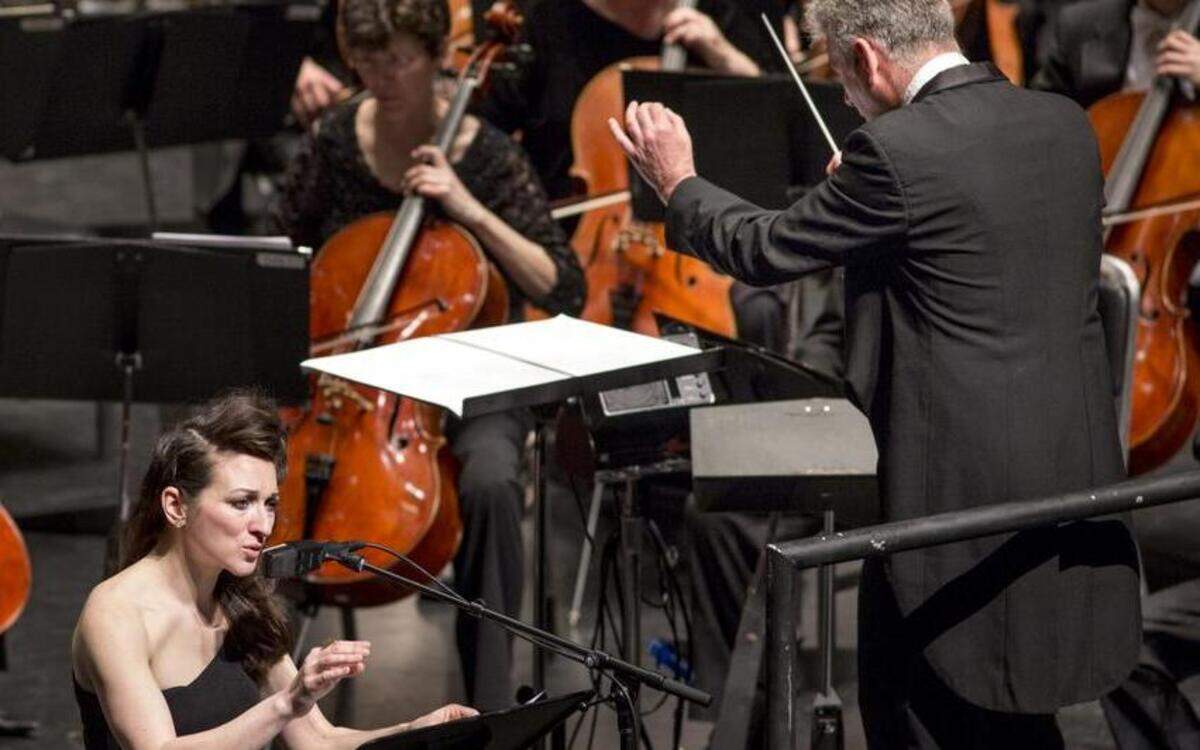
The N.C. Symphony program Friday in Meymandi Concert Hall was an all-American evening. But more important was its intriguing juxtaposition of classic works by two beloved 20th-century composers with new pieces by two emerging artists.
Familiar works by Aaron Copland and Samuel Barber opened and closed the concert, but if this was intended as insurance against possible audience reaction to new compositions, it was entirely unnecessary. Both new pieces were satisfying, with compelling elements in each.
Judd Greenstein wrote his 14-minute “Change” in 2009 for a chamber ensemble of flute, clarinet, double bass, piano and electric guitar. For this world premiere orchestrated version commissioned by the N.C. Symphony, Greenstein, 35, kept the bouncy percolations but added an engaging weight and range of color to its repeating phrases that overlap and collide. These varied enough each time to keep the piece scintillating throughout its building and receding waves.
Grant Llewellyn conducted with energetic pulse, keeping the rhythms humming along. The work showcased all the orchestra’s sections, and the players, as usual, sounded as though they’d known it for years.
At 41, Sara Kirkland Snider has proved particularly adept at vocal writing. Her 2013 song cycle, “Unremembered,” is based on Nathaniel Bellows’ poems about childhood memories of the adult world. Indy-rock singer Shara Worden performed three of these, joined by a female backup trio. Her deep, intense singing added riveting character to Snider’s haunting depictions of the mysterious disappearance of a house guest, the sad vision of a swan being run over, and the sighting of a witch-like presence in the dark woods. Llewellyn gave the pieces vivid drive and subtle shading.
Glorious ending
Copland’s suite from his “Appalachian Spring” is still deeply affecting in its spare, pioneering spirit. Llewellyn shaped its contemplative moments reverently and gave its sprightly sections precision, but smoothed over the bracing brashness it should have.
Llewellyn built the rising intensity of Barber’s “Adagio for Strings” with quiet emotion, the string section providing sonorous, arching phrasing. With Barber’s “Essay No. 2,” Llewellyn ended the concert gloriously, moving confidently from the chattering woodwinds and jazzy little riffs in the beginning to the grand, elongated climax that conjures mountainous vistas and wide-open plains.
Dicks: music_theater@lycos.com
If you go
What: N.C. Symphony – Copland, Barber, Snider and Greenstein
Where: Meymandi Concert Hall, Duke Energy Center for the Performing Arts, 2 East South Street, Raleigh
When: 8 p.m. April 25
Tickets: $18-$75
Info: 919-733-2750 or ncsymphony.org
This story was originally published April 25, 2015 at 1:27 PM with the headline "Concert review: NC Symphony’s all-American performance spans centuries."