
Raleigh Donut Dolly recalls Vietnam and its aftermath
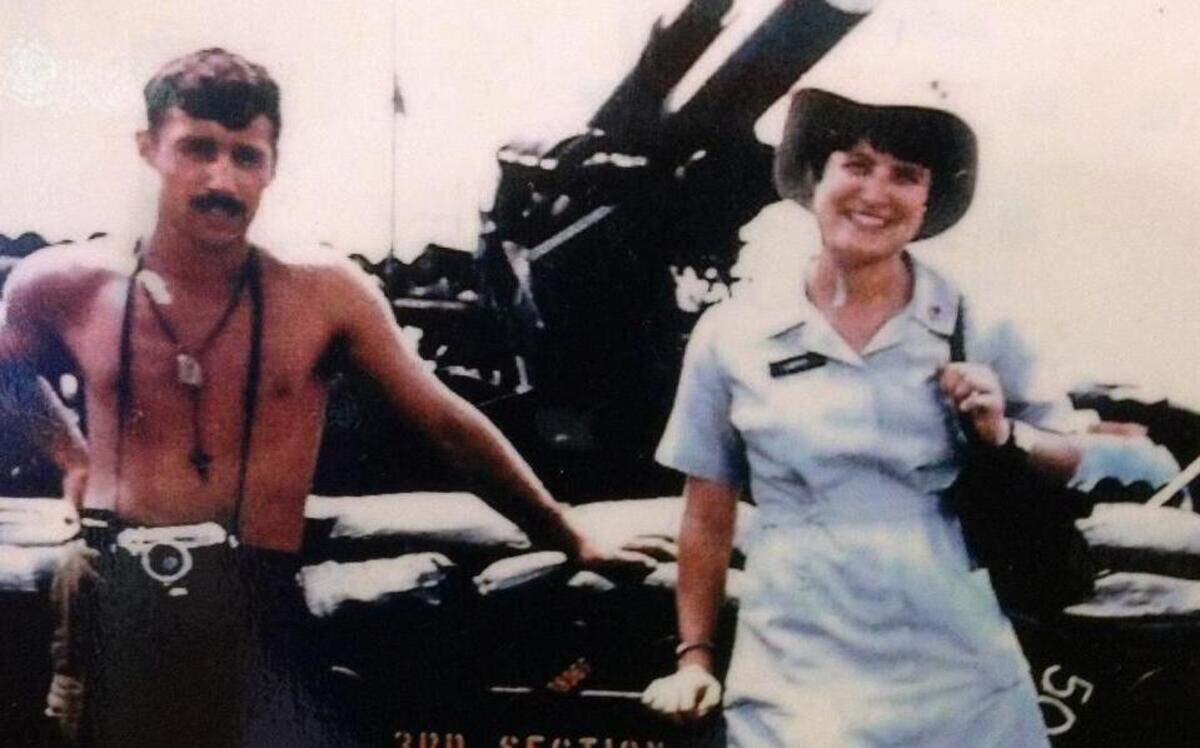
Mary “Larry” Young Hines knew the Vietnam War had changed her, but a 1971 college party in Carrboro after she came back really brought it home.
She had volunteered to go, spending 13 months in Vietnam with the Red Cross. The relief agency’s Supplemental Recreation Activities Overseas program sent 627 female college graduates – the “Donut Dollies” – to the war between 1965 and 1972 to deliver small comforts and a friendly smile.
Hines, who lives in Raleigh, said she returned in April 1969 “a controlled mess.”
“I stayed up all night. I slept all day,” she said. “All I did was write letters and send packages over to the guys and the people that I knew who were there.”
She enrolled in UNC’s graduate program for special education. She met new people, many of whom could not relate to what she had seen. She enjoyed lively but friendly debates with the guy who invited her to the party, she said.
The apartment was dimly lit and thick with marijuana smoke, and she hesitated, but her friend persuaded her to go in, Hines said. She’d only taken a few steps when someone yelled, “Oh look, everybody. Steve’s here, and he brought the war whore.”
It took her breath away.
“I went over in that direction, and I was so livid, I was shaking. I said: ‘You, have no idea what you’re even talking about. You think you hate the Vietnam War? Let me tell you something, I’ve lived it. I really hate it.’ ”
She walked the few miles back to her apartment alone and in tears.
“That’s just when I thought, I don’t fit in anywhere,” she said.
Armed with a smile
It’s been 50 years since the first U.S. combat troops were sent to Vietnam in March 1965 and 40 years since the South Vietnamese capital Saigon (now Ho Chi Minh City) fell to North Vietnamese forces on April 30, 1975.
Harold Oldham of Mebane remembers the Donut Dollies from his time at Qui Nhon Air Base in central Vietnam. Oldham, an aircraft mechanic, served in the Air Force from 1968-71, before a career in the N.C. National Guard.
The Donut Dollies were a change of pace and a reminder of home, Oldham said.
“They were there just to greet you and give you a smiling face,” he said. “The biggest thing was just to have the conversation.”
While Donut Dollies weren’t trained as counselors, they quickly filled that role, said Kara Dixon Vuic, an associate professor of history at High Point University. Military leaders may have been open to the program, she said, because they thought soldiers would be better-behaved with American women and would socialize with them instead of the Vietnamese.
In some cases, however, the women faced resentment, sexual advances and even assault, she said.
The job forced them to face the worst that humanity could do to itself armed only with a happy face, said Beth Ann Koelsch, curator of the Betty H. Carter Women Veterans Historical Project at UNC-Greensboro.
“These are women who just graduated from college, and they were dropped into this hellish environment,” Koelsch said. “They were having to be on and warm and friendly 24-7.”
A crazy time
Hines, now 68, was a sorority member and fraternity sweetheart from Lexington, N.C., and on track to earning an English degree from the University of Georgia when a Red Cross recruiter approached her. Her assignment came through in March 1968; she graduated that June.
It was a crazy time. Martin Luther King Jr. was assassinated in April; Robert F. Kennedy, in June. There were riots in Washington, D.C., and people camping in the streets. Some warned her not to go, Hines said.
She and 18 other Donut Dollies headed to the Red Cross office in Saigon that July. The rules were strict – wear a simple blue cotton uniform that fell below the knee, with approved jewelry and shoes; hair neat and plain; and no cursing, drinking or staying out past curfew.
Hines spent her first five months at Cam Ranh Air Force Base, on the eastern coast. There were no young men in the nearby villages, she said; only women, children and old men scratching out an existence among the pigs and chickens.
She moved north from there – to Chu Lai and Phu Bai – to serve LZs and other outposts. The LZs, or landing zones, were cleared hilltops from which troops provided fire support to infantrymen in the mountains and valleys.
Surrounded by death
The Donut Dollies would rise before dawn to catch resupply helicopters, she said, patching together rides to several outposts in a 12- to 15-hour day. They delivered mail, served meals and spent time with the troops, playing homemade versions of popular game shows, she said.
The first choppers brought the body bags collected by night and were reloaded with supplies and people. They left the chopper doors open, she said, in case they crashed or the door gunners had to shoot out.
Hines recalled one flight when the chopper jerked back. She was sitting on the floor and looked down, seeing a hole from a 51-caliber heavy machine gun beside her leg, she said. The pilot turned back to return fire, until somebody reminded him the Donut Dollies were on board, she said.
“I remember looking at that hole, thinking, Lord, that could have been me,” she said, “but then I looked at the ceiling, and where the round had gone through; (the shot had) scattered (punching through) five or six holes.”
Increased fighting in May 1969 kept the Donut Dollies in the American base camp, where they volunteered at the 312th Evac Hospital in Chu Lai. Hines was planning another visit to LZ East when she learned Viet Cong armed with flamethrowers had overrun the camp. Two dozen soldiers died.
“It’s hard for me to still look at it, but I have a picture from the last time we went there,” she said. “Everybody on that place is standing there and waving goodbye, and some of them are white and some of them are black, and some of them are fat and some of them are skinny, and some of them have on shirts, and some of them don’t, and I thought, this is just a microcosm of the whole thing for me ... and now they’re all gone.”
Coming home
She returned to the United States that spring, a foreigner in her own land, she said.
Girls were wearing miniskirts and hot pants, and drugs were common. Woodstock and the Manson Family murders added to the chaos. She was quick to anger and thought about returning to Vietnam, she said.
She met her husband Tom, who served two tours with the Navy in Vietnam and was a UNC graduate student, after settling in Chapel Hill.
They married in February 1972
They have since returned to Vietnam as part of a medical mission, she said, and she stays in touch with friends through veterans groups and reunions. She volunteers at the USO of RDU Center, and she still thinks about those who didn’t make it back.
Three Donut Dollies died in Vietnam. Others died at an early age or developed serious health problems thought to be related to military use of the herbicide Agent Orange, Hines said.
Other scars are subtle, like her low tolerance for fireworks, loud noises and violence, she said. But she’ll always remember the sobbing veteran who approached her to say thank you at a 1986 reunion, she said.
“He says, we were out in the field, and it was dirty, we were sick of being there and we were just animals. We were killing people. We were getting killed. We stunk,” Hines said. “We never knew when you were coming, but when those helicopters landed, and you jumped out of there, oh my God.
“He said, all of a sudden, we were people again. We tucked our shirttails in, and we watched our manners and our language. ... A lot of those people didn’t make it home, but you made them think they were going to go home.”
Grubb: 919-932-8746
This story was originally published April 25, 2015 at 8:00 AM with the headline "Raleigh Donut Dolly recalls Vietnam and its aftermath."