
Mecklenburg, Wake lose out on up to $1 million each for arts funding in NC COVID bill
Arts advocates in Mecklenburg and Wake counties say their groups are losing out on up to $1 million each on COVID-19 economic relief from the state.
On Thursday, the North Carolina House passed the nearly $1 billion Coronavirus Relief Act 3.0 that the Senate had approved the day before. It includes $9.4 million for grants for local arts organizations and nonprofits, and Cooper said Friday he would sign the bill.
But the bill excludes from arts funding any county with a population of 1 million or more, and of North Carolina’s 100 counties, only Mecklenburg and Wake meet that criteria. The money is from a federal grant.
“Mecklenburg has yet again taken a hit,” said Democratic Rep. Becky Carney of Charlotte.
The state’s largest counties will miss out on around $950,000 to $1 million each, according to Nate McGaha, the executive director for Arts North Carolina, a statewide arts advocacy group.
“We’re incredibly grateful to the North Carolina General Assembly for their support of arts programs in 98 counties, but very disappointed in their decision to exclude Mecklenburg and Wake,” McGaha said. “So we have mixed emotions.”
Legislative leaders defended their bill, saying that Mecklenburg and Wake received nearly $200 million each from the federal government for coronavirus relief, while smaller counties did not. That money did not include specific provisions for the arts but the counties could’ve used the money in part for that if they so chose, spokesmen for the leaders said.
‘It’s unjust’
While the bill excludes Wake from general arts funding, the county is home to a number of the state’s largest arts organizations, some of which received separate funding.
For instance, the North Carolina Museum of Art received $2.5 million, the Carolina Ballet was allocated $700,000 and the North Carolina Symphony received $400,000.
That means Mecklenburg is the only one left out entirely of that state arts money, said Arts & Science Council President Jeep Bryant. The nonprofit serves as a pass-through agency for funding for Charlotte-area arts and culture groups.
“It’s unjust, inequitable and an outrage,” Bryant said. “The decision by legislators to deny arts funding to Mecklenburg County will result in further loss of jobs and prolong the crisis for our cultural community.”
Bryant said the arts and cultural community in Mecklenburg County generated $242 million in annual economic activity before the COVID-19 pandemic hit. It employed nearly 8,000 people directly and supported many more jobs for contractor workers, individual artists, performers and others, he said.
‘Beyond a crisis’
A 2015 economic impact study on the arts industry in Wake County said in that year, arts spending totaled $179 million, with an impact of $557 million.
“The ripple effect of this (pandemic) is huge,” said Charles Phaneuf, president of the United Arts Council of Raleigh and Wake County.
Local arts groups have held some virtual and socially distant events, Phaneuf said, but that revenue is down 40% to 60% percent for most.
“It’s beyond a crisis,” he said. “These groups were the first to close at the beginning of the pandemic and they’ll be the last to open. This is an existential crisis.”
In a statement, Wake County said it was disappointed in the county’s arts funding exclusion, but pleased to see the $3.9 million allocation for the art museum, symphony and ballet. The county didn’t commit to covering what the state left out, but said it’s exploring COVID-related relief for arts groups.
“Wake County management is researching all avenues to assist our struggling artists,” Wake County director of communications Dara Demi said in an email. “The Wake County Board of Commissioners has consistently made the arts a centerpiece of our community and understands the importance of supporting our creative class and the cultural and economic benefits they bring to our county.”
Funding concerns
The money that would have gone to Mecklenburg and Wake counties was redistributed to the other remaining counties.
“The rationale is that those smaller counties did not get the direct cash infusion from the federal government,” said Pat Ryan, a spokesman for the Senate President Pro Tem Republican Phil Berger. “So it only seems fair that we provide them with this arts funding.”
Mecklenburg and Wake counties got direct payments worth $194 million from earlier federal COVID relief bills, said Joseph Kyzer, a spokesman for Republican House Speaker Tim Moore. The bill the Legislature approved was focused on counties that did not receive such large appropriations, Kyzer said.
Rep. Carney also questioned why the Raleigh Ballet got $700,000 in the ballet while the Charlotte Ballet got nothing.
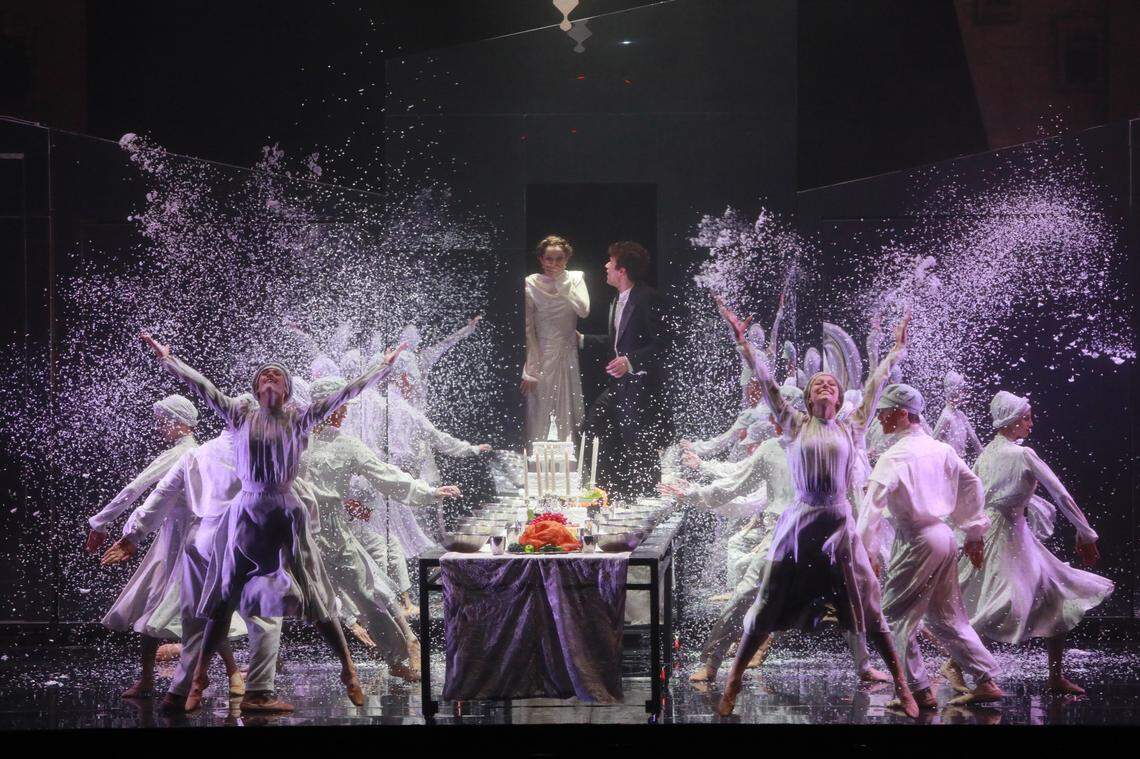
Charlotte Ballet Executive Director Doug Singleton said it’s unfortunate that Mecklenburg artists were excluded from the funding as well as Wake County groups. He said there needs to be better accountability over government funding.
“This process highlights the inequity associated with line-item funding,” Singleton said.
McGaha said that while Mecklenburg and Wake have greater resources than the rest of North Carolina, their funding needs are great as well. “Many arts organizations in larger cities have a reach beyond their borders, having more of a regional impact,” McGaha said.
Some leaders said omitting the state’s largest counties was simply politics.
“I see it as political. It’s a ding against the two counties that are overwhelmingly represented by Democrats,” said Democratic Sen. Natasha Marcus of Mecklenburg.
“It was a whirlwind session and they, as with so many other things, didn’t take Democratic input, and when they do that Mecklenburg and Wake are disadvantaged.”
This story was originally published September 4, 2020 at 6:00 AM with the headline "Mecklenburg, Wake lose out on up to $1 million each for arts funding in NC COVID bill."

