He was wrongfully incarcerated in 2013. Today, his art hangs in Triangle art museums.
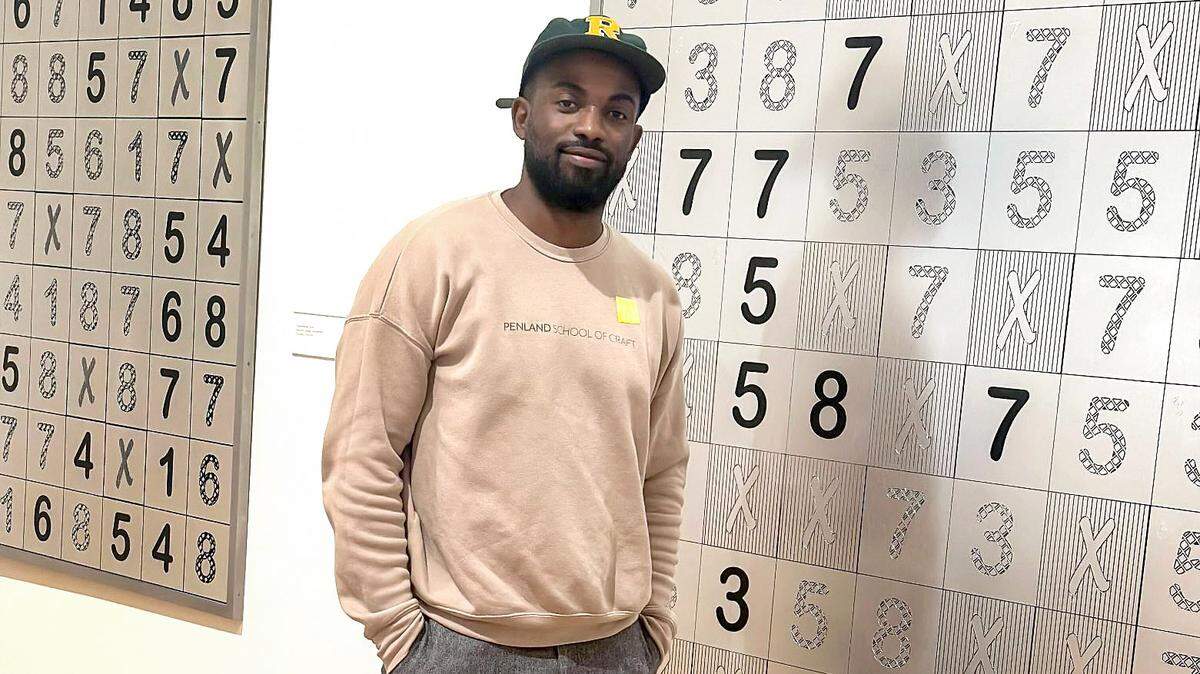
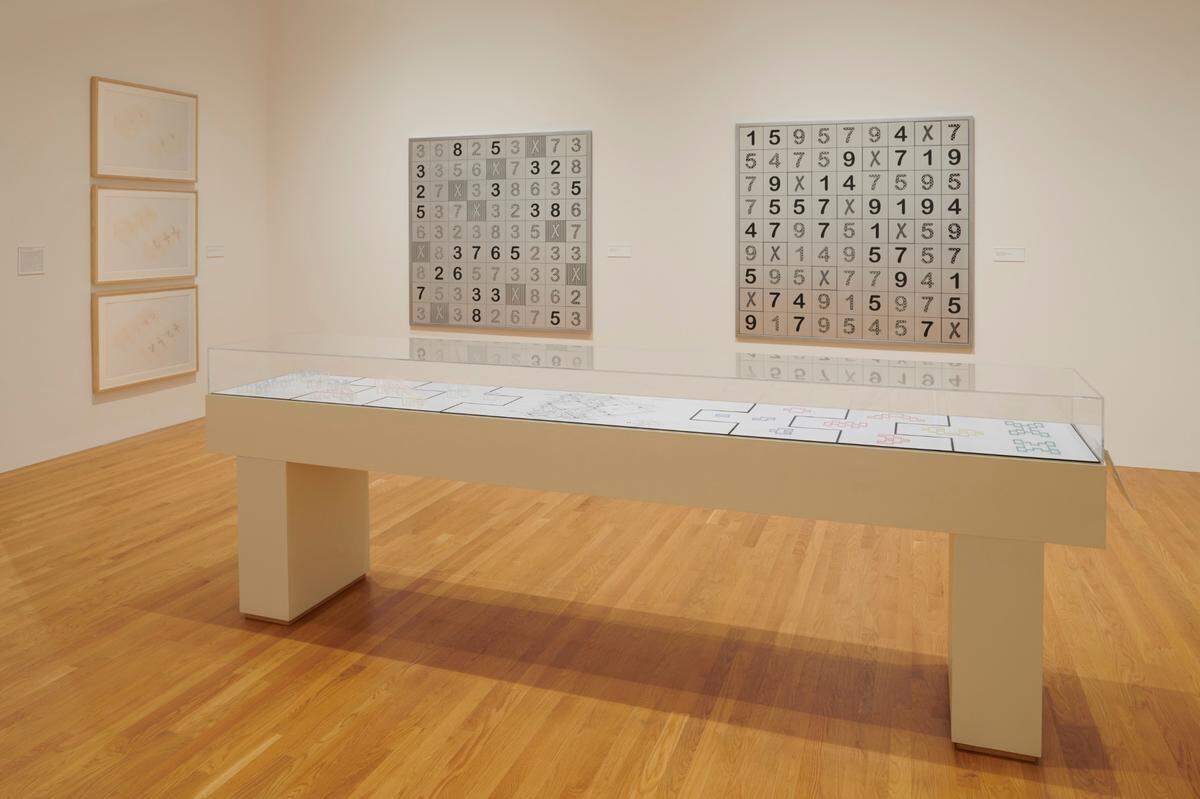
At first glance, the large, silver-colored engravings hanging in the Nasher Museum of Art resemble Sudoku puzzles.
But to artist Sherrill Roland, 40, they’re anything but ordinary. Each piece adds up to a number assigned a wrongfully incarcerated inmate in North Carolina, like Winston-Salem exoneree Darryl Hunt, who was exonerated in 2004 in the 1984 murder of a young copy editor.
Roland, also an exoneree, learned how to play Sudoku during his 10 months in state prison a decade ago. The Asheville native quickly saw how inmates are reduced to an assigned number, and it has stuck with him ever since.
“I remember my number because that number stood in for my name. When people wrote me mail, whenever I moved through that space of jail, I would get called out by number,” Roland said. “It’s just something you can’t forget, but it’s also completely useless out here in this world.”
Outside the criminal justice system, Roland gives these numbers new purpose in his exhibition at the Nasher, “Processing Systems: Numbers by Sherrill Roland,” which will run through Jan. 19. A parallel exhibition, “Processing Systems: Bonding by Sherrill Roland,” opened at UNC-Chapel Hill’s Ackland Art Museum in August and will run through July 13.
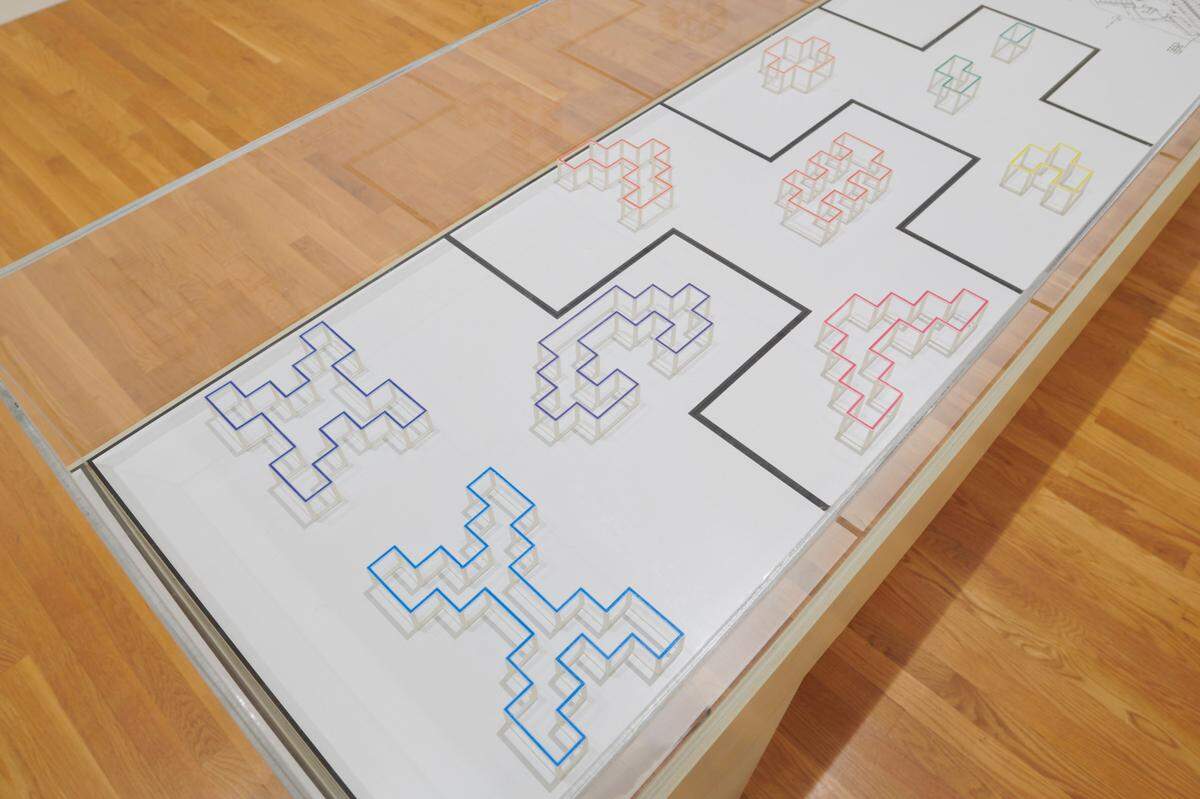
The exhibits focus on experiences in the judicial system; the Ackland exhibit examines the bond Roland and his father share as formerly incarcerated people, while the Nasher exhibit looks at the dehumanization the wrongfully convicted face in prison.
For Roland, art has been an important way to process what he experienced while also serving as a conversation starter on the flaws of the criminal justice system.
“I’ve used art as a way of expression and relief, and also, you could see it as advocacy work in the sense of still speaking up for individuals who have been touched in certain ways by the criminal justice system,” he said. “But I’ve also been curious about the law more, because at times it felt — it’s such a weapon, such a heavy tool.”
Standing up for himself, others
Roland’s life turned upside down as a graduate student pursuing a master of fine arts at UNC Greensboro in 2012, when he was indicted on multiple charges out of Washington, D.C., the nature of which he declined to detail, citing privacy concerns. He spent 10 months in prison before he was exonerated.
After his release, Roland returned to graduate school and began The Jumpsuit Project, an interactive experience where he wore an orange jumpsuit resembling a prison uniform every day leading up to his graduation from UNC Greensboro in 2017. That work gained national attention, and Roland quickly realized his art could be an emotional outlet for processing his incarceration.
“I needed some work to be done for myself, so I did it for personal reasons,” he said. “But me standing up for myself was also standing up for others, is what I found.”
Over time, Roland focused his work less on his own life and more on the experiences of others in the prison system. The accolades followed, including a Smithsonian Research Artist fellowship last year and permanent exhibitions in museums in Charlotte, Miami and other cities.
Ten years after his release from prison, Roland’s exhibition at the Nasher marks the completion of a fellowship at Duke’s Franklin Humanities Institute’s Social Practice Lab, and he’s wrapping up his first semester as a tenure-track professor of sculpture at UNC-Chapel Hill.
“All the work that was made for this show came from doing research here [at Duke] and also having the support to physically make it here,” Roland said.
The coldness of a prison cell
The journey to Roland’s current exhibitions took over a year, with initial talks starting in early 2023, said Nasher curator Julia McHugh.
McHugh, 38, and her co-curator, Pedro Lasch, 49, described the Nasher exhibit as unique in many ways, including Roland’s collaborative spirit and his flexibility in creating all new pieces for the exhibition. Lasch, the director of the lab hosting Roland’s fellowship, suggested the display as the culmination of Roland’s fellowship, McHugh said.
“[Roland] was across the street at Duke’s Rubenstein Arts Center actually producing these works,” McHugh recalled. “Pedro [Lasch] and I were very involved in his interaction with the machines he used to produce these works and that process.”
Roland solely uses materials he had access to or was surrounded by in prison. For the Nasher exhibit, the Sudoku-like puzzles are made of aluminum, meant to reflect the coldness of a prison cell, he said.
Roland views the puzzles as an abstract type of portrait, emphasizing how prison dehumanizes people. He chose to keep all of the exonerees anonymous except for Hunt, whose case is well known, in order to respect their privacy.
To McHugh, this exhibition represents a new step in Roland’s career.
“I think this is the first time he’s sort of thinking outside of his own personal story and thinking about the larger world of wrongfully incarcerated people, especially in his immediate community,” she said.
Crucially, Roland’s art bridges the gap between artistry and social justice, easing the way to difficult conversations, Lasch said.
“Too often, when people see an artwork that deals with the prison system, they assume, ‘Oh, yeah, it’s a great topic, but it’s not the most amazing art,’” he said. “And I think when you see Sherrill’s show, it’s undeniable that you can do both — yeah, it’s not easy, but you can do it. And he has done it.”
How to go
▪ “Processing Systems: Numbers by Sherrill Roland” is at the Nasher Museum of Art at Duke University in Durham through Jan. 12. Admission is free. nasher.duke.edu
▪ A parallel exhibition, “Processing Systems: Bonding by Sherrill Roland,” is at the Ackland Art Museum at UNC-Chapel Hill through July 13. Admission is free. ackland.org
This story was originally published October 31, 2024 at 8:00 AM.