HBO’s ‘The Staircase’ Episode 5: Prison life and a fight about documentary’s balance
.jpg "Colin Firth as Michael Peterson in the HBO Max series “The Staircase.”")
HBO Max has premiered its new series “The Staircase,” a dramatic retelling of the 2001 death of Kathleen Peterson and the Durham murder trial of husband, Michael.
The scripted series, starring Colin Firth as Michael Peterson and Toni Collette as Kathleen Peterson, is based on the Netflix documentary series of the same, but draws on other source material and takes dramatic license — which makes for a very different viewing experience than fans of the documentary have known.
The series was created, produced, written and directed by Antonio Campos, with Maggie Cohn as co-showrunner.
HBO Max released the first three episodes — streaming only — on Thursday, May 5, with a new episode debuting each Thursday through June 9 .
We’re recapping episodes. This week we have Episode 5: The Beating Heart.
Note: The narrative of Campos’ dramatic retelling of the Peterson saga jumps around in time. Even though many of us — locals who lived through the original coverage of the case and those who have watched the documentary series — likely know the significance of various plot points, we’ll try in the recaps to stick with the dramatic timeline and not spoil events that take place in future episodes.
Also note: Remember, this is a dramatic, scripted version of events, which means some things depicted may or may not have happened the way we see. In fact, the French filmmakers who made the original “Staircase” documentary series are very upset with HBO, about this episode in particular. Keep that in mind as you watch/read.
Below the recap you’ll find links to other coverage of “The Staircase,” including a timeline of Peterson events, an update on where major players in the case are now, a closer look at The Owl Theory and more.
Peterson’s bumpy transition to prison life
Episode 5 begins in April 2004, six months after a guilty verdict sent Michael Peterson to prison for the 2001 murder of his wife, Kathleen, in their Durham home.
Michael sits in a cell alone and his face reflects that he has taken a bad beating: two black eyes, a black bruise over his lip, and cuts over his nose and on his forehead. The guard calls for him and he slowly gets up and moves toward the door. He’s headed back to general population. In a shower scene, the camera reveals two large, purple bruises on his back that look almost like stomp marks.
He visits the commissary, or canteen, to buy supplies and cuts off the cashier as she tries to loudly announce that he has more than $300 balance in his account.
.jpg "colin-firth (1).jpg")
In the prison yard, he stands alone and eyes various groups — perhaps looking out for the people who beat him up, or maybe trying to figure out where he might find safety.
Next we see him pick up his mail, and there’s a package from Paris.
Back in his cell, Michael takes his mail from under his pillow, but before he can open it, another prisoner, who is pushing a broom, stops at his open door.
“You know why he jacked you up, right?” he says to Michael, who answers “No.”
“He was waiting on a single cell for five years and was next on the list, but they gave it to you. Because you’re famous,” he says. “See you ‘round, Staircase.”
Letters from Sophie
2004: Michael sits in his cell and reads through letters and postcards from Sophie Brunet, who we learned in Episode 4 is one of the editors of “The Staircase” documentary. Brunet is played by Juliette Binoche.
“The deadline is tight,” Brunet says in the postcard. “Trust that we are working as fast as we can to get your story in front of the world, and finally get you the trial you so deserve.” Her letter accompanies a copy of “In Search of Lost Time, Vol. 1” by Marcel Proust.
Now we’re in Paris, and we see Sophie arrive at the office, where she and a team are editing “The Staircase.” They talk about getting Episode 4 “out to sound.”
Sophie stares at photos on her wall, tacked up in storyboard form, outlining episodes of the series.
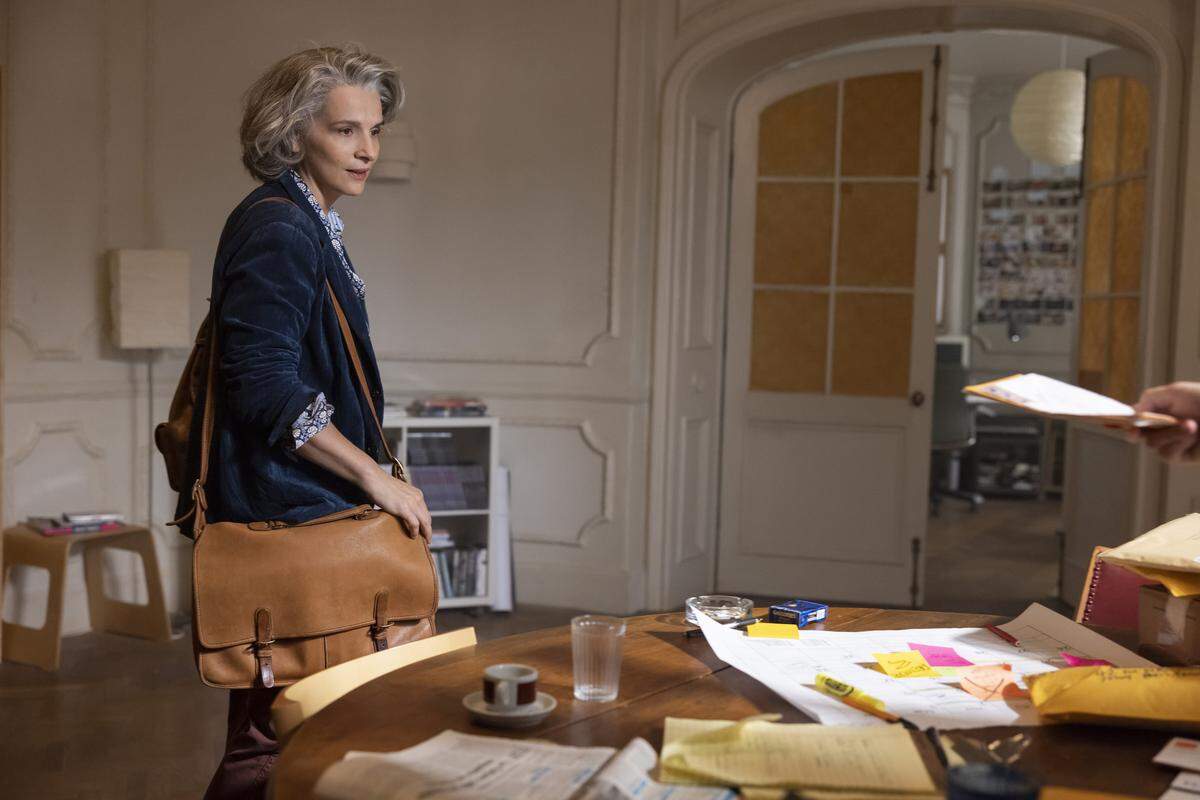
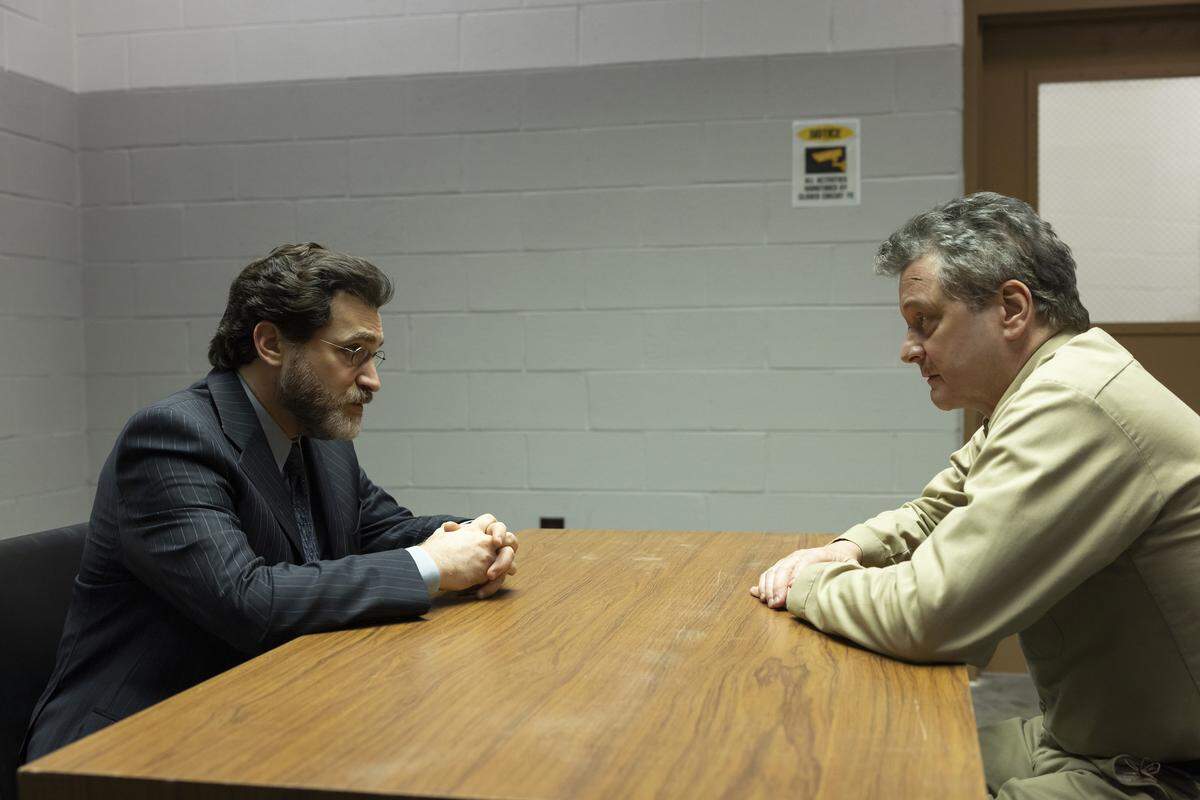
In the next scene, Michael sits across from attorney David Rudolf (Michael Stuhlbarg), who is visiting him in prison.
Peterson wants to know how long before his appeal, before he can get out: “Just look at my [expletive] face David ... the longer I’m in here, the more likely it is I’m going to get killed.”
Rudolf tells him it could be three months. In fact, he says he’d be shocked if it takes longer than that.
“I’m not supposed to be here, this wasn’t supposed to happen,” Michael tells him.
Checking in with the kids
Back at the Peterson house in Durham, we see Clayton Peterson (Dane DeHaan) with a paint roller, painting over the bloody staircase, and Margaret Ratliff (Sophie Turner) packing up Kathleen’s Christmas Nutcracker collection. The whole time we hear Bill Peterson (Tim Guinee) on the phone talking about the grounds for appeal.
Margaret shows the nutcrackers to Bill, who whispers: “Sell!” Margaret looks distraught. “The whole set?” Bill shrugs. “Mom loved them,” she says.
Later, at dinner, Margaret talks about her work in a film production office in Los Angeles. She mentions Martha’s working “some customer service thing,” and Bill and Clayton laugh. “Martha’s not really ... pleasant,” Clayton jokes. Todd Peterson (Patrick Schwarzenegger) comes in wearing a leather jacket and carrying a sack of beer.
We switch to Martha Ratfliff (Odessa Young) in San Francisco, who comes into her apartment and tells her roommate that she just quit her job. “I just didn’t really want to be there anymore,” she says. Her phone rings and she looks at the number and then puts the phone down without answering.

A fight about ‘balance’
We’re back in Paris, where Brunet is with producer Denis Poncet (Frank Feys) and director Jean-Xavier de Lestrade (Vincent Vermignon), and they are debating the balance of the edits so far. It is clear that Poncet believes Brunet’s edit is not balanced.
Brunet tells him: “The lies about his sexuality, the witness in Germany — the edit is balanced as it is. Any more evidence of innocence or guilt will upset that balance.”
Poncet reminds them that Michael was found guilty and that they can’t act like that wasn’t the case. He insists that Brunet include in the documentary the testimony about the broken cartilage.
No, says Brunet, it’s “superfluous.” De Lestrade nods in agreement and says he’s hearing them both out.
Poncet offers a recap: The medical examiner got on the stand and testified with medical certainty that Kathleen was strangled, he says. Brunet interrupts, getting heated: “This is the same woman who said Kathleen was beaten in the head with a weapon that was later found in the garage.”
De Lestrade notes that to add the cartilage, they have to cut something. He asks Poncet what they should cut. Before he can answer, Brunet sarcastically adds that she is curious to hear his answer. Poncet reminds her that they won an Oscar (for “Murder on a Sunday Morning”) without her help.
It’s tense.
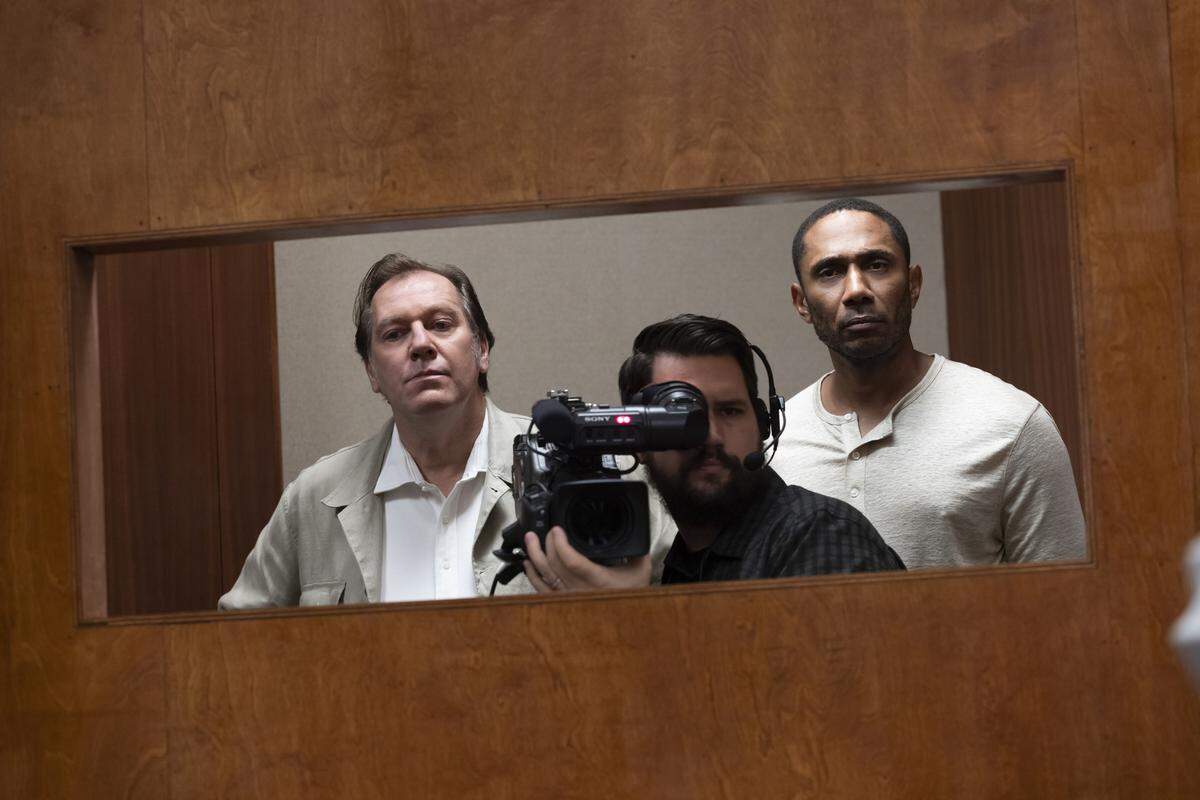
But Poncet answers. The scene he would cut, he says, is the scene with Michael “waxing poetic” with Clayton about age and ego. De Lestrade says absolutely not, that scene is a “key scene for understanding Michael.” Poncet replies that he doesn’t get “the obsession with understanding Michael. He’s a liar! No one can understand a guy like that. That’s the thing!”
Brunet, still sarcastic, adds that he’s just the main character in the show, that’s all. Poncet says yes, a show where we know the ending of the story: guilty.
Poncet argues that jurors said they convicted Michael on physical evidence and specifically cited the cartilage testimony. Brunet argues that it’s slander, and they can’t support slander.
Brunet: “He deserves an accurate portrait, a balanced one.”
Poncet: “What, you know what’s accurate, then? You don’t even know this guy.”
Brunet: “But I do. We’ve been writing each other.”
Poncet’s head whips around, and de Lestrade looks concerned. He asks her for how long. “Five, six months” she answers.
When Poncet stands up and starts to pace, Brunet says, “Oh, get over yourselves. You spent two years drinking the man’s wine and laughing at his jokes. I’m just sending him postcards and books.”
Poncet is enraged — particularly that Brunet is sending him Proust — and Brunet and de Lestrade laugh at his outburst.

Stamps for life
Back in prison, Michael is eating as a screaming man walks toward him: “Hey Staircase, I ain’t [bleeping] done with you!” but a guard steps in and pushes him away.
Then we hear Brunet’s words from her next letter to him. She tells him she is working day and night to get the documentary finished. “I remain convinced that once the world sees it, it’ll help your appeal,” she says.
The inmate who does janitorial stuff shows up again and tells Michael if he brings 50 37-cent stamps to the yard, it’ll take care of his “problem.” (Stamps are better than money, he says).
Bad timing for bad grades
November 2001: We skip back in time. Michael goes to the mailbox, removes Durham’s Herald-Sun newspaper and sees the headline: “Incumbent Clement defeats novelist Peterson in a landslide.”
Neighbor Larry Pollard (Joel McKinnon Miller) pulls up in Mercedes convertible and tells him he’s sorry about the election, but says he voted for him. “So you were the one?” Michael jokes.
Michael sees mail from Tulane University and opens it. Next he’s on a call with Margaret, angry about her grades and telling her that Tulane is going to take her scholarship away. Margaret tells him that she’s struggling, that she feels like there’s something wrong with her — her friends think she has a learning disability, she tells him.
“Margie the martyr. That’s just medical jargon for ‘lazy’ — which I agree you’ve always been,” he responds.
She asks him why he’s being “so awful” and says she’s going to call “mom” instead. Don’t bother, he and Kathleen are on the same page, he tells her, and what’s more, they’re not paying for her plane ticket home for Thanksgiving. They need to start saving money for when they drop her financial aid, he tells her, and hangs up on her.
Margaret is crying. She calls Martha and tells her that he isn’t paying for her to come home for Thanksgiving. Martha wants to know if he was “normal dad angry or was it like spring break angry?” Martha tells her if she’s not going home, neither is she — she’s staying in San Francisco.
.jpg "colin-firth-toni-collette (1).jpg")
‘Selling everything the man owned’
2004: We’re back at the Peterson house and Margaret is packing more household items to sell. She puts a price tag on the grenade that always sat on Michael’s desk. Bill is on the phone with Rudolf, trying to push him on the appeal process. We have no choice but to be patient, Rudolf tells him.
Rudolf asks Bill how the kids are holding up and Bill says: “Their 60-year-old father was just brutally assaulted by a meth head and thrown into solitary confinement for a week.” Plus, he tells Rudolf, he’s “selling everything the man owned” to keep writing him checks.
Inside the house, Todd and Clayton move furniture while Todd tells Clayton about how great the timeshare business in Cabo is. He drinks beer and tells Clayton he should join him there. Clayton looks at him with skepticism and concern.
‘I voted for Gore’
Michael delivers the 50 stamps to his new protector, an inmate called BK, who tells him there’s nothing to be nervous about — unless he’s in “the brotherhood.”
“You’re not a Nazi, huh, Staircase?” another inmate asks him. “Of course not,” Peterson says. “I voted for Gore.”
BK tells him to bring him 50 stamps every Monday and he won’t have to worry about “that crackhead” anymore. They fist-bump. Michael starts to walk away, but the inmate who acted as the go-between (the one with janitorial duties — we don’t catch his name) invites him to lift weights with him. He has a friend.
Next we hear Michael’s letter to Brunet, voiced by Firth. He asks why she’s still writing to him — she’s “a smart, accomplished woman in the prime of her life” and he’s a “convicted criminal waiting for some (expletives) in black robes to admit some mistakes were made and free me.”
Back in Paris, Brunet smokes cigarettes while she watches footage of the medical examiner’s testimony on the broken cartilage. Another person working on the doc comes in to say he’s going home. She asks him what he thinks about the broken cartilage. Could Kathleen have broken it in the pool accident? she asks. Maybe, maybe not, he says.
“Right, we can’t know for sure,” Brunet tells the young man. “I feel like if I met Michael, if I had an hour with him, I could make sense of all this.”
“I doubt it,” he responds.
Brunet pulls up the footage of Michael talking to Clayton about missing Kathleen, but not being able to change anything. “A great deal of selfishness and ego goes away with age,” Michael tells Clayton. Brunet smiles. “We can’t help it. You watch yourself get old and fat and stupid, and so, you worry about other things. Other people. Those you love. Like you guys.”
Larry buys a Christmas deer
2001: We’re back in 2001, and we see Kathleen at the gym, running on the treadmill next to a younger woman who is faster and has better endurance (which Kathleen notices). Kathleen gets off the treadmill and bumps into the woman we saw Kathleen fire from Nortel in Episode 1. The woman is happy to see her and says the firing “set her free.” She isn’t making as much money, she tells Kathleen, but the hours are “humane.” Kathleen seems jealous.
2004: Margaret is carrying a box through the house during the estate sale, collecting items that are not for sale. She takes a cup — the one the family passed around the dinner table and drank from in Episode 1 — out of a potential buyer’s hand and tells them it’s a family heirloom.
Bill greets neighbor Larry Pollard, who wants to buy Kathleen’s white deer lawn ornaments. There’s only one deer there and Larry asks, “weren’t there two?” Bill says he has no idea. Larry asks him how much he wants for the deer and Bill tells him he can have it. “Nonsense,” Larry says. “Michael needs the money. Let’s call it a hundred.” He hands Bill some cash. “Remember, I’m right next door if you need me. I’m retired now. Got nothing but time.”

Todd and Clayton visit prison
2004: Todd and Clayton visit Michael in prison and Michael explains that he needs someone to make his commissary deposit each week, to cover food, writing materials and most importantly, stamps.
“I can take over,” Clayton says. Todd says no, he can keep doing it, even though he’s in Mexico. They argue a little and Michael settles it: Todd will handle the commissary money, Clatyon gets the dogs. (“I hate those [bleeping] dogs,” Clayton says.)
Todd updates Michael on the estate sale and Michael asks about a listing for the house. Clayton breaks it to Michael that the house is going to go for less than asking. Way less. “Are you kidding me!? It’s got six [bleeping] bathrooms! Why!?” Michael demands.
Todd clears his throat. “Because of what happened in there.”
Michael pauses. “So, I’m gonna be broke when I get out of here.”
Some people argue in a corner of the visitor’s room. Clayton looks around, uncomfortable. “This is horrible. I don’t know how I survived,” he says.
“Clayton, you only did four years. And you were guilty,” his father snaps at him.
Back at the house, now completely empty, Margaret, Todd and Clayton roll their suitcases to the front door, turn out the light and close the door.
Letters from Paris stop
2004: Back in Paris, de Lestrade oversees the recording of “The Staircase” theme music while Poncet chats up some financial backers. He tells them how scary the Peterson house was, with its maze-like hallways and creaky wood floors. They ask for a private screening and de Lestrade tells them it’s not quite ready.
Poncet tells them to wait a month and a half for the official premiere.
Later, with the financial backers out of the room but the orchestra still recording, Poncet tells de Lestrade that they need to remove Brunet from the project. “She’s biased. It shows in her work,” he says. “The stakes are too high.”
De Lestrade tells him that he personally signs off on every cut she makes and that they aren’t firing her.
Poncet is adamant. “She has to go,” he says. “Why not? It would give her more time to consort with felons.” Poncet makes a joke about Brunet’s husband just before Brunet walks into the room. She sits and listens to the mournful music with the two men.
She tells Poncet she understands his concern and if he wants, she’ll stop writing to Peterson. He tells her it’s “a good start.” She tells him she will do it for the good of the documentary. Poncet asks if that means they can revisit the issue of the cartilage scene and Brunet bristles. She and de Lestrade are both angry that he would bring that up again.

“She edits, I direct, you produce,” de Lestrade tells Poncet. “You’re not supposed to intervene in artistic decisions.”
As they fight, the orchestra continues take after take of the depressing “Staircase” theme. Brunet watches the opening of the film as the music plays.
In a voiceover, Brunet writes another letter to Michael, this time to tell him that she needs to take a break from writing to him. We see her at home, eating dinner with her husband and a small boy, and she looks miserable.
Peterson writes her back and tells her he’s sorry he won’t get more letters for a while, but thanks her for the latest book, “Alice’s Adventures in Wonderland,” and compares his experience in prison to Alice’s, going “through the looking glass.”
He tells her how hellish prison is and compares it to war — particularly in how you can meet interesting people who can be funny, gentle and loyal. “It’ll make for a good novel one day, I can feel my imagination turning on, thanks to you.”
Michael tells her he’s been thinking about Paris lately, about a cafe he knows — one he visited with Kathleen. He tells her when he wins his appeal, he’d like to go there with her.
‘Lose cartilage, keep Clayton’
2004: At the office, Sophie gets Michael’s letter but she doesn’t open it. She folds it and puts it her pocket, telling her colleague, “nope nope nope.”
Poncet and de Lestrade arrive to review the new edits and they once again argue over the inclusion of the cartilage scene. De Lestrade puts his foot down — no cartilage scene. Period.
Poncet calls him an arrogant [expletive], telling him that he (Poncet) put his reputation on the line for the film, getting them to expand from two hours to eight, and even used his own money to finance them.
The two men continue to argue, with Poncet saying that he “kills himself” for their films, but de Lestrade gets all the interviews and applause while Poncet stays in the shadows doing “the dirty work.” Following this case was his idea to start with, Poncet reminds him.
Poncet ends his rant with: “You don’t respect me” and de Lestrade doesn’t disagree. “We could have made something special. Something that made history.” He walks from the room.
When he’s gone, Brunet says” “Lose cartilage, keep Clayton. Yes?” De Lestrade nods and says, “Yes.”
Todd’s down in Mexico
2004: Now we’re in Cabo with Todd and his friend (now business associate) at one of their timeshares with a couple of women. Todd grabs a bottle of liquor, turns on the music and proceeds to get wasted on the condo’s terrace.
“When you come to Cabo, no one knows who you are, you can do anything you want,” he says.
We skip back to Michael in prison, attempting to buy 10 rolls of stamps (and a honey bun) at the canteen. But there’s no money there. The cashier (who really has a terrible attitude, if I may say so) tells him he’ll have to check back next week.
Michael panics, tells her he really needs this. She yells at him to step out of line NOW.
He goes to the yard to tell BK that he doesn’t have the stamps but he’ll get them, he just needs one more day. He’s told he must get the stamps or the crackhead will get him. “This ain’t no damn charity,” BK tells Michael.
Michael tells his janitor/weight lifting friend that his son didn’t put money in his account, and his friend lets him stand by him while he lifts, so that no one messes with him.
Back in Mexico, Todd wakes up and there’s blood all over his bed, all over the bathroom and all over his back. All that’s left of the young woman he was with the night before is a pink bra. He freaks out and starts calling his friend. Turns out Todd fell and hit his head, and that’s where the blood is from.
His friend tells him he scared the girls away, and he needs to get his act together.
Jump back to prison, and Clayton is telling his dad: “I set my account to autopay so it’ll never happen again.”
Michael is relieved, but super on edge. Clayton tells him that his wife (fiancee?) Becky is pregnant. Michael smiles, gets up and hugs Clayton. A guard yells out: “All right 640, make space.”
Michael tells Clayton he hopes his appeal comes through before the baby is born so that he can be there for him. Any day, Clayton tells him, and adds that they think they’re having a girl. “Now girls are a handful, you know that, right?” Michael tells him. Clayton beams.

Thanksgiving canceled in Durham
November 2001: Kathleen is in the bar or lobby area of a restaurant on her cell phone with Margaret. Margaret is telling Kathleen that Michael won’t pay for her to come home for Thanksgiving. Kathleen tells her she’ll give her the money for a ticket and that Michael doesn’t need to know, but Margaret, in tears, says she’s already made plans to go to Rhode Island to see her Aunt Blair. “I’ll see you at Christmas — if I’m invited,” Margaret says.
Kathleen goes back to the table, where she and Michael are having dinner with another couple. They discuss work stress and Michael orders another bottle of wine, even after Kathleen said it was pricey.
Kathleen announces that she’s thinking of taking Thanksgiving off since some of the kids aren’t coming home. Michael pretends not to know that Margaret isn’t coming home. Kathleen says maybe they’ll go to her sister’s house for Thanksgiving this year, and Michael looks sorry that he caused the fight with Margaret, but says nothing. He tells their friends they’ll need them to come over and feed the bats.
The request for appeal is denied
Michael’s eating lunch and his janitor/weight-lifting friend comes over to sit with him. Michael thanks him for letting him hang with him the day before, and tells him everything is sorted out now, even mentions that he’s going to be a grandfather.
His friend looks confused and comments on how relaxed Michael looks. “When I lost, it took me a minute,” he says. “Lost? Lost what?” Michael asks.
Then Michael’s in the common room watching TV and sees news that he has lost his bid for an appeal. The news notes that it has been nearly a year since Michael’s conviction. His defense team must now appeal to the North Carolina Supreme Court for any chance of a new trial.
Next we see Michael on the phone with Rudolf. He’s angry that he didn’t hear the news from him.
Rudolf tells him there’s still hope. He says the judges agreed with their argument that the seizure of his computer was unconstitutional, but they also ruled that was “immaterial to the final outcome.” But because it was a split decision, the appeal automatically goes to the State Supreme Court. Rudolf tells Michael it could be “another year. Or two.”
Rudolf adds: “I’m with you till this is over. Right here. You know that, right? Come on, I can’t get off this call if you’re mad at me.”
Michael tells him he’s not mad and hangs up.
We see the kids react to the news. They’re on a conference call together and Clayton reminds them this isn’t over, there’s another appeal.
Margaret asks, “is this just gonna go on for years?” and Todd says it has not been years, it’s been 10 months. Margaret responds, “It’s been three years since mom ...“
The screen shows all four kids in four panels. Martha is smoking (probably) pot.
Todd says they need to buckle down and refuel. Clayton says, “There are still moves left on the board.” Martha, in a stoned haze, says, “Yeah, it’ll all be fine.”
‘A masterpiece’
De Lestrade introduces “The Staircase” at a screening in Paris while Brunet stands in the wings, Poncet by her side. She looks sad.
As the film plays, de Lestrade tells Brunet: “I’m sorry about Michael. It’s not fair.” She responds: “Tomorrow is another day.”
We see her in the lobby and hear applause inside the theater. The crowd calls the documentary “a masterpiece.”
De Lestrade tells Brunet: “If this show works, it is because of you. You are the beating heart of this project, my old friend.”
Brunet walks out onto the sidewalk and opens and reads the old letter from Michael.
Margaret watches ‘The Staircase’
2004: Margaret is at home in Los Angeles. She checks her mail and finds a letter from Brunet, along with DVDs of “The Staircase” documentary (which at its earliest stage was called “Soupcons”).
“We hope we did justice to your family’s story,” the letter reads. “Please know that to me, this is not the end.” The letter is signed Sophie, Editor (unreadable) Productions.
The episode ends by alternating back and forth between two scenes:
- Michael is alerted that he has a visitor in prison.
- Larry Pollard sits at his desk, looking over the autopsy report and autopsy photos of Kathleen. Pollard looks from the photos across the room to a stuffed owl, its sharp talons sticking up.
- Michael walks into the visitors room and sees Sophie Brunet for the first time
Recaps of HBO Max ‘Staircase’ episodes
HBO’s “The Staircase” Episode 1: The death of Kathleen Peterson and an arrest
HBO’s “The Staircase” Episode 2: Peterson prepares his defense, the French arrive
HBO’s “The Staircase” Episode 3: Building a case, Peterson’s trial begins
HBO’s “The Staircase” Episode 4: The verdict and another version of Kathleen’s death
HBO’s ‘The Staircase’ Episode 5: Prison life and a fight about documentary’s balance
HBO’s ‘The Staircase’ Episode 6: The Owl Theory takes flight + preparing for Alford
HBO’s ‘The Staircase’ Episode 7: SBI and the undoing of the case against Peterson
More coverage of HBO’s Peterson saga ‘The Staircase’
You can find more coverage of the HBO Max series “The Staircase” and the trial of Michael Peterson at newsobserver.com/topics/staircase. Here are a few of the stories:
▪ HBO Max’s “Staircase” series: What to expect (vs. the Netflix option) and how to watch
▪ The “Staircase” Peterson saga in pop culture: movies, TV, books and podcasts
▪ “The Staircase” updates: Whatever happened to key people (and Durham house)
▪ A “Staircase” timeline: From Kathleen Peterson’s death to her husband’s trial and plea
▪ Who is Larry Pollard from HBO’s ‘Staircase’? The Owl Theory, ‘smoking feather’ and more
▪ HBO’s ‘The Staircase’: Who was Kathleen Peterson and where did she work?
This story was originally published May 19, 2022 at 8:00 AM.