Raleigh TV meteorologist paused on-air work for cancer treatment. Update on when he returns
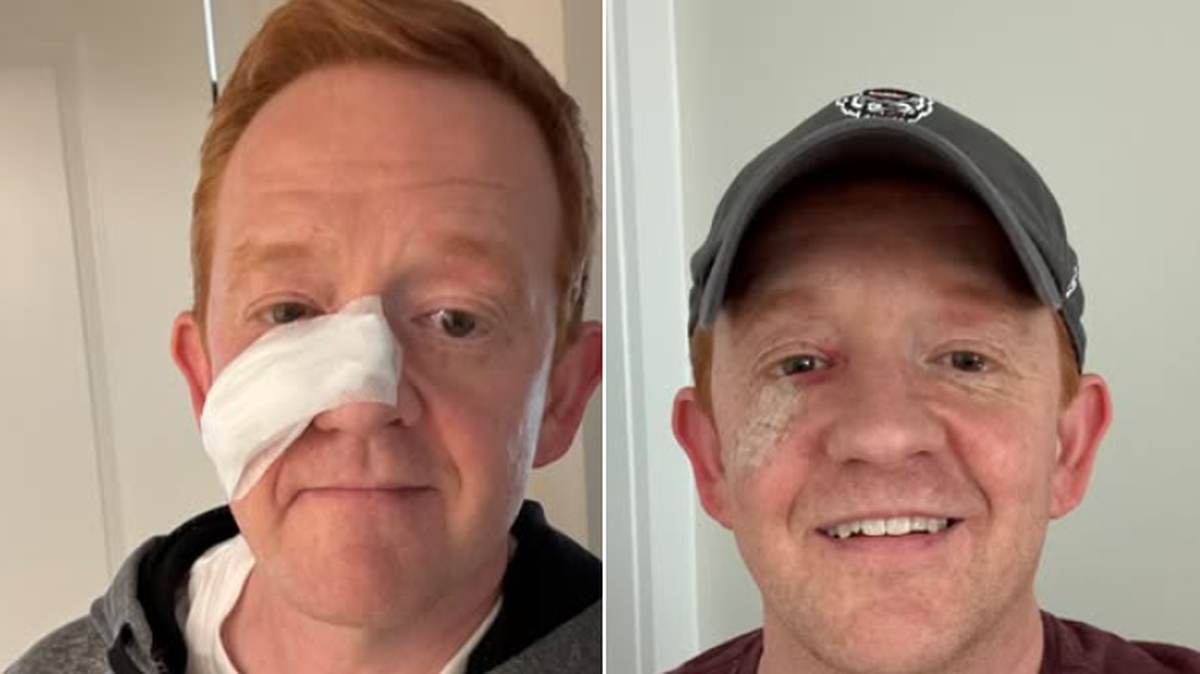
Between Thanksgiving and Christmas last year, meteorologist Lee Ringer noticed a mark below his right eye.
“I was just a little annoyed and kind of tried to scrape it off,” the Spectrum News 1 North Carolina meteorologist told The News & Observer in a phone call.
But the blemish he thought was a pimple didn’t go away. It grew back, bigger this time.
Around the start of 2025, Ringer made an appointment with a dermatologist. The physician assistant suggested a biopsy, and he agreed to it.
“[The physician assistant] didn’t lead me to believe one way or another, but I could tell that that she had some concern about it,” Ringer said. “... It was a little nerve-wracking, waiting for those results.”
After receiving an answer about what the red mark was, Ringer — who has been at the Spectrum station since 2005 — took some time off the air. But he expects to be live on camera again starting Monday, March 10.
‘It’s not a good feeling’
Results of the biopsy came back less than a week after the procedure. He had squamous cell carcinoma, a kind of skin cancer.
“When you see that word ‘cancer’ for the first time, it’s not a good feeling,” Ringer said.
However, he knew that the cancer had been caught early.
Even before the results came back, the physician assistant had warned Ringer that he may need Mohs surgery, a procedure that removes the cancer cells while preserving as much healthy skin as possible around the affected area. Ringer was already familiar with the treatment because his father had undergone the surgery several times, and he knew that it has a high success rate when cancer is identified early enough.
He was initially concerned about how having the surgery would affect his work, but the station supported him, Ringer said, and gave him time to have the surgery and heal. He’s been able to continue working in the meantime, just off screen.
Recovering from Mohs surgery
While numbing agents were used, Ringer was awake during the surgery to remove the cancer. He felt some discomfort, but nothing too severe.
He could take off the large bandage 24 hours after the surgery, but the smaller bandage has to stay on until March 8.
“I have been telling folks that it’s a little annoying to have this bandage on my face that entire time,” Ringer said. “But I’m very blessed that if that’s my only concern that I have, that I’m very blessed.”
He shared posts on social media to remind and encourage viewers to take care of their skin and schedule regular dermatologist check-ups.
He didn’t expect the response to be as strong as it has been.
“I am still getting messages from all around the country,” Ringer said in the March 4 interview. “I’ve received messages even from as far away as Australia.” His Feb. 26 Facebook post had been viewed, as of March 4, more than 2 million times.
‘Nothing unique’
According to The Skin Cancer Foundation, squamous cell carcinoma is the second most common form of skin cancer, behind basal cell carcinoma.
It develops when DNA damage from exposure to damaging agents including ultraviolet radiation cause abnormal changes in the squamous cells, which are located near the surface of the skin.

“There’s nothing unique about me having this,” Ringer said.
He knew he was at a higher risk for skin cancer because of his skin tone, and as an adult, has prioritized wearing sunscreen, Ringer said. But as a kid? He didn’t necessarily feel the same way.
Unprotected exposure to ultraviolet radiation from the sun (or tanning beds) and lighter skin tones are just two risk factors for squamous cell carcinoma, according to The Skin Cancer Foundation. Other risk factors include:
- A weakened immune system due to illness or some immunosuppressive medications
- History of skin cancer
- Age over 50
- Gender, as Squamous cell carcinomas occur at least twice as frequently in men
- Sun-sensitive conditions
- Chronic infections and skin inflammation from burns and scars
- Skin precancers
- History of HPV

How to protect against skin cancer
The Centers for Disease Control and Prevention recommends several ways to prevent skin cancer.
- When the UV Index is 3 or higher, people should: stay in the shade; wear clothing that covers their arms and legs and hats that shade their face, head, ears and neck; wear sunglasses that wrap around and block UVA and UVB rays; and use a broad spectrum sunscreen with a sun protection factor of at least 15.
- Reapply sunscreen after staying in the sun for more than two hours and after swimming, sweating or toweling off.
- Avoid indoor tanning.