
How to have your car and carpool too
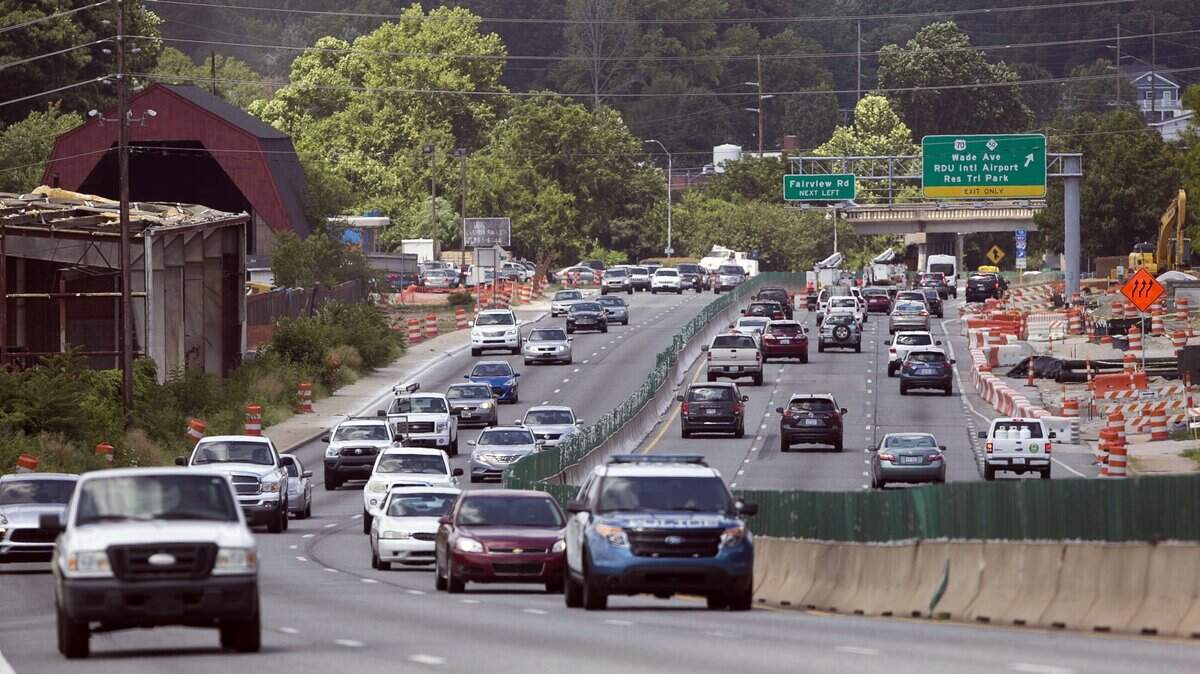
In the 1960s, Jack Hester lived about 25 miles from his job at IBM. The drive from Ridgefield, Conn., to Westchester, N.Y., was long, lonely and expensive. Hester lived near a few of his colleagues, and they decided to start a car pool.
However, their work for IBM often required Hester and his colleagues to have access to their car during the workday. So the traditional model of carpooling, in which employees leave cars at home and ride to and from work together, wouldn’t work.
Instead, Hester and his colleagues began practicing what he called “reverse carpooling.” In this model, everyone drives to work on Monday morning, and then carpool home. Unused cars stay at the office site until Friday afternoon, unless they’re otherwise needed.
This flexibility was key. “You end up with a broader pool than you normally have in regular car pool,” Hester told me.
Otherwise, the car pools functioned like traditional carpooling. Employees took turns driving each other home at the end of the day and back to work the next morning, even instituting a ticket system to make sure the burden of driving was shared equally.
Hester participated in the reverse car pool for a year before he was transferred to Raleigh, where carpooling became less necessary.
But the Triangle of today is denser and more congested than it was in the ‘60s. From 1970 to 2017, the combined population of Wake, Durham and Orange counties grew from about 420,000 to more than 1.5 million people.
According to Census Bureau data, 7 percent of Raleigh’s workforce carpools to work. Another 79 percent drive alone.
More than 80 percent of households in the Raleigh metro area have two or more cars, which makes reverse carpooling feasible for most households in our area. Owning two cars makes keeping a car at work more practical than it would have been for Hester and his colleagues in the ‘60s, when more families had only one car. And, as Hester noted, programs like this one could save all of us time and money.
“Reverse carpooling is a lot cheaper to implement than new highways,” Hester said.
Hester appreciated that the car pool saved gas and wear to a car, but he also liked the social aspect of reverse carpooling. “You get to know people you don’t know that you don’t know at work,” Hester said.
And with the Triangle’s booming population, carpooling helps reduce congestion and pollution, which reduces travel time and keeps us all healthier. Carpooling is a collective solution to a collective problem, and reverse carpooling is a more adaptable system than traditional carpooling.
The downsides of reverse carpooling are easy to spot. Organizing the car pools would be a challenge. Traffic would still make driving on Monday mornings and Friday afternoons a mess. Office parking lots would be full most of the week. But as Hester said: “If you come up with a new idea, the first thing people say is, ‘This isn’t perfect.’ But reverse carpooling is an 80 percent improvement on (traditional) carpooling.”
With the way the Triangle has been growing, we need to be more comfortable with transportation other than driving to work alone. Compared to major cities, our traffic isn’t all that bad, but we should shift away from a single-driver culture. Our city governments are encouraging drivers to change their habits, but we as drivers need to take initiative too. Reverse carpooling is worth trying.
This story was originally published November 2, 2018 at 3:00 AM.