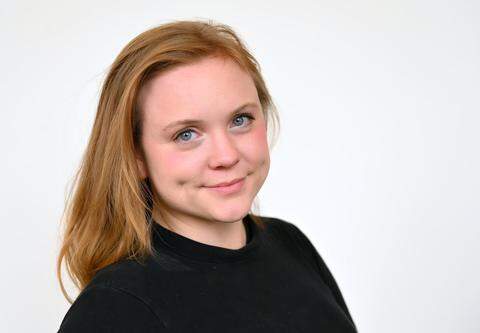
One of Charlotte’s top banking executives is retiring. Here’s what she’ll do next.
.png "Andrea Smith, chief administrative officer at Bank of America, will retire at the end of the year. She’s been with the bank for more than three decades.")
Andrea Smith started her first job at Bank of America more than 30 years ago, but her banking career began long before that.
As an eighth grader in Norman, Oklahoma, she spent Saturdays sorting checks and statements at the community bank where her father worked — an institution so small he’d hand-deliver mortgage papers to customers at their front door.
Smith is now chief administrative officer at one of the country’s largest banks, Bank of America, and one of its highest-ranked executives based in Charlotte. She’s also been active for years in the community, from serving as chair of the Charlotte Chamber to helping lead efforts addressing barriers to economic mobility in the city.
Philanthropy will become her full-time focus in a few months when she retires at the end of the year, part of a number of shifts at the bank’s executive level.
Following the recent retirement announcement, Smith, 54, spoke with the Observer about her career at Bank of America, her decision to leave and her experience as a woman in the C-suite.
An unlikely start
Smith started her first job in 1988 as a project analyst at First RepublicBank in Texas when she was just 21 years old.
She walked into work on her first day to find that her position had been eliminated. They were scrapping that entire department, a supervisor told her. Did she have any interest in a job as a computer programmer?
Smith had majored in economics and taken only one computer class at Southern Methodist University. But she gave it a shot.
“(I thought) ‘What’s the worst thing that happens? I lose this job?’ That’ll be a book I can write, if I lose two jobs in a very short period of time,” Smith said.
Smith managed to keep that job, and gained some of the confidence she’d later need to build her banking career. It ultimately landed her at Bank of America: First Republic failed in 1988 and was bought up by Bank of America predecessor North Carolina National Bank.
Smith still jokes about the deal with former Bank of America CEO Hugh McColl when the two get together for breakfast or lunch — at least a monthly occurrence. “I tell him all the time, ‘The best thing you got from buying First Republic was me.’ ”
The only woman in the room
In her early years at the bank in the late 1980s, Smith encountered what she describes as a culture that was far from supportive, “a male dominated... dog-eat-dog kind of world.
“I was often the only woman in the room,” she said. Male colleagues frequently assumed she was at meetings to pour coffee or make copies, Smith said.

In her current role, she’s long worked to change that culture: advocating for other women in leadership roles, leading partnerships with women- and minority-owned businesses, and embracing her own version of an open-door policy.
“Anybody that emails me... I always take a meeting with them,” Smith said. “That has been one of my trademarks. That takes up a lot of time. But if someone’s going to have the courage to email a direct report to the CEO, I’m going to take the time to meet with them.”
Smith has been chief administrative officer since 2015. It’s a wide-ranging role that involves overseeing functions supporting the company’s “strategic and operational foundation,” including global corporate and customer-focused strategies. Most recently, she also helped lead the bank’s COVID-19 response plans, American Banker reported.
For the past several years, she’s been recognized as one of the most powerful women in banking by American Banker. Business North Carolina has named her one of the most influential business leaders in the state.
“I’ve always tried to bring people along with me” Smith said. “I think one of the things that I’m leaving behind is a culture that everyone wants to be part of, where everyone sees that they can fit in.”
That ranges from expanding paternity leave at the bank to scrapping the idea of “work-life balance” when it comes to her own schedule. Instead, Smith aims for work-life integration, meaning she puts everything from conference calls to her kids’ volleyball games on her work calendar.
“My message is not just for women and how to have a career. It’s for men too,” Smith said. “Everyone has to figure out their own way, but the point is it can be done.”
‘It’s the right time’
With her youngest child preparing for college, and a period of relative calm at the bank, Smith said she felt the time was right to step away.
It’s later in her career than she had originally planned to depart. For a while, she had considered retiring around her 30-year anniversary with the bank in 2018.
CEO Brian Moynihan tried to talk her out of the move after she first brought it up this past spring, Smith said, even offering her multiple different roles. Ultimately, he accepted her decision.
“You know when it’s the right time,” Smith said.
She plans to shift her focus to philanthropy in Charlotte, much of it focused on increasing economic opportunity in the city. She’ll continue to work with local organizations Carolina Youth Coalition and Crisis Assistance Ministry, among other projects.
Michael Smith, president and CEO of Charlotte Center City Partners, has known Andrea Smith for over a decade. They first met on the bleachers at Freedom Park when their children played in the Dilworth Little League.
Andrea Smith has been a “tremendous leader” for the city who has built on Bank of America’s philanthropic history in Charlotte, Michael Smith said. “She’s focused on Charlotte’s greatest challenges
“I’ve always been so impressed with her tenacity, her wisdom and big-system thinking,” he added. “So much of that comes from her foundation in being a nationally celebrated human resource executive.”
What’s important to Smith
In her last few months with the bank, Andrea Smith is working to form a Bank of America alumni council that will connect retirees and former employees. She’ll continue to lead the effort after her retirement.
Her advice for the next generation of leaders: be bold, take risks — and in the buttoned-up world of banking, a little authenticity can go a long way. “I’m the same way in the bank, outside of the bank, with the CEO or anyone else that comes by,” Smith said. “I think that’s really important.”
And she has at least one more male-dominated space to take on in retirement: the golf course.
Smith serves on the PGA of America board, and has been working on her own game. She’s also found parallels between the sport and her professional life.
“I’ve been telling women: yes, you’re going to hit some bad shots. We all do,” she said. “But it’s not going to be nearly as bad as you had in your mind. Put your hand up for that job.”
Correction: An earlier version of this story misidentified a person praising Andrea Smith. It is Michael Smith, not Michael Marsicano.
This story was originally published September 22, 2021 at 6:33 AM with the headline "One of Charlotte’s top banking executives is retiring. Here’s what she’ll do next.."