
Chef Ashley Christensen, NC restaurants in spotlight, thanks to Time’s ‘South Issue’
People have been talking about the New South for decades now, more as a movement than a destination.
This region of beauty and culture is always grappling with the scars of its past, but a series of pieces in Time magazine depict a region increasingly equipped and willing to address them.
This week, the magazine published ‘The South Issue,’ a deep look into today’s South and the changemakers and leaders making the New South a reality.
The food of North Carolina, particularly in Raleigh, is one of its centerpieces, from high profile chef, to evolving cuisines at the intersection of cultures.

Chef Ashley Christensen, a James Beard Award finalist and owner of several downtown Raleigh restaurants, is named one of the 31 people redefining the South.
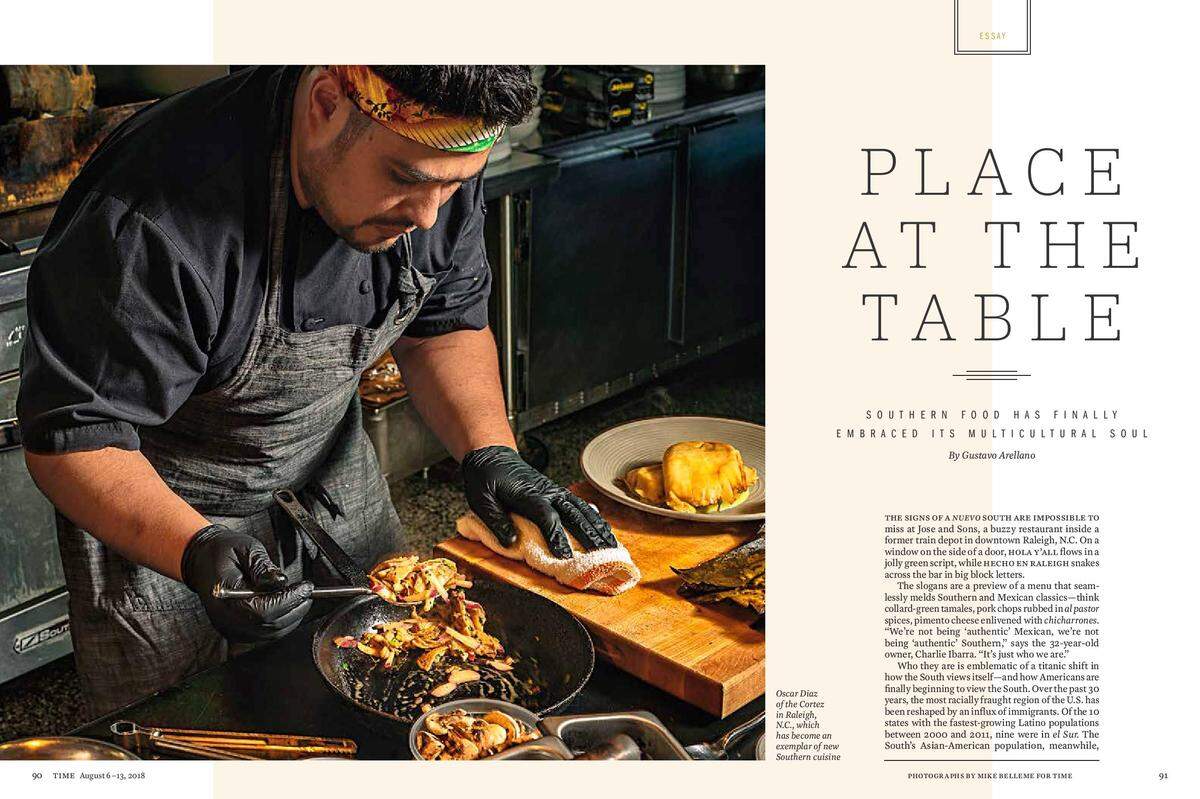
In a separate story, “How Southern food has finally embraced its multicultural soul,” Raleigh sibling restaurants Jose & Sons and The Cortez are profiled as two spots telling a new story in Southern food.
The restaurants of brothers Charlie and Hector Ibarra and Oscar Diaz serve dishes blending Mexican and Southern traditions.
Meanwhile, Garland chef-owner Cheetie Kumar gets a shoutout for her participation in a “Brown in the South” dinner series, an event created by India-born Meherwan Irani in Asheville.
Activist chef
Christensen’s restaurants have been at the forefront of making Raleigh one of the South’s dining destinations. But it’s her activism for equality and old-fashioned kindness that caught Time’s attention. Food & Wine wine editor Ray Isle noted her motto “Don’t forget kindness” emblazoned on her restaurants’ windows.
“Christensen has taken on plenty,” Isle writes. “Her restaurants, anchored by the award-winning Poole’s Diner, have made her a star in the food world .... But she has always balanced hospitality with social action, whether working with Share Our Strength to feed underprivileged children, weighing in on industry issues like workplace conditions for women in restaurants or changing men’s and women’s restrooms in her restaurants to “people rooms” in response to North Carolina’s since-repealed “bathroom bill.”
The magazine recalls a moment earlier this year when Christensen wished Michelle Obama a happy birthday on Instagram. A man commented, “Just cook and be quiet,” which Christensen responded to with a digital scolding and personal manifesto on what it means to dine in her restaurants.
“It goes so much further than a simple transaction of food for cash,” Christensen wrote in January. “Through this relationship, we drive our industry and community forward.”
Showcasing diversity
North Carolina may always be barbecue first in its food mentality, but Time uses the state to showcase the dining diversity in the South.
Irani is another North Carolina chef on the list of “31 People Changing the South,” notable for creating an Asheville restaurant empire in one of the South’s favorite places to eat and drink. This year, Irani was a James Beard semifinalist for Best Chef: Southeast for his flagship Chai Pani and is one of the main forces behind Elliot Moss’ beloved barbecue joint Buxton Hall.
The word fusion is often used when a cuisine is multiple things at once, but it can sometimes miss when a profound shift is happening.
The food essay by Gustavo Arellano tracks the role immigrants have had on evolving Southern food, from Viet-Cajun crawfish in the Gulf, to Jose & Sons’ tamales with collard greens or al pastor pork chops in hog hungry North Carolina.
“Immigrants are adding to what the South is,” Diaz tells Time. “There’s this beautiful painting, and we’re adding more beautiful colors. Because it’s not a finished piece.”
Diaz and Ibarra, Time writes, see themselves “as ambassadors for their prismatic view of the South.”
“I’m repping not just the restaurant; I’m repping Raleigh,” Diaz tells Time. “I’m repping Latino culture and American culture. I’m repping the South.”
The magazine also highlights:
▪ Nicole Hurd, who founded College Advising Corps in Chapel Hill. The company now has a presence in 14 states and helps underserved students enroll in college, according to its website.
▪ John Herrera, a former Carrboro alderman who founded the Latino Community Credit Union in Durham, which among other things, offers education about banking. Herrera is the credit union’s president.