NC Gardening Guide: Test garden soil for free. Your growing plants will thank you
Soil is a key ingredient in any backyard garden, so it’s important to make sure it’s the healthiest it can be. That’s why longtime gardeners – and soil science experts – recommend testing.
Knowing the makeup of your soil will help you understand the ways you can improve the soil and make it the most habitable environment for your vegetable and flower gardens.
The good news: North Carolina has free soil testing eight months out of the year.
We talked to Jeana Myers, an NC State Extension horticulture agent for Wake County, and Deanna Osmond, an NC State professor and extension leader for the Department of Crop and Soil Sciences, to learn more about how to test your soil and why it’s so important.
Why should you test your soil?
Soil testing is an important tool to help you create the best garden possible.
Testing your soil before your plants go in the ground can help you prepare a solid foundation, putting your plants in the best environment to thrive.
“We hear from people all the time about problems in the landscape, and the first thing we say is, ‘Have you soil tested?’” Myers said, adding that questions about soil tests are the most commonly asked of NC State Extension specialists.
“You might find a problem in your garden with a simple solution. If your pH is too low or too high, you add fertilizer or lime to correct it.”
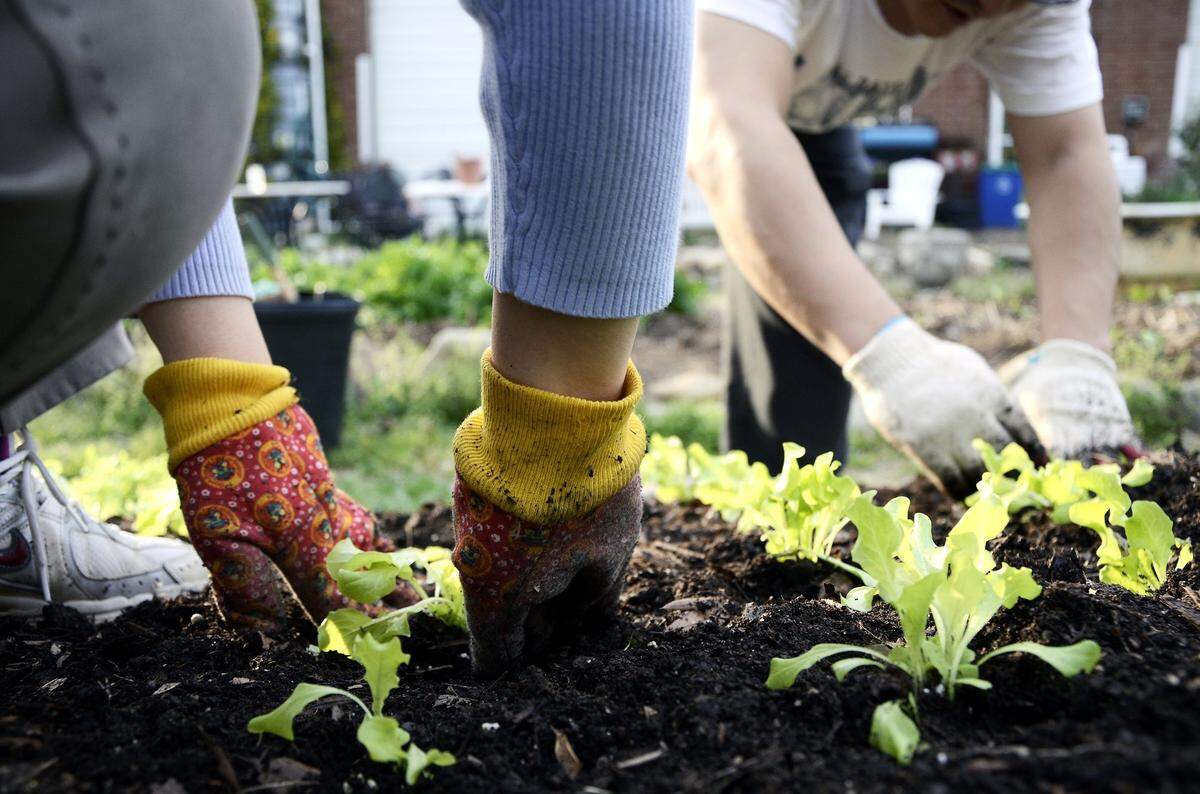
Let’s break down some of these concepts:
▪ pH: pH is a measure of how basic or acidic something is. When soil is tested, its pH is measured, and suggestions to balance out your soil (and give you an optimal pH) are offered. If the pH is too high or too low, it can cause nutrients to be excessive or unavailable. The proper pH makes them optimally available, Myers said.
North Carolina soils are naturally acidic, due to high temperatures and frequent rainfall. They’ll usually require lime, which neutralizes the soil’s acidity.
▪ Lime: Lime is often a combination of calcium and magnesium. “It’s added to raise your soil pH to an optimum level,” Osmond said.
▪ Fertilizer: Fertilizer, such as compost, provides nutrients. “Compost is a combination of providing organic matter and nutrients, so I really suggest people if they’re going to use compost, they apply compost and then soil test,” Myers said. “It can contain a lot of nutrients — phosphorus and potassium in particular.”
(For a guide on backyard composting, visit newsobserver.com/news/local)
For more information, visit “Soil Acidity and Liming: Basic Information for Farmers and Gardeners” at content.ces.ncsu.edu.
“We certainly recommend people get a baseline knowledge of what their pH and fertility levels are,” Myers said.
How to get the best soil sample
There are some common mistakes made when testing soil. Make sure you follow these steps to get the best soil sample:
▪ Use a plastic bucket: If you use a metal bucket, elements like zinc might show up in your soil sample, and that will give you a false reading, Osmond said.
The same thing can happen if you use a galvanized shovel, Myers said. Stainless steel is best.
▪ Make sure it’s clean: It sounds silly that dirt can be made dirty, but putting your soil in a dirty bucket will contaminate the soil and can produce an inaccurate read. Make sure you thoroughly clean your plastic bucket and tools before digging and mixing.
▪ Pay attention to the depth of your sample: If you’re only sampling the top layer of your garden, your test results will not reflect the entirety of your soil, Osmond said.
“Take a trowel and go straight down into the soil, zero to six inches for a garden bed,” Myers said.
▪ Get enough samples: One trowel of dirt isn’t good enough for an accurate soil sample.
“Take a sliver, put it in your bucket, then go to other areas in your garden between 15 and 20 times,” Myers said. “This way, once you mix it up, you’re getting a good average of what you have. Especially with compost, different areas will have different readings.”
▪ Compost first: If you’re only testing the soil itself without adding compost, you’re not going to get the most accurate read for your garden, Myers said. In your garden (with compost already mixed in), use your trowel to get numerous samples, creating an average, mixed sample to send for processing.
(Note, if you’re interested in getting your compost tested, that does cost a small fee, but you can do so through the Department of Agriculture and Consumer Services as well. For more information, visit ncagr.gov/agronomi/uyrwaste.htm.)
▪ Sample before planting (but it’s not necessary): Ideally, you’d sample and test your soil before your plants are in the ground, Osmond said.
But if you’re encountering an issue with plants (or reading this story and feeling inspired to test after planting), “You can go ahead and soil test around the plants, no problem,” Myers said.
“The testing won’t disrupt them — just take samples within the area,” Myers said. “As far as adding fertilizers or lime based on the soil test report, you can always apply the amendments to the surface of the soil with minimal disturbance. Mixing in lime and fertilizers is probably optimal, but it’s always better to soil test and apply based on needs rather than waiting until the next season.”
▪ Use the NCDA&CS service: An inexpensive pH reader isn’t going to give you the best results, said Myers, who worked for NCDA&CS (NC Dept. of Agriculture & Consumer Services) for five years.
“They carefully calibrate the pH meters at the lab every day, so you know you’re going to get an accurate reading,” she said.
▪ Carefully interpret your soil results: Take time to read your soil results and learn what needs to be done so your garden can thrive, Osmond said. NCDA&CS also has a detailed document for more information: ncagr.gov/agronomi/pdffiles/ustr.pdf.
NC State Extension’s Master Gardener volunteers are always available to help figure out soil results (and answer a variety of other questions). Visit the NC State Extension’s Garden Help Directory to help you contact the best person for your needs. For more information, visit emgv.ces.ncsu.edu/need-gardening-help.
How to get your soil tested for free
Here’s what you need to know about testing your soil with NCDA&CS:
▪ Get materials from your county’s Cooperative Extension office: Sample boxes aren’t available by mail, the website says, so you’ll have to head over to your local Extension office. You can also visit the Agronomic Division in Raleigh.
To find your county center, visit ces.ncsu.edu/local-county-center or call (919) 515-2813.
▪ Information sheets are available online: You’ll get an information sheet with your sample box, but they’re available online too. Visit ncagr.gov/agronomi/forms.htm to download one.
▪ Fill up your box to the fill line: After taking between 15 and 20 samples and mixing them in a clean (plastic!) bucket, you’ll want to put a scoop in your sample box.
Make sure you’re filling the box up to the fill line, marked clearly on the outside of the box.
▪ Damp soil is OK: But excessively wet soil isn’t, Myers said. This can break down the box.
Get information on soil sampling basics from NCDA&CS at ncagr.gov/agronomi/pdffiles/basics.pdf. And for a complete list of FAQs, visit ncagr.gov/agronomi/stfaqs.htm.
During the free season (April 1 to Nov. 30), it takes seven to 10 working days to get your results, Myers said. During the winter months, it can take four to eight weeks.
Questions about backyard gardening?
Do you have questions about your backyard garden? Any stories you’d like to see about gardening topics? Tell us here! Or email kcataudella@newsobserver.com.
This story was originally published March 14, 2022 at 9:45 AM.