Georgia’s wildfires sent HEPA air purifier sales surging. Here’s what most buyers missed
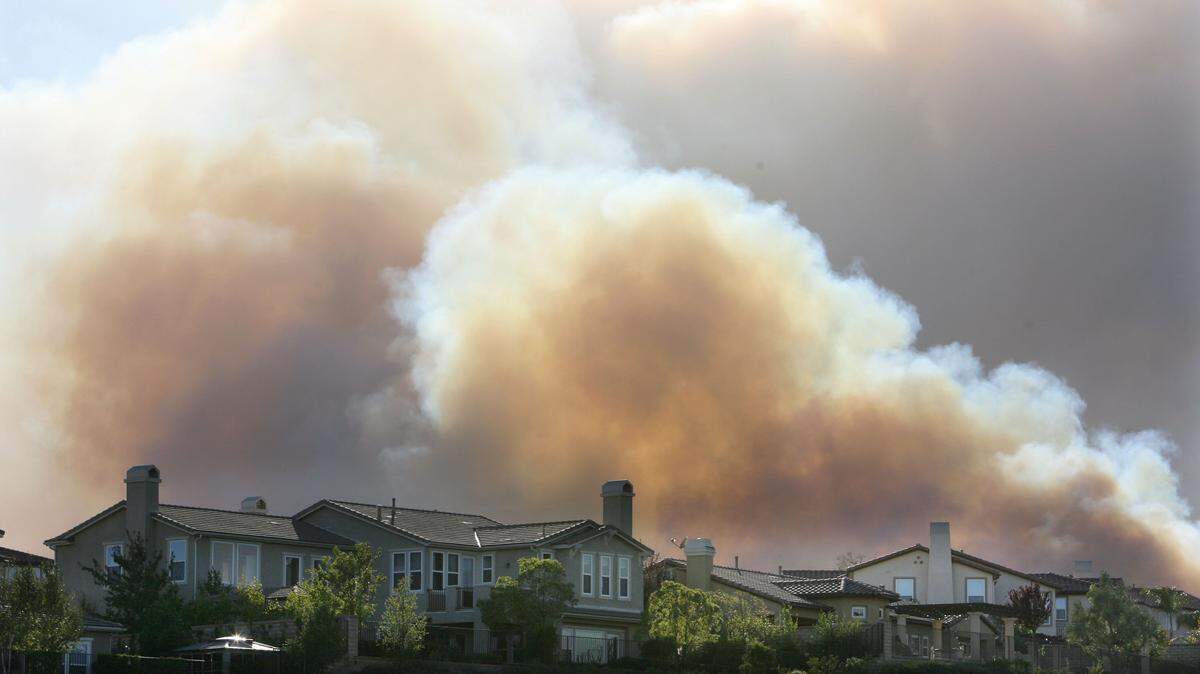
Wildfire season is here, and the same scramble plays out every year: smoke rolls in, shelves empty out and panicked shoppers grab whatever air purifier they can find. A hepa air purifier can genuinely protect indoor air during a smoke event — but only if you buy the right one, size it correctly and understand what it can and can’t do.
The stakes are higher than a runny nose. The U.S. Environmental Protection Agency warns that wildfire particles entering homes can cause burning eyes, bronchitis and aggravate chronic heart and lung disease. And the buying window for getting it right is usually before smoke is in the forecast.
Why hepa air purifier searches spike during wildfire season
Search demand tracks smoke almost perfectly. When wildfires tore through Georgia in April 2026 — driven by a rain deficit and low humidity, among other things, per NASA — neighboring states got hit with poor air quality alerts and immediately started shopping.
In South Carolina, searches for “hepa air purifier” jumped 120% between March 29 and April 30 compared with the weeks prior, according to Google Trends. Searches for “portable air purifier” climbed 400%. Florida and North Carolina showed similar spikes.
The pattern repeats every smoke event. When Canadian wildfires blanketed the East Coast in 2023, Target, Walmart, Lowe’s and Home Depot stores across eastern Pennsylvania sold out within days and some models on Amazon saw sales of more than 20,000 in a single month, per the Lehigh Valley News.
With the wildfire season in full bloom, those surges are expected to continue as people seek relief indoors.
Common mistakes when using an air purifier for wildfire smoke
During a wildfire, outdoor air pushes into your home through open windows and doors, through ventilation, and through small gaps around joints, cracks and poorly sealed areas. Once those particles are inside, you need to filter them out.
A true HEPA filter captures 99.97% of particles down to 0.3 microns — the size range that matters most during a smoke event. That’s the spec that earns the name. But “HEPA-type,” “HEPA-style” and “HEPA-like” are unregulated marketing terms that can mean almost anything, so read the box closely.
MORE INFO: How to choose the best HEPA air purifier for your home — and why it’s so important
Other common mistakes include:
- Wrong size. A purifier rated for 200 square feet won’t do much in a 500-square-foot living room. It runs constantly, wears the filter out faster and barely moves the needle on air quality.
- Skipping the filter math. A $90 purifier with $60 replacement filters every three months can cost more over two years than a $250 unit with $30 filters every six months. The sticker price isn’t the real price.
- One unit for the whole house. Air doesn’t circulate freely between rooms, especially with bedroom doors closed at night — which is exactly when clean air matters most for sleep.
Not only that, but HEPA only handles particles. Wildfire smoke also carries gases such as volatile organic compounds and formaldehyde, which pass straight through a HEPA filter. An activated carbon filter is what catches those — which is why the better units pair both.
What to do before wildfire season arrives
Wildfire season doesn’t send a calendar invite. But the pricing cycle is predictable enough to plan around.
Stock up in late winter or early spring, when shelves are full and prices haven’t caught up to demand — that $260 August purchase is often a $180 one in March.
And if the smoke beats you to it, the EPA says a furnace filter taped to a box fan works as an emergency backup. It’s not elegant. It won’t win any design awards. But it filters air, it costs under $30, and you can build one in five minutes.
Buy a few spare filters now and stash them with the box fan so you’re not scrambling when the AQI turns red.
The whole point is to take the panic out of the purchase. Because the smoke is coming — the only question is whether you’ve already made your decisions or you’re making them at 11 p.m. with burning eyes and an empty Amazon cart.
This article was created by content specialists using various tools, including AI.