
Heat Waves Are Getting Worse. Here Is What That Means for How You Walk Your Dog.
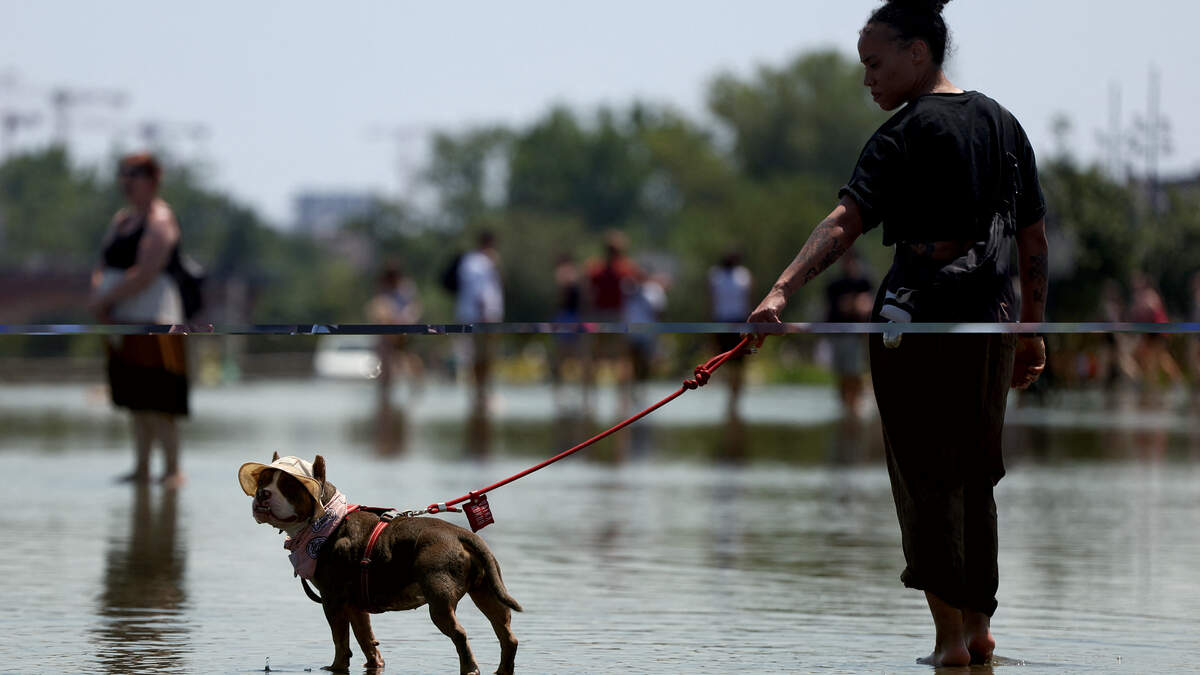
As heat waves grow longer and more frequent, the risk they pose to a pet extends well beyond human discomfort. Dogs and cats can overheat quickly, and the difference between a manageable warm day and a medical emergency can come down to how quickly an owner notices the signs, and how prepared they are to act.
Climate scientists say the pattern is not going away. “Heat waves like this are so directly connected to the climate crisis and climate change and it’s because of how we’ve been burning fossil fuels and cutting down forests for so long and increasing the concentration of heat-trapping gasses in the atmosphere,” Jennifer Francis, a climate scientist at the Woodwell Climate Research Center, told AP. “These kinds of heat waves and droughts and associated fires are all increasing just as we would expect them to in a warming world.”
For pet owners, that means summer routines that worked a decade ago may no longer be safe. Here’s what veterinarians and animal welfare groups recommend.
Why summer heat is a growing danger for pets
The basic rule veterinarians repeat is simple. If the weather feels dangerous to you, assume it feels dangerous to your animal. “The general rule of thumb is, if it’s too hot for people, it’s too hot for animals to be outside for any extended period of time as well,” Jerry Klein, chief veterinarian of the American Kennel Club, told Wirecutter. Pets can’t tell you when they’re in trouble, and by the time symptoms are obvious, damage may already be underway. Checking the forecast and planning walks, errands and outdoor time around the temperature is one of the easiest ways to lower the risk.
How to prevent heatstroke before it starts
Prevention is far easier than treatment. Keep fresh water available at all times, provide a cool space your pet can retreat to and pay attention to behavior changes that might signal early distress. Fanning your pet or wetting them down helps them regulate temperature, and Emily Hall, a veterinarian and lecturer at the Royal Veterinary College in the UK, told Wirecutter that immersing an animal in water is also an option in hotter conditions.
Small tweaks around the house help too. A cooling mat, which is a flat, thin pad with pressure-activated gel that absorbs body heat, outperformed cooling beds in testing. Stone or tile flooring stays naturally cooler, so guide pets there during the hottest hours. Alex Crow, an RCVS licensed veterinary surgeon, offered another tip to Keys News. “Adding water to dog food and freezing it is an effective way to keep pets cool. It’s a great enrichment for dogs who are bored inside, and it can work really well.”
Cats need a slightly different approach. “Cats have evolved from desert animals and they avoid stagnant water. They’re more likely to drink if the water is fresh and moving,” Crow told Keys News. A pet water fountain can encourage hydration in cats that otherwise ignore their bowl.
Walking your pet safely in hot weather
Exercise is the single most frequent trigger of heatstroke in dogs, according to the RSPCA. There’s no universal “safe” temperature for a walk, since it depends on breed, age, health and temperament, but the general guidance is to stick to early morning or late evening, stay in shaded areas and avoid pavement whenever possible.
A quick check can save your dog’s paws. Press the back of your hand to the ground for five seconds. If you can’t hold it there comfortably, it’s too hot to walk on. Signs that paws have already been burned include limping, refusing to walk, licking or chewing feet, darker or damaged pads and visible blisters or redness. Running or cycling with a dog in hot weather is a bad idea regardless of how conditioned the animal is. If your dog is getting less exercise than usual because of the temperature, the RSPCA recommends keeping them mentally engaged indoors with puzzle toys or training games.
Which breeds face the highest risk
Not every dog handles heat the same way. “Not all breeds are equally at risk. Flat-faced dogs, like Frenchies, Bulldogs and Pugs, as well as overweight dogs, are a lot more at risk than other breeds as they can’t regulate temperature as well,” Crow told Keys News.
Understanding why matters. “Dogs don’t sweat through their fur or skin like humans, so panting is a dog’s way of regulating body temperature,” Crow said. Breeds with shortened airways simply can’t move air efficiently enough to cool themselves in extreme heat, which is why owners of brachycephalic dogs need to be especially cautious about time spent outdoors.
Signs of heatstroke to watch for
Catching heatstroke early dramatically improves outcomes. According to the PDSA, warning signs include excessive panting, drooling or foaming, confusion, shaking, weakness and collapse, vomiting or diarrhea and seizures.
Crow described what to look for in plainer terms. “The most obvious sign your pet is overheating is panting very heavily and frantically especially if they haven’t been exerting themselves,” he told Keys News. Gum color also matters. “If their gums look particularly red or dark in color is a sign they are overheating. This means blood to the extremities has increased to dissipate the heat.” He added that as things worsen, “more severe signs that your pet has overheated include wobbliness, collapsing and vomiting, a hot dog will feel nauseous and sick.”
What to do if your pet overheats
The guiding principle from veterinarians is “wet, then vet”, meaning begin cooling your pet before you transport them, Hall told Wirecutter. Move the animal into shade immediately and slowly pour water that’s cooler than the dog’s body temperature over their body, avoiding the head in case they’re struggling to breathe. Do not cover them with damp or wet towels, which can trap heat and make the problem worse. The faster you bring their temperature down, the lower the risk of lasting injury.
Even if your pet seems to bounce back, don’t skip the vet visit. “If a dog overheats and it looks like heatstroke, and you think you’ve got it under control, always get them seen by a vet. Because sometimes there can be internal changes that can occur hours later,” Klein told Wirecutter.
This article was created by content specialists using various tools, including AI.
.jpeg)