Broadway Versus Off-Broadway Versus Touring Shows: Here’s What Each Tier Actually Delivers
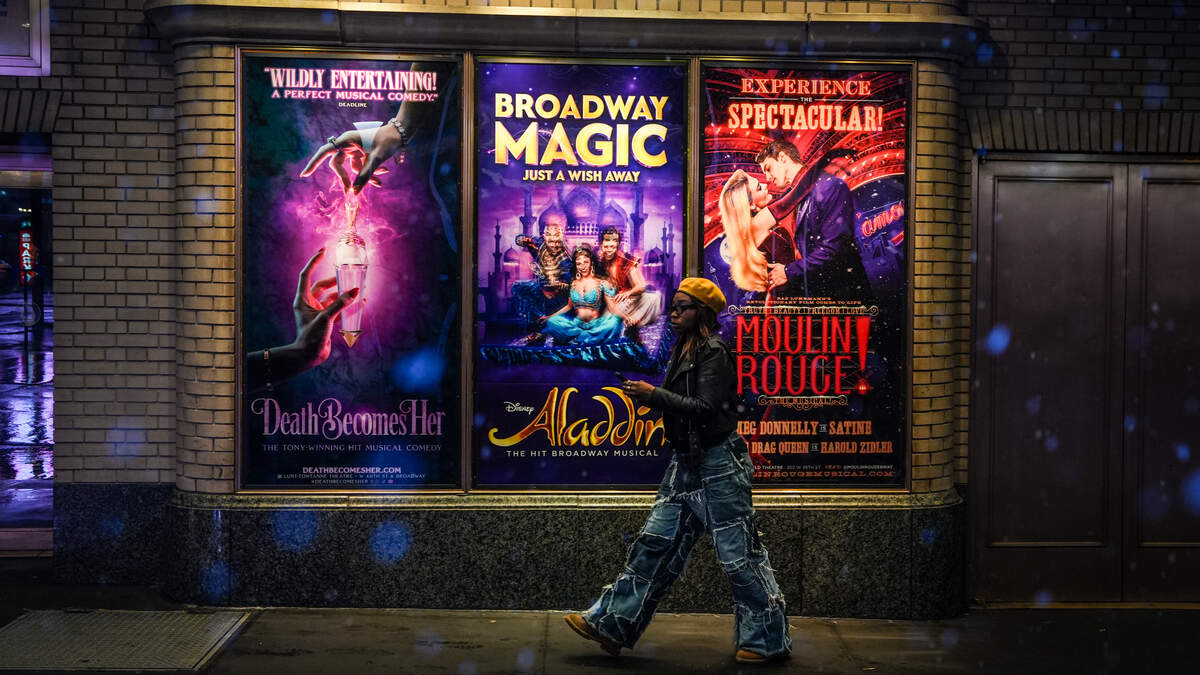
Ticket prices for a single Broadway show can swing from under $100 to well over $300, and the label on the marquee tells you almost everything about what you are getting. Knowing whether a production is Broadway, off-Broadway, off-off-Broadway or a national tour changes the budget, the venue, the star power and even how the show is judged by critics.
Here is how the four tiers actually work, and why the differences matter before you buy a seat.
How Broadway is defined
Broadway refers to a specific set of 41 professional theaters clustered in the Theater District near Times Square in New York City. The venues are certified by The Broadway League, the trade association that governs the industry, and each house holds a minimum of 500 seats.
These are the productions with the biggest budgets, the most recognizable stars and the most elaborate sets, costumes and effects. Ticket prices typically land between $100 and more than $300 for popular titles. Runs are open-ended and driven by demand, which is why hits like “Chicago” and “The Lion King” can play for years or even decades. Tony Award eligibility is also tied specifically to these Broadway houses. For a deeper look at the key differences across the tiers, the New York Film Academy has a useful breakdown.
Why off-Broadway and off-off-Broadway matter
Off-Broadway covers New York City theaters with 100 to 499 seats. Many are not in the Theater District at all, with venues scattered across neighborhoods like the East Village and Chelsea. Budgets are smaller, the work is often more experimental or intimate, and tickets generally run $50 to $100.
Off-Broadway is also where a lot of eventual Broadway hits are built. “Hamilton,” “Rent” and “Avenue Q” all started off-Broadway before transferring uptown.
Off-off-Broadway sits one rung lower, in theaters with fewer than 100 seats. This is the most experimental and indie tier, with minimal budgets and often non-union casts. Because the financial risk is low, it is where many new playwrights first stage their work.
Productions in these two categories are not eligible for Tony Awards, but they compete for the Obie Awards and the Lucille Lortel Awards.
What a Broadway touring production actually is
A Broadway touring production is a full-scale version of a Broadway show that packs up and travels to cities across the U.S. and internationally. The choreography, sets, costumes and sometimes even the direction are meant to replicate the original. Broadway touring shows are how audiences outside New York get to experience hit musicals and plays without flying to Manhattan.
The logistics behind these tours are enormous. “Every touring production has a schedule that’s put together 12, 18, sometimes 24 months in advance, keeping in mind they have to go from city to city. It can be like 3-D chess,” Jeff Loeb, general manager of Los Angeles’s Hollywood Pantages Theatre and Broadway in Hollywood, told Broadway Direct.
The touring cast is usually not the original Broadway lineup, although a recognizable name occasionally joins. A show’s “first national tour” typically launches shortly after or even during its Broadway run and offers the closest replica of the original staging. Later or “non-equity” tours may run with scaled-down sets and smaller orchestras.
What this means for ticket buyers
Once you know which tier a show belongs to, expectations get easier to set. A Broadway house near Times Square delivers scale and star power at a premium price. Off-Broadway trades size for intimacy and often lower cost. Off-off-Broadway offers a chance to see brand-new work at bargain prices. And a touring production brings the Broadway experience to your city, with the trade-off that the cast and sometimes the production values may differ from what plays in New York.
This article was created by content specialists using various tools, including AI.