
The salad in winter
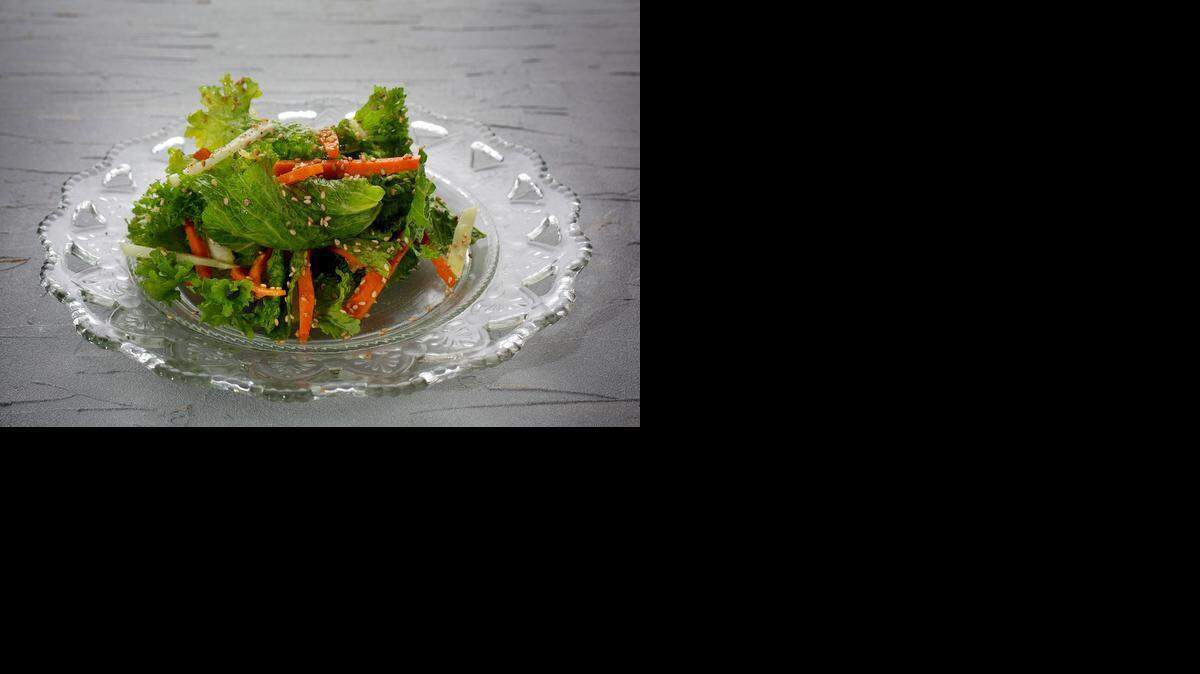
When we talk about salads, we often apologize. If a co-worker asks what we ate for lunch and the answer is leafy, green and dressed with vinaigrette, we say, “Oh, just a salad.”
We take salads for granted, as cooks and as eaters. We undervalue them for their potential for sustenance and satiation, but also for the care they require in the making, a trend no doubt encouraged by our dependence on bottled dressings and pre-prepped greens.
We can do better, even in winter. Frost-sweetened, intensely flavored greens – collards, cabbage, mustards, chicories and, yes, kale – can restore some glamour, and perhaps some respect, to the salad course.
Cold brings out the best in a lot of greens. Bitter chicories take on a mellow, buttery glow; collards turn bright-tasting and sweet, their stems juicy enough to eat raw; mustards, tasting of hazelnuts and wasabi, are irresistible.
“I really look forward to selling our greens this time of year because the flavor is so good,” said Mike Nolan, who grows a variety at his Earth Spring Farm in Carlisle, Pa.
Sure, you could cook these greens. But it’s also gratifying to capture them as they are, framing them, along with a few garden companions, as a moment in a season. Maybe it’s a ruffly head of savoy cabbage, juicy-sweet daikon radishes and garnet-skinned carrots; or a head of spiky-leaved, ruby-streaked mustard greens with a plump, crisp kohlrabi. To enjoy them fresh and vibrant is a privilege.
Making a salad should be a thoughtful and measured process, as much about preparing its components as about assembling them. Although you could apply that philosophy to all kinds of cooking, it is critical with salad, because there are fewer steps to coax out flavors or mask flaws.
In his new book “Twelve Recipes,” Cal Peternell includes good points on the art of making salad well. Peternell, chef at the Berkeley, Calif., restaurant Chez Panisse since 1995, touches on some of the basics that home cooks tend to miss because the steps seem painstaking or because, having grown up on iceberg, we never learned:
As Peternell points out, “You can always dress more.”
Cabbage Salad With Winter Roots and Popped Mustard Seed
Turn this into a vegetarian main dish by folding 1/4 cup of red quinoa, cooked and cooled, into the finished salad and adding cubes of extra-firm tofu.
1 medium head savoy cabbage or Napa cabbage
2 medium carrots, scrubbed well
3 medium winter radishes
1 small red onion
3 tablespoons peanut oil
1 tablespoon brown mustard seed
2 small dried arbol chile peppers, torn into 2 or 3 pieces (optional)
3/4 teaspoon sea salt
2 tablespoons fresh lemon juice
Cracked black pepper
1/2 cup flat-leaf parsley leaves (from about 10 sprigs)
CUT the cabbage in half through the stem end, then cut each half through the stem end to yield four quarters. Slice off the core and discard, then cut each quarter crosswise into thin ribbons. You should have about 9 loosely packed cups. Transfer to a bowl.
CUT the carrots into matchstick-size strips (julienne), and halve and thinly slice the radishes; add to the bowl.
CUT the onion in half crosswise, then slice it thinly lengthwise. Add the onion to the bowl.
HEAT the oil in a small skillet over medium heat. Once the oil shimmers, add the mustard seed and arbol chile pieces. Cover and cook for about 4 minutes, shaking the pan occasionally, until the seeds begin to pop. Remove from the heat; let cool for 5 minutes (covered).
DISSOLVE the salt in the lemon juice in a small bowl, then pour over the cabbage, along with the oil and mustard seed. Use your hands to toss the cabbage and vegetables with the dressing until they are well coated and slightly wilted. Taste for salt, and season lightly with the black pepper.
FOLD in the parsley and serve. The salad can be made 30 minutes before serving.
Per serving: 170 calories, 4 g protein, 16 g carbohydrates, 11 g fat, 2 g saturated fat, 0 mg cholesterol, 470 mg sodium, 7 g dietary fiber, 7 g sugar
Yield: 4 servings.
Mustard Greens, Kohlrabi and Carrots with Ginger Dressing
The salad dressing can be made ahead and refrigerated for a day. Bring to room temperature and shake to remix it before using.
8 cups lightly packed mustard greens (from about 2 small bunches, or 1 large; about 12 ounces)
1 large carrot, scrubbed well
1 bulb green kohlrabi
2 teaspoons white sesame seeds (unhulled, if possible)
3/4-ounce piece ginger root
1 clove garlic
1/4 teaspoon plus 1/8 teaspoon fine sea salt, divided
1 1/2 teaspoons apple cider vinegar
1 tablespoon boiled cider (see note)
3 tablespoons extra-virgin olive oil
Cracked black pepper
TEAR the greens into large, bite-size pieces. Rinse them in a bowl of cool water, then spin dry. Transfer to a large bowl.
TRIM the carrot and trim and peel the kohlrabi. Cut each into matchstick-size strips (julienne) and add to the mustard greens.
TOAST the sesame seeds in a small skillet over medium-low heat, shaking the pan occasionally, until the seeds are lightly browned, about 5 minutes. Transfer to a small plate to cool.
CUT the ginger and garlic into small pieces. Use a mortar and pestle to pound the garlic and ginger with 1/8 teaspoon of salt to form a pastelike mixture. Transfer to a bowl. (Or smash the garlic and ginger with the flat side of a knife, then mince.)
ADD the vinegar, boiled cider and the remaining 1/4 teaspoon salt to the bowl with the garlic and ginger, then gradually whisk in the oil to form a dressing. Pour over the greens; use your hands to gently toss the salad. Taste, and add salt and/or cracked black pepper as needed.
GARNISH with the toasted sesame seeds and serve immediately.
NOTE: Boiled cider gives this a sweet-tart complexity. Find it in specialty food stores or make it by reducing fresh cider on the stove to about 1/7th of its original volume. You can use pomegranate molasses or maple syrup is an acceptable substitute, but taste won’t be the same.
Per serving: 170 calories, 5 g protein, 15 g carbohydrates, 11 g fat, 2 g saturated fat, 0 mg cholesterol, 250 mg sodium, 6 g dietary fiber, 7 g sugar
Yield: 4 servings.
Collard Green Salad With Spiced Lemon Dressing
If your collards are not particularly tender, blanch or steam them just until tender, then drain them thoroughly before tossing with the dressing.
Kosher salt
1 pound fingerling potatoes, scrubbed well
1 bunch collard greens (about 1 pound)
5 oil-cured black olives, pitted and coarsely chopped
1 teaspoon cumin seed
1/2 teaspoon caraway seed
1/4 to 1/2 teaspoon crushed red pepper flakes
1 clove garlic
1 tablespoon plus 1 teaspoon lemon juice
1/2 teaspoon plus 1/4 teaspoon fine sea salt, divided
2 tablespoons plus 2 teaspoons extra-virgin olive oil
1 cup cooked or canned, no-salt-added chickpeas
1/3 cup packed cilantro leaves, for garnish
Freshly cracked black pepper
BRING a medium pot of water to a boil over medium-high heat. Add a generous pinch of salt, then add the potatoes. Reduce the heat to medium; cook, uncovered, just until the potatoes can be easily pierced with the sharp tip of a knife, about 15 minutes. Drain and cool.
CUT the ribs from the collards by slicing along both sides of the stalk from the top of the leaf to the stem end; discard or reserve the ribs for another use. Stack the halved leaves and cut them into thin ribbons. Rinse in a bowl of cool water, spin dry and transfer to a medium bowl. Add the chopped olives.
HEAT a small skillet over medium-low heat. Add the cumin and caraway seeds; cook about 3 minutes, until lightly toasted and fragrant. Cool for 5 minutes, then grind or crush to a coarse powder. Transfer to a small bowl and add red pepper flakes to taste.
CRUSH the garlic to a paste with a mortar and pestle or the side of a knife. Add the lemon juice and 1/2 teaspoon sea salt; mix until the salt has dissolved. Add to the cumin and caraway. Whisk in the oil to form a dressing.
CUT the cooled potatoes into bite-size chunks. Place the potatoes and drained chickpeas in a bowl.
ADD 1 tablespoon plus 2 teaspoons of the dressing to the collards and olives; use your hands to toss gently until well incorporated. Pour the remaining dressing over the potatoes and chickpeas, along with the remaining 1/4 teaspoon of sea salt. Use a spatula to fold it in until well-coated.
TO SERVE, scatter the potatoes and chickpeas over each plate. Mound the collard-olive mixture on top, and garnish with cilantro. Season lightly with the black pepper and serve.
NOTE: The potatoes and chickpeas can be dressed and refrigerated 2 days in advance; bring to room temperature before serving. The spices can be toasted and ground 3 days in advance and held in an airtight container at room temperature.
Per serving (based on 4): 240 calories, 10 g protein, 37 g carbohydrates, 8 g fat, 1 g saturated fat, 0 mg cholesterol, 520 mg sodium, 10 g dietary fiber, 5 g sugar
Yield: 2 to 4 servings (4 appetizer or side-dish servings or 2 main-course servings).
Emily Horton is a freelance writer living in Seattle.