
A toast to 25 years as a restaurant critic in the Triangle’s most exciting culinary era
Somewhere in my house, in one of the boxes of old photos and other mementos that invariably get tucked away in attics and closets, is a brittle, yellowing newspaper article. Dated June 9, 1995, it’s the first restaurant review I ever wrote.
The restaurant, a quirky little seafood joint called The Steamery sharing a building with a BP station in Carrboro, didn’t last very long. And at the time, as a six-month probationary freelancer with no journalism degree or publication credits, I had little reason to expect that I’d last much longer.
And yet here I am, some 1,300 reviews and a gazillion calories later, still counting myself lucky to have a job that combines my passions for food and writing. It’s icing on the cake that I’ve been able to cover the most exciting era in the culinary history of this burgeoning metropolitan region — one that’s earned more than its share of James Beard Awards. And that includes the 2019 Outstanding Chef Award, brought home to Raleigh by Poole’s Diner chef/proprietor Ashley Christensen.
Twenty-five years ago, the Triangle was just beginning to wake up to its potential. Early hints, sparsely sprinkled among the Chinese-American, Tex-Mex and red sauce pasta joints that dominated the landscape, came in the form of outliers like Lizard & Snake (Cal-Mex in Chapel Hill), Suman’s (Indian in Durham) and WickedSmile (a brash upscale contemporary spot in downtown Raleigh).
All of those restaurants have long since closed, but they paved the way for a colorful parade of newcomers. Over the next quarter-century, the hospitality desert that was downtown Raleigh blossomed into a lush garden of eating and drinking establishments, scattered over a patchwork of plots from the Warehouse District (where WickedSmile had briefly flourished, a few years ahead of its time) to Glenwood South — where, believe it or not, you could count the number of restaurants on one hand.
Then, 518 West (a spinoff of the perennially popular 411 West in Chapel Hill) opened in 1997, starting a trickle of restaurants that eventually became a flood. Two decades later, dozens of restaurants and bars lining that six-block stretch of Glenwood Avenue stood ready to satisfy every imaginable craving from craft cocktails to pho to burgers and beer.
In Durham, Magnolia Grill was a cornerstone in the development of the Triangle as a culinary region with a national reputation — in more ways than one. Owner/chef Ben Barker and his late wife and partner, pastry chef Karen Barker, brought home two James Beard awards between them: the 2000 Best Chef in the Southeast for Ben, and the 2003 Outstanding Pastry Chef award for Karen.
By the time the restaurant closed in 2012 when the owners retired after a 26-year run, it had left a legacy as a pioneer of local sourcing and a training ground for chefs who went o to open some of the area’s most noteworthy restaurants.
Meanwhile, other parts of Downtown Durham proved to be fertile soil, though it took a little longer for the first seed to sprout. That was in 2006 — nearly a decade after 518 West in Raleigh — with the opening of a French bistro called Rue Cler. Over the next few years, a variety of noteworthy establishments sprouted up, offering everything from from tapas and a world class sherry selection (Mateo) to Neapolitan pizza (Pizzeria Toro) to chicken and waffles (Dame’s).
These joined several restaurants that had previously taken root on Ninth Street and around Brightleaf Square to earn Durham the title of America’s Foodiest Small Town from Bon Appétit magazine.
Contributing to the dining scene
Chapel Hill doesn’t get as much press as its larger neighbors, but the town has made significant contributions to the local dining scene. It’s the home to not one but two James Beard award winners: Andrea Reusing of Lantern, Best Chef in the Southeast in 2011; and Crook’s Corner, the 2011 American Classics award, given to “our nation’s beloved regional restaurants.”
Throw in Mama Dip’s Kitchen (beloved Southern eatery since 1976) and Merritt’s Store & Grill (best BLT in the Triangle) and you’ve got several reasons to make the drive from Raleigh or Durham well worth your while.
In some ways, Cary’s culinary landscape has seen the most dramatic change of all. The town, whose ethnic makeup was once as monochromatic as the covenant-decreed paint colors of houses that earned the town the nickname of Beige-town, has in just a few decades morphed into a multicultural rainbow.
Nowhere is this diversity more evident — or more concentrated — than in a cluster of unassuming strip malls near the intersection of East Chatham Street and Maynard Road. Within a few blocks of that intersection you can explore the cuisines of more than a dozen cultures, from Ethiopian to Nepalese. And if you’re in search of Szechwan, Taiwanese or regional Indian cuisine, you’ll find them all scattered around Cary and its suburban neighbor, Morrisville.
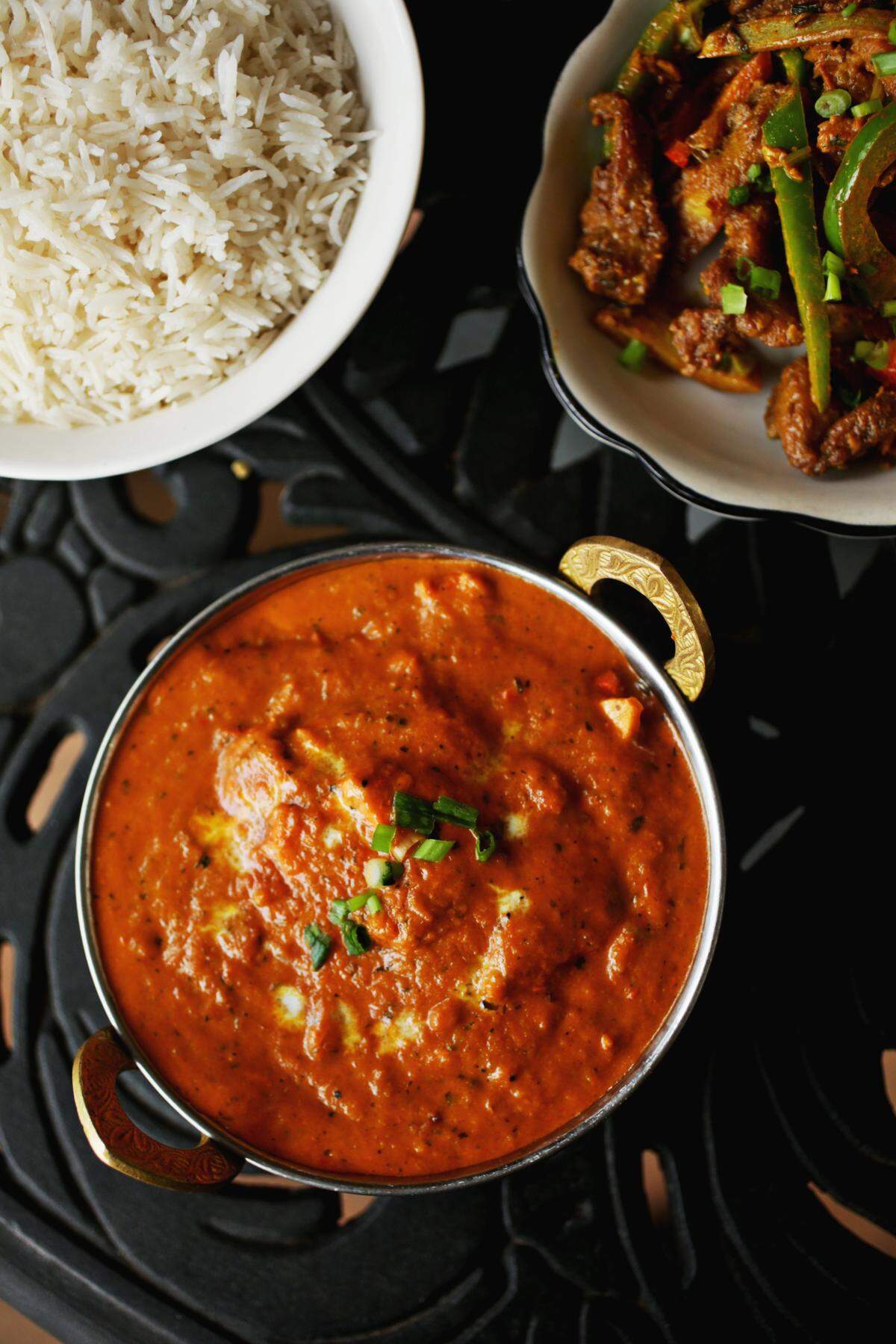
And I’ve been able to taste it all, in dining rooms ranging from the simplest mom-and-pop eatery decorated with travel posters to elaborate designer decor.
A three-dimensional experience
For nearly three months, I’ve only been able to taste it in the literal sense, via curbside takeout or delivery. But as we all know, the food — no matter how good — is just one dimension of a rewarding restaurant meal.
I’ve missed the other elements that make dining out a fully three-dimensional experience: the conviviality of a shared meal with friends; the warm hospitality of a good server; the mood, at once relaxing and stimulating.
It’s about discovering the hidden gem of a restaurant and celebrating the local culinary talent that has made the Triangle what it is today. It’s about supporting chefs and restaurateurs who are fulfilling their dreams of owning their own restaurants and bringing people together to share their food and traditions. This can happen to an extent with takeout, but it’s not the same as being in a dining room.
I’m looking forward to the day when I can sit down in a restaurant again. When that will be, or what the experience will be like, I couldn’t say. We’re still in the early stages of the coronavirus learning curve, and restaurant owners understandably have taken different approaches to reopening. I’m waiting to see the results of the first wave of people who feel comfortable enough to venture out for a meal in a restaurant.
I think it’s safe to say the new normal will involve hand-sanitizing stations, and restaurant staff (and in some cases, maybe diners) wearing masks. On the bright side, the need for social distancing will make tables wedged in too close to one another — making it unavoidable to eavesdrop on neighboring diners’ conversations — a thing of the past.
I think outdoor seating will become much more popular. Some restaurants are already expanding their patios to accommodate the increased demand, and I’m pretty sure that, when I’m ready to sit down at a restaurant again, it will be on one of those patios.
But for now I’ll continue to take a cautious approach to pandemic dining, ordering delivery and takeout and telling you about my experiences.
I’m also chilling a bottle of champagne to celebrate the 25th anniversary of my first review (and no, the irony that I’ll be celebrating at home is not lost on me). I’ll drink a toast to a dining adventure that has been beyond the wildest dreams of a boy who grew up in a small town in North Carolina, and to the opportunity to share my adventures with you.
Oh, and one more toast: Here’s to 25 more years.
This story was originally published June 8, 2020 at 6:00 AM.