
PPP didn’t work for many restaurants the first time. Will a second wave be different?
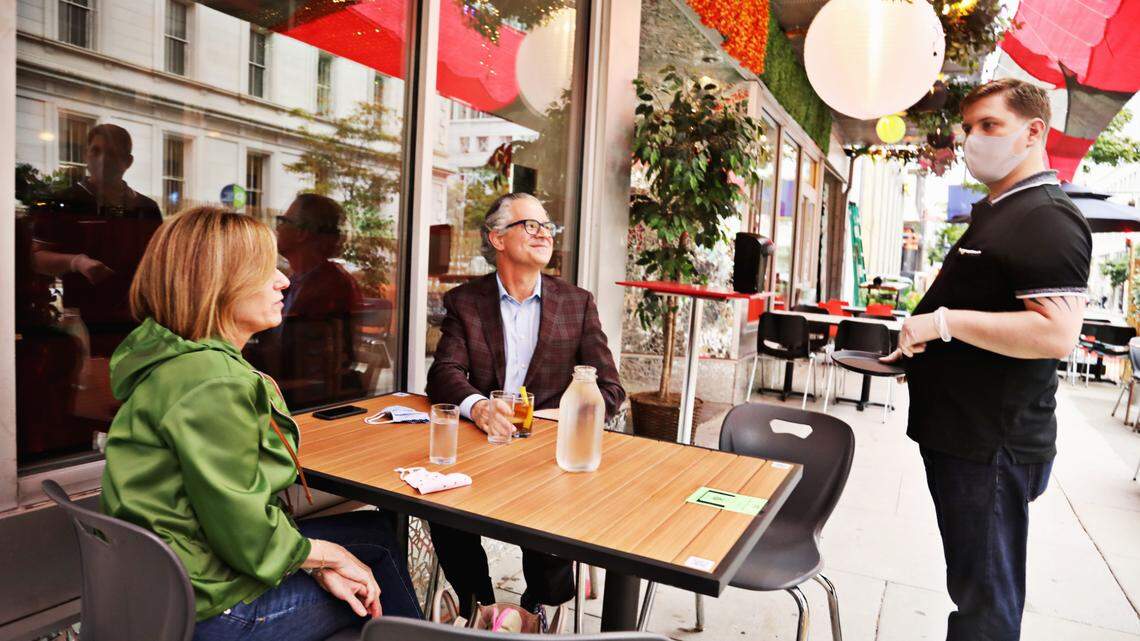
The Small Business Administration has opened a new round of Paycheck Protection Program loans, a $284 billion piece of last month’s federal COVID-19 relief bill. The loans are meant to keep workers employed and counter the heavy losses many small businesses are facing due to COVID-related restrictions and decreased spending.
For restaurants, though, PPP has been a mixed bag.
In December, Cheetie Kumar, chef and co-owner of Raleigh’s Garland restaurant, led a group of North Carolina restaurant owners in lobbying Congress on restaurant relief, pushing for grants instead of loan-based programs like PPP.
“We don’t really have any other choice,” Kumar said. “It’s a 24 week band-aid on an 18-month problem.”
The latest round of PPP funding expands benefits for restaurants beyond those for other businesses, increasing loan amounts to three and a half times a business’ monthly payroll instead of two and a half times. This round also allows the money to be spent on more things, including perishable food products, personal protective equipment for workers and repairs.
It also tightens what it means to be a small business, cutting the maximum number of employees from 500 to 300. A cut like that could exclude businesses like Raleigh’s famous steakhouse, the Angus Barn, which received $2.6 million in the first round of funding, preserving 353 jobs.
PPP at work
In the long string of hard months since the pandemic began, December was the worst for Sutton’s Drug Store in Chapel Hill, owner Don Pinney said. He intends to apply for the latest round of PPP funds, saying the first round had issues but largely kept his staff together.
With the money, Sutton’s kept around 80% of its employees at nearly full time hours. The historic lunch counter on Franklin Street has survived by feeding Chapel Hill locals, after UNC students were sent home amid an escalating COVID outbreak in the university community. Pinney said his older regulars have also stayed away.
“They’re not coming in; they’re staying home and staying safe,” Pinney said.
Sutton’s is down 65% this year and is surviving on deferred rent, PPP funds and a GoFundMe campaign, which raised more than $10,000 for the restaurant.
How PPP has changed
When the first round of Paycheck Protection Program funds went out last spring, restaurants in North Carolina still couldn’t open their dining rooms. Still, that funding dried up within days, leaving many businesses shut out and anxious.
“It was really stressful and really traumatic, everyone racing against the clock, worried that the money’s going to run out,” Kumar said of the PPP process last spring.
In a second round of PPP, many more small businesses were able to get funding, but restaurant owners said the money was often ineffective. Initially PPP funds had to be spent in eight weeks, during a time in the spring and early summer when many restaurants in North Carolina were ordered to remain closed. Later, the program was tweaked to allow restaurants up to 24 weeks to spend the money, but by then many restaurants had already burned through the cash, paying rent and paying employees for takeout service or to stay home.
Sharon May of Relish Craft Kitchen and Bourbon Bar in Raleigh said the money was better than nothing but still came at a time when the restaurant was mostly closed.
“The first round was not helpful, but was helpful,” she said. “I’m not trying to look a gift horse in the mouth.”
May said she paid employees at a time when there wasn’t much work to be done, but also could catch up where the restaurant fell behind. She plans to apply for the latest round.
“It will help me pay people who have let me not pay them,” May said. “The best thing the PPP funds can do is get us to when the weather is good again.”
To qualify for loan forgiveness, 60% of PPP funds must got to payroll. In the first round, the bar was higher, with 75% of PPP funds required to go to payroll.
Kumar said that breakdown doesn’t work for restaurants, saying that her budget is 30% payroll.
‘Beyond hemorrhaging’
If the numbers don’t work, Kumar worries restaurants could end up with hefty loans.
“We’ve spent so much money just pivoting; it’s not hundreds of dollars it’s thousands,” Kumar said. “And now we’re worrying about getting something that’s supposed to help us, but if we don’t spend it the right way it’s more debt.”
The bleak winter was borne out in the latest jobs report, which showed 372,000 restaurant and bar employees were laid off nationwide.
“The restaurant industry is beyond hemorrhaging, it’s dying on the operating table,” Kumar said. “It’s an absolute emergency; we’re losing so many restaurants across the country.”
At bakery Boulted Bread in Raleigh, PPP largely worked as planned.
“We’ve had a lot of guilt that (PPP) was a good fit for us, but many of our friends were not able to open,” co-owner Sam Kirkpatrick said. “It was a real lifeline for us.”
Businesses have between eight and 24 weeks to spend PPP money. There’s plenty of motivation for businesses to spend the funds in time. If they don’t, the money turns into a loan that needs to be paid back within two years.
“That forgiveness barrier is so intimidating,” Kirkpatrick said.
Boulted plans to apply for the next round, but could be shut out of funding, Kirkpatrick said, because the bakery has been too successful by pandemic standards.
To get a new PPP loan, businesses have to show at least a 25% loss in one quarter, a relatively low threshold as many claim business has dropped 60% or more. Boulted, which has always sold breads and pastries largely to-go, is down around 20%, Kirkpatrick said, meaning it could have to stick it out without relief.
“And that’s a huge number, if we say we’re down 20%, we had a really rough year,” Kirkpatrick said. “We owe a debt of gratitude to the people who have stuck with us.”
At Relish, the restaurant received $397,000 according to SBA data. May said the loan had already been forgiven.
Keeping the restaurant open has been a roller-coaster, May said. Once last fall, she said she made the restaurant’s payroll because of her late-arriving personal tax refund.
“The truth is it’s been a miracle we’ve been able to keep it going this far,” May said. “
Relish has outdoor tables, but still doesn’t serve customers in the dining room. The restaurant closed earlier in the year for two weeks after an employee tested positive for COVID-19. With case counts remaining high, May said she doesn’t feel safe opening up.
“Restaurants have been put in the position of choosing to fail or open up,” May said. “I just can’t put money over lives, and that’s what it is. And it’s my life too. And the lives of my employees and customers.”
