
Spice up this Chicken Noodle Salad with Peanut Dressing recipe by adding fresh ginger
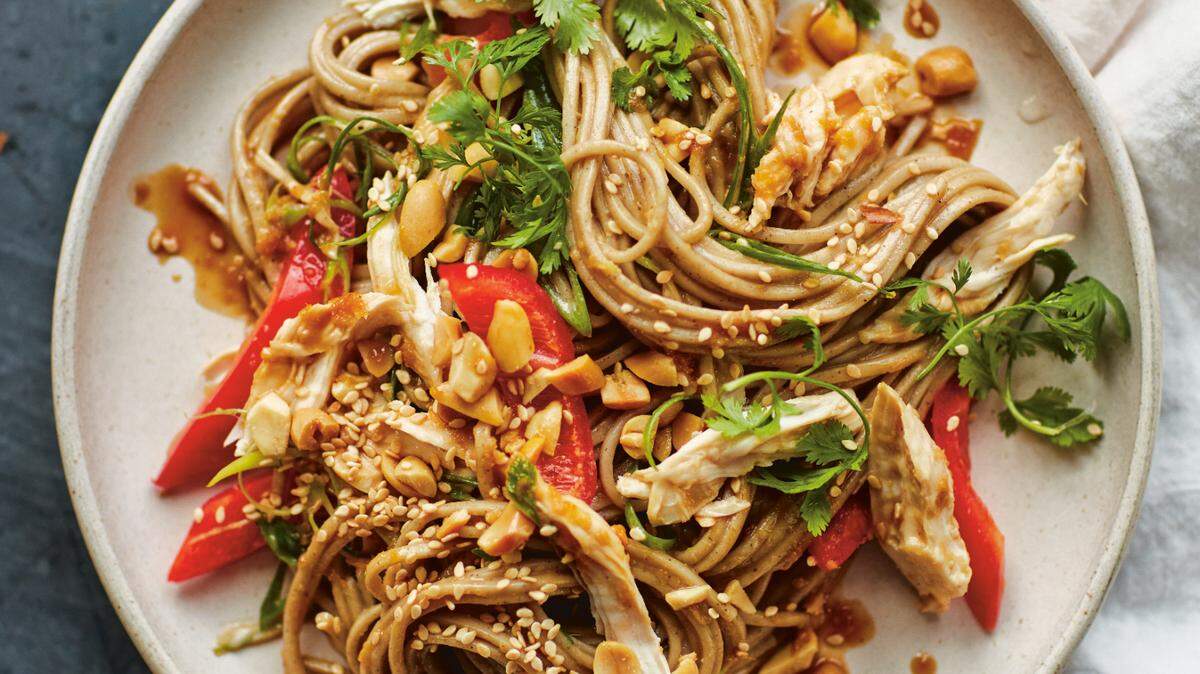
We often think of ginger as an Asian ingredient, but it’s crossed over into almost every cuisine in the world. You might find it in German Pfeffernusse cookies, Australian marmalades, Moroccan tagines, or American cranberry relish. Spices like ginger give a warm pungent flavor to sweet and savory dishes and drinks across a wide range of global cuisines.
In Chinese cooking, ginger is sliced into julienne, chopped or smashed and added to vegetable, fish, and meat dishes. In Japanese dishes, it’s grated, shredded, or pickled and then served thinly sliced with sushi. Indian chefs favor it in curries and rice dishes.
Ground ginger lends a spicy note to cookies (ginger snaps), preserves, quick breads (gingerbread) and beverages (ginger ale). It is, of course, part of the spice mix we love — pumpkin pie spice.
Ginger does more than improve taste, it’s also good for you. Traditionally, ginger has been used to relieve problems with digestion or nausea, including motion sickness.
Fresh ginger or ginger root, as it is often called, is not a root but the rhizome, or underground stem, of a plant that comes from the same family as turmeric and cardamom.
When buying fresh ginger, look for a heavy piece with smooth brown skin, no wrinkling and no mold. Fresh ginger is hard and breaks cleanly with a snap. If you see pieces with fibers coming out at the break, it is an old piece.
It should keep in the refrigerator for 2-3 weeks wrapped in a paper towel. It can also be wrapped in foil and stored in the freezer for 1-2 months. It will lose its crispness but can still be used to add flavor to dishes.
If I have too much ginger on hand, I often grate it, add enough water to make a paste, and freeze it in an ice cube tray. I can then easily add it to stir-fries or other dishes.
To prepare ginger, scrape off the brown skin with a spoon (or leave it on), then chop, slice, or puree the flesh using a Microplane grater, or even crush it in a garlic press.
This recipe is adapted from “Once Upon a Chef: Weeknight/Weekend,” by Jennifer Segal. Clarkson Potter/Publishers ($32.50).
A light to medium-bodied dry or semidry white wine generally is a good choice with Asian food. Psagot Viognier (vee-oh-NYAY) 2019 ($27.99) from Israel with its floral notes of anise, apricot, honey, and lemon provides a nice contrast to the sharpness of the ginger and the salty and sweet flavors in the dish.
Segal advises, “Note that the dressing will taste acidic and salty before you toss it with the noodles — because the noodles will soak up the flavor quickly, you have to over-season the dressing slightly. Feel free to make the dressing ahead of time, but cook and dress the noodles at the last minute so they don’t get soggy.”
A version of this story originally published in the Miami Herald.
This story was originally published August 1, 2022 at 1:53 PM with the headline "Spice up this Chicken Noodle Salad with Peanut Dressing recipe by adding fresh ginger."