
Prevent a vole invasion
Our Belgian endive row looked lush and healthy, promising a good fall crop for winter eating – except for one plant, whose leaves had withered. I pulled, and it came up easily. No wonder. Where once a deep taproot had been there was now a deep, narrow cone-shaped hole. Every trace of root had been consumed.
The culprit? Surely a meadow vole, and this seemed a good time to assess not only their current plunder in the garden, but also the possibility of future raids.
Also known as field mice, these furry creatures are larger than house mice, and brownish rather than gray. Unlike moles, which mess up your lawn with their burrows but ignore vegetable crops, voles will feast on most any edible you grow.
Root crops are special favorites: sweet parsnips, sweet beets, succulent baby turnips – and endive roots most of all. When fall frosts arrive, making the carrots extra sweet, these too may become orange-tinted hollows in the soil. And don’t forget the salad course. Cold frames and greenhouses can become vole playpens.
Vole mamas can have a litter every three weeks. Hiding is essential. A host of larger creatures find them tasty snacks, both the hawks and owls that hunt from the air and ground-stalkers such as foxes and snakes.
Keeping grassy areas around garden beds closely mowed helps expose voles to predators. But if you spot numerous shallow runways in the garden, notice vole damage to crops or glimpse the rodents themselves, take precautionary measures.
Trapping is the best solution. Ordinary mousetraps placed perpendicular to the runways are effective, but they can catch ground-feeding songbirds too. Our most successful strategy has been to place unbaited traps where they will not only interrupt a vole’s mad dash to safety but also provide what looks to them like a safe haven.
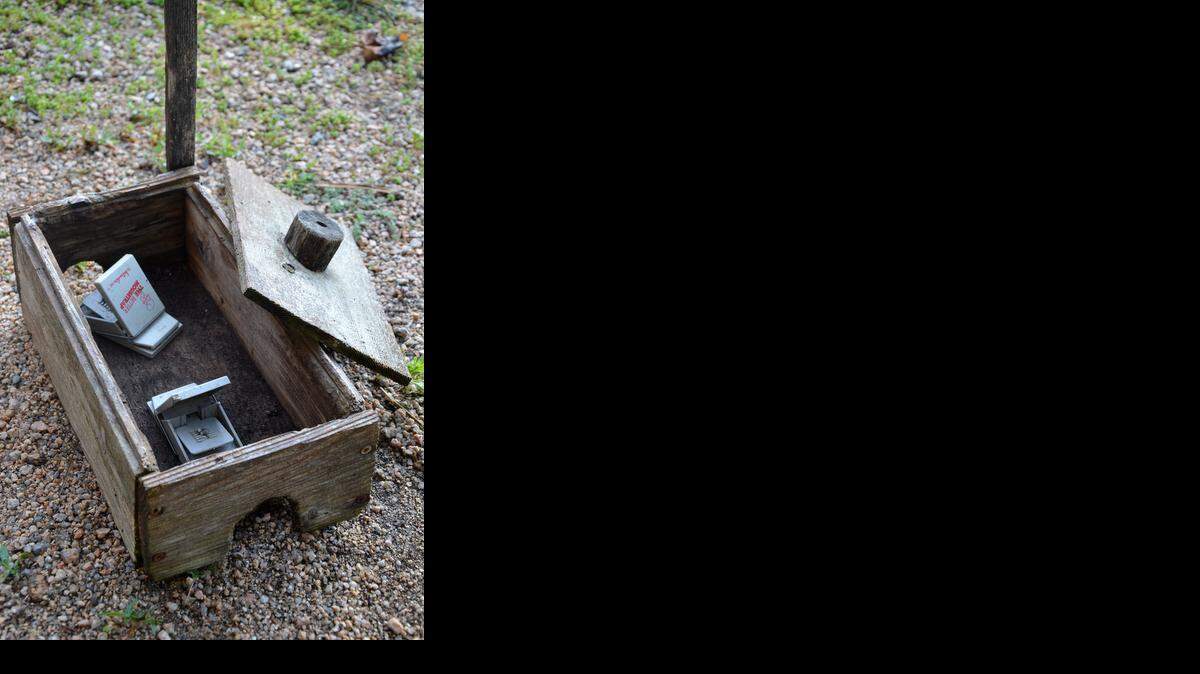
We’ve used plastic boxes designed as bait stations for rats but have also had great success with a homemade version.
It’s a simple wooden box, screwed together, with a bottom and a removable lid. Using a jigsaw, we cut little mouse-sized openings in two opposite sides of the box, then set our mousetraps just inside these entrances, where a vole in a hurry to escape a hawk’s eye can’t help but land. (Birds do not enter.)
The lid is easily lifted off to look for, and remove, voles and the occasional mouse. An upright stick attached to one corner helps us find the box amid tall garden greenery. You can tie a flag to the stick if it’s still hard to see. The trap we use is an easy-to-set one called the Better Mousetrap from intruderinc.com.
We’re looking forward to crisp little heads of Belgian endive this winter. Unless someone else gets to them first.