
Over-wintering potted plants
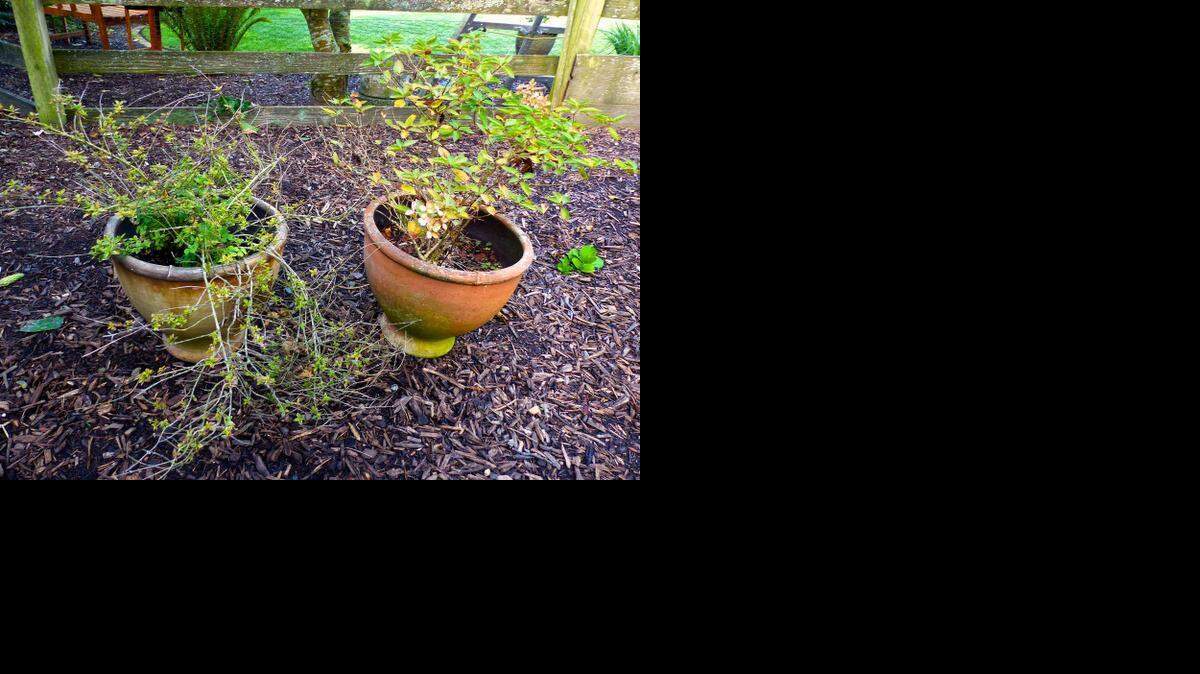
In simpler times, container gardening was small-scale landscaping using flowering annuals. We enjoyed their color for one season and went with something new the next.
But shifts toward food production and mixed container planting – perennials with annuals – have changed all that, creating the need for over-wintering.
“Many more people have limited or no garden space, (and) as a result are doing their food gardening in containers,” said horticulturist Marianne Ophardt. “Cultivating small (perennial) fruit like raspberries, strawberries and blueberries is one way for these gardeners to grow their own fruit, and it’s fun.”
Ignore the rules about hardiness zones if you’re trying to over-winter perennials in pots. All bets are off when containers are exposed to dehydrating winds and seasonal freeze-dry cycles.
The best way to help plants survive the winter is to select the right varieties to begin with, Ophardt said. Buy the most cold-tolerant varieties you can find.
“I pick the hardiest available rated with a USDA zone that is two zones colder than my zone,” she said.
Some plants genetically are more perennial than others. Woody plants like shrubs, for example, usually are more cold-hardy than soft-stemmed herbaceous perennials.
Many techniques have evolved to help potted plants survive the winter. Several of the most common:
Use bigger containers: “Larger root masses and soil volumes are less susceptible to winter injury,” said Hannah Mathers, an Ohio State University professor who specializes in commercial nursery and landscape extension.
Dig them into the ground: “Dig a pit and cover with poly (plastic sheeting) and straw to over-winter some smaller containers,” Mathers said. “Trapping the heat from the earth is an ideal way to over-winter plants.”
Group them: Less troublesome than digging can be “grouping and placing them in a protected spot on the ground, such as an alcove or corner, and mulching them with compost or straw,” Ophardt said.
Bring them indoors: “Anyplace cool but that will stay above freezing,” Ophardt said. “Most often an unheated garage meets this criterion.”
Over-wintering perennials gives you a running start for the next growing season, especially if you’re a fan of mixed container gardening. When spring arrives, the containers need only a few annuals to fill them in.
“I myself this year did several mixed planters with small shrubs, small conifer trees and herbaceous perennials mixed with annuals,” Mathers said. “I will be over-wintering these in an unheated greenhouse. Some of the larger pots with conifers I will keep outside for winter color.”