
Ask the Gardener: You’ve been slimed!
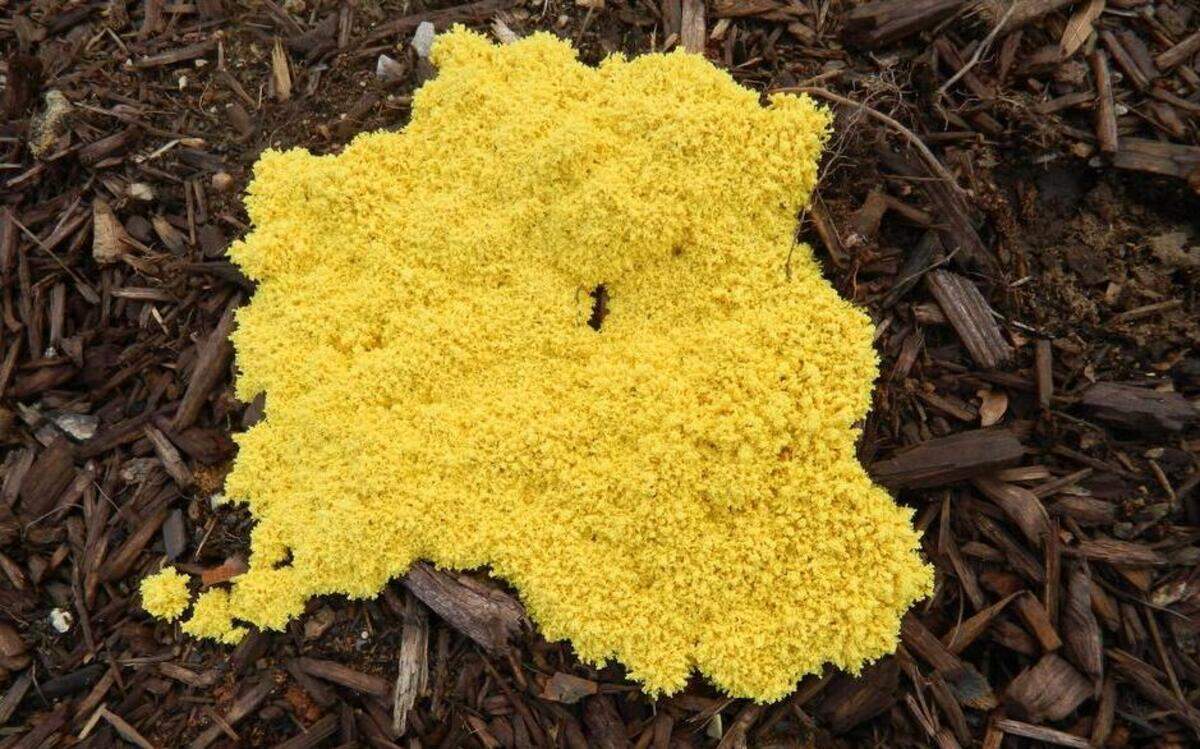
I found a weird glob of bright yellow curdled something about 5 inches across in the bark of my perennial bed, and when I asked my husband what it was, he thought it was a mushroom of some sort, but it seems too flat and icky – juicy, maybe? – to be a mushroom. Can you take a guess as to what it could be? And is it harmful?
Beatrice Smith
Raleigh
After sending you an image of what I thought it might be, and you confirmed it looked a lot like the yuck that invaded your landscape, I am confident that the mystery mess is slime mold, which can come out in the yard after long periods of wet weather, such as the soggy spring we have experienced.
Slime mold is weird stuff – it is not a mold, nor a fungus, nor a plant, nor an animal. It is just a dirt-dwelling, mobile (yes, it can move) amoeba-like goo. It is typically seen in shades of yellow or orange, but can be found in just about every other color except green, since it doesn’t produce chlorophyll. It’s not harmful – if your dog licks it, he won’t turn into Cujo; if you touch it, you won’t feel cursed to play Barry Manilow records backward after midnight.
A good dose of hot, rain-free weather will dry up slime mold, but if you can’t stand the sight of it now, simply scoop it up, along with a heaping helping of surrounding soil or mulch it is sitting on, and toss it away in a plastic trash bag.
Getting the brown out
My cast iron plant must have had a really bad winter because many of the leaves are streaked in light brown now, and it looks awful. Is there a spray that will help this condition, or will fertilizer help?
Megan Moore
Durham
The only spray I know of that will take the brown out of the leaves you described is green paint. When the foliage on a cast iron plant (Aspidistra sp.) is bitten by extended, extreme cold spells, the damage is permanent, and no magic elixir will bring back the beautiful natural green.
So, whip out your pruners and snip any ugly brown leaves off at the base of the plant. If you have to do extensive pruning, your cast iron plant might look like skinny shadow of its former self, but this is where fertilizer can be beneficial. A light application of a complete fertilizer such as 8-8-8 or 10-10-10 around the plant after pruning will help stimulate new leaf growth as the summer approaches.
Day lilies from seed
I bought four pretty day lilies last year that produced many seeds after the flowers, and although I didn’t get a chance to plant any last year, I am thinking about doing it this year to get more of the day lilies. Do you have any advice?
Sue Williams
Raleigh
If you are looking to grow more of the same day lilies from seed, my advice would be don’t bother. More than likely your day lilies are cultivars, and the chances of any seed-grown offspring being exact copies of such parents are slim. Even if the seeds came true, it would take a couple of years before the plants were established enough to flower.
A better way to make more plants that will be perfect duplicates of what you already have is to divide the day lilies in late September. Divisions are quicker to develop, too. Replanted in early fall, they will usually put on a flower show the following spring.
L.A. Jackson is the former editor of Carolina Gardener Magazine. Send your garden questions, including the city where you garden, to: askthegardener@newsobserver.com.
This story was originally published May 8, 2015 at 12:00 PM with the headline "Ask the Gardener: You’ve been slimed!."