
Start looking for green tips of daffodils
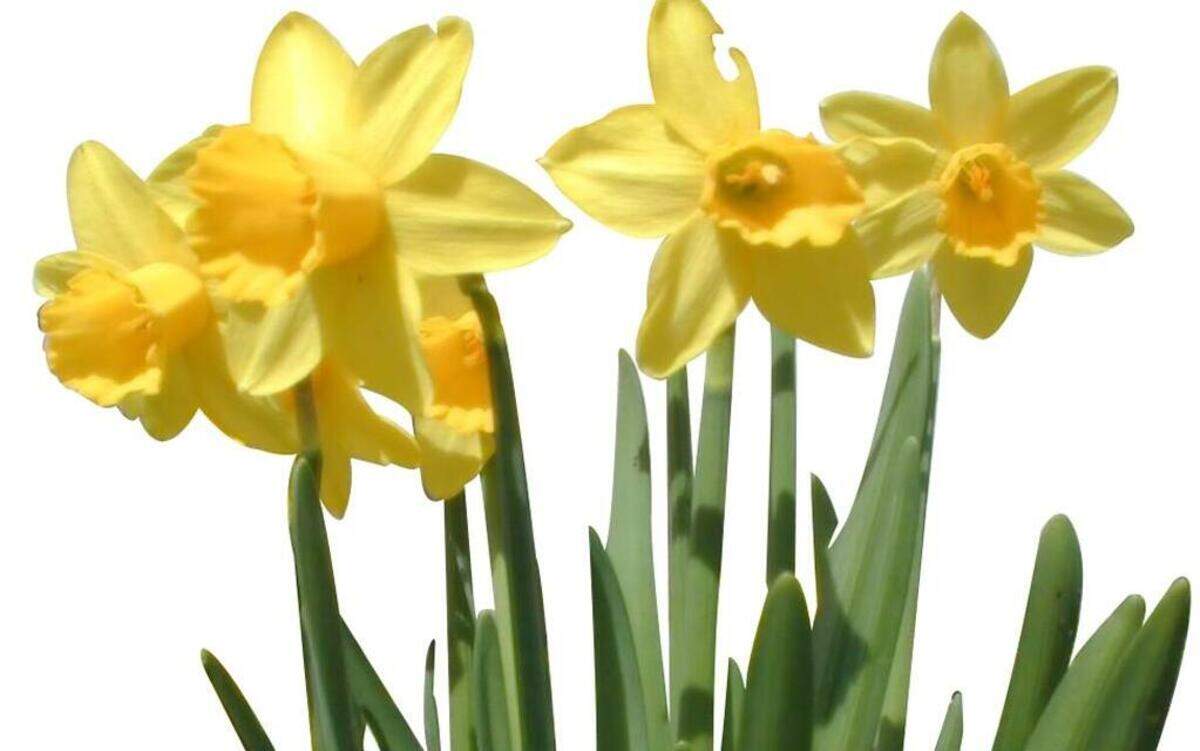
As the ice and snow melted early this week, I went in search of something, a sight that always cheers me at midwinter.
It is the first green tips of daffodils just poking through the damp earth and a rapidly thinning cover of white. More will be coming along, rising to herald the news that spring is indeed on its way.
Over the years, I have heard many gardeners express alarm at these sightings, worried that the inevitable cold of February will harm them. That should not worry you, because the foliage is very hardy and will not be damaged. Open blooms, however, can be damaged by deep freeze, but that is a worry for later on.
The greater hazard is that the leaves may get stepped on and crushed, and that happens easily when the leaves are a few inches above ground. So beware of that.
The rising tips are an important sign that the bulbs have awakened for a new season and will benefit from fertilizer now. This comes as a surprise to many people but should not be overlooked. Fertilizer will help the bulb develop and maintain healthy foliage through the spring and gather strength to set buds for next year’s blooms.
The flowers that will bloom this winter and spring are already safely stored in the bulb and will show up in February, March and April, depending on the variety. There were sightings of a few daffodils in bloom in December, apparently brought on by really warm weather. But that was unusual.
It doesn’t take much fertilizer, just 3 pounds of 8-8-8 or 10-10-10 garden fertilizer on 100 square feet of bed. Or use a specially formulated bulb fertilizer at the rate directed on the package. Later on, when the green tips of tulips and hyacinths emerge a few inches, do the same for them.
Fertilizer is especially helpful in getting another season or two out of tulips. Most will rebloom given sufficient nutrition, but I do not think of them as long-lasting members of a flower bed like daffodils. Waiting for the green tips makes it easy to locate the bulbs and sprinkle the fertilizer right where it is needed. Then rain will wash it into the ground.
Gardeners love daffodils but many people simply hate the foliage left behind after the flowers fade. They try all kinds of methods to conceal the foliage. These include folding and tying with a rubber band, even braiding the long slender leaves.
But you must leave them alone to avoid breaking the vessels in the stems that keep the bulb going and developing buds. Once the foliage turns yellowish-brown, you can safely clear it away by gently raking or pulling.
Nancy Brachey: nbrachey@charlotteobserver.com
Ask Nancy
Q. Last spring I bought a Knock Out rose intending to plant it in a pot. I cannot put it in the ground. But I didn’t get to it, and it is still in the plastic pot it was in when I purchased it. Is it too late to replant it? If so, should I use a plastic or a clay pot? If if it is too late, should I bring it inside for the winter?
A. You can use clay or plastic. Clay is more expensive, heavier and can be prone to cracking in winter. There is a good selection of plastic pots that look good, are lightweight and not too expensive in home and garden centers. Some have nice colors and are good imitations of traditional clay.
It is not too late to do this work. But keep the plant outside. It is not a houseplant.
This story was originally published January 29, 2016 at 3:48 AM with the headline "Start looking for green tips of daffodils."