
FEC deadlocks on Mako co-founder’s political giving

The Federal Election Commission has punted on whether the co-founder of Raleigh’s Mako Medical could make a campaign contribution in the name of his severely mentally disabled sister to a congressional candidate.
The commission delivered a split vote, a path that election integrity advocates say has become too common for the agency. Two Democrats and a left-leaning independent voted to penalize Chad Price and three Republicans voted against that. A vote to dismiss the complaint also ended up with a tied vote, with the parties reversed.
In 2017, Judson Hill, a Georgia congressional candidate, reported that Jessica Price was an employee of Mako Medical and had made a $2,700 contribution in a campaign filing. It was one of five donations totaling $17,500 to state or federal candidates listed under her name in campaign reports, and among hundreds of thousands of dollars Chad Price, his family and business associates had given since Mako’s 2014 founding.
But Jessica Price, 39, is severely disabled and functions at the level of a young child. She did not work for Raleigh-based Mako. Chad Price, who has been her guardian since 2013, made the donations.
Price had already given the maximum allowed by law to three of those candidates, including Hill, a Republican state senator who by then was helping Mako try to gain business in Ohio.
The FEC’s general counsel recommended a caution letter to Price after receiving statements from him and his attorney. Chad Price’s father, Larry Price, had filed the complaint against him.
The counsel’s recommendation also resulted in a split vote. The committee then voted to close the case with no action. Larry Price, who also filed complaints with election boards in several states, can appeal the decision to the courts but said he’s unlikely to do so.
The FEC’s split decision happens all too frequently, particularly as the nation has grown more polarized politically, election integrity advocates say.
Former FEC commissioner Ann Ravel, a Democratic appointee who stepped down in 2017, pointed then to the increasing gridlock. She said in a report the commission failed to reach consensus on 30% of its substantive enforcement cases in 2016; a decade earlier less than 3% were gridlocked.
“We have an FEC that just repeatedly deadlocks, whether or not they are cases on a smaller scale like this one or a larger one,” said Brendan Quinn, a spokesman for the Campaign Legal Center, a nonprofit watchdog. “And the result is almost an incentive for bad actors.”
Anna Massoglia, an investigative researcher for OpenSecrets, a nonprofit that tracks campaign spending, said some of the cases that have been dropped are “jarring.” Neither she nor Quinn offered an opinion on the Price case.
Massoglia alluded to an FEC deadlock on a major case involving a dark money “social welfare” group aiding U.S. Sen. Thom Tillis’ campaign in 2014. She and others looking into Carolina Rising found it had spent nearly all of the money it raised on ads backing Tillis, a North Carolina Republican who narrowly edged incumbent Democrat Kay Hagan.
On Election Night that year, Carolina Rising’s leader, Dallas Woodhouse, told a reporter in a televised interview the group spent $4.7 million to help Tillis. “We did it,” said Woodhouse, who later became the NCGOP’s executive director.
Woodhouse told the FEC that the group was not soliciting donors to influence an election, which would have required identifying them, and the FEC’s general counsel agreed. The three Republicans on the FEC voted not to pursue violations against Carolina Rising.
For much of 2019 and 2020, the FEC lacked a quorum, and that effectively shut down an investigation into British consulting firm Cambridge Analytica, Business Insider reported last month. Tillis’s campaign, the NCGOP and others had hired the firm and were facing complaints over its role in targeting voters.
The FEC has also been underfunded and understaffed, said Massoglia, creating backlogs and putting pressure on staff to dismiss cases with less review.
Kentucky complaint
The FEC’s dismissal in the Price case comes after a Kentucky prosecutor opted not to take up a similar complaint by Larry Price over a donation Chad Price had made in his sister’s name to a state candidate. The prosecutor said the state’s “antiquated” campaign finance laws made it too difficult to build a case against her brother.
Price told the FEC that two campaigns had told him it was legal to make donations on behalf of his sister. One was Hill’s campaign, which told the FEC that didn’t happen.
In his recommendation, the FEC’s general counsel noted Price’s claim that West Virginia state Sen. Stephen Baldwin’s campaign had said the same. Baldwin, a Democrat, said in emails this month to The News &Observer that neither he nor anyone with his campaign did so.
Price’s attorney, Mark C. Moore, of Nexsen Pruet’s Columbia, SC, office said in an FEC filing on Sept. 10, 2020, that all of the state complaints filed against Price had been dismissed. But in Kentucky, a prosecutor did not reach a decision until April 23, 2021. Larry Price said his complaints to West Virginia and North Carolina officials remain open.
The FEC’s general counsel said it found that Chad Price had committed two violations in making a donation in his sister’s name, even if it was unclear if it was Price’s money or his sister’s.
“Given that he had already maxed out for the special election, Chad violated 52 U.S.C. §§ 30116(a) and 30122 by making an excessive contribution in the name of another,” the counsel said. “However, we believe that under the circumstances of this case, the Commission should exercise its prosecutorial discretion and dismiss the allegation as to Chad. In recommending dismissal, we recognize that violations of section 30122 are serious, and this matter presents a close call.”
The two Democratic commissioners and the independent in a written statement said the commission should fine Price for violating the law.
“It is particularly grievous to exploit a position of trust to make political contributions in someone else’s name,” the commissioners said. “In addition to (the) gravity of the violation, there are questions regarding Chad’s credibility and whether he made the contribution in Jessica’s name in order to conceal that he was the source of the funds.”
They took particular issue with Price’s claim that blocking him from contributing in his sister’s name would disregard her free speech rights, noting in a footnote that he had it “entirely backwards.”
“Allowing him to contribute in her name would allow him to appropriate her First Amendment rights for his own purposes,” they wrote. “Being her guardian does not entitle him to contribute in Jessica’s name any more than it entitles him to vote in her name.”
Republican members did not provide a written explanation for their votes.
“Mr. Price is pleased with the FEC’s decision summarily dismissing this meritless complaint. We have no further comment at this time,” Moore, Price’s attorney, said in a statement.
Judith Ingram, a spokeswoman for the FEC, said it could not comment beyond the filings in the case.
‘Follow the money’
Larry Price said he was disappointed with the lack of action on what to him looks like a pattern of deceit.“No one wants to follow the money,” he said. “That’s what it’s all about.”
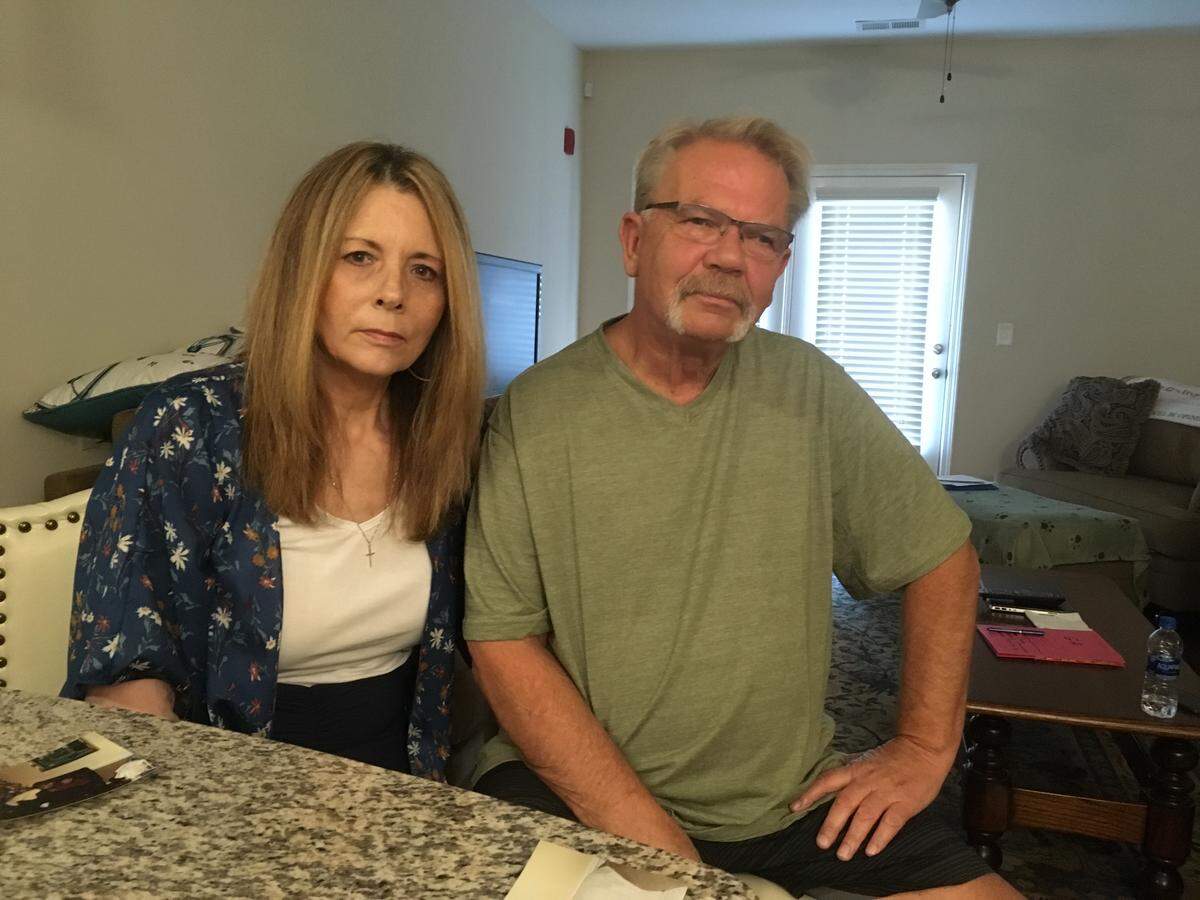
Chad Price’s donations in his sister’s name are among roughly $560,000 in political donations he, his family and business associates made over a five-year period, The News & Observer found. Republicans received most of the money, though in recent years Price stepped up giving to Democrats as well.
Lawmakers have attempted to alleviate the FEC’s gridlock, as well as boost its resources to tackle election violations. Former Rep. Walter B. Jones Jr., a Republican from Eastern North Carolina who died in 2019, had co-sponsored bipartisan legislation in 2017 that would cut the commission to five members with no more than two coming from any political party.
This year, Democrats filed legislation that would enact dozens of election changes that include requiring FEC commissioners to cast a majority vote to overturn their counsel’s decision to pursue or drop a case. Campaign Legal Center supports the legislation, which is stalled in the U.S. Senate.
“We just need some sort of functioning FEC,” Quinn said. “We need an FEC that’s going to enforce campaign finance laws and right now we don’t.”
For more North Carolina government and politics news, listen to the Under the Dome politics podcast from The News & Observer and the NC Insider. You can find it at link.chtbl.com/underthedomenc or wherever you get your podcasts.
This story was originally published November 22, 2021 at 6:00 AM.