
Two German companies made a $9B deal. Crop researchers in the Triangle are part of it.
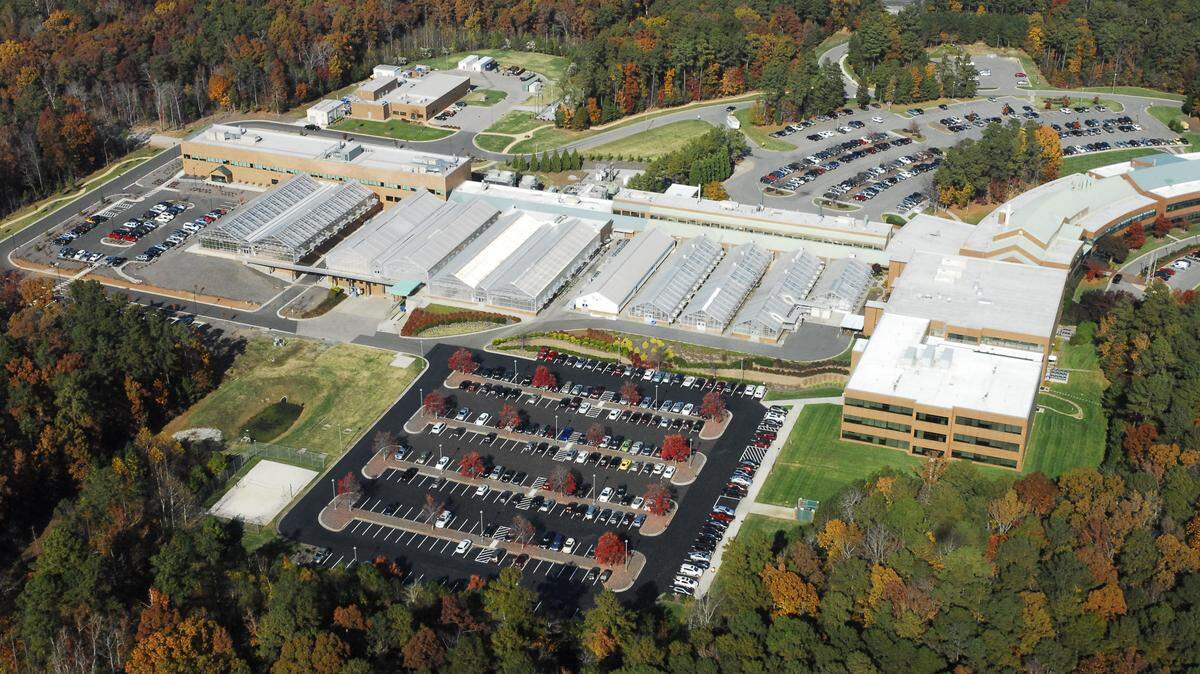
More than 420 people who work in Research Triangle Park got a new set of bosses on Wednesday, thanks to a nearly $9 billion deal between two German mega-corporations.
BASF closed Wednesday on a pair of previously announced acquisitions from Bayer AG that gave it control of Bayer’s seed and herbicide businesses. All told, BASF gained more than 4,500 new employees worldwide.
Locally, the deal shouldn’t herald any near-future layoffs, even though both companies had major operations here. BASF, which already employed about 1,000 people at its facility on Davis Drive, agreed to retain the permanent staff it inherited from Bayer for at least three years.
The expanded company is in a hiring mode and wants to soon bring on board 39 more people to fill a variety of roles, said Paul Rea, the BASF senior vice president who heads operations in RTP.
The deal with Bayer “is based on growth,” Rea said, explaining that BASF sees little overlap with its existing businesses. “The capabilities we’ve acquired are additive to what we’re doing.”
Along with the workers, BASF is also gaining four buildings from Bayer, including two on T.W. Alexander Drive, one on Paramount Parkway and the fourth on Davis Drive. Unlike his comments about employees, Rea was non-committal when asked if the company plans on keeping all of them or consolidating its holdings.
“Those decisions haven’t been made yet,” the New Zealand executive said. “We’re only at Day 1 today. We’ll now be in a discovery phase where we assess what facilities we need for the long term.”
But “we’ll need a significant footprint to be able to effectively grow this business here in Research Triangle Park,” Rea said.
BASF’s takeover of the former Bayer operations is a knock-on of Bayer’s 2016 decision to buy out the Monsanto Co. That deal finally went though in June after Bayer secured permission from U.S. and European Union anti-trust regulators, CNBC reported.
U.S. regulators agreed to the $66 billion Bayer-Monsanto merger only after Bayer agreed to sell off the portions of its business that competed with Monsanto.
That meant divesting its “cotton, canola, soybean, and vegetable seed businesses, as well as Bayer’s Liberty herbicide business, a key competitor of Monsanto’s well-known Roundup herbicide,” U.S. Department of Justice officials said in late May when they announced their terms for allowing the merger.
The Justice Department’s agreement with Bayer also addressed intellectual property and research programs, plus what it called Bayer’s “nascent ‘digital agriculture’ business.” That alluded to BASF’s pick-up of Bayer’s xarvio software line, which includes applications that help farmers manage chemical-application schedules and track weed and insect infestations.
The sell-off of Bayer assets to BASF is “the largest negotiated merger divestiture ever required by the United States” and “preserves competition in the sale of ... critical agricultural products,” Assistant Attorney General Makan Delrahim said when the department announced its settlement with Bayer on May 29.
Another point of the settlement was to see to it that BASF wound up with “the same innovation incentives, capabilities and scale that Bayer would have as an independent competitor,” the Justice Department said in May, adding that it’d worked with regulators in Canada and Brazil along with those in the EU.
BASF announced the acquisitions in two phases, the first in October and the second in April. Its announcements covered the same business segments the Justice Department singled out, hinting the purchase negotiations had unfolded behind the scenes in parallel with Bayer’s talks with anti-trust regulators.
The Justice Department singled out Bayer’s Triangle operation as one of the keys to the settlement, as Bayer’s facilities here include a lab that, with similar ones in Belgium, specializes in work on genetically modified crops.
Prior to the sale, Bayer and Monsanto were two of only four companies in the world that had the know-how, finances and the “extensive library of high-quality seeds that are necessary for plant research and breeding,” the department said in one of the legal filings that nailed down the settlement.
Rea said BASF’s acquisition of the former Bayer operations helps set up an “opportunity for us to learn and bring together an even broader range of solutions for growers.”
The company’s business covers “just about every farming segment there is across North America and the world” when it comes to “row crops” like corn, soybeans and cotton, along with trees and fruit crops and “non-agricultural uses” on athletic fields and golf courses, he said.
The acquisition gives BASF “additional breeding resources” and R&D capability, he said.
“Around 30 percent of our staff here in RTP are R&D based,” Rea said. “That number will only grow with the addition of the legacy Bayer team.”
This story was originally published August 1, 2018 at 5:29 PM.