Google Fiber says it’s here to stay, even as competitors point out its exits elsewhere
When Google Fiber announced earlier this year that it would be exiting the Louisville, Ky., market, people were quick to wonder whether this might mean other markets, such as the Triangle, could be next.
After all, Google’s parent company has not expanded across the country as fast as some thought it would, only operating in around a dozen communities.
And now Google Fiber’s competitors in the Triangle — one of the best-connected areas in the country — are trying to take advantage of any doubt that might exist around the stability of the service.
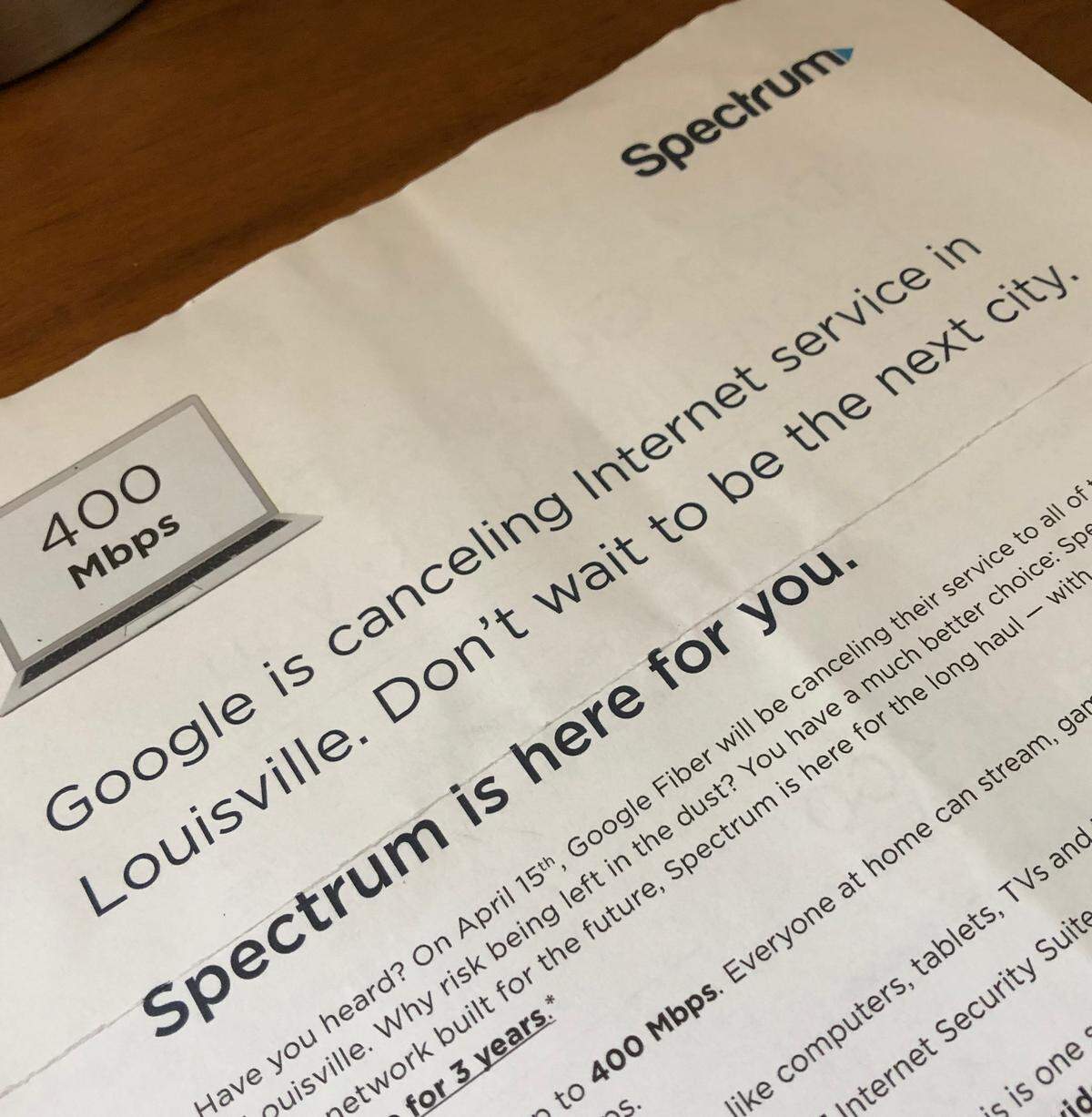
Spectrum, one of several companies offering high-speed internet connections in the Triangle, sent a letter to some Google Fiber customers recently warning them: “Google is canceling Internet service in Louisville. Don’t wait to be the next city.”
The warning is followed by a deal Spectrum would offer Google Fiber customers to switch over.
Joe Mancini, head of sales for Google Fiber’s Triangle operations, called the letter a “scare tactic,” adding that despite what happens in Louisville, Google Fiber is here to stay in the Triangle.
Spectrum declined to comment on the letter.
The exit from Louisville was because of market-specific reasons and had no bearing on the future of Google Fiber’s operations in other parts of the country, a spokeswoman for Google Fiber noted. Though, she granted, it obviously generated a lot of interest.
One of the problems there, The Courier-Journal of Louisville reported, was a failed experiment in burying fiber optic cable in much shallower trenches than it used in other cities, a process that would’ve saved the company money. The company’s fiber is expected to go offline on April 15.
Despite that, Mancini said customers shouldn’t have doubts about Google Fiber’s service in the Triangle.
“I would encourage folks to disregard this obvious scare tactic. Google Fiber is here to stay,” he said in a phone interview. “We love it here, and we are working harder every day to bring faster internet coverage. I am knocking on doors to talk to potential customers right now, and our customer base and the network is growing every month.”
The company wouldn’t say how many customers it has in the Triangle now, but Mancini noted that its service has expanded to more parts of the Triangle since the beginning of this year.
Google Fiber launched in the Triangle in September 2016, bringing its service first to parts of Morrisville. Since then, Mancini said, the company’s products are now available as far east as downtown Raleigh, and it is providing service to parts of Chapel Hill and southern Durham. Google Fiber also is available in downtown Durham and some areas around there.
“We served our first customers in Chapel Hill earlier this year and downtown Durham, as well,” Mancini said, noting that One City Center in downtown Durham has Google Fiber, as well as several apartments in the Meadowmont area of Chapel Hill.
The coverage is expected to keep growing because of the strong demand for Google Fiber, he said. The Triangle has a lot of competition for high-speed internet, however. Providers such as AT&T, Ting, Spectrum and Frontier all compete in parts of the region for customers.
In its pitch to Google Fiber customers, Spectrum said it could provide download speeds of up to 400 megabits per second for $29.99 per month, a rate it would lock in for three years if a customer left Google. In the Triangle, Google Fiber offers plans for up to 100 megabits at $50 per month or up to 1,000 megabits at $70 per month.
“This is a community full of smart consumers,” Mancini said. “These consumers care about speed and quality of service. We work hard everyday to deliver that.”