New state pollution permit allows a wood pellet plant to expand in North Carolina
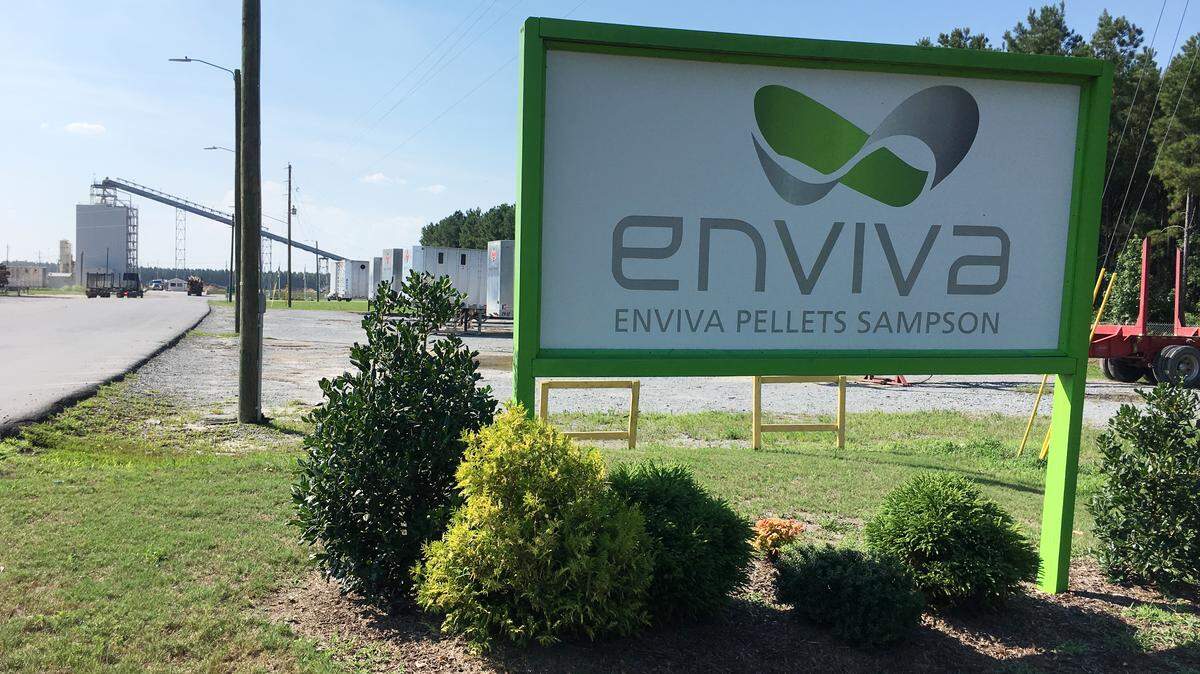
The state Division of Air Quality has approved a permit that will reduce several types of pollutants from Enviva’s wood pellet mill in Sampson County even as it allows the plant to expand production by 22 percent.
The permit is the second of three the company is seeking this year for new or expanded pellet mills in the state. The first permit allowed Enviva to open a new plant in Hamlet in June, while the third would allow the company’s Northampton County plant near Roanoke Rapids to increase production by 46 percent.
Enviva is the world’s largest maker of wood pellets, which it exports to Europe to be burned instead of coal in power plants. The European Commission considers burning wood pellets and other biomass an acceptable strategy for reducing carbon dioxide emissions to combat climate change, because the trees used to make the pellets will eventually grow back.
Critics say that regrowth takes decades and doesn’t factor in the carbon and other pollutants emitted in producing and shipping the pellets. Opponents of the permits urged the Division of Air Quality to consider all the impacts that increasing pellet production would have on public health and air quality, including the loss of trees.
Rachel Weber of Asheville-based Dogwood Alliance says allowing Enviva to expand contradicts the Clean Energy Plan released by Gov. Roy Cooper last week, which says the state should not support burning wood pellets to create power, either at home or abroad. Dogwood Alliance and other groups have urged the Cooper administration to place a moratorium on new pellet production so the state can study the industry’s full impact on the environment.
“The Cooper administration and the Department of Environmental Quality have explicitly recognized that wood pellet biomass should have no place in North Carolina’s clean energy future,” Weber said. “What we’re seeing is that the current system is set up to allow that industry to expand despite the unaccounted impacts on forests and climate and communities.”
The Division of Air Quality says its permits are limited to the pollution coming from the plants and whether it meets state and federal standards.
“We’re looking at the emissions and making sure that they’re meeting the standards that we do have some oversight of,” said spokeswoman Zaynab Nasif.
For its part, Enviva said the permit allows the company to use state-of-the-art equipment to control air pollution.
“This is a permit to install additional emissions control equipment,” Yana Kravtsova, the company’s vice president of environmental affairs, said at a hearing in Sampson County this summer. “I ask, ‘Who and why would anyone oppose that?’”
The Sampson permit takes into account equipment installed last December that reduces emissions of volatile organic compounds, particulate matter and hazardous pollutants such as methanol and formaldehyde. The Division of Air Quality says Enviva has agreed to install additional equipment to further reduce volatile organic compounds and hazardous pollutants by the summer of 2021.
The agency says it made changes to the draft permit in response to concerns raised by the public. They include time limits on start-up and shut-down periods at the plant, when pollution control equipment is not functioning, and requiring the company to report emissions testing results twice a year.
If Enviva wins approval to expand in Northampton, the company will be able to produce about 2.4 million metric tons of wood pellets a year at four plants in North Carolina, including the oldest at Ahoskie. The company also operates a terminal at the state port in Wilmington, where pellets are loaded onto ships bound for Europe.
This story was originally published October 2, 2019 at 5:25 PM.