Delta Air Lines becomes first company to join IBM’s quantum computing hub at NC State
A little more than a year and a half after IBM launched a quantum computing hub on N.C. State University’s Centennial Campus, Delta Air Lines will be the first industry partner to work there.
It’s the beginning of what IBM and N.C. State hope will become a raft of companies looking to take advantage of quantum computing. The N.C. State hub is part of the Q Network, a group of businesses, universities and government agencies that can use IBM’s quantum machines via the cloud.
While the actual quantum computers that will be used are located in New York, at IBM’s home base, N.C. State is one of the few places where scientists, students and businesses can access the powerful machines via a cloud computer network. N.C. State is the only North American university that is a member of the network, though several other universities from around the globe are also members.
The partnership with IBM places N.C. State on the forefront of what the future of computers will be. Quantum computing has, for some time, been widely seen as the next step for computing — supercharging how fast computers can crunch numbers and solve complex algorithms. The machines can potentially complete problems in minutes that might take a traditional computer years to finish.
Traditional versus quantum computing
Where traditional computers have operated from completing calculations made up of packets of 1s and 0s, quantum computers operate from a different framework, one that is based off the field of quantum physics. The computers rely on taking advantage of how particles behave at the subatomic level, where individual particles can behave like two separate objects.
If you can build those physics principles into computer computations, you can process data differently. Rather than a series of 1s and 0s, the computer can process quantum bits, or qubits, a combination of a 1 and 0. The more qubits a computer can process, the more powerful it is. However, qubits are hard to create and it could be years before the computers are practical for commercial uses.
IBM has a 53-qubit computer and its newest quantum computer, a 28-quibit one called Raleigh, was just unveiled this month at the CES conference in Las Vegas. (IBM names each generation of its quantum computers after a city where it has an office. The company has a large presence in Research Triangle Park.)
“IBM’s focus, since we put the very first quantum computer on the cloud in 2016, has been to move quantum computing beyond isolated lab experiments conducted by a handful of organizations, into the hands of tens of thousands of users,” Dario Gil, director of IBM Research, said in a statement. “We believe a clear advantage will be awarded to early adopters in the era of quantum computing and with partners like Delta, we’re already making significant progress on that mission.”
Daniel Stancil, head of the electrical and computer engineering department at N.C. State, said if you were to compare quantum computing to the progress of traditional computers, they would probably be at the same stage of development as traditional computers were in the late 1940s. At that point, a single computer could be the size of an entire building and only capable of a few calculations.
“One difference [now] is that, in 1947, the only people who could interact with the computer were the people in the room,” Stancil said. “But today IBM took the lead of making computers publicly available in the cloud, which has tapped into the global open source community. That has helped it move ... much more rapidly than the early days of computing.”
What Delta will do
Through the partnership with N.C. State, Delta will be able to access IBM’s fleet of quantum computing systems. Delta’s CEO Ed Bastian said at the CES conference that the airline hopes to use the technology to create new innovations and reduce stress across the travel day.
Whatever uses the company finds will help researchers at N.C. State and IBM figure out to make quantum computing more practical.
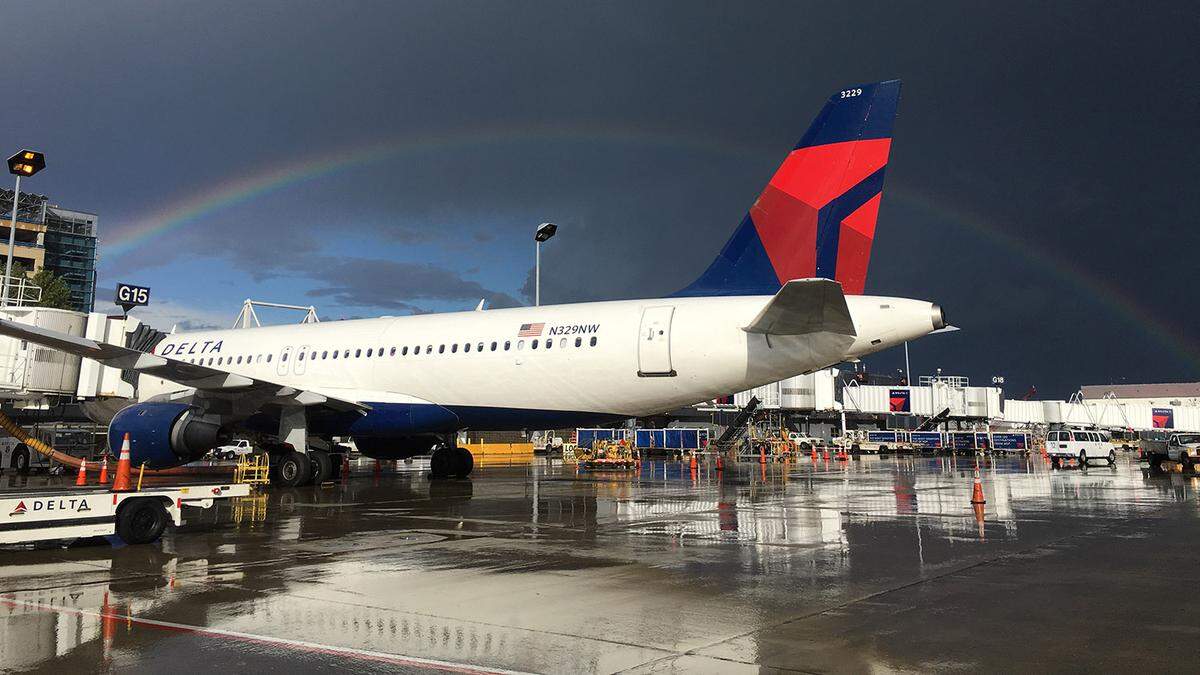
“The industry people, like Delta, could help start defining use cases,” said Dennis Kekas, N.C. State’s associate vice chancellor for partnerships and economic development, “whether it is [using quantum computing] to deal with weather or deal with a pilot getting sick and reshuffling your deck chairs, variety is very important. We want it to be diverse.”
Kekas said other uses for quantum computing could be found in chemistry, drug development, physics research and machine learning. He noted that N.C. State is also working with researchers from UNC-Chapel Hill on how to use the technology in finance.
Other quantum computing in the area
The N.C. State hub is just part of a growing number of teams working on quantum computing in the Triangle.
A group of professors at Duke University received $15 million in funding from the U.S. government in 2018 to develop a quantum computer, The News & Observer previously reported. While its effort is smaller in scale, the Duke team is attempting to build a quantum computer that tackles the technology from a slightly different angle.
And Microsoft has hired a number of employees in the Raleigh area to work on a quantum computing project for the Washington state-based company, the Triangle Business Journal reported.
Kekas said he hopes the hub, and other quantum computing projects in the area, will be a lightning rod to attract students, researchers and companies to the Triangle region. He added that another industry partner has agreed to work at the hub, though he couldn’t name them yet.
“We are starting to see more activity than we did a year or two years ago,” he said. “We are really creating a focal point in this area, which I think will help drive the future with workforce expansion here. You will see more and more of that.”
This story was produced with financial support from a coalition of partners led by Innovate Raleigh as part of an independent journalism fellowship program. The N&O maintains full editorial control of the work. Learn more; go to bit.ly/newsinnovate