Trump’s suspension of H-1B visas could hurt NC businesses and schools, advocates warn
President Donald Trump’s decision this week to temporarily halt new H-1B visas, a program that brings highly educated foreign workers to the United States, could affect many companies and schools in North Carolina looking to fill job openings in the coming months, local advocates say.
The executive order, which was signed by the president on Monday and will last until the end of the year, would stop hundreds of thousands of foreign workers from seeking jobs in the U.S.
Trump pitched the suspension as a way to help Americans land jobs during a time of high unemployment because of the coronavirus pandemic. But the order was immediately denounced by pro-business groups, especially ones representing the tech industry, which has relied on H-1B workers for many analytical jobs.
“The software industry ... rel[ies] on non-immigrant visa programs, including H-1B, to recruit for select positions that are critical for their businesses,” The Software Alliance, which counts IBM, Microsoft and Oracle as members, said in a statement. “... This allows companies based in the U.S. to remain globally competitive, which in turn boosts the U.S. economy, creating jobs for millions of Americans.”
Durham is a hot spot for H-1B visas
H-1B visas, which are limited to workers with at least a bachelor’s degree, are granted for up to three years and can be extended for an additional three years. The U.S. caps the number of approvals each year at 85,000 foreign workers, 20,000 of whom must have at least a master’s degree.
The cap means that demand for the visas outpaces supply by a large margin. For the past half a dozen years, the applications for H-1B visas, which are submitted in April, have exceeded the cap in the first five days of the filing period.
North Carolina is a heavy user of H-1B visas, especially by the Triangle’s technology companies and universities. In 2016, companies in the state requested more than 35,500 H-1B-supported positions, according to the Department of Labor, with an average wage of $78,870. However, only a small fraction of those requests are filled.
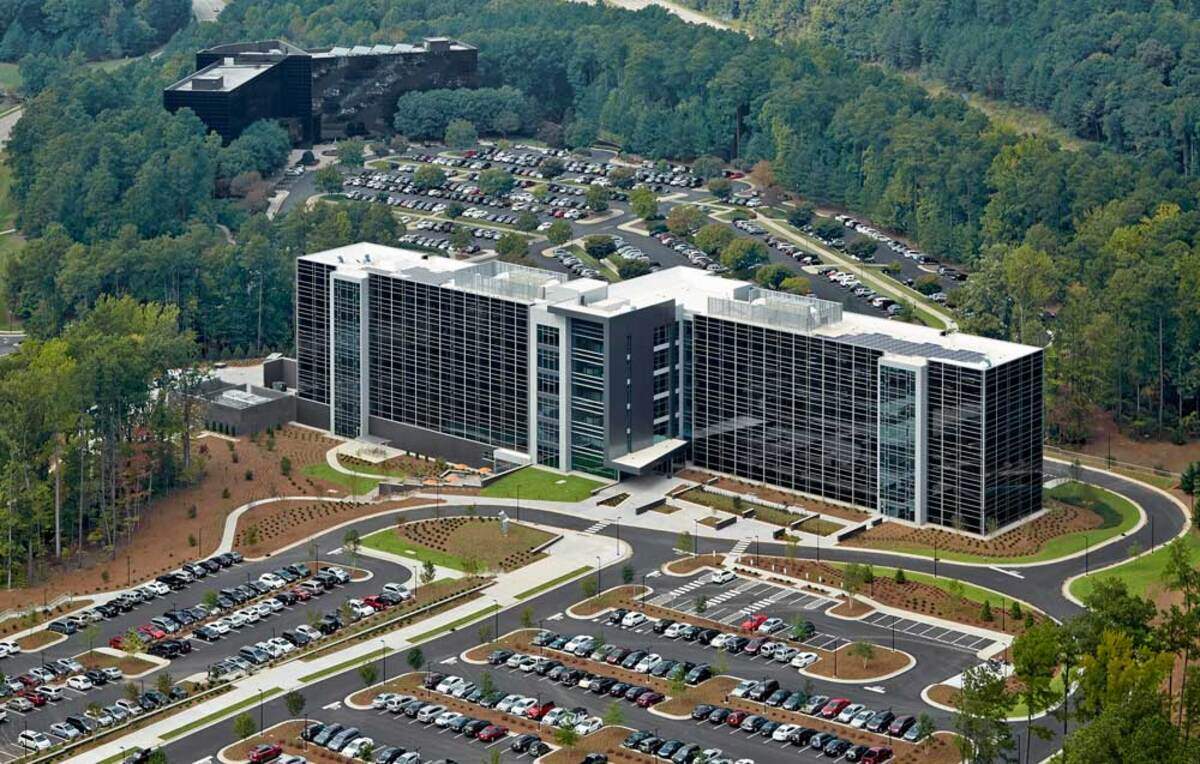
According to an analysis by the Pew Research Center, from 2010 to 2016, the Durham-Chapel Hill metro area had 11,300 H-1B visa approvals, or around 4.1 approvals per 100 workers. That was the third-highest concentration in the country, Pew found. Over the same time frame, the Charlotte and Raleigh metro areas each had 4,400 H-1B approvals.
Computer giant IBM, Duke University and UNC-Chapel Hill ranked among the largest applicants for H-1B visas in the state. The average salary for an H-1B worker in Durham-Chapel Hill was $84,700.
Michael Schoenfeld, a spokesman for Duke, said the suspension of H-1B visas means the university will lose out on some of the “most innovative and most entrepreneurial individuals from around the world at a time when we need the best talent in science, technology and other critical fields.”
“We can expect that universities and companies that engage in research will be negatively impacted, and that will unfortunately put us behind other countries that are developing their own knowledge economies,” he said in an email.
Cary-based SAS has long turned to H-1B visas to fill skills gaps. “We have a difficult time filling these heavily analytically oriented positions, the people that can help create new software using the latest, most advanced analytical techniques,” SAS co-founder and CEO Jim Goodnight told The News & Observer in 2016. “For example, to find a Ph.D. in operations research, it takes us almost two years on average.”
Steve Rao, a town council member in Morrisville, which has a large South Asian population and is home to several tech companies, said companies based here have struggled to fill technology positions, and have long turned to foreign workers to fill gaps. One in four IT workers nationwide are now immigrants, according to New American Economy, a group that advocates for immigration reform.
He added that the goal of the president’s order is short sighted.
“I think this is going to hurt American jobs,” said Rao, who is a member of New American Economy. “Sooner or later, people are going to say, ‘You know what, if I’m in China, I’m not going to go to Silicon Valley or North Carolina.’ Do we want the next Zoom to be started in North Carolina, or do we want it to be done in India, China, Germany or Canada?”
Not just tech jobs
Raleigh immigration lawyer John Pinnix said the new order is going to hurt many of his clients, which aren’t just tech companies looking to find software developers.
He said many H-1B visa holders work in health care or in school systems, especially in rural areas where its hard to recruit recent graduates from U.S. schools. Many of these workers, like front-line health workers, are acutely needed now because of the coronavirus pandemic, he added.
Pinnix, who works with several public schools systems, said many were planning on having H-1B-sponsored teachers join in the fall. Now, the earliest they might join is in January — though he believes the current suspension could portend further permanent restrictions.
“We are talking about school systems that already have a shortage,” he said in an interview. “They can barely teach what state law makes them teach let alone more advanced college curriculum. It is awfully hard to find math and science teachers and special ed teachers ... unless it is a local person that wants to come back home.”
Pinnix said many schools and companies like using the H-1B visa because its length gives workers time to obtain a green-card, which allows them to live in the U.S. permanently. But Trump’s ban also restricts the issuance of those new green cards, keeping even more foreign workers from taking jobs.
Rao said many South Asian immigrants have been waiting years for green cards because of backlogs and caps on how many Indians can receive them each year.
“Some of them have been living in Cary and Morrisville for 10 years or longer,” he said. Rather than stopping immigration, he added, the U.S. should be trying to reform the process to help those people waiting.
“These people are making really, really good money,” Rao said, “and when they make that money, what are they doing? They’re putting it into the tax coffers of the state. They’re paying into Social Security, they’re paying into Medicare. They’re pumping money into the economy, which we need more of.”
This story was produced with financial support from a coalition of partners led by Innovate Raleigh as part of an independent journalism fellowship program. The N&O maintains full editorial control of the work. Learn more; go to bit.ly/newsinnovate