After a 15-year ban, could payday lending return to North Carolina?
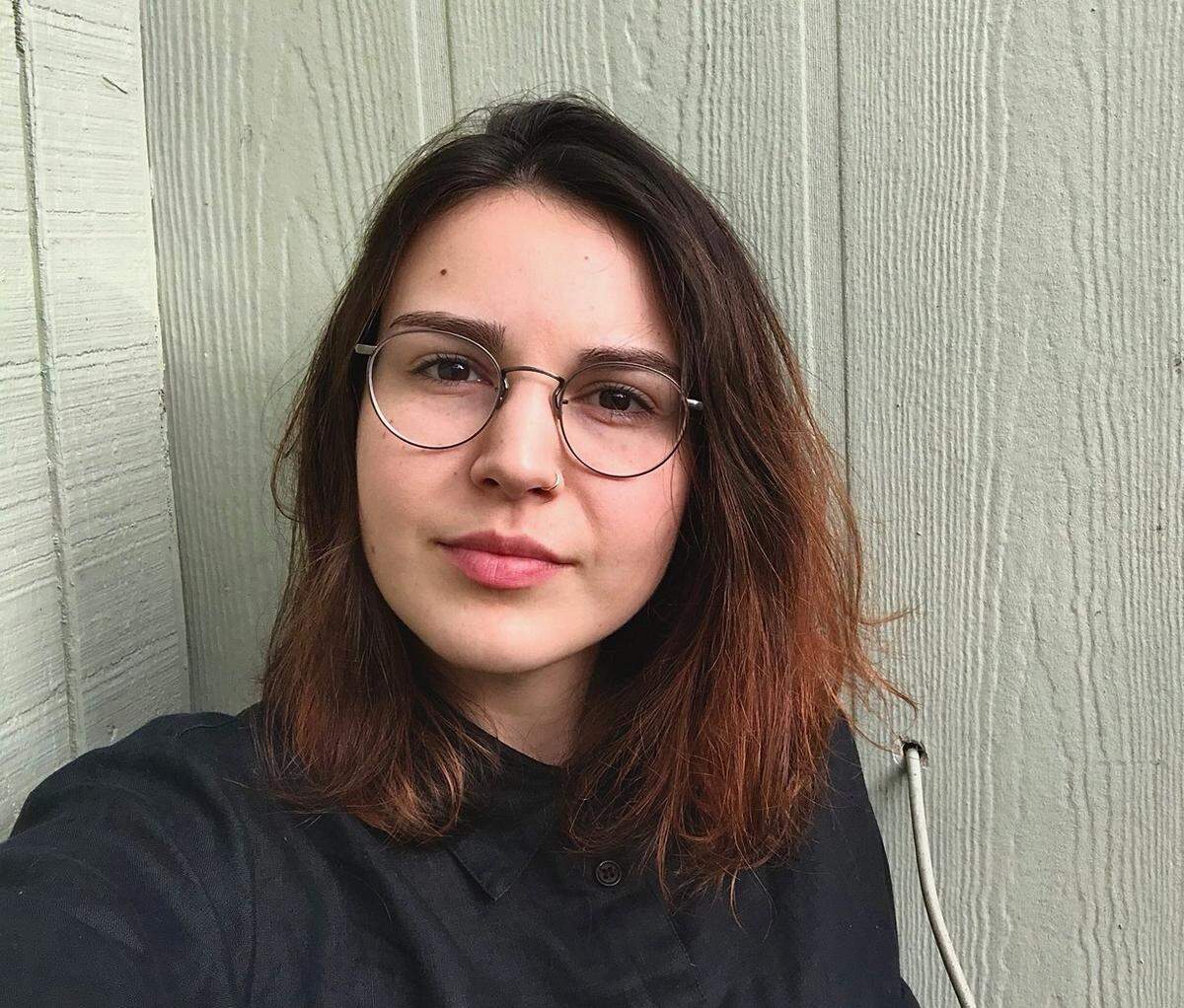
In 2017, Melody Garrett was in a bind. She’d been laid off from her job at a garbage disposal company, and her new part-time job at CVS didn’t pay enough for her to make the $1,400 rent on her Mount Holly apartment, where she lived with her teenage son.
She searched Google for loans and found that she could get a $2,200 car title loan online through a company called Approved Financial. The company asked her to send photos of her car, a 2011 Toyota Corolla, along with photos of both her driver’s license and car title.
“It was a last-minute quick decision. I was just stressed — my back was against the wall. I didn’t know where else to turn,” Garrett recalled Monday in a phone interview with The News & Observer.
But the loan came with highly punitive conditions. Despite website ads for “flexible payment options” and “low interest rates,” the interest rate noted in the loan agreement was 191.81%, adding up to a total of $8,689.92 to repay the $2,200 loan, including various fees.
After a family emergency, Garrett said she could not keep up with the $362 monthly payment. After missing two payments, she came out to the parking lot during her lunch break at work to find her car missing. Approved Financial informed her that her car would be sold unless she paid them more than $3,500.
She asked for a breakdown of fees but never received one, she wrote in an affidavit filed in a 2019 lawsuit by the North Carolina Attorney General’s office against the company.
“They told me one thing and one thing led to another, and it just didn’t go the way that they explained it to me,” said Garrett. “There were all these little hidden rules and things that I didn’t understand.”
She managed to get her car back but fell behind again. The company took the car back for good. Without a car, she couldn’t get to work, and she had to take out more loans to buy a new car.
“It was horrible. There’s no way to describe it, you’re at rock bottom,” she said. “If I knew the things back then that I know now, I would have never went that route.”
Garrett wasn’t alone. After receiving other complaints about the company from borrowers, North Carolina Attorney General Josh Stein blocked the company from operating in North Carolina last year. The lender was charging 120% to 200% interest, according the lawsuit, far exceeding North Carolina’s loan interest rate cap of 16% for unlicensed lenders.
The company had, the lawsuit argued, been “making and collecting on loans at oppressive and unfair rates, and making such loans without accounting for borrowers’ ability to repay,” a practice consumer advocates refer to as predatory lending.
But if a proposed federal rule passes, predatory lenders like Approved Financial could gain a foothold in North Carolina.
The rule, proposed last month by the Office of the Comptroller of the Currency, a bureau of the U.S. Treasury Department, would allow predatory lenders to partner with out-of-state banks in order to skirt the state’s interest rate cap.
Pressure from the powerful lending industry
The proposal comes after years of pressure from the highly profitable lending industry, which has argued that efforts to limit products like payday loans and title loans, like the one Garrett received, would deprive consumers of access to emergency credit. Federal regulators made another concession to the payday loan industry last month when they finalized a rule which removes the requirement that lenders check borrowers’ ability to pay back a loan.
The proposal has prompted backlash from officials and advocates in North Carolina who say that the change would hurt low-income people by trapping them in cycles of debt. Payday loans — marketed as a tool for cash-strapped borrowers to make it to the next paycheck — are small, short-term loans extended at a very high interest rate, often more than 400 percent.
“There are very few financial products that are just so patently unfair as a payday loan,” said Stein in a phone interview with The News & Observer.
“The whole premise of the industry is that a substantial portion of their customers will be on a debt treadmill and pay many times what the original loan amount was back in interest. A model that depends on people being in financial distress is one that we don’t need here in North Carolina.”
The practice of payday lending ended in North Carolina in 2006 after Joseph Smith, the state’s banking commissioner at the time, ruled that the state’s largest payday lender, Advance America, was operating in the state illegally. The state had banned payday lending back in 2001, but Advance America and other lenders had dodged the ban by partnering with out-of-state banks where payday lending was legal.
Smith ordered Advance America to cease operations in the state, prompting other payday lenders to leave the state, too.
North Carolina is one of 16 states, plus Washington D.C., where payday lending is illegal.
‘Devastating for low-income communities’
Al Ripley, consumer and housing policy specialist at the North Carolina Justice Center, a non-profit advocacy organization, recalls regularly working with clients being charged as much as 400% interest on payday loans.
“They would not be able to repay that loan after two weeks, so they would renew and pay another $45 to borrow $300, every two weeks. It was not uncommon to see people in our office who had 15 to 20 of those loans in a row and just absolutely being financially destroyed by them,” Ripley recalled.
“It is one of the most pernicious and harmful lending products in the world. The idea of allowing it to come back to North Carolina would just be devastating for low-income communities.”
A 2014 study by the Consumer Financial Protection Bureau found that 80% of payday loans were rolled over or reborrowed within 30 days, incurring additional fees with every renewal.
With thousands of North Carolina residents still applying for unemployment benefits every day due to the COVID-19 pandemic, advocates say that the proposed rule change couldn’t be more poorly timed.
“Especially during this time, during COVID-19, when a lot of low-income and Black families are facing some very challenging financial times, what we don’t want is to make it a lot easier for organizations to target and to prey upon them for financial gain,” said Marquita Robertson, executive director of The Collaborative, a non-profit that seeks to close the racial wealth gap in North Carolina.
”What we don’t want is for [borrowers] to be feeling the consequences of this 10 years down the road for something they did when they were in a pinch in 2020.”
Research has shown that payday lending specifically targets Black communities. In 2005, The Center for Responsible Lending, a nonprofit group that promotes policies to curb predatory lending, found that African-American neighborhoods in North Carolina had three times as many payday loan stores per capita as white neighborhoods.
The disparity increased as the proportion of African Americans in a neighborhood increased.
If payday lending is reintroduced in North Carolina, Robertson says that Black communities would once again be disproportionately impacted.
“When I drive down certain parts of Raleigh downtown — Black Raleigh — there are no banks. But you see pawn shops,” she said. “You’re going to see these pop up to replace banks in bank deserts... . That’s not what we need. Our people deserve better. They deserve safe affordable bank accounts and not predatory lenders.”
What are the options?
Payday lenders make the argument that their services help people in need of cash for emergencies.
But consumer advocates say that emergency credit doesn’t have to come with terms that strip wealth from borrowers. They point to the State Employees’ Credit Union as a model, which developed its loan program in 1993 as an alternative for members who were finding themselves trapped in debt traps.
“Payday loans and payday lenders have over the years wreaked havoc on folks, principally of modest means, but not necessarily— the users of these products fall into every economic strata,” said Mike Lord, president and CEO of SECU, whose members are primarily active and retired teachers and state employees and their families.
Lord said that clients would regularly bring checks for $500 to the credit union teller that they had paid a payday lender $75 to obtain. Often, they’d take out the same loan the next month, and the month after.
SECU instead offers the same $500 loan for $5—a 12% annual percentage rate. Lord says that 87,000 members use this service on a monthly basis, adding up to $73 million in savings on interest per year. The credit union also requires borrowers to put 5% of the loan amount into a savings account to help break the debt cycle.
“Lenders can make money and cover their costs by pricing products responsibly and reasonably,” said Lord. “It doesn’t have to savage and pillage individuals just because they’re in a weakened financial position and have to take whatever is available to them.”
Payday lenders push back
The payday lending industry and some legislators have made repeated attempts to loosen restrictions. In 2013, the industry hired 15 lobbyists to push a payday lending authorization bill that ultimately failed to make it through a House committee, according to CRL.
In 2017, U.S. Representative Patrick McHenry, a Republican from Denver, N.C., introduced a bill that would have required that interest rates remain unchanged even if the loan is sold. Consumer advocates said the bill would have allowed lenders to skirt North Carolina’s restrictions. The bill stalled in the Senate.
McHenry supports the latest proposed rule change. “Now more than ever, it is critical families in need have access to every option to cover unexpected costs,” he said in a press release last month. “For millions of Americans, small-dollar, short-term lending can be a lifeline in difficult times.”
But consumer advocates say that these arguments don’t hold up. In 2007, two years after the Commissioner of Banks’ ruling against Advance America, researchers found that the absence of storefront payday lending “has had no significant impact on the availability of credit for households in North Carolina.”
The study, prepared by the Center for Community Capital at UNC for the North Carolina Commissioner of Banks, found that more than twice as many former payday borrowers reported that the “absence of payday lending has had a positive rather than negative effect on their household.”
The state has repeatedly stamped out attempts by payday lenders to operate in the state.
In 2013, then-Attorney General Roy Cooper and the state’s Commissioner of Banks successfully blocked online lender Western Sky Financial and several of its affiliates from operating in the state. The company, based in the Cheyenne River Sioux Tribe Reservation in South Dakota, claimed that it was not subject to the jurisdiction of North Carolina. The state argued in court filings that it was “a front.”
Because of state protections, fewer North Carolina residents have been trapped by payday lending debt in recent years. The rule change, however, would override the state’s authority.
Fighting back
North Carolina officials say they are prepared to fight the rule change. The OCC is accepting comments on the rule until September 3 and both the state Attorney General’s office and Commissioner of Banks intend to submit comments opposing the rule change. CRL and other advocacy groups intend to submit comments as well.
The states of New York, California, and Illinois last week filed a lawsuit against the OCC. Stein declined to say whether North Carolina would join the lawsuit but said that his office is in discussion with the plaintiffs and would consider taking legal action if the rule is adopted.
Ray Grace, NC’s banking commissoner, said that while he is concerned about the rule, he is unsure of what power his office would have to challenge it if it’s adopted.
“When federal law is enacted, it very frequently preempts state law,” Grace said in a phone interview with The News & Observer. “Our actions are pretty much foreclosed at that point.”
This story was originally published August 6, 2020 at 9:10 AM.