
Coronavirus relief act promised two weeks of paid leave for COVID-19. Here’s the reality.
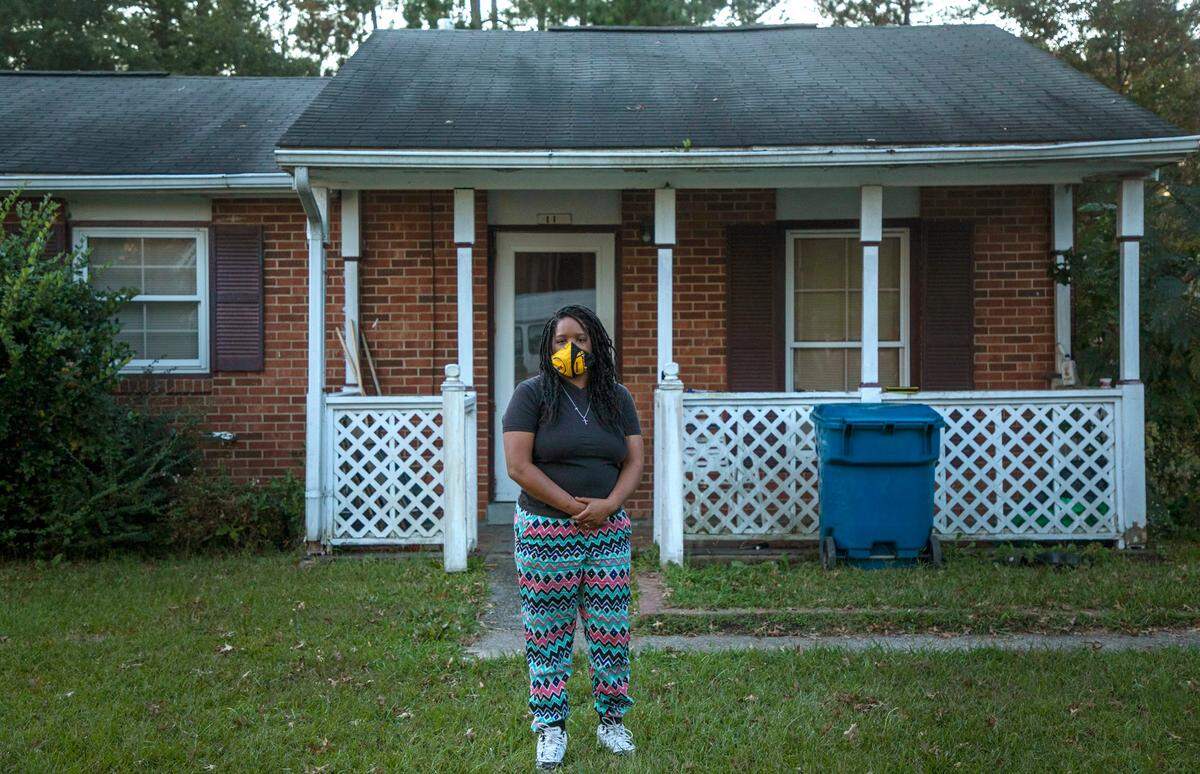
In May, as COVID-19 outbreaks popped up in nursing homes across North Carolina, Ieisha Franceis quit her nurse’s assistant job at a Durham nursing home. She didn’t feel safe going to work, Franceis told The News & Observer in an interview over Zoom.
She got a job at Freddy’s Frozen Custard & Steakburgers in west Durham. Franceis said she took a pay cut, and it often took two hours to get to work by public transit— her old job was a five to 10 minute bus ride away from her home. But with her 12-year-old son to take care of — and sometimes her 1-year-old grandson and 89-year-old mother-in-law, too— the sacrifice seemed worth it, she said, if it meant less risk of contracting COVID-19.
It turned out Freddy’s wasn’t safe either: Franceis said she is currently quarantining for the second time in three months because of potential coronavirus exposure at the restaurant.
The first time was in August, when an employee tested positive. According to Franceis and other workers, 12 workers were asked to quarantine for either two weeks or until they got a negative coronavirus test. Franceis and others said the restaurant refused to pay them for any time off.
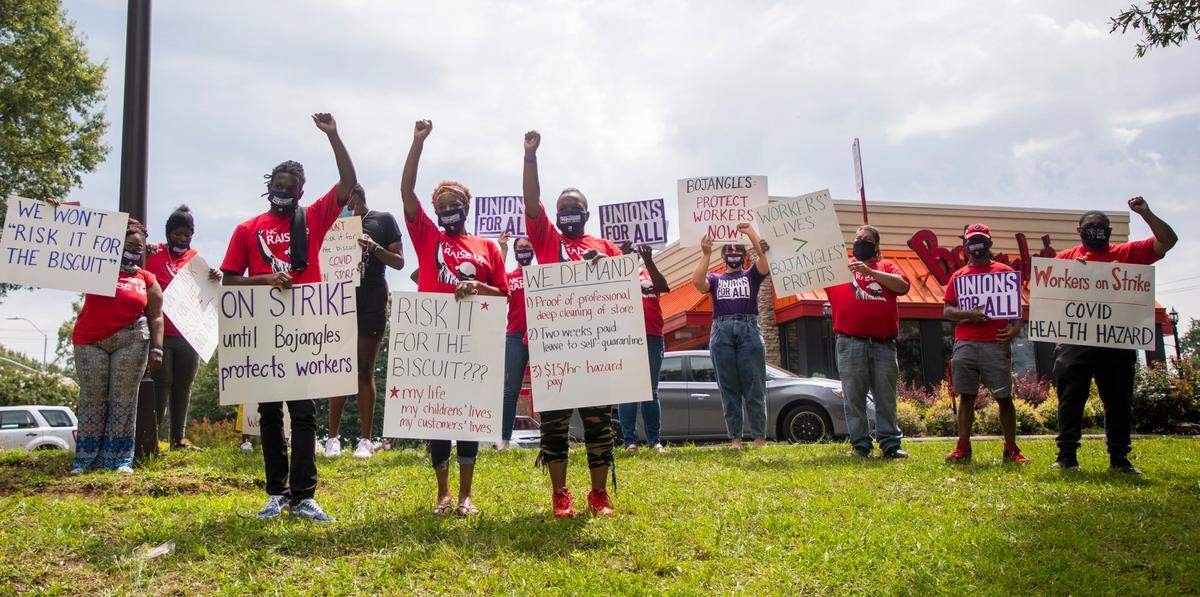
In response, employees walked off the job and, joined by supporters from NC Raise Up — the local chapter of the national Fight for $15 organization — demanded a professional deep cleaning of the store, two weeks paid leave to self-quarantine, and $15 per hour hazard pay.
In an email to The News & Observer, Freddy’s public relations manager Jill Tinsley wrote that the store was deep-cleaned. But neither of the other demands were met.
Then, last week, Franceis and other workers said that the general manager came in with symptoms of COVID-19 and worked in close contact with employees. The restaurant sent employees a letter confirming that an employee had tested positive. According to Tinsley, all employees were notified, but employees told the N&O that some were not aware until they were informed by coworkers this week.
Franceis and 11 other workers again delivered a strike notice to management, again demanding to be paid for quarantine time. Franceis said they haven’t yet received a response.
The experience of the workers at Freddy’s exemplifies one of the shortcomings of the Families First Coronavirus Response Act, which Congress passed in March to provide relief for people affected by the pandemic. Among other things, the act mandated that workers be given two weeks of paid sick leave if they needed it to recover or quarantine from COVID-19.
But companies with more than 500 employees were exempted. Companies with fewer than 50 employees could be exempted from a provision to provide paid family leave.
The franchisee that owns the west Durham Freddy’s location— plus a handful of others between the Triangle and Charlotte— HCI Hospitality, has more than 500 employees. It’s not required to provide paid sick leave, said Bridget Seemann, director of human resources for HCI.
The decision to pay workers for quarantine time is at the discretion of individual Freddy’s franchisees, Tinsley wrote in an email.
Franceis wants to quarantine for the full two weeks. But she says she doesn’t know how she’ll afford to pay her light bill this month and her rent next month if she does.
“This is how we feed our families, this is how we pay our bills. If we get sick and we can’t work for 14 days or more, or if there’s an outbreak in this store and we choose to quarantine in order to keep ourselves and our family safe...” said Franceis. “And you don’t feel the need to compensate us if we choose to take the precaution, which we very well should, to make sure that we and our families are as safe as possible?”
The limits in the Families First Coronavirus Response Act have left anywhere from 2 million to over 3.1 million North Carolina workers without these protections, according to an analysis by the Center for American Progress. That’s as much as 84% of the state’s workforce.
Nationwide, as many as 106 million workers — roughly 80% of the workforce — are excluded.
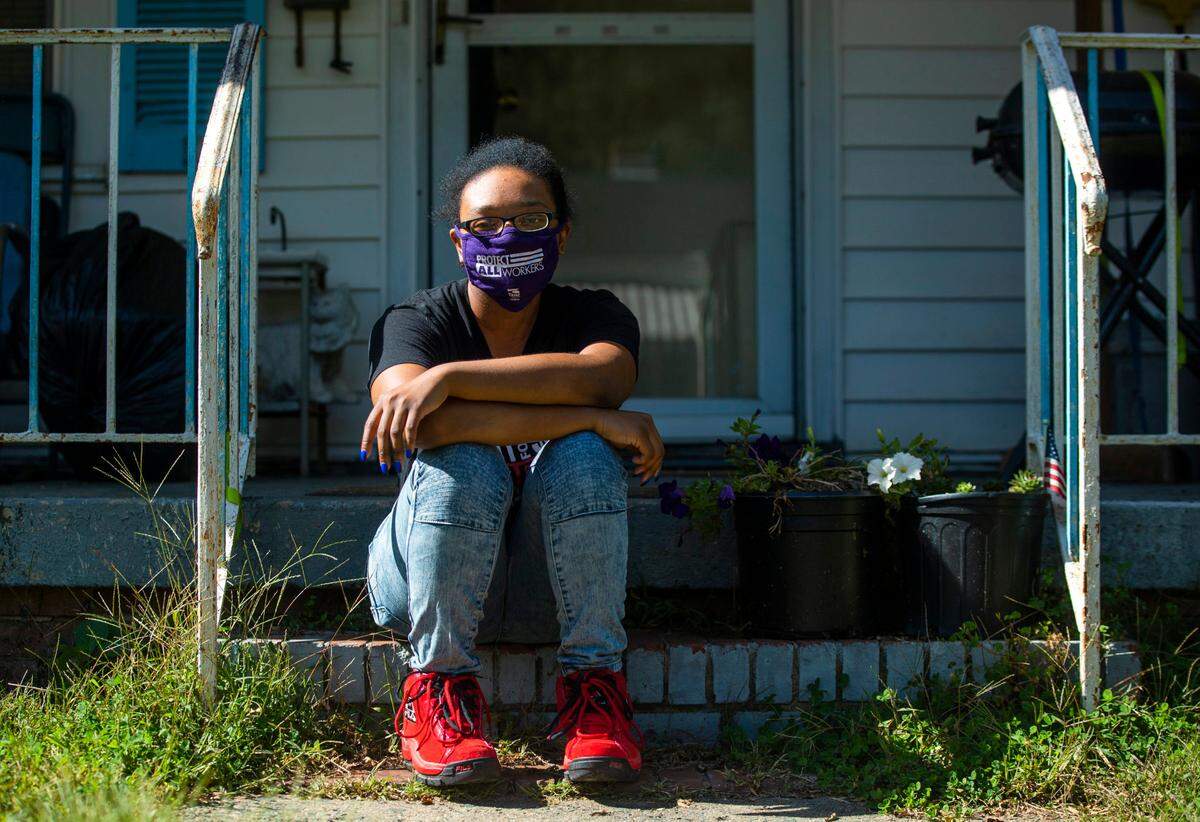
“Going into work scares me everyday. I have to deal with customers, I have to touch money,” said Jamila Allen, another worker at Freddy’s. She takes the bus to and from work, an hour each way. “Coronavirus is a scary thing to potentially catch and if you’re not working for two weeks how are you going to live and survive?”
Workers choose between paychecks and health
While some large companies have begun voluntarily offering paid sick days since the start of the pandemic, interviews with workers and worker advocates in North Carolina suggest that many have not, or have offered them to only some workers.
On Aug. 8, LaMaeka Moses arrived at work at Bojangles’ at East Raleigh’s New Bern Avenue for the 7 a.m. shift. As she passed the bulletin board in the back of the restaurant, her eyes caught the word “coronavirus” on a letter posted to the board: an employee had tested positive.
Moses and one of her coworkers walked out immediately. Moses’ three young daughters are all immunocompromised and she didn’t want to risk infecting them. When she got home and called the company’s H.R. representative, Moses said she was told that only three workers who had been in close contact with the employee who’d tested positive had been asked to quarantine, and would be paid for those days.
This didn’t make sense to Moses.
“Everyone is in close proximity in that restaurant. There is no way to be six feet apart,” Moses said. The H.R. representative told her that the company had watched camera footage from behind the counter to determine which employees had spent more than 15 minutes within six feet of the infected employee — the CDC’s definition of close contact.
Moses’ job was packing orders, so she was constantly moving back and forth behind the counter and past all of the other employees. “I’m sure I was all over that camera,” she said.
Amanda Arnold, human resources director for Tri-Arc Food Systems Inc., the local Bojangles’ franchisee, confirmed to The N&O that management had based its determination of exposure on surveillance footage, in addition to speaking with the positive employee and reviewing work schedules. The company employs over 500 people and is exempt from FFCRA.
Moses, along with two other workers, went on strike. On Aug. 19 — joined by a couple dozen supporters — delivered a list of demands to management: provide 14 days of paid leave for workers to self-quarantine, professional deep cleaning of the store with proof of the cleaning shared with employees and the public, and $15 per hour hazard pay for all workers at this store. Arnold wrote in an email the the store was deep-cleaned. The other demands were not met.
Moses decided it wasn’t safe to return to work at Bojangles’. She is searching for a new job, and in the meantime, watching her savings dwindle.
Gaps in Department of Labor oversight
There is no way to know how many companies are providing their employees with paid sick time during the pandemic. The FFCRA does not require companies to report to the U.S. Department of Labor the number of employees who have requested or received paid leave. Employers with fewer than 50 employers are permitted to claim an exemption from the law but are not required to notify DOL if they do so.
Under the law, employers who provide paid leave are eligible to file for tax credits as reimbursement. But according to Internal Revenue Service spokesperson Luis Garcia, the IRS does not yet have data on how many businesses have claimed the credit.
The Department of Labor’s Wage and Hour division has investigated 2,800 cases under the FFCRA and found nearly $2.5 million in back wages due for workers, according to the regional DOL spokesperson, Eric Lucero.
Lucero declined to share how many complaints have been made nationally or in North Carolina, or how many cases out of the total investigated were in North Carolina. The N&O has filed a public records request for this information.
A search of news releases from the Department of Labor shows only one example of a FFCRA violation in North Carolina: a Charlotte trucking and warehousing company, Premier Transportation & Warehousing Inc, was required to pay $3,116 in back wages after failing to provide an employee two weeks paid sick leave. An HR representative at Premier Transportation & Warehousing Inc declined to comment.
Preexisting lack of protections
Worker advocates and labor policy experts say that North Carolina’s longstanding lack of worker protections leave those workers who are eligible at a disadvantage.
“There’s a lot of misunderstanding among employers that they have to pay for it. It’s almost like it’s such a foreign concept to them that this is a policy that exists. I think a lot of employers are just so uncurious about it and they don’t want to do the extra paperwork,” said Ana Pardo, co-director of the Worker’s Rights Project at the North Carolina Justice Center, a progressive research and advocacy organization.
“In so many ways people in North Carolina are convinced that they don’t have any rights in the workplace, period,” said Pardo. “Certainly compared to other states where there are paid sick days and paid leave laws on the books. In North Carolina it’s almost like people don’t believe it — they don’t believe that there’s something meant to help them navigate this situation.”
Polling by the National Partnership for Women & Families in May found that more than half of Americans either aren’t aware of or do not believe they qualify for the protections.
“This is the challenge of our country’s continued failure to enact a national paid leave law or paid sick days law— that this is being done in a pandemic makes it hard to really create the comprehensive coverage you need, and do the awareness campaign so that workers know what their rights are,” said Tanya Goldman, a policy analyst at The Center for Law and Social Policy, a national nonprofit. “This DOL has really completely failed in its education and public outreach to ensure that people understand their rights.”
The department announced last month that it is launching a public awareness campaign, including TV ads and radio spots, to make more workers aware of the benefits.
But without new legislation expanding protections or strengthening enforcement, the effects of these efforts will be limited.
The HEROES Act, passed by the House in May, would expand the protections under the FFCRA to all employers. But Senate Republicans have refused to consider the bill and White House officials continue to discourage further stimulus talks until after the election.
Aiming to fill in the gaps left by the FFCRA, 13 states and Washington D.C. have enacted paid sick leave laws, according to the National Conference of State Legislatures.
In North Carolina, the state board of education authorized an emergency sick leave policy for education workers, paid for out of an employee’s regular pay.
But further expansion of paid sick leave without a federal law is unlikely. The state is one 23 that have passed legislation in recent years that preempts localities from enacting local paid sick leave ordinances.
Meanwhile, workers like Franceis and her Freddy’s coworkers remain quarantined, trying to make their last paycheck last until it’s safe to return to work.
“I have a 12-year-old son, you know, that needs things, almost on a daily basis. You know, I have a 1-year-old grandson who is growing like a tree, who almost on a daily basis needs something. I got a real household with real rent, with real lights, water, gas, you know — bills,” said Franceis.
“So, missing these days of work just to ensure that me and my family remain safe— words can’t even express how it really takes away from everything.”
This story was originally published October 21, 2020 at 2:51 PM.