
Jud Ammons, influential developer of Triangle housing communities, dies at 85
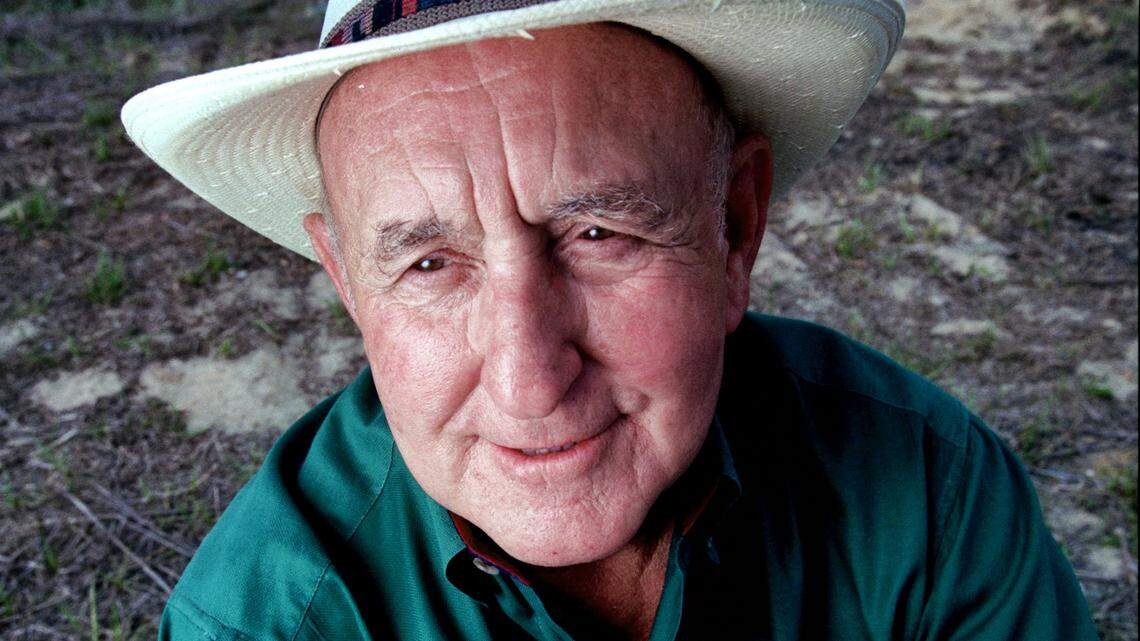
Justus M. “Jud” Ammons, one of the Triangle’s most influential housing developers for decades, died on Sunday. He was 85.
His death was confirmed to The News & Observer by his son, Andy Ammons. He died of complications from a surgery.
Ammons, who grew up on a farm in the Western North Carolina town of Mars Hill, built some of the first and largest subdivisions in North Raleigh. He and his children are responsible for building thousands of homes, in places like North Raleigh, Wake Forest, Wilmington and Nags Head.
Before the region’s population boomed, Ammons was one of the visionary developers who helped pave the way to where Raleigh is today.
Back when he started building Greystone, one of the first mixed-used planned communities in Raleigh, in 1979, North Raleigh still had some of the rural characteristics that he grew up with in Mars Hill.
“We grew up on Six Forks Road. It is in the heart of the action now,” Alma Hoffmann, his daughter, said. “Our neighbors had chickens and horses. We had a dirt road.”
Now, the area, from North Raleigh to Wake Forest, is home to tens of thousands of people, and Wake County has become the largest in the state.
He didn’t just stop at building neighborhoods. He built the Springmoor Life Retirement Community in North Raleigh, the city’s first continuing-care retirement community, sparking a proliferation of those communities in the area. He also developed the 600-acre EastPark, one of the first major industrial developments in Southeast Raleigh.
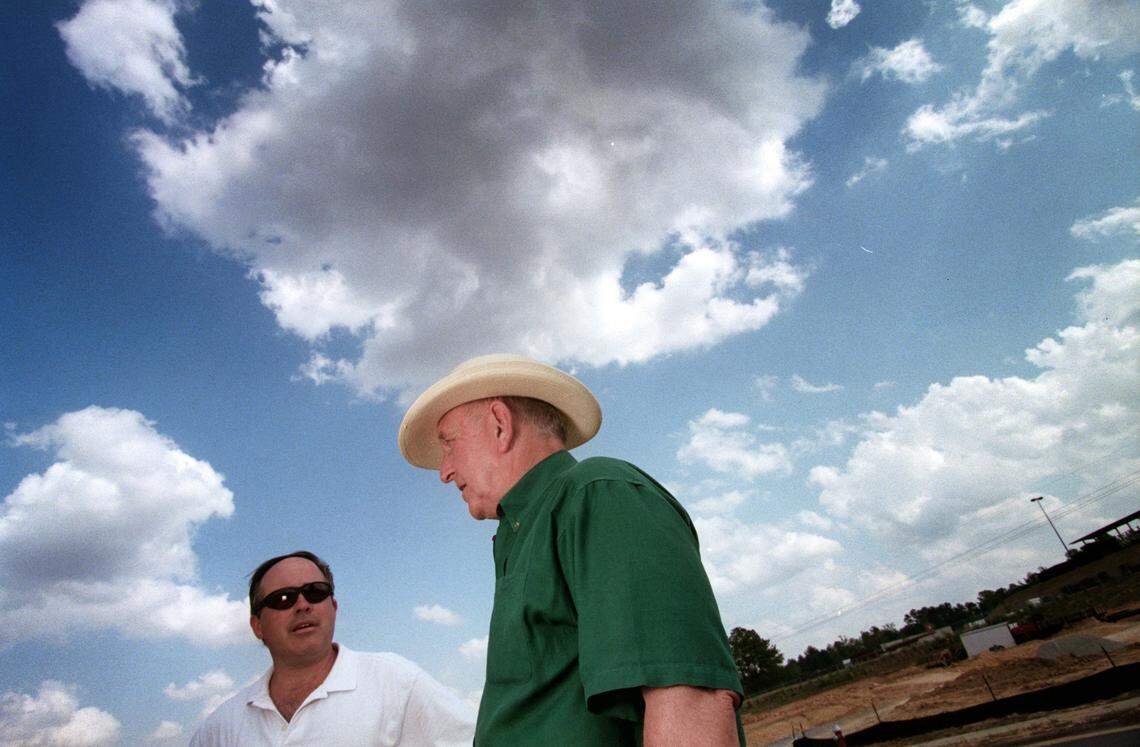
To Ammons, IBM’s decision to move a large operation to Research Triangle Park in the late 1960s was the game changer. It put the idea of the Research Triangle on the map, and hundreds of companies and thousands of highly educated employees followed.
“When IBM came to RTP that was the big deal,” Andy Ammons said. “Developers don’t bring people to the area. They just build the homes they are going to live in.”
People used to always tell him that he was lucky he bought land when he did. And while he would always count himself as lucky, he’d always say, “The harder you work, the luckier you are.”
But he knew how valuable land was going to be, buying thousands of acres from Raleigh to Wake Forest that he and his children eventually turned into neighborhoods. He had no problem buying land and waiting patiently for the growth to reach it. He was one of the first to specifically lay out housing communities to include shopping, office space and recreational amenities.
“I always thought I could do all three better than anybody,” he told The N&O in 2001.
He was known for his quick wit and advice — which is showcased in a book he wrote called, “Don’t Wish You Had, Be Glad You Did” — and was extremely picky about what was built on his land.
“It’s my stuff,” he told The N&O. “If I think they’re going to mess it up, I won’t sell to them.”
Ammons had a knack of connecting with many of the rural farmers whose land he was hoping to buy. He didn’t come across as your stereotypical businessman. He once showed up to speak at UNC’s Kenan-Flagler School of Business wearing overalls, a call back to his degree in agricultural engineering at N.C. State University, Hoffman said.
In particular, there was one dairy farmer, Emmitt Marshall, who had more than 1,000 acres just outside of Wake Forest that Ammons wanted to buy. The only problem: Marshall said he didn’t sell to folks from Raleigh.
It wasn’t until Ammons showed the farmer he knew how to feed a calf milk, drawing upon all his childhood knowledge, Andy Ammons said, that he was able to convince that farmer to speak with him about the land.
Today that land is part of the 2,600-acre Heritage Wake Forest community, built by his son Andy.
His vision wasn’t always perfect, though. He told The N&O in 2001 that he passed up on opportunities to buy land in now-booming Holly Springs because he “didn’t think a dog would live down there.”
He knew a thing or two about dogs as well. Throughout his life he raised beagles on his farm in Raleigh, sometimes running up to 100 of them. The dogs were his escape from the stresses of life. Everyday at 2 p.m., he would head to the farm to run those beagles and decompress.
His life was all about “family and church and beagles,” Hoffmann said.
Outside of his development company, Ammons served on the Wake County Planning Commission and the Raleigh Greenway Commission, which helped develop the city’s system of trails. He was also one of the cofounding members of Greystone Baptist Church.
He stepped away from running the day-to-day operations of his development company about 15 years ago. But up until the day he died, you could count on him coming into the office three days a week, Hoffmann said. The original Ammons development company was split into three separate ventures that his sons now run.
Ammons was born on Aug. 27, 1935. He attended N.C. State, an institution he supported throughout his life.
He served in the U.S. Air Force and worked for Carolina Power & Light before he started building homes in his spare time in 1970. He loved the work so much, he quit his job at CP&L to go into home construction full time.
Later in life, Ammons was known for being a large benefactor at N.C. State, Mars Hill University and Meredith College.
In 2015, he donated $3.5 million to Meredith, the largest gift in the history of the school, The N&O reported.
It was in honor of his wife, Jo Ellen, whom his children referred to as his most important business partner. Jo Ellen, a Meredith alumna, died in 2014 from leukemia.
The donation was used to renovate Johnson Hall and add the Jo Ellen Ammons Welcome Center to the building, which serves as a first stop for many visitors to the college. It’s the same building where Jud and Jo Ellen first met for a blind date.
“Jud Ammons and his family have been valued friends of Meredith College throughout the years,” Meredith President Jo Allen said in a statement. “Jud’s story of seeing his wife Jo Ellen for the first time when she was a Meredith student — a pretty young woman in a yellow sweater — is indicative of the devoted admiration, love, and loyalty he felt for his family. ... We will miss Jud, his wit and insights and spirit, and we are fortunate to have known him.”
He is survived by his children: Andy, David, Alma, and Jeff, who all live in the Triangle, as well as 13 grandchildren.
The Ammons family plans to hold a small family service on Nov. 25. A live stream of the event will also be shared.
This story was originally published October 21, 2020 at 1:31 PM.