This UNC scientist just sold his company for $4B. Here’s his hope for North Carolina.
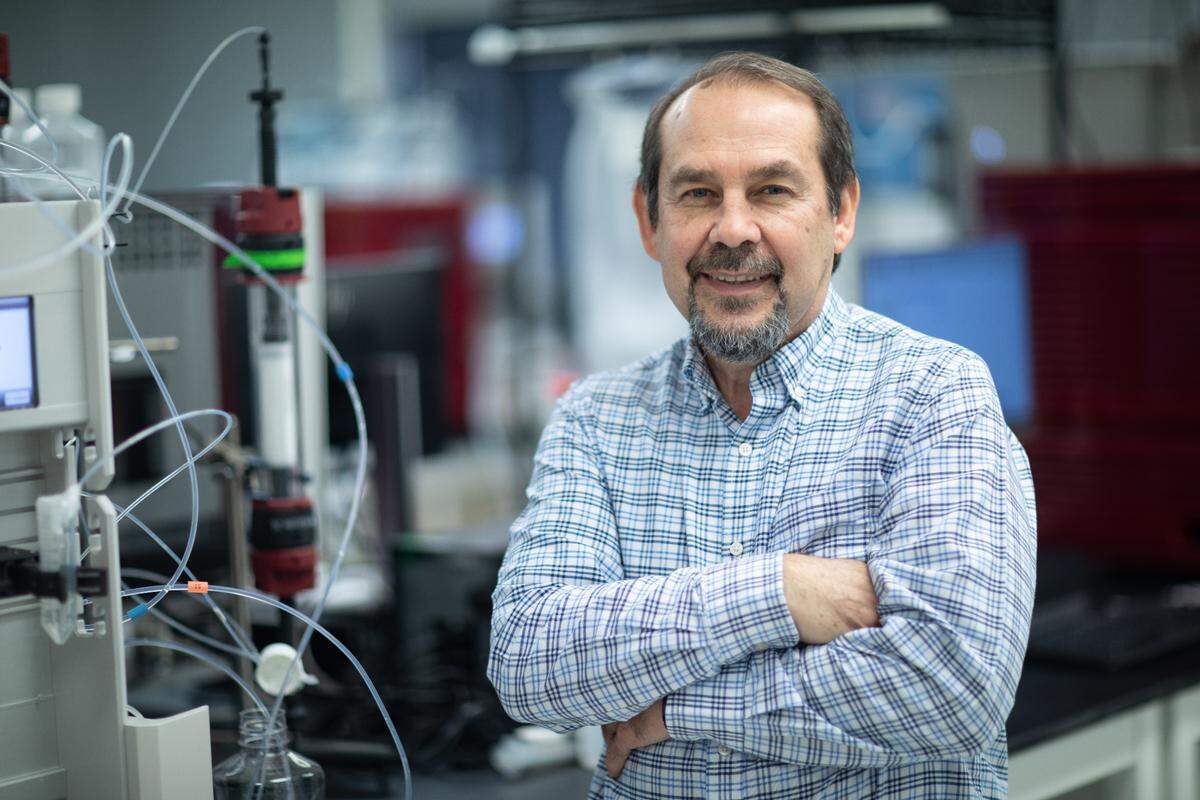
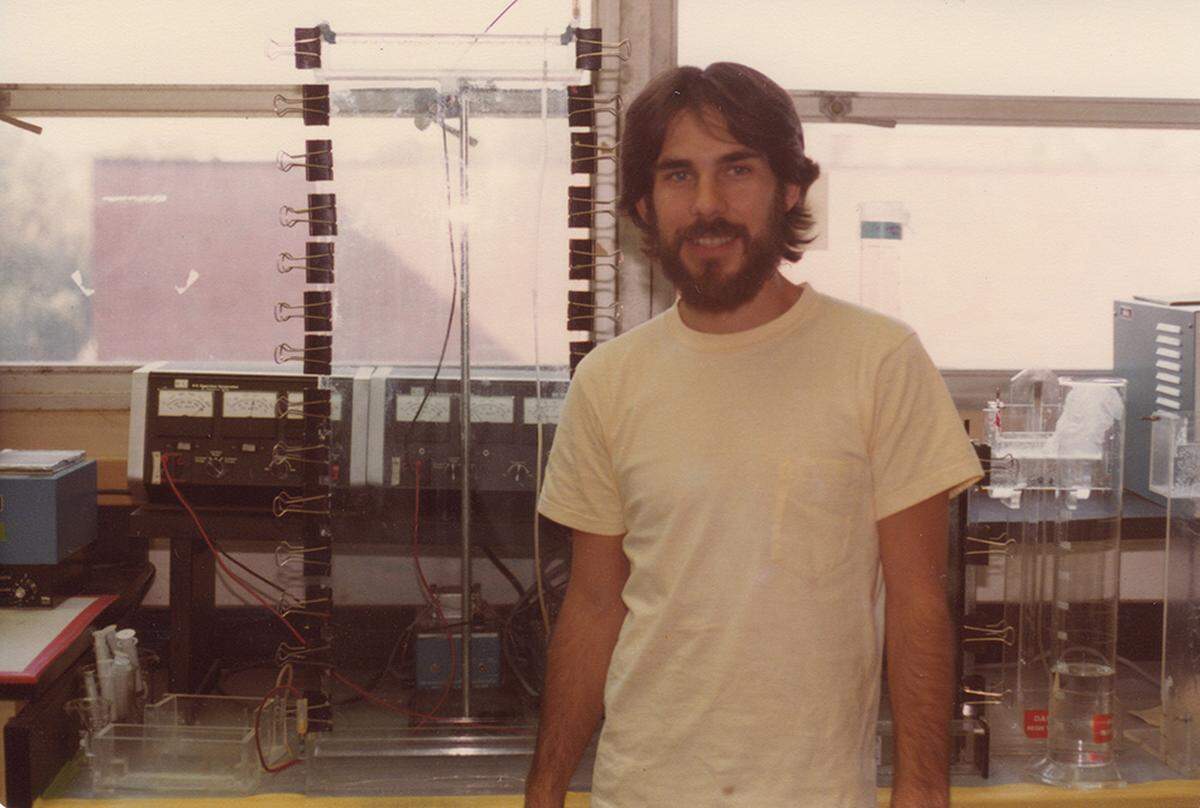
Jude Samulski has worked on gene therapy treatments for more than 40 years. It’s been his life’s journey ever since he stepped into a University of Florida laboratory as a graduate student in 1978.
He’s seen the peaks and valleys of the experimental treatment, which uses genes to treat diseases in multiple ways, like replacing a mutated gene that causes a disease with a healthy one, knocking out mutated genes or adding a new gene to counteract a disease.
It’s gone from a controversial method, when a clinical trial death in 1999 at a different lab set back research for years, to now being viewed by many as the future of disease treatments. The first gene-therapy treatment approved by the U.S. Food and Drug Administration came in 2017.
But at the moment, with gene therapy perhaps viewed in its most promising light, he’s at a peak. On Monday, he sold Asklepios BioPharmaceutical, a company spun out of his lab at UNC-Chapel Hill, to the German pharmaceutical giant Bayer for up to $4 billion.
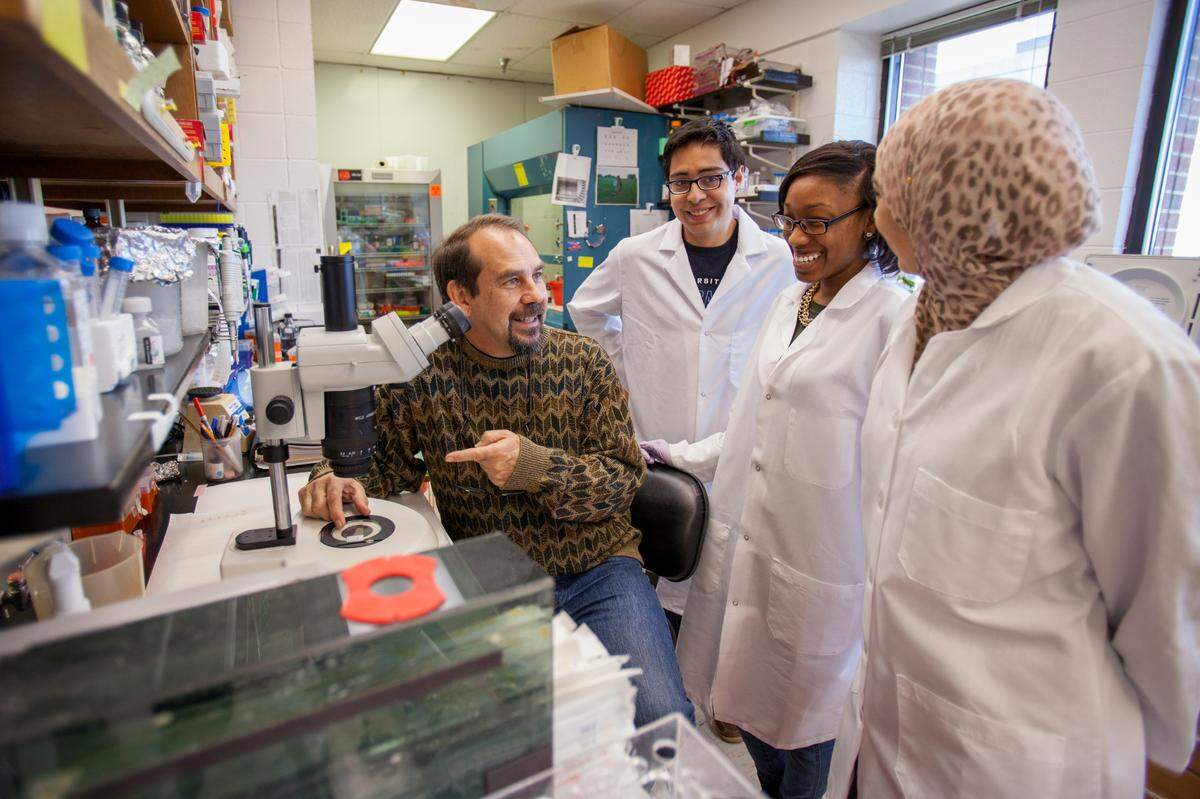
Samulski’s research paved the way for using adeno-associated viruses (AAV) as a way to replace defective genes with healthy ones. AskBio currently has several early-stage clinical trials looking at treatments for Parkinson’s disease, Pompe disease and congestive heart failure.
Remaining independent
But Samulski, speaking over Zoom from his home in Orange County, isn’t one to get wowed by the value his life’s work has just earned.
“I mean a lot of people use that metric (money) to determine success,” he said. “I think for us, there were a lot of other components to the deal that were as important if not more important.”
The main one: AskBio is going to remain relatively independent. While Bayer now owns the rights to his gene-therapy platform, which could one day find treatments for dozens of diseases, the German company has promised to operate the company “on an arm’s-length basis.”
“We wanted to ensure that we were able to ride the surfboard all the way in,” Samulski said, “rather than try to hand it over to someone else.”
It was an added benefit that Bayer promised to honor AskBio’s philanthropic commitments to the Columbus Children’s Foundation, which helps children with ultra-rare diseases. AskBio is treating children with juvenile Parkinson’s disease through the foundation.
“We’ve made a strong effort that the technology we develop doesn’t just get become available for those who can afford it or their disease is popular enough and large enough that someone can make money,” Samulski said.
Flocking to RTP
Samulski first showed up in North Carolina in 1993, lured away from the University of Pittsburgh with the help of a $430,000 Faculty Recruitment Grant from the N.C. Biotechnology Center in 1993, according to the center’s web site.
It might be some of the best money the center ever spent, as he’s consistently turned out valuable intellectual property and spinouts from UNC-Chapel Hill and made the Research Triangle a destination for gene therapy development.
Gene therapy companies are flocking to the area, like AveXis and Bluebird Bio. And large companies are buying up startups founded here. Bayer was not the first company AskBio has dealt with. It sold off part of the company, called Bamboo Therapeutics, to Pfizer for up to $645 million in 2016.
“North Carolina is becoming a hub for gene-cell therapy,” said Mary Beth Thomas, the NC Biotech Center’s senior vice president of science and business development, “and that all ticks back to Jude landing in Chapel Hill and developing the reputation he has in the field.”
But Samulski cautioned against waving the flag just yet. While the Triangle has many gene-therapy companies operating here now, many are just doing manufacturing. The innovation and research, Samulski said, is still more prominent in places like Boston and San Francisco.
“One of the things that I think we have not done as well on,” he said, “is that we are becoming what they refer to as the manufacturer of these gene therapies. And I think that is settling for less than what we’re capable of.”
“We not only can be the manufacturing,” he said, “we can be the innovation hub, like Boston and San Francisco.... We can capture something and become the Silicon Valley of gene therapy.”
How to grow gene therapy in NC
Doing that, Samulski believes, will take investment from the government.
There should be dedicated funds for gene therapy at the universities, he said, because that is where the innovation is being done.
“You could simply put resources into an institute of gene therapy that could be held centrally in RTP, where it has members from UNC, N.C. State and Duke,” he said. “You’d create the kind of Cold Spring Harbor environments where scientists from around the world come to be at this place and interact with one another.”
Cold Spring Harbor Laboratory is a century-old biomedical research center on Long Island, New York.
Samulski would also like to see the NC Biotech Center receive more funding and give more grants to young biotech companies. “What’s hard about this is when you get into periods where people think saving money is more important than investing money,” he said.
Thomas said Samulski also stands out because most researchers in the 1990s were not interested in creating companies. The focus was more on publishing research, but UNC gave Samulski the space and resources to explore commercialization.
Judith Cone, UNC’s vice chancellor for innovation, entrepreneurship and economic development, said that since the AskBio deal has not yet been finalized, it is too early to know the “financial significance” of the acquisition to the university. “We celebrate the acquisition because it represents a major milestone in the development of the University’s intellectual property and ability of AskBio’s gene therapy platform to reach patients,” Cone said in a statement.
When Bamboo Therapeutics was sold in 2016, though, UNC received about $9 million and 75,000 shares of the company. It expects that number to increase based on where certain milestone are mets. The school used most of its proceeds to fund Samulski’s Gene Therapy center.
Samulski credits much of AskBio’s success to his co-founder Sheila Mikhail, who runs much of the day-to-day business of the company.
“You can’t put on a hat to be a scientist one day and hat to be a business person the next day,” he said.
Samulski said he is not planning to slow down after the sale.
“From a science perspective, you know, I’m still intoxicated with what’s the next best vector that can get us across the universe on gene therapy,” he said.
“We’re trying to develop vectors that don’t cause immune response,” he said. Currently, using Samulski’s AAV technique, gene therapy creates an immune response much like a vaccine might.
“I’m trying to figure out how can I give it to you where it stays like a stealth bomber,” he said. “It can get in and deliver, and you don’t know it came and left.”
This story was produced with financial support from a coalition of partners led by Innovate Raleigh as part of an independent journalism fellowship program. The N&O maintains full editorial control of the work. Learn more; go to bit.ly/newsinnovate
This story was originally published October 30, 2020 at 8:30 AM.