The pandemic altered how we think of restaurants. And changes are likely here to stay.
Everyone remembers their last meal. The last one that felt normal, maskless and easy. The last one elbow to elbow with a stranger, when dining rooms were called cozy and intimate.
We didn’t know it at the time, but there was a moment when the world went from changing to changed. For restaurants that moment was on or around March 17, 2020, when North Carolina closed its dining rooms to help control the early days of the COVID-19 pandemic.
When things break apart, they don’t always fit back together. With restaurants, the changes may be long-term. The pandemic normalized things like takeout and delivery and brought conversations about pay and equity to the forefront.
“I think a pandemic speeds up time and makes us innovate,” said Raleigh restaurant owner Sean Degnan. “I think it also stops time and makes us reflect. I think we did both. We’re all a little different because we’ve lived this year.”
These are among the top ways the restaurant scene is different now than it was a year ago. And these changes are likely to stay.
Takeout will continue to reign
The cooks at Postmaster in Cary found that people weren’t willing to pay $20 for beef short rib dish in a takeout box. But they would pay more than $10 for a gooey cheeseburger wrapped in aluminum foil.
“We realized the burger was basically the only thing that was selling,” Chris Lopez said. “We sat in a ball of anxiety for 48 hours, wracking our brains about what to do. It all kind of feels like a blur.”
With the dining room closed and fine dining in doubt, Postmaster became Gov’t Cheeseburger. In its first day it sold 50 cheeseburgers, the entire run, in less than an hour.
After months of slinging sought-after burgers and fast food specials, Gov’t Cheeseburger moved from Cary to downtown Raleigh, cooking out of the cocktail bar Foundation and changing its name to Fine Folk. Now, after months there, it’s moved into Union Special Bread, existing largely as an idea than a physical restaurant.
“We learned a lot about convenience,” Lopez said. “It’s possible to do a completely to-go model on a smaller scale that’s successful.”
Oak City Fish & Chips started in Raleigh as a food truck, but has locations in the Morgan Street Food Hall and in Southeast Raleigh off of Rock Quarry Road. Last year, the company shifted brick and mortar workers to food trucks and was thankful the takeout trend swung in their favor. Owner Isaac Horton said he had seen the takeout trend rising, but the pandemic changed things immediately.
“We understood that the convenience paradigm was beginning to reign more and more supreme in food and beverage,” said Horton. “Companies that were closing had unnecessary real estate and too much exposure and high rent.”
Horton expects a cabin fever spike in restaurants when people feel safe to dine out, but he said the shift to takeout will endure.
Tipping and shifting pay
The Durham diner Monuts ended tipping entirely this month. The counter service spot, popular for breakfast and lunch, has been closed for dine-in since the beginning of the pandemic, but remained steady with takeout service, despite bumps and bruises along the way.
“We’ve wanted to go tip-free for a long time,” said Rob Gillespie, who co-owns the restaurant with his wife, Lindsay Moriarty. “I think it’s something we would have moved towards eventually, but I think if there was going to be a time, this seems like it was it.”
With dining rooms closed and table service cut out or cut back, some restaurants have retooled the pay model. Tipping and pay has been a shifting subject for years, as restaurants address the disparities that exist between front of house workers, like servers and bartenders, and back of house, like kitchen staff.
In a statement on its website, Monuts said it increased prices 15%, or the average tip diners were leaving anyway.
Full service restaurants are also toying with pay models during the pandemic. The new Durham restaurant Plum added a 15% living wage fee.
And Garland restaurant in Raleigh said wages were raised above minimum wage for tipped employees and tips were redistributed through the restaurant.
“This has opened up a way for us to navigate how to make that disparity not exist anymore,” Garland co-owner Cheetie Kumar said.
Wider spaces and outdoor dining
The Wake County man who would become North Carolina’s first COVID case had dinner one night at Raleigh restaurant so.ca, about a week before Gov. Roy Cooper closed dining rooms last March. With his restaurant in the headlines of an escalating public health crisis, owner Sean Degnan closed for a couple days, deep cleaned everything and then cleaned it again. When so.ca reopened, Degnan said generous friends tipped $1,000 and some thought maybe a week of bad press was all that would come of COVID-19.
“Even then, we really wished it had just been our problem,” Degnan said. “If it could have ended there it would have been awesome.”
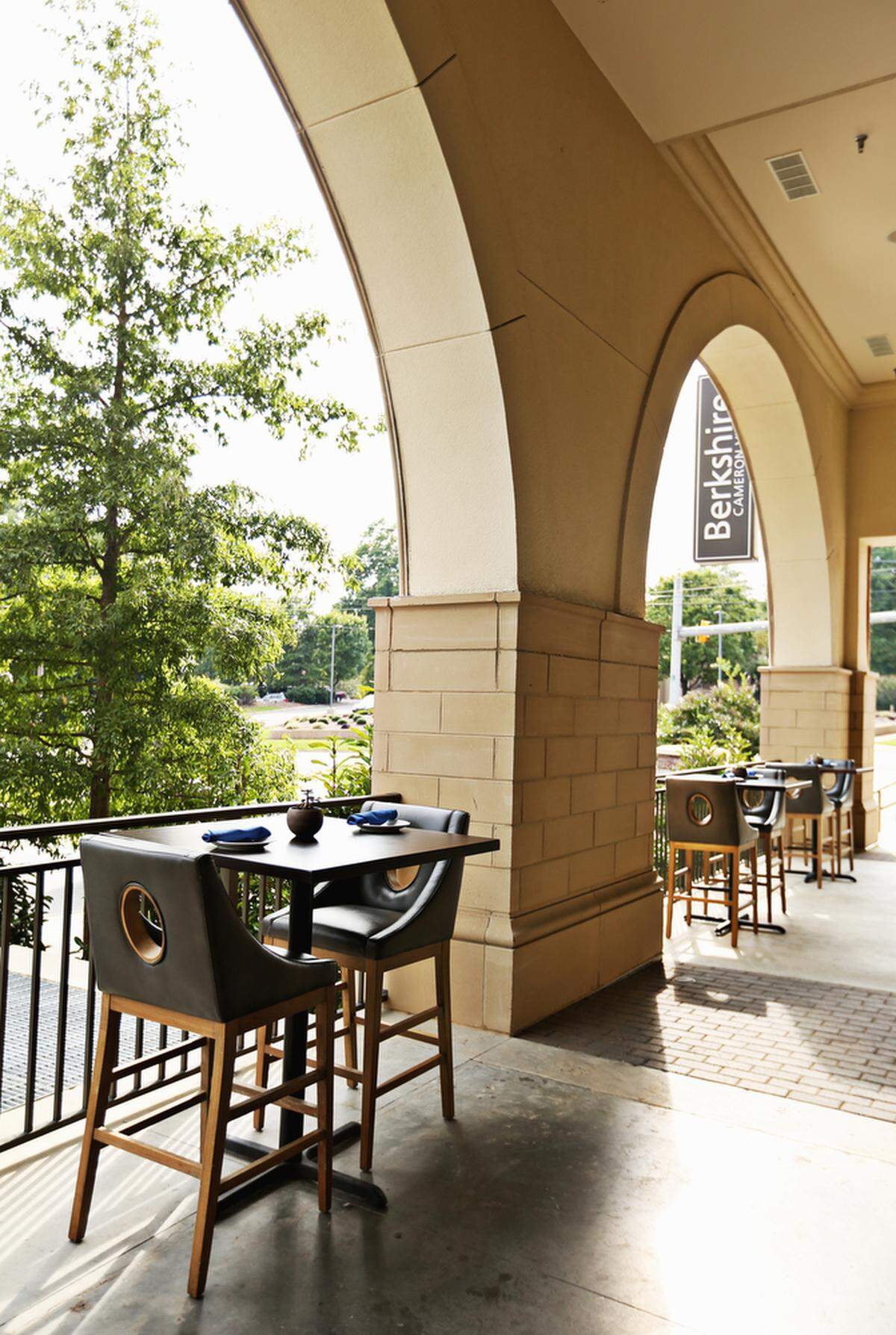
Degnan’s restaurants, including ko.an in Cary, are large, airy spaces. After a year of maintaining space between tables, Degnan expects those gaps will remain.
“Social distancing is here to stay,” Degnan said. “I’m never going to be sat right next to another table. There will be a plant or something. I’m not sitting next to someone I don’t know.”
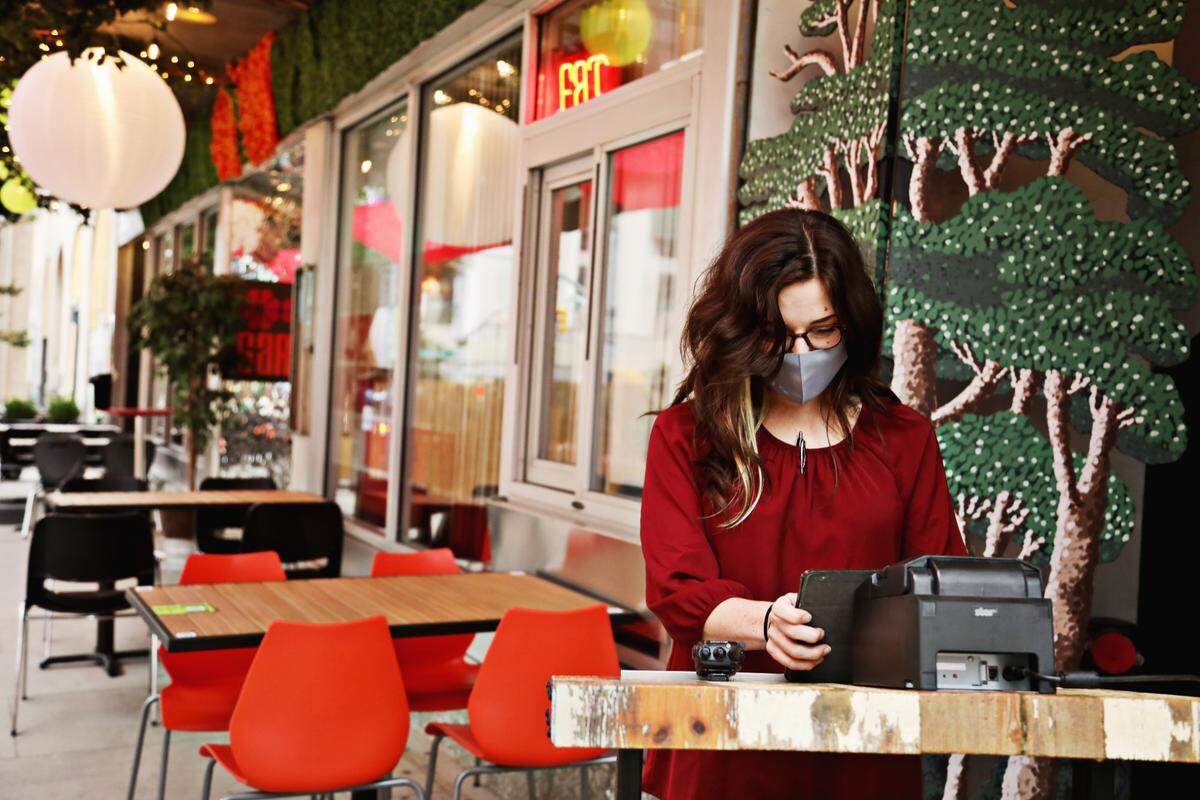
This year picnic tables were worth their weight in gold. For some businesses, if they didn’t have a patio they didn’t open. Others sunk thousands into heaters and sidewalk tables. Degnan expects the Golden Age of al fresco meals to carry on.
“Our patios kept us open,” Degnan said.
Grocery shopping at restaurants
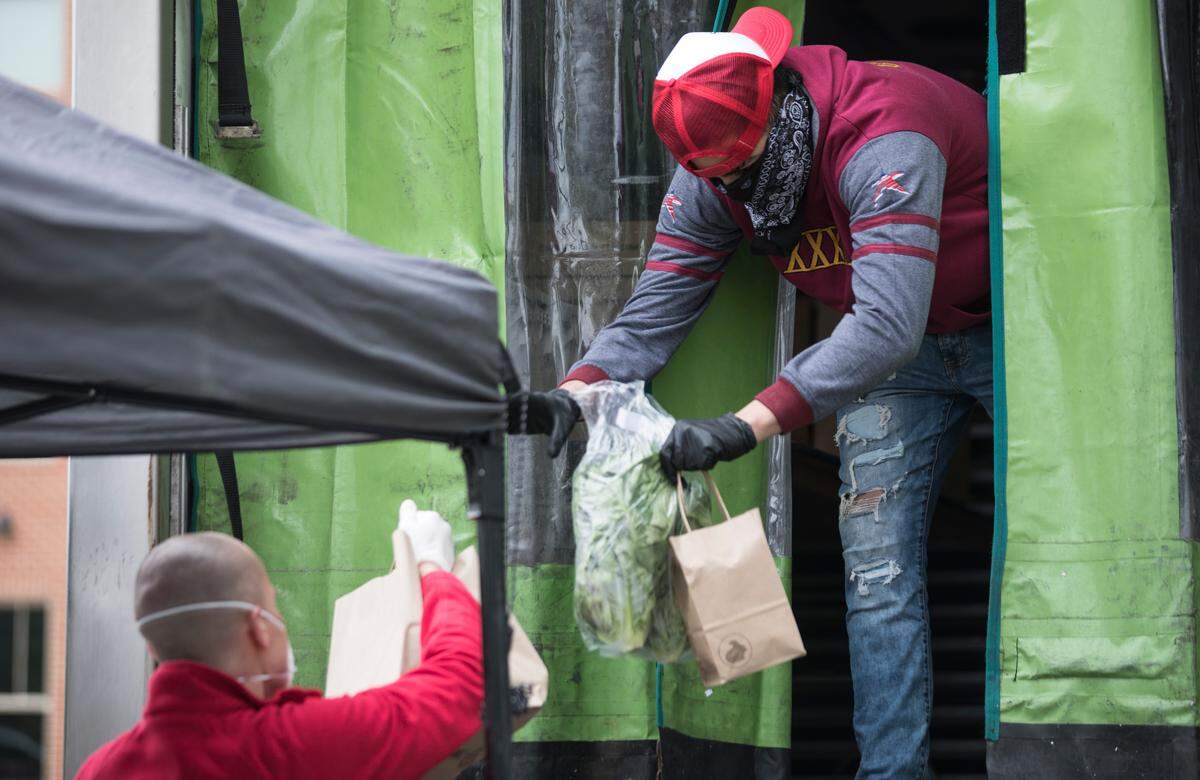
When grocery store shelves were cleaned out of meat and bulk chicken sales stopped traffic last year, Carrboro United pulled together a three-day-a-week online store of Orange County restaurants and food vendors.
Starting with four vendors and expanding to as many as 45 some weeks, Carrboro United sold everything from entire meals from local restaurants to raw grassfed beef to olive oil, granola and eggs. It became a menu of restaurants and a menu of pantry staples at a time when people were concerned about shopping and items were hard to find.
“We realized that there’s all this food, but the pipeline getting that food to customers had been cut exponentially,” said Zoe Dehmer, co-founder of Carrboro United and director of operations at Acme Food & Beverage. “We knew we needed to widen the pipeline locally for food to come through restaurants more.”
Described as a “food hub,” Carrboro United doesn’t expect to end its run, even as people return to restaurants. The latest food drop included options from more than 20 vendors.
Dehmer said the pandemic has shifted how people use restaurants, shopping for meals or pieces of meals like they would grocery items themselves.
“Now, restaurant’s are not just where you go out for a birthday,” Dehmer said. “People are beginning to look to them to provide an element of a meal that they’re going to eat at home. People are getting creative in using prepared foods. That way of thinking of restaurants isn’t going away.”
Take & bake
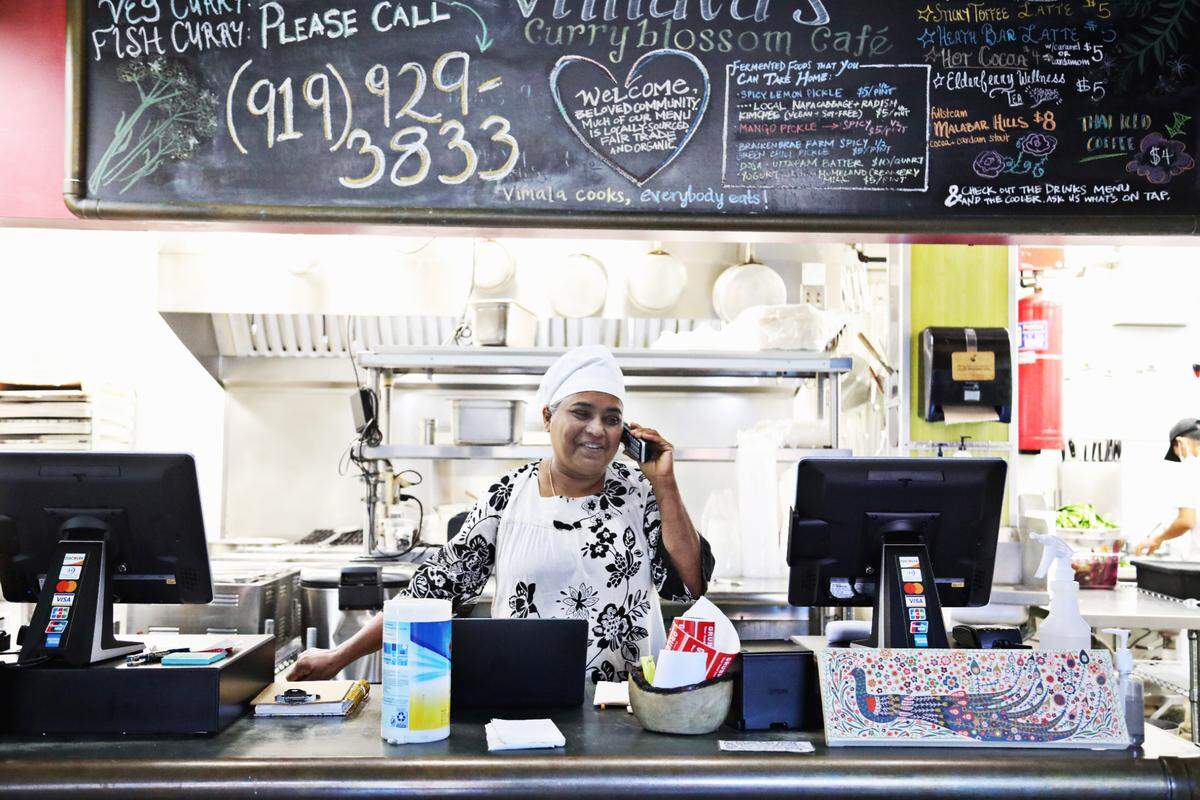
On Franklin Street in Chapel Hill, Vimala’s Curryblossom Cafe is one of Carrboro United’s vendors, but owner Vimala Rajendran said the restaurant’s cold prepared foods sold the most all year.
“Home life has become very challenging for people, redefining school life and work life. Families wanted to gather around the table but didn’t necessarily have the time to shop and cook,” Rajendran said.
“Restaurants can be a one stop thing for people. I think that’s here to stay.”
Community delivery
Durham Delivers took the hub model to the streets, organizing more than two dozen restaurants doing meal drops in Durham neighborhoods throughout the week.
One of those restaurants, Durham’s Big C Waffles, has always been takeout only, starting five years ago as a food truck and recently opening a brick and mortar. Situated near Research Triangle Park, it saw its lunch crowd change from nearby office workers to neighbors working from home.
The pandemic canceled major contracts Big C had for 2020, including college campuses and the Dreamville Festival. Still, owner Carl Richardson said business was up 15% from the previous year.
“People are still conscious of sitting down to eat, but are more comfortable ordering online,” Richardson said. “It’s things like delivery services and Durham Delivers that keep our business going.”
Delivery services
The steady rise of food delivery services over the past decade became a way of life in the past year. With people isolating in their homes and cutting down on contact, a meal left on a doorstep held wide appeal.
Some local restaurants waded into delivery for the first time, with restaurant owners sometimes running the food themselves.
But the big names in food delivery — like GrubHub, Doordash and Uber Eats — became the way diners picked what was for dinner, scrolling through restaurant options in the apps.
David Chu, who has owned Hunam Chinese Restaurant in Chapel Hill for more than 30 years, said delivery services became a necessary middleman, despite carrying a 30% fee.
“We have to look at it as advertising,” Chu said. “We’re not making any money because we’re paying the middleman. We’re still making it. It’s not great, but we’re here.”
The return
With vaccines and dropping case counts, people are returning to restaurants. It may not happen all of a sudden, but in some places it already looks normal. People will remember their first meal back in the way they remembered their last meal out.
Everything will shine compared to 2020.
“Obviously, everything is likely changed forever,” Lopez said. “I think there will be a resurgence, a new golden age of people sitting down for meals, once they’re comfortable doing it.”
This story was originally published March 18, 2021 at 8:00 AM.