Cary’s Contender eSports is teaching kids life skills through video games
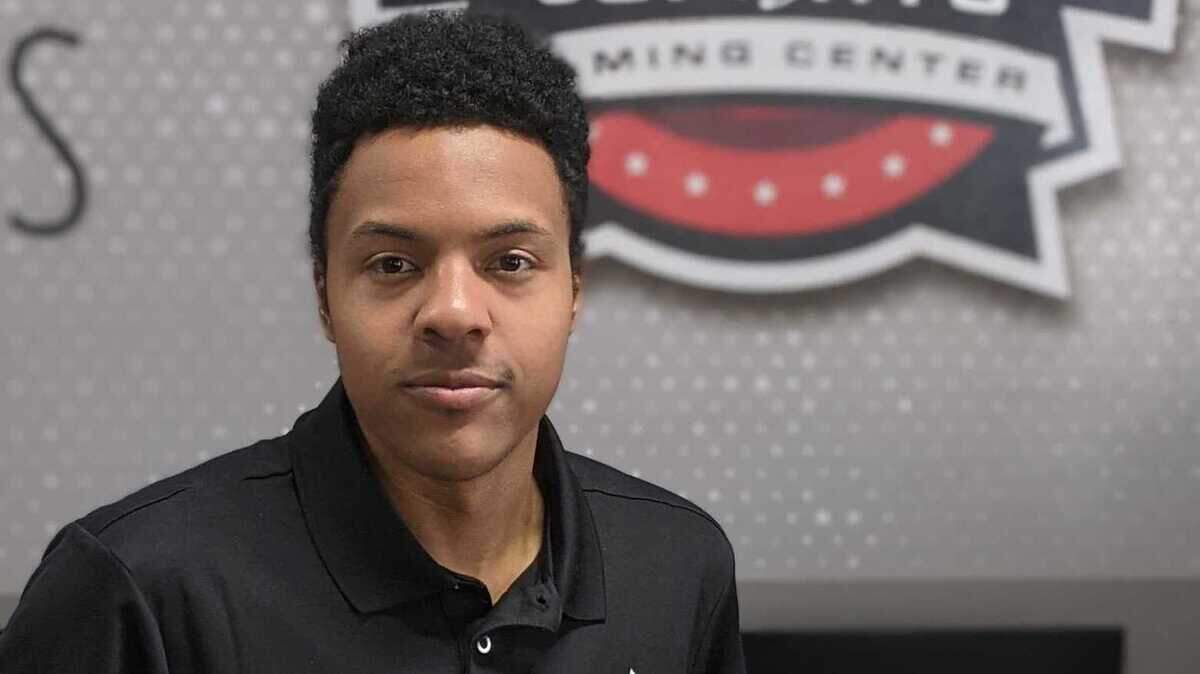
A Cary gaming center is working hard to overcome video game stigma and establish esports — a form of competitive video gaming — as a respectable outlet on par with traditional sporting activities.
Contender eSports, at 316 Colonades Way, is a modest storefront buried in the Waverly Place shopping center. But its understated exterior belies an internationally relevant gaming complex within, replete with $320,000 worth of custom-built computing stations.
The location, which just celebrated its one-year anniversary, is one of several Contender eSports across the country. Its model has bucked the the trend of pandemic business decline. In the last few months, the upstart hosted national and international competitions, featuring hundreds of participants, and its general manager, Caleb Smith, has lofty aspirations with long-term plans to open facilities in Garner, Pittsboro, Wake Forest and Durham.
But first, he’s intent on uprooting the negative predisposition many have toward video gaming.
“Before we came in, not many outside the gaming community in the area really knew what esports was,” said Smith, who opened Cary’s location with his father. “It can be hard trying to convince people that this is a real thing that’s not just kids being lazy and unhealthy, wasting time.”
Smith wants the larger community to view competitive gaming with the same reverence it does traditional sports, especially with respect to formative education. A structured esports program, he says, instills in children the same character-building qualities parents value in basketball, football, soccer and other team activities.
But convincing some parents will take time.
“It will take a whole generation change, I think,” Smith said. “But there was a time, I heard, that people were against sports being in schools and colleges because that was the place for education and all that. People were against it at one point, so I think it’s something like that where we are now with esports.”
Dislodging bias against video games is no small task, but Smith feels uniquely qualified to see it through. The 23-year-old can speak with authority on the similarities between esports and traditional sports, having competed in both at advanced levels.
“I played soccer all growing up and then went overseas to Germany to try out, and I played a half season amateur and then was signed to play pro there for two years,” Smith said. “...Now, I mean, people hear ‘pro’ and think of Cristiano Ronaldo making $48 million dollars. It was nothing like that — a much smaller division. But I get the value of team sports and what it can do for people.”
Contender eSports endeavors to capture the same principles in the way it organizes game play. Drop-in sessions are available for $20 per visit, but many children attend regular coaching sessions, workshops and camps that teach leadership, respect, accountability and social skills.
“This isn’t sitting alone in the dark eating candy and drinking Dr. Pepper,” Smith said. “You have a team that’s counting on you. You have to be on time, and work together, and you learn if you make mistakes there can be repercussions for that.”
Esports gaining popularity
Smith’s mission to add video games to the commonly accepted sports catalog isn’t a singular effort. Around North Carolina and the world, esports is finding traction in new circles.
“College scholarships for esports have been on the rise,” Smith said. “Most are around like $2,000 a semester, not a lot. But it’s good it’s being recognized as a real extracurricular.”
Many towns and cities are sponsoring esports events and incentivizing esports businesses such as Smith’s. Even in North Carolina’s General Assembly, a bill was filed to launch a state incentives program for esports, The News & Observer reported. The bill stepped through a few committees in the House but never reached a full vote, meaning it likely won’t pass until at least next year, if at all. However, the bill is backed by a top GOP budget writer, Rep. Jason Saine, suggesting it could find success in the future.
In the meantime, Smith will continue his own esports advocacy.
“I think we’re making really good progress,” he said. “Kids love it, of course, and parents are seeing how it’s not necessarily what they thought.”
This story was originally published November 2, 2021 at 1:30 PM.