Does NC have to adopt Biden’s federal vaccine mandate? What happens if it doesn’t?
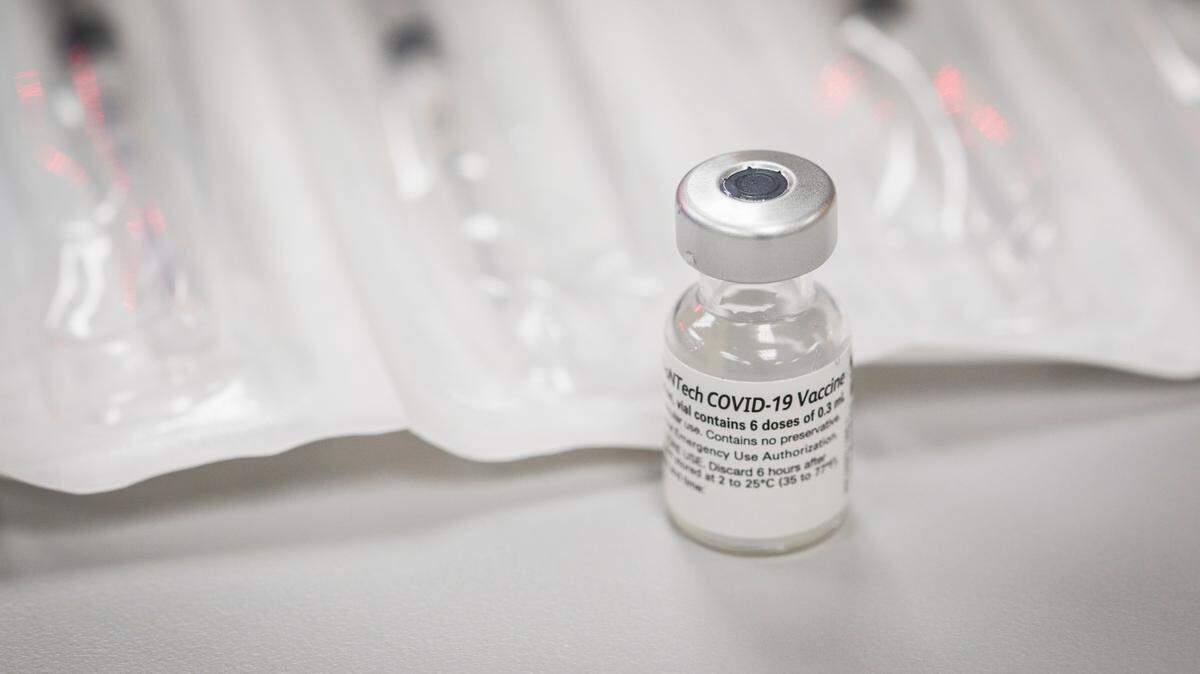
President Joe Biden’s administration announced Thursday that the U.S. Department of Labor’s Occupational Safety and Health Administration (OSHA) will require workers at companies with 100 employees or more to be vaccinated against COVID-19 or be tested on a weekly basis.
The mandate will affect an estimated 84 million private sector employees across the U.S.
But North Carolina is one of the more than 25 states with its own state-run OSHA program to protect workers, and the state Department of Labor can choose how, or whether, it will implement such mandates.
The department has 15 days from Friday to respond to federal OSHA with its decision.
In a statement issued Thursday, N.C. Labor Commissioner Josh Dobson said his department is reviewing the rule and will submit a response to federal OSHA by the required deadline.
Until the department makes its decision, it’s too early to say how things will shake out in North Carolina, but here’s what we know so far about OSHA and the mandate — and how it could affect you or someone you know.
What does the federal vaccine mandate say?
The mandate, issued by OSHA, requires companies with 100 or more workers to:
▪ Ensure their employees are fully vaccinated by Jan. 4.
▪ Provide paid time off for employees to get vaccinated, as well as provide sick leave for workers to recover from any side effects of the vaccine.
▪ Ensure unvaccinated workers are tested weekly for the virus. Employers do not have to pay for the testing.
▪ Ensure unvaccinated workers wear a mask in the workplace. Employers do not have to pay for employees’ face masks.
A separate mandate issued by the Centers for Medicare and Medicaid Services — part of the U.S. Department of Health and Human Services — will require all health care workers at facilities participating in Medicare and Medicaid to be fully vaccinated, with no option for weekly testing instead.
What is OSHA?
The Occupational Safety and Health Administration (OSHA) is a federal agency created to ensure safe and healthful working conditions for workers by setting and enforcing standards and by providing training, outreach, education and assistance.
▪ OSHA is an agency of the U.S. Department of Labor.
▪ OSHA was established by the federal Occupational Safety and Health (OSH) Act of 1970.
▪ OSHA establishes standards, or rules, that employers are legally required to follow to protect their workers from hazards. Examples of OSHA standards include requirements to:
Provide fall protection.
Prevent exposure to infectious diseases.
Ensure the safety of workers who enter confined spaces.
Prevent exposure to harmful substances, such as asbestos and lead.
Put guards on machines.
Provide respirators or other safety equipment.
The Biden administration’s announcement Thursday said OSHA has a “strong 50-year record of requiring employers to take common sense actions to prevent workers from getting sick or injured on the job.”
OSHA has never previously mandated vaccines in the workplace.
Learn more about OSHA at osha.gov.
What is an ETS?
Typically, OSHA standards must go through an extensive process that includes public engagement, notice and comment on the standard and the issue it addresses. The agency must show that a significant risk to workers exists and that there are feasible measures employers can take to protect their workers.
Sometimes, though, OSHA may issue an emergency temporary standard (ETS) in situations where employees are exposed to a “grave danger” and immediate action is necessary to protect them from such danger.
▪ An ETS is temporary by design, but they serve as a proposal for a permanent OSHA standard.
▪ The permanent standard must be finalized within six months after publication of the ETS.
▪ OSHA will seek public engagement and comment on the ETS, as it would for a non-emergency OSHA standard, to determine whether it should be adopted as a final standard.
Who does OSHA cover?
▪ Private sector workers. OSHA covers most private sector employers and workers in all 50 states, Washington, D.C. and other U.S. jurisdictions, either directly through federal OSHA or through an OSHA-approved state program.
▪ Federal government workers. OSHA protections apply to all federal agencies. OSHA does not fine federal agencies, but it does monitor federal agencies and responds to workers’ complaints.
Who is not covered by OSHA?
State and local government workers are not covered by federal OSHA, but some states, including North Carolina, operate their own health and safety programs with protections for these workers.
Self-employed workers are not covered by federal OSHA.
Who is covered by the vaccine mandate?
The federal mandate will apply to about two-thirds of the nation’s private sector workforce, or about 84 million workers.
▪ The 100-employee threshold counts employees at all locations of a single corporate entity. For independently owned franchises, the franchiser would only count “corporate” employees, and each franchisee would only count employees of its individual franchise.
▪ Part-time, temporary and seasonal workers are included in the 100-employee count, so long as the temporary and seasonal workers are employed directly by the company and not by a third-party staffing agency.
▪ Workers who work exclusively outside are included in the 100-employee count, but only employees working in an inside setting for the company would have to be vaccinated.
- To qualify as working exclusively outdoors, the employee must work outdoors on all days and not routinely occupy vehicles with other employees as part of work duties.
▪ Employees who are minors are counted in the 100-employee threshold, and they are subject to all requirements of the standard. Minors may need parental consent to be vaccinated or tested for COVID-19.
▪ Employees who work exclusively from home are included in the 100-employee count, but only employees who work at least part-time in the physical workplace or office setting are required to be vaccinated.
More categories of workers, including state and local government workers, may be included in the mandate under individual state-run OSHA plans.
What is a state-run OSHA program?
State-run OSHA plans are OSHA-approved workplace safety and health programs operated by individual states or U.S. territories.
▪ There are plans covering both private sector and state and local government workers in 22 states, including North Carolina. North Carolina’s state plan is managed by the Occupational Safety and Health Division of the state Department of Labor.
▪ There are plans covering only state and local government workers in six states.
State-run safety and health programs are monitored by OSHA and must be at least as effective as OSHA in protecting workers and in preventing work-related injuries, illnesses and deaths.
Who’s covered by OSHA in NC?
North Carolina’s OSHA plan covers all public sector workers and most private sector workers in the state.
Workers not covered by the state’s OSHA plan are covered under federal OSHA. They include:
▪ Federal employees.
▪ United States Postal Service workers.
▪ Private sector maritime activities.
▪ Employees on Indian reservations.
▪ Railroad employees.
▪ Enforcement on military bases.
▪ American Red Cross workers.
▪ Aircraft cabin crew members onboard an aircraft in operation.
Does NC have to follow the federal mandate?
When federal OSHA issues an ETS, states with their own OSHA plans can:
▪ Adopt the ETS.
▪ Adopt the ETS with modifications.
▪ Not adopt the ETS.
The ETS outlines the minimum level of protection states must provide to workers.
▪ States may also choose to adopt more protective occupational safety and health requirements.
▪ States may not choose to adopt less protective requirements. A standard that prohibits employers from requiring vaccination would not be at least as effective as the ETS, because OSHA has recognized that vaccination is the most protective policy choice for employers to adopt to protect their workplaces.
States must inform federal OSHA of their decision within 15 days of the ETS entering the Federal Register, a compilation of current federal regulations, rules and notices.
States must completely adopt the ETS, or a standard at least as effective as the ETS, within 30 days of the ETS entering the Federal Register.
The ETS entered the Federal Register on Friday, Nov. 5.
State-level standards must remain in effect for the duration of the federal ETS.
Will NC adopt the mandate?
As of Friday, the N.C. Department of Labor has not issued a decision on whether it will adopt the mandate.
In a statement Thursday, Labor Commissioner Josh Dobson said the department is “reviewing the text of the rule and its potential impact on our state’s employers and will ultimately issue a response by the required date.”
Jennifer Haigwood, director of communications and policy development for NCDOL, told The News & Observer that the department has two main concerns with the federal mandate:
▪ It could lead workers who do not want to get vaccinated to leave their jobs, which Haigwood said would “exacerbate” the current “workforce crisis.”
▪ It would place a strain on the department’s compliance officers, which the department said have received more than 5,000 workplace complaints related to COVID since the pandemic began in March 2020.
Haigwood said the department is limited in its options regarding the mandate, but is “trying to consider all things that we could possibly do right now.”
What happens if NC doesn’t adopt the mandate?
▪ If North Carolina chooses not to adopt the federal ETS, or a state standard with the same level of worker protection, federal OSHA could “commence proceedings to ensure adequate protections for covered workers within the state.”
▪ That could mean reconsideration and possible revocation of the final approval status for the state’s OSHA plan, as well as federal OSHA reinstating its federal enforcement authority over portions, or all, of the state’s plan.
What are NC businesses saying about the mandate?
Several businesses in the Triangle, including SAS Institute, RedHat, IBM and Google have instituted vaccine mandates for their employees. The News & Observer is compiling a list of businesses who have announced vaccine requirements.
In a statement Thursday, N.C. Superintendent of Public Instruction Catherine Truitt said the federal OSHA mandate is “one of the clearest examples of government overreach and one of the purest attacks on personal choice.”
Public school districts with 100 or more employees are included in the mandate.
Truitt said the state Department of Instruction will work with the Department of Labor and Dobson as he works to “implement a plan that is right for North Carolina.”
In a statement Friday, N.C. House Speaker Tim Moore called the mandate unconstitutional and said he would explore “every legal option” to fight it.
How is the mandate being enforced?
Both federal OSHA and North Carolina’s state OSHA plan are enforced through workplace inspections. The ETS is to be enforced using the same enforcement procedures as non-emergency OSHA standards.
In North Carolina, there are two primary types of inspections:
▪ Programmed inspections are scheduled in advance, based upon “objective and impartial” selection criteria and on targeting schedules for safety and health or special emphasis programs.
▪ Unprogrammed inspections are scheduled in response to alleged hazardous working conditions that have been identified, such as through a worker complaint, at a specific work site.
Dobson cited enforcement as a main concern with the mandate.
“Our compliance officers should be spending their time working with employers to prevent injuries, illnesses and fatalities at construction sites and manufacturing facilities rather than knocking on doors to check an employer’s vaccine records,” he said in a release.
Federal OSHA is offering compliance assistance for businesses to learn more about how they can implement and comply with the ETS in their workplace.
▪ A roughly 30-minute video is available on YouTube.
▪ An extensive frequently asked questions site is available on the OSHA website.
Need to get vaccinated?
If you think your employer may be included in the mandate and you want to get vaccinated, you can find a vaccination site near you at covid19.ncdhhs.gov/vaccines.
This story was originally published November 5, 2021 at 2:25 PM.