Blue Friday: As we head into shopping season, supplies in NC are falling far short of demand
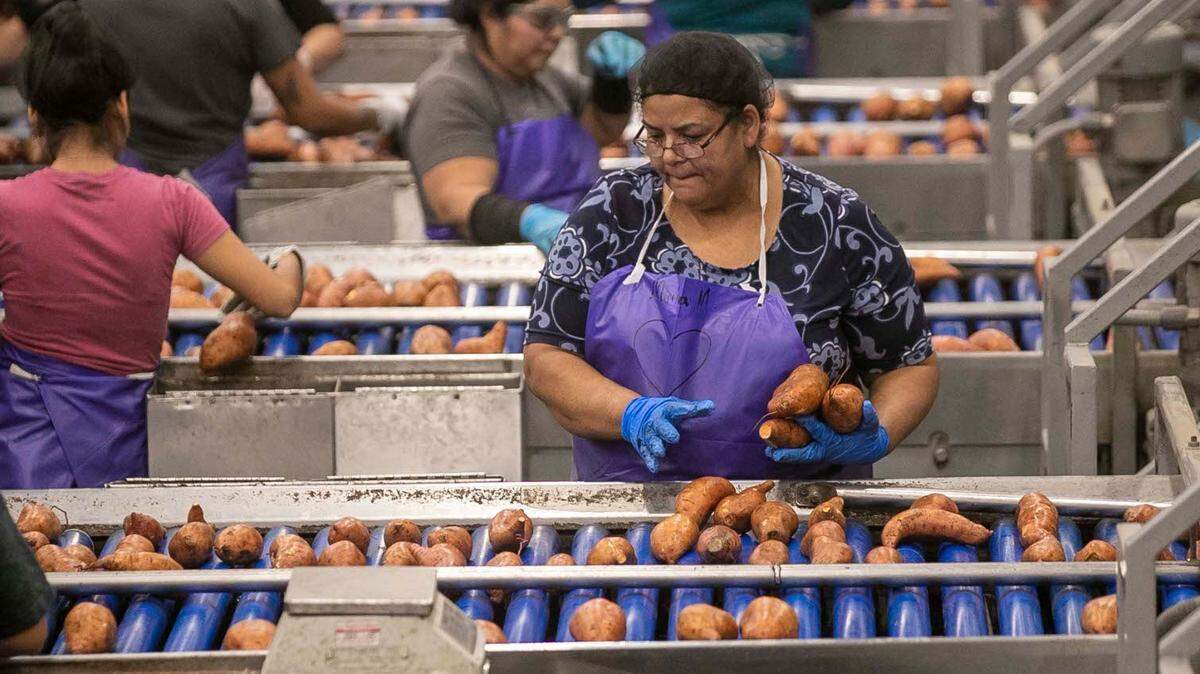
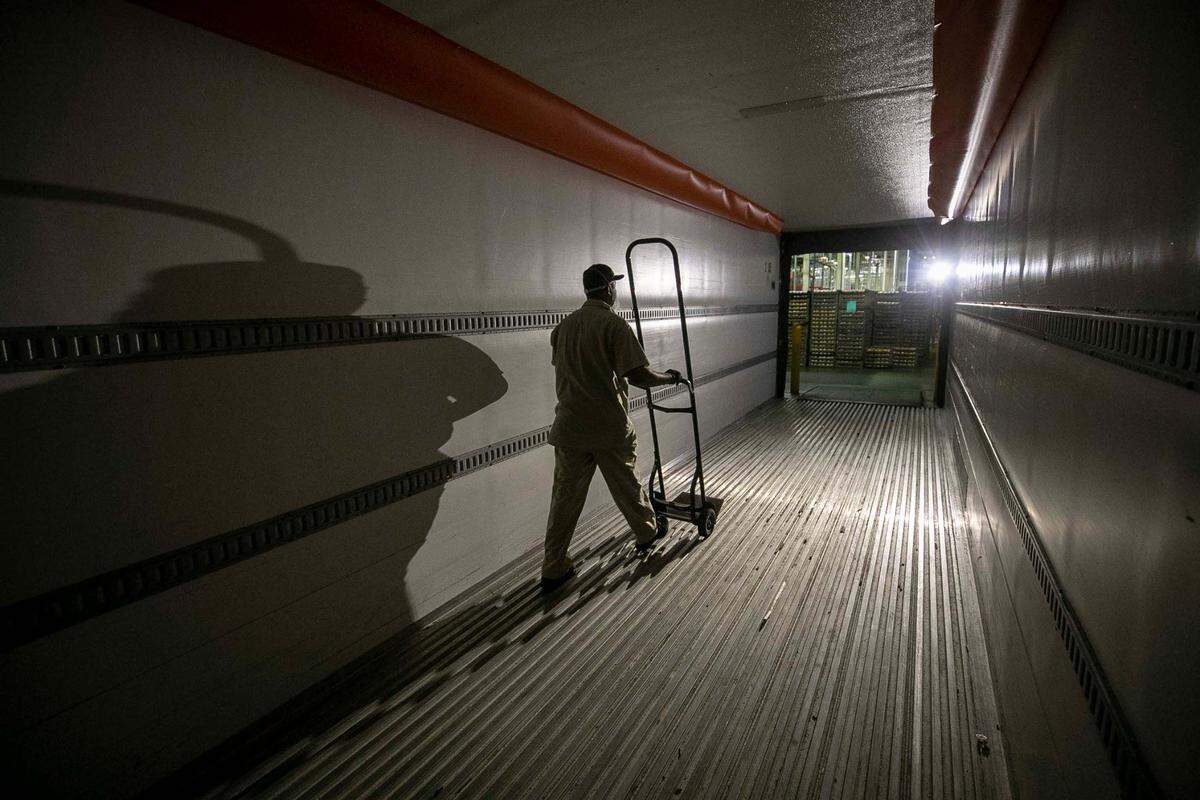
Austere shelves lie empty in a Durham grocery store, absent the pasta, cat food and beer that would usually cluster there. The truck that should have delivered new products arrived half empty. Inventory is exhausted at the warehouse that should have filled the truck. Logistics companies that should have stocked the warehouse await goods from manufacturers that can’t get raw materials.
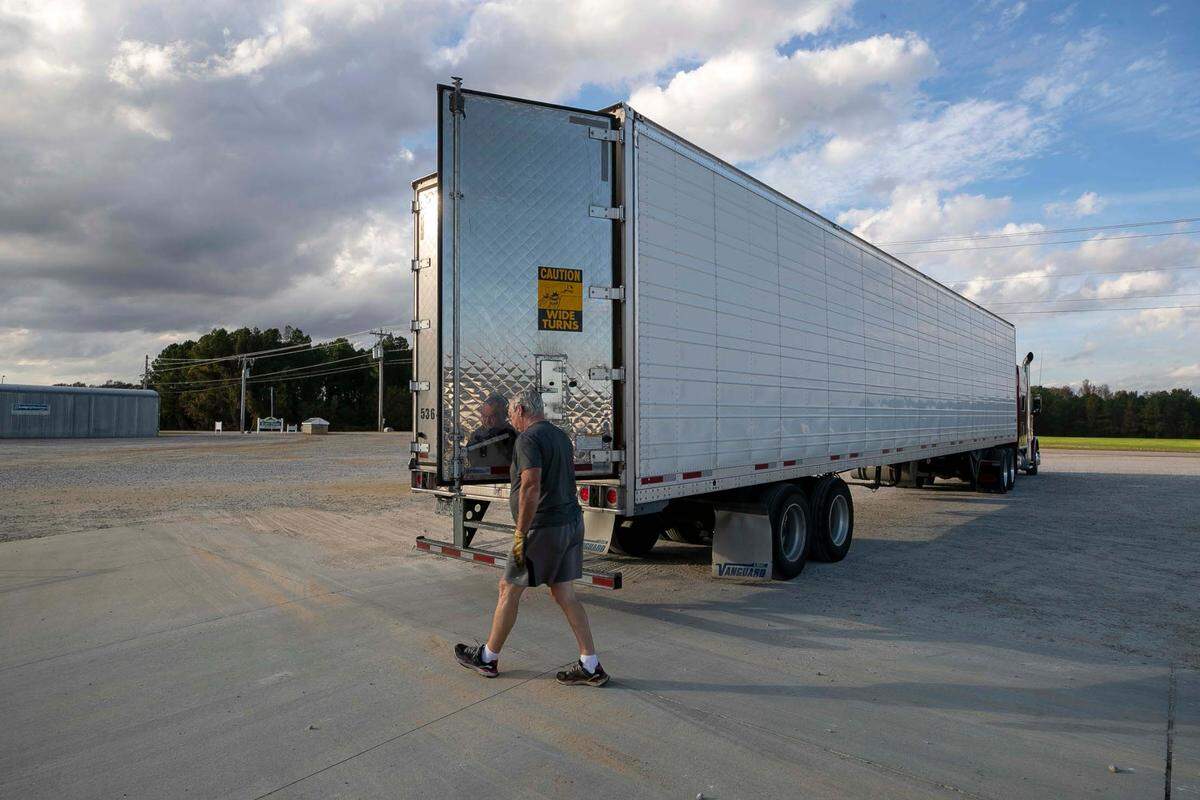
In Raleigh, 18-wheelers sit idle in a parking lot. Retailers, manufacturers and shoppers are desperate for the trucking company’s services. But with 50% of its positions vacant, the operation sputters.
A manufacturer of popular children’s furniture in Butner hopes for another booming holiday season. But before it can fulfill orders, it needs polyurethane foam from a producer in Mount Airy. To make its foam, the producer needs Korean chemicals that are stranded off California’s coast on a cargo ship waiting to unload.
Each scene depicts a link in what has become a global crisis: The supply chain is breaking.
What went wrong?
A “supply chain” is the path an item follows from conception to production to purchase and delivery. In today’s global economy, few products complete their evolutions in a single place. Materials sourcing, manufacturing, packaging and delivery can be disparate operations, executed at various locations across the globe.
Most steps along the way go unnoticed by most people.
“What companies do, it’s almost like magic that we take for granted,” said Jayashankar Swaminathan, a GlaxoSmithKline distinguished professor of operations at the University of North Carolina-Chapel Hill who specializes in supply chain management.
“It’s only when there is a disruption that you say, ‘OK, what’s going on here? Why are we suffering?’”
Everyday products may travel thousands of miles before shoppers buy them at a local grocery store or retailer.
“So let’s take the example of any type of product in the retail sector — a Barbie doll, a toy, what have you,” Swaminathan said. “Basically, at the far end of the supply chain is the retailer, which is where the customer typically is going and buying things. But basically what happens is that you’ve got at the next stage back a distributor or a distribution center that is actually in the business of distributing goods. They buy goods from a manufacturer and they will store inventory and then they will ship it to the retailer in smaller quantities as needed.”
Manufacturers also act as recipients in the supply chain, ordering raw materials and component parts from suppliers “who might themselves have additional suppliers,” Swaminathan said. “So it goes down multiple layers depending on the complexity of the product.”
Between each location in a supply chain, logistics companies facilitate transportation, moving just enough goods to meet demand and minimize surplus.
“It’s getting the right product at the right place at the right time for the right price,” Swaminathan said.
Until recently, many experts favored this “just-in-time” model. The advent of new technologies and predictive software could estimate with little margin of error exactly the supply necessary to meet demand without sacrificing capital.
“A lot of supply chains became leaner and leaner,” Swaminathan said. “You removed the amount of buffer stock as much as possible because any unused stock is basically a waste of capital, right? ... It’s good from a productivity standpoint.”
But what happens when a global pandemic upends the cycle and disrupts the hyper-efficient supply chain?
“Disaster,” Swaminathan said. “Good for productivity, but quite bad for resiliency. It was efficient to a fault.”
‘The problem is everywhere, and everyone is suffering’
When Yvette West retired from Duke University Hospital where she’d worked as a nurse overseeing the operating room, she thought any alternative job would offer respite from her decades-long stress. She elected to open a grocery store.
“I opened Bulldega because you couldn’t get an onion in downtown Durham,” West said. “I remember a woman who was making dinner tried to go to a restaurant nearby just to buy an onion that she needed. There was no convenient option to get stuff like that.”
Six years later, the corner store and “urban market” is a hallmark of downtown Durham’s retail offerings. But it’s not the restorative retirement gig West expected.
“Nursing was hard, and I can’t imagine what it’s like for poor nurses now in the pandemic,” she said. “But the supply chain issues are making this really stressful, too.”
For months, Bulldega’s inventory has been subject to the ostensibly arbitrary stock of its suppliers. Every Tuesday, a truck arrives with the week’s provisions. To receive everything she ordered is a fantasy; West just hopes the highest demand items arrive before customers stop coming back.
“I never know what’s going to show up,” she said. “I think the unpredictability of it is what’s the worst. I don’t know what we’re going to get.”
Each week, a black and white invoice from West’s supplier, United Natural Foods Inc., tabulates the store’s order. A column of ones represents West’s modest request for each product. Beside it, a column of zeros documents UNFI’s inability to deliver. On the worst weeks, dozens of zeroes might span the page. Pasta, cat food, coffee, saltine crackers, dish soap — all of them unavailable.
A similar inventory from Constellation, Bulldega’s beer supplier, tells a more colorful story. Red highlights cover out-of-stock options. Corona, Pacifico, Modelo and Victoria are just some of the names blotted crimson.
“In the past it was, ‘We’ll get more next month,’” said Joe Mazzetelli, Bulldega’s buyer and sommelier. “Now it’s, ‘Maybe Q2, 2022.’”
Grocery stores across the country are facing the same shortages as Bulldega. But for a local grocer, long-term viability is a bigger question mark.
“We don’t have the buying power of large chains,” West said. “Besides supply problems, prices are just all over the map.”
And when prices go up for grocery stores, they go up for shoppers.
“Retailers and manufacturers will hold off on passing off cost increases as long as they can, and they did,” said Doug Baker, vice president of industry relations at the Food Industry Association. “But many of them are having to pass those along now.”
Before the pandemic, the average grocery haul cost $113 per week, according to Baker. At the pandemic’s worst, that figure swelled to $161.
“We’ve settled back to about $144 per week,” he said, “but it’s still significantly higher than where we were pre-pandemic. So we have elevated demand.”
Until the supply chain and prices stabilize, grocery expenses will stay elevated even as options dwindle.
“None of this is to say, ‘Boohoo, poor Bulldega,’” West said. “The problem is everywhere, and everyone is suffering.”
Trucks ‘on the fence’
About 86% of the state’s communities rely exclusively on trucks to deliver their goods, according to the North Carolina Trucking Association.
“That’s a pretty substantial number,” said Crystal Collins, the NCTA’s president. “But people didn’t grasp it until now, when they saw that the shelves were empty and the toilet paper was nowhere to be found.”
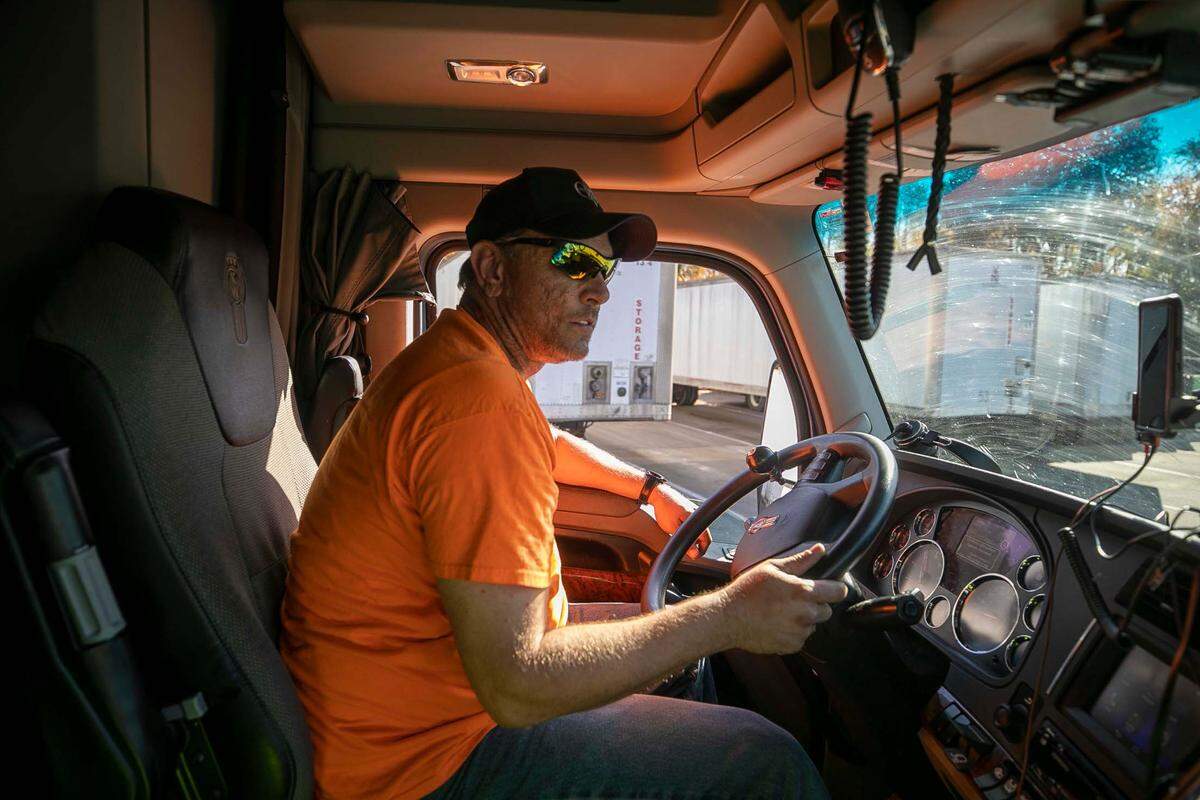
Truckers have long operated in the background. They’re essential to a functioning society, but the work can be thankless. Long hauls take drivers away from home for days or weeks at a time. The money is often good, but few are willing to adopt the lopsided work-life balance.
“It is so difficult to attract, and in some cases retain, drivers,” said Rick Coates, co-founder of C&L Transport in Garner. “It’s just not really attractive to people, especially folks with families, to go out on the road.”
Coates’ company specializes in food delivery — from manufacturers to the sort of warehouses that might stock Bulldega’s goods. Between 30 trucks in its fleet and others contracted through the company’s freight brokerage service, C&L moves hundreds of loads a week. But it’s not enough to meet demand.

”We would easily be north of 50 trucks if we had the driver force out there,” Coates said.
Across the country, the trucking industry is short 80,000 drivers, according to American Trucking Associations, of which the NCTA is an affiliate. Though COVID-19 steepened the industry’s nosedive, its downturn began years ago.
Duane and Pat Long, founders of Raleigh’s Longistics, have predicted for a decade their industry would crumble for lack of drivers. Longistics, which specializes in pharmaceutical transport, celebrated its 38th anniversary last month. The Longs run a strong operation with about 50 trucks. But they can’t engage the entire fleet. Several trucks sit “on the fence” — industry slang for immobile in the yard.
“We have about 100 drivers, but if I had 100 more I’d have the business for them,” Pat Long said. “... Every company in this country has trucks on the fence.”
The driver shortage began about 10 years ago when baby boomers started retiring in droves. By 2019, the U.S. Bureau of Labor Statistics predicted 65,700 positions would be open in the next year as more truckers approached retirement age.
In 2020, new standards and enhanced record-keeping forced about 45,000 truckers out of their jobs, according to Transport Topics, a trucking and freight news agency. Using the Drug & Alcohol Clearinghouse, an online database under the U.S. Dept. of Transportation, prospective employers could see for the first time when drivers failed drug and sobriety tests at previous companies.
“The clearinghouse was a good thing, of course,” Coates said. “But all of a sudden a bunch of drivers disappeared without any kind of replacement.”
Millennials and Gen Zers will have to replace their forebears for the trucking industry to survive. But licensing rules bar entry for young prospects.
“Right now, CDL holders under the age of 21 aren’t allowed to cross state lines,” Collins said. “... And so, if you’re looking at trucking, and you’re 18 and just graduated high school, right now you have to be 21 to become a truck driver. What are you going to do in those three or four years? You’re going to go find something that you can get a trade or a career in now.”
Even when young drivers enter the field, their stays are often short-lived. Hiccups elsewhere in the supply chain make trucking a more frustrating endeavor than ever before.
“Shipping processors or packaging providers, sometimes they struggle with having no labor in their warehouses or manufacturing facilities to produce the product or to put it on the truck,” Coates said. “It can result in significant delays, which is a big negative. It impacts me when I’m sitting and the wheels aren’t turning. Drivers are paid by the mile.”
Long would hope drivers recognize the value of their work and take pride in its essential function. But so far, that hasn’t been enough to boost retention.
“If I had a crystal ball I’d still have no idea what will happen,” she said. “We’ve tried almost everything as an industry. You know, it’s a real shame. It’s a real shame.”
What does it mean for holiday shopping?
In July, a manufacturer of popular children’s couches in Butner, 17 miles north of Durham, made a peculiar post on its Instagram page.
“Happy Holidays!” The caption read, coupled with a snowflake emoji.
The main graphic was a flowchart that asked, “When should I order for the holidays?” No matter what path viewers followed to match their circumstances, the answer was always the same: “Order NOW!”
“It was kind of a joke having, you know, a snowy background in the middle of summer,” said Ryan Cocca, co-founder of Nugget, which started making children’s furniture in 2014.
“But for real, it was the time to order now.”
Four months later, the recommendation seems prescient. Manufacturing delays nationwide have slowed production cycles and halted deliveries. The time to purchase many holiday gifts is past.
“Global supply chain is having a huge crunch now, and that’s because of where things are getting produced in the global supply chain,” Swaminathan, the UNC-Chapel Hill professor, said. “Factories had been shut for some time. Ports had been shut for some time. And so the demand has gradually been increasing and supply hasn’t been increasing at the same rate,” he said.
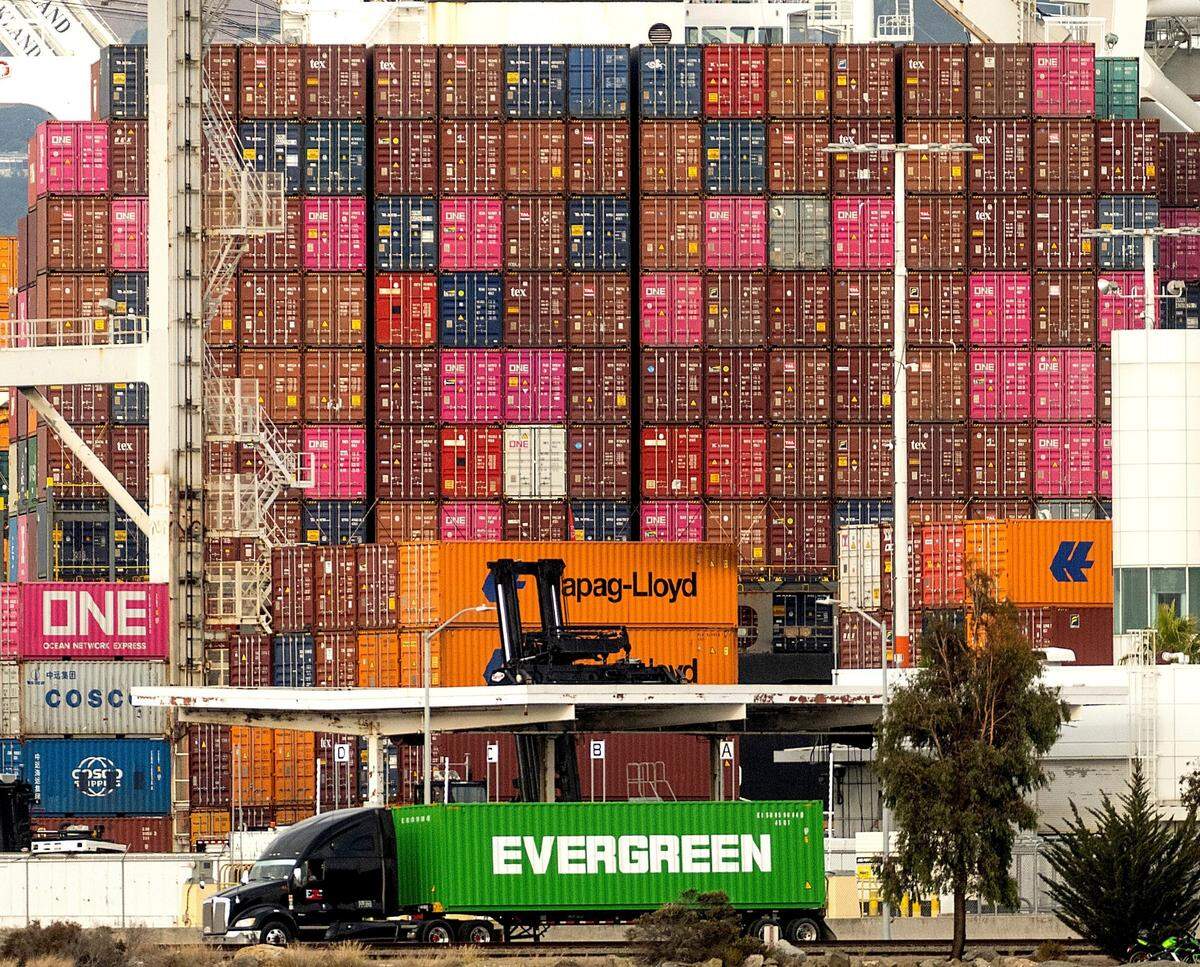
Nugget — the fastest-growing private company in North Carolina, according to Inc. Magazine’s annual list — prides itself on local manufacturing with locally sourced components. Still, it cannot circumvent issues in the global supply chain.
The polyurethane foam it needs for couch cushions comes from a producer in Mount Airy. That supplier needs Korean chemicals, which are likely stranded off California’s coast on a container ship waiting to unload.
“Suppliers of foam have been slashing their client lists this year,” Cocca said. “I think we’re still taking at least a 25% reduction, if not more.”
Sporadic deliveries from understaffed transportation companies exacerbate the issue, and the ability to ship products is uncertain.
“We can’t get boxes,” Cocca said. “There might not even be production today because there’s not anything to ship the Nuggets in, and I think it was a half day yesterday because of that.”
A global crisis with no clear solutions
Chemicals, like those needed to make polyurethane foam, often arrive by cargo ship from Asian manufacturers. Regardless of final destination, most arrive in California, New Jersey or Georgia, all of which have worker shortages slowing disembarkation.
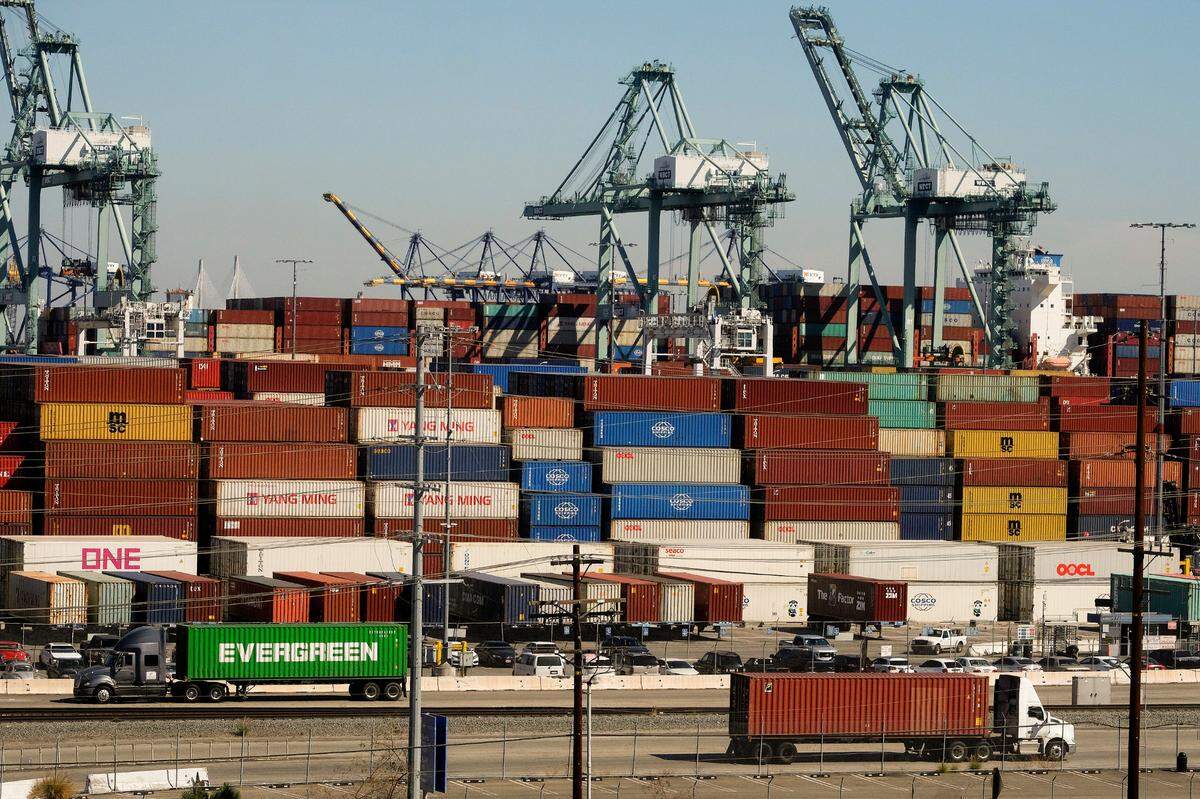
Textiles, plastics, electronics, semiconductors and other critical goods follow similar paths across the ocean.
“Asia is such a huge producer of both the raw materials and the actual finished goods production,” said Crissa Klein-Lewis, the Charlotte-based COO of PPT America, an apparel sourcing company with hundreds of clients around the world.
“China shut down and then all of its neighboring countries started to shut down and that raw materials flow stopped,” she said. “Then, as they started to come back up, the U.S. and Europe were shutting down and pushing back and canceling orders or delaying orders and so suppliers started to produce less. No one could quite gauge what the demand was.”
“Balance” still hasn’t been restored, she added. The just-in-time model assumes global harmony, which the ongoing pandemic does not permit. What’s clear, though, is demand has skyrocketed and shows few signs of slowing.
“We’re battling what I would say is panic buying,” Klein-Lewis said. “Producers are seeing how bad things are at the port and panic and think they need to get more goods.”
Shoppers are also frantic.
“We need demand to come down,” said Baker, the FIA vice president. “People are purchasing far more groceries than they ever have in the past. If we can get that demand to come down, we can bring some relief and allow the supply chain to recalibrate.”
A solution to mitigate supply chain interruptions in other industries is more nebulous. Swaminathan expects it will take concerted intervention from logistics companies and government agencies.
“I think this is a great wake-up call for different stakeholders,” he said, “the first stakeholder being the government itself. More attention needs to be paid to our infrastructure.
“Second, I think many corporations are learning the lesson that efficiency has been awesome, you’ve been making a lot of money as a result of that efficiency, but we got to be planning for supply chain duress.”
That realization won’t fix this holiday shopping season, though, nor will normalcy resume in the near future. The most elastic industries might recover by the middle of 2022, according to Swaminathan, with others taking “much, much longer.”
“So for now,” he said, “my advice is plan ahead and place your orders yesterday.”
This story was originally published November 21, 2021 at 6:00 AM.